Warfarin & Vitamin E Risk Assessment Tool
Dosage Risk Calculator
Enter your daily Vitamin E intake to see the estimated risk level when taking Warfarin.
Symptom Checker
Click symptoms you are experiencing while on Warfarin + Vitamin E.
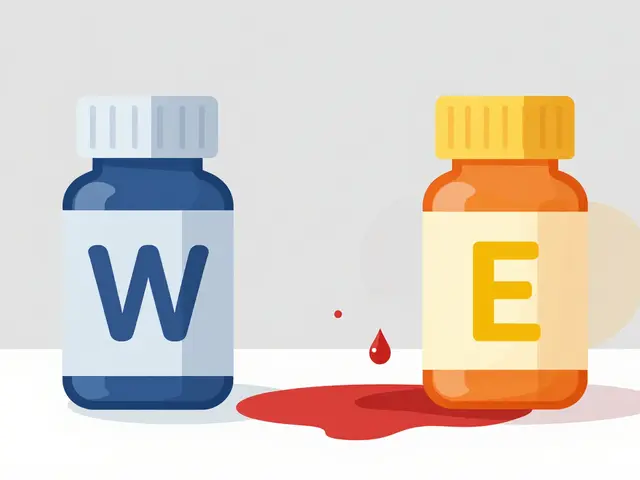
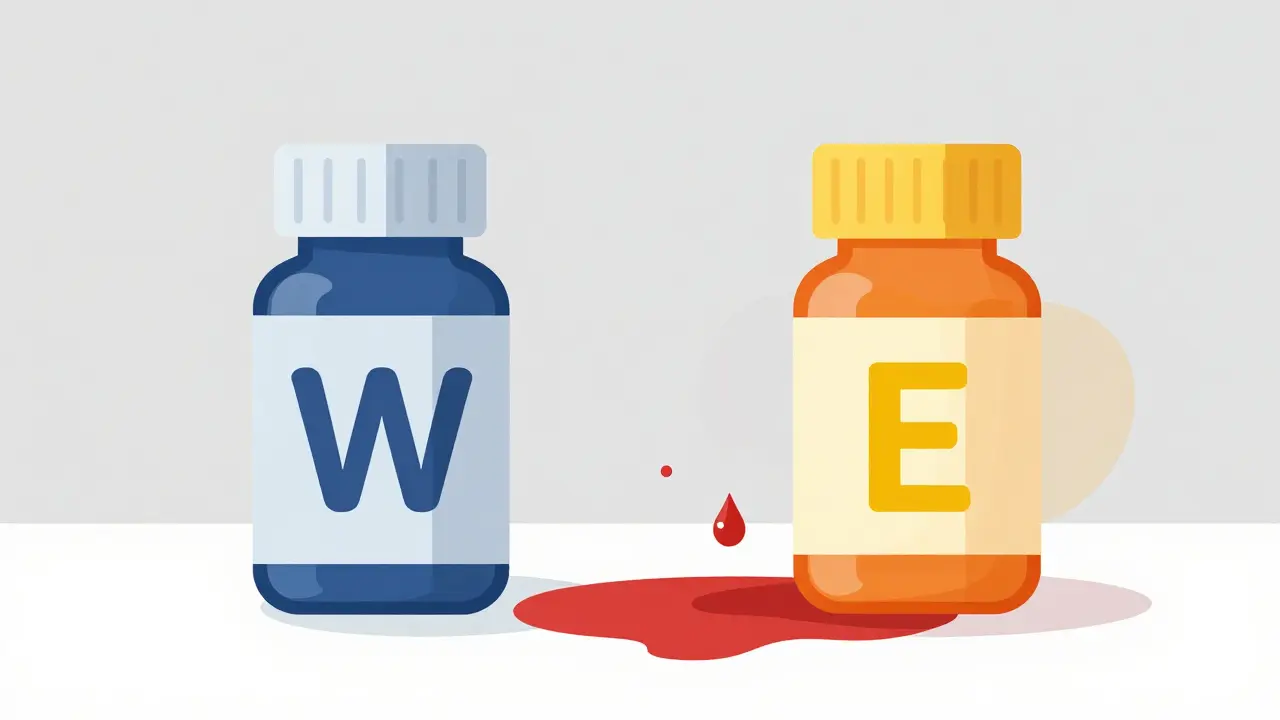
You might take Warfarin is a blood thinner prescribed to prevent dangerous clots in conditions like atrial fibrillation or after heart valve replacement because your doctor says it keeps you safe from strokes. You might also take Vitamin E is a popular antioxidant supplement often used for skin health or general wellness because you want to boost your immune system. On paper, these two seem harmless enough. But when they meet in your bloodstream, the chemistry changes. The combination can quietly push your blood’s ability to clot into a dangerous zone, increasing your risk of severe bleeding without any obvious warning signs.
This isn't just theoretical fear-mongering. It is a documented pharmacological conflict that has puzzled clinicians for decades. Some studies say it's fine; others say it's risky. If you are on Warfarin, understanding this specific interaction is not optional-it is a matter of safety. Let’s look at what the data actually says about mixing these two substances.
The Core Conflict: How Vitamin E Affects Blood Clotting
To understand why this mix is tricky, you need to know how each substance works. Warfarin blocks the action of Vitamin K, which your body needs to make clotting factors. This slows down clot formation. Vitamin E, specifically alpha-tocopherol, works differently. It is an antioxidant, but it also has antiplatelet effects. In simple terms, it makes your platelets (the cells that stick together to form clots) less sticky.
When you add Vitamin E to Warfarin, you aren’t just adding one effect; you are potentially stacking two different mechanisms that both reduce clotting. The University of California San Diego Anticoagulation Guidelines explicitly list Vitamin E under "Increased Risk of Bleeding due to Antiplatelet Effect." They group it with other supplements known to thin the blood, such as fish oil, garlic, ginger, ginkgo, and turmeric. This suggests that even if your International Normalized Ratio (INR) looks normal, your actual bleeding risk might still be higher than expected.
The Research Contradiction: Safety vs. Danger
If you read medical literature, you will find a confusing split in opinions. This confusion comes from conflicting study results over the last 30 years.
On the side of "it’s probably safe," there is a landmark 1996 double-blind trial published in the American Journal of Cardiology. Researchers J.M. Kim and R.H. White studied 21 patients on chronic Warfarin therapy. Half got Vitamin E, half got a placebo. They found no significant changes in INR levels. Their conclusion was straightforward: Vitamin E can safely be given to patients requiring chronic Warfarin therapy. For years, this study was cited by doctors who wanted to reassure their patients.
However, more recent and larger-scale research tells a different story. A 2013 retrospective observational study published in the Journal of the American Heart Association analyzed over 1,000 patients with non-valvular atrial fibrillation. This study found a clear link between high serum Vitamin E levels and increased bleeding events. Specifically, Vitamin E levels ≥4.49 μmol/mmol cholesterol were associated with a higher risk of any bleeding, while levels ≥5.56 μmol/mmol cholesterol carried the highest risk for major bleeding. These findings held true regardless of the patient’s standard HAS-BLED bleeding risk score. This suggests that Vitamin E might be an independent risk factor that standard monitoring misses.
| Study Year | Source | Sample Size | Key Finding | Clinical Implication |
|---|---|---|---|---|
| 1996 | American Journal of Cardiology | 21 patients | No significant INR change | Suggested safety for short-term use |
| 2013 | Journal of the American Heart Association | 1,011 patients | High serum Vitamin E linked to major bleeding | Suggests long-term cumulative risk |
| 2023 | UCSD Anticoagulation Guidelines | N/A (Guideline) | Vitamin E increases bleeding risk via antiplatelet effect | Recommend avoidance or strict monitoring |
The Dosage Threshold: Where Does the Danger Begin?
Not all Vitamin E is created equal, and not all doses carry the same risk. The consensus among many clinical experts is that dosage matters significantly. Droracle’s clinical analysis warns that high-dose Vitamin E supplementation-specifically above 400 IU daily-may potentially increase the anticoagulant effect of Warfarin.
Here is the breakdown of risk based on dose:
- Below 400 IU/day: Generally considered lower risk, though individual variability exists. Some unpublished studies suggest even low doses (42 IU) could have additive effects in sensitive individuals.
- 400-800 IU/day: This is the gray zone. Case reports exist where patients on 800 IU daily experienced abnormal bleeding. The adverse effect often didn’t appear until the fourth week of concurrent use, making it sneaky.
- Above 800 IU/day: High risk. Most guidelines advise against this level of supplementation for anyone on Warfarin.
The National Institutes of Health Office of Dietary Supplements issued a clinical update in 2022 noting that while evidence remains conflicting, caution is warranted, particularly at doses exceeding 400 IU daily. The American Heart Association also cautioned that high-dose Vitamin E (≥400 IU/d) may increase the risk of hemorrhagic stroke, especially in patients taking anticoagulants.
Why Your INR Might Lie to You
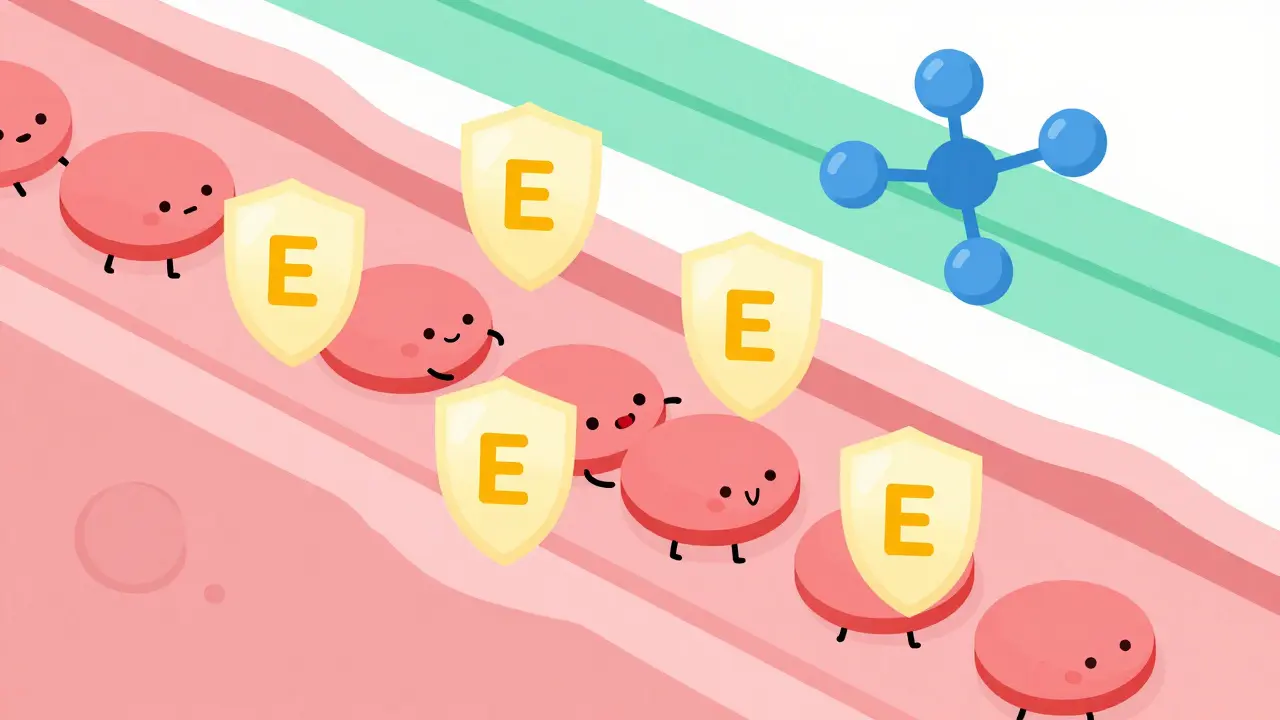
Most people on Warfarin monitor their health through INR tests. An INR measures how long it takes your blood to clot compared to a normal person. If your INR is in the therapeutic range (usually 2.0 to 3.0), you assume you are safe. But Vitamin E complicates this picture.
Because Vitamin E affects platelet function rather than just the vitamin K-dependent clotting factors measured by INR, your INR might stay stable while your actual bleeding tendency increases. This is why the UCSD guidelines emphasize that Vitamin E should be avoided due to its antiplatelet effect. Even if your INR doesn’t spike, you could still experience bruising, nosebleeds, or worse, internal bleeding. This disconnect is why some researchers advocate for measuring serum Vitamin E levels directly, as suggested in the European Society of Cardiology’s 2023 update to atrial fibrillation management guidelines.
What Do Clinics Actually Recommend?
There is a gap between academic debate and real-world practice. A survey of 250 anticoagulation clinics published in the Journal of Thrombosis and Thrombolysis (2017) revealed that 78% of clinics routinely warn patients about Vitamin E supplementation. Furthermore, 63% specifically advise against doses exceeding 400 IU daily.
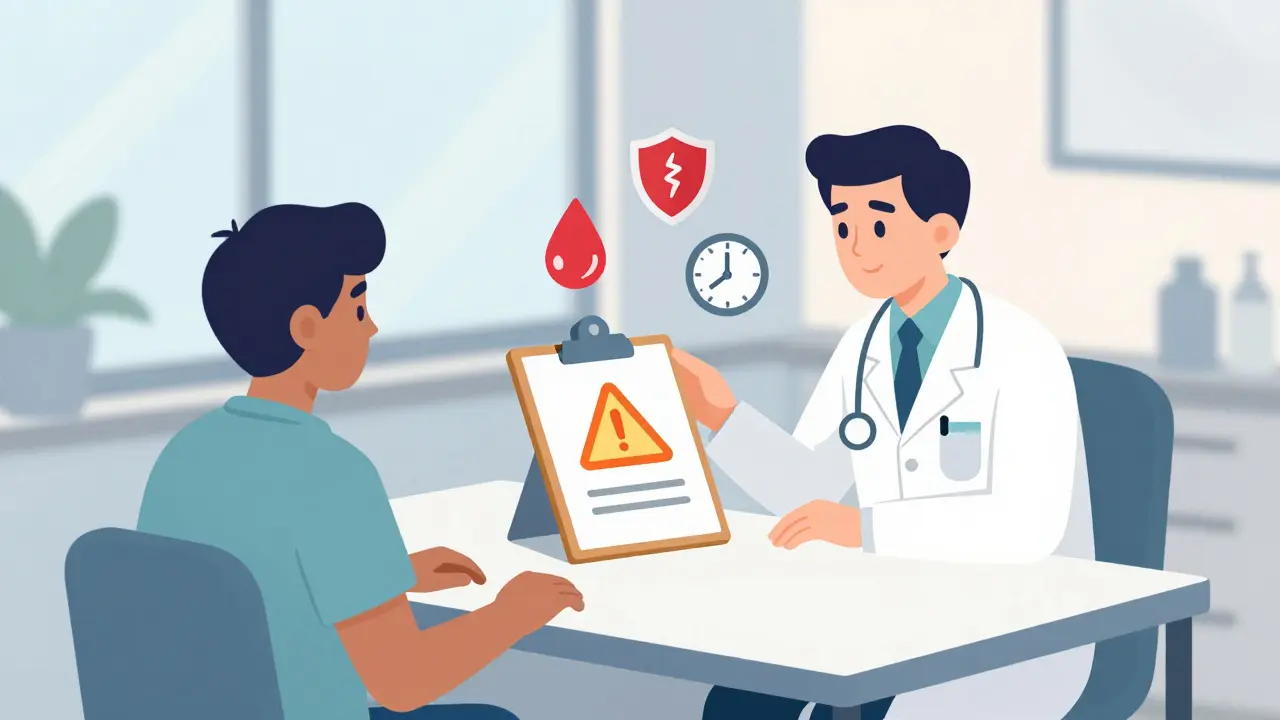
The practical reality for healthcare providers is complex. Proper management requires baseline INR measurement before starting Vitamin E, weekly INR monitoring for the first month, and continued biweekly monitoring thereafter. This represents approximately 3-5 additional clinic visits annually per patient. Given this burden, most clinicians prefer to simply tell patients to avoid high-dose Vitamin E altogether unless absolutely necessary.
Genetic Factors and Individual Susceptibility
Why do some people bleed on Vitamin E and Warfarin while others don’t? Genetics play a huge role. Research is increasingly focusing on polymorphisms in genes like CYP2C9 and VKORC1. These genes control how your liver metabolizes Warfarin and how your body responds to Vitamin K. If you have certain genetic variants, you may be hypersensitive to even small changes in your regimen, including the addition of Vitamin E. This explains the "individual variability" noted in earlier studies where some volunteers showed additive effects at very low doses while others did not.
Practical Steps for Patients
If you are currently taking Warfarin, here is how you should approach Vitamin E:
- Check your sources: Vitamin E isn’t just in pills. It’s in multivitamins, skin creams (if absorbed), and foods like nuts and seeds. While food sources are generally safe, concentrated supplements are the problem.
- Talk to your pharmacist: Before buying any supplement, ask your pharmacist. They can check for specific interactions based on your current INR stability.
- Monitor for symptoms: Watch for unusual bruising, redness in urine or stool, prolonged bleeding from cuts, or frequent nosebleeds. These are early warning signs.
- Consider alternatives: If you need an antioxidant, discuss safer options with your doctor. Vitamin C, for example, does not have the same antiplatelet concerns.
The bottom line is that while low-dose Vitamin E might be manageable for some, the potential cost of getting it wrong is severe bleeding. With direct oral anticoagulants (DOACs) becoming more common, fewer people are on Warfarin, but for those who remain on it, this interaction remains a critical safety issue.
Can I take Vitamin E if I am on Warfarin?
It depends on the dose and your individual risk profile. Most guidelines advise against high-dose Vitamin E (above 400 IU daily) due to increased bleeding risk. Low doses may be acceptable under strict medical supervision with frequent INR monitoring, but many clinicians recommend avoiding it entirely to minimize risk.
Does Vitamin E affect my INR levels?
Not necessarily. Vitamin E primarily affects platelet function (antiplatelet effect) rather than the clotting factors measured by INR. This means your INR could remain within the therapeutic range while your actual risk of bleeding increases, making INR alone an insufficient safety check for this interaction.
How much Vitamin E is considered safe with Warfarin?
There is no universally agreed-upon "safe" dose, but most clinical warnings focus on doses above 400 IU daily. Doses between 400-800 IU carry moderate risk, and doses above 800 IU are generally considered high-risk. Always consult your anticoagulation specialist before starting any supplement.
Are there natural sources of Vitamin E that are dangerous?
Food sources of Vitamin E, such as almonds, sunflower seeds, and spinach, are generally considered safe because the amounts are too low to cause significant pharmacological interactions. The danger lies in concentrated supplements, capsules, or liquid forms that deliver high doses quickly.
What should I do if I accidentally took Vitamin E with Warfarin?
Do not panic, but monitor yourself closely for signs of bleeding such as bruising, nosebleeds, or blood in urine/stool. Contact your healthcare provider to inform them of the intake. They may advise you to get an extra INR test sooner than scheduled to ensure your levels remain stable.