

As of late 2025, the U.S. is facing one of its worst drug shortage crises in history. Over 277 drugs remain in short supply, including life-saving antibiotics, cancer treatments, and anesthetics. Hospitals are scrambling. Pharmacists are spending hours each week tracking down alternatives. Patients are skipping doses because the medication simply isn’t there. And behind this crisis is a federal response that’s growing more complex-and more contradictory-by the month.
The Scale of the Problem
The numbers don’t lie. In 2024, the U.S. hit a record high of 323 active drug shortages. Even after some resolutions, 277 remain unresolved as of September 2025. The FDA reports 98 active shortages, but that number only includes drugs they’ve officially confirmed. Other agencies and hospital networks track more, because they see the real-world impact: a cancer patient forced to delay chemo, a surgical team using expired saline because the new batch didn’t arrive, a nurse giving a different antibiotic that causes unexpected side effects. The problem isn’t random. It’s structural. About 80% of the active pharmaceutical ingredients (APIs) used in U.S. medications come from overseas, mostly China. And 78% of sterile injectable drugs-those most often in short supply-are made in just five facilities nationwide. One factory shutdown, one quality control failure, or one shipping delay can ripple across the entire country.What the Federal Government Is Doing
In August 2025, President Trump signed Executive Order 14178, launching a major expansion of the Strategic Active Pharmaceutical Ingredients Reserve (SAPIR). This isn’t about stockpiling finished pills or syringes. It’s about storing the raw chemical building blocks-the APIs-needed to make 26 critical drugs. Why? Because APIs last 3 to 5 years longer than finished medicines and cost 40-60% less to store. The goal is to have these materials ready to be turned into medicine within days if a manufacturer fails. The Department of Health and Human Services (HHS) also released its 2025-2028 Draft Action Plan, built around four pillars: COORDINATE, ASSESS, RESPOND, and PREVENT. That means trying to get agencies like the FDA, CDC, and ASPR to talk to each other, mapping out where APIs come from, creating emergency response protocols, and pushing for more domestic manufacturing. Meanwhile, Congress is considering two key bills: H.R.5316, the Drug Shortage Act, which would make it easier for pharmacists to compound urgent-use drugs during shortages, and the bipartisan Drug Shortage Prevention and Mitigation Act, which would give Medicare bonus payments to hospitals that maintain backup supply chains.How the FDA Is Handling Shortages
The FDA has been the frontline agency for managing drug shortages for over a decade. Their approach is mostly reactive but practical. When a manufacturer reports a potential shortage, the FDA works directly with them to fix the problem-whether that’s speeding up an inspection, approving a temporary import, or helping them fix a production line. They’ve had wins. The saline shortage of 2018-2020, which affected 90% of U.S. hospitals, was resolved through coordinated efforts with manufacturers and emergency imports. Today, the FDA resolves about 85% of reported shortages through these kinds of interventions. In November 2025, they launched the Enhanced Shortage Monitoring System-a new AI tool that analyzes 17 data streams: shipping logs, manufacturing records, hospital purchase patterns, even social media chatter from pharmacists. It predicts shortages with 82% accuracy up to 90 days in advance. That’s a big step forward. But there’s a catch. Only 58% of manufacturers are actually reporting potential shortages as required by law. Small companies-those with fewer than 50 employees-are especially bad at reporting, with 82% failing to comply. And since 2020, the FDA has issued only 17 warning letters for non-reporting. In the EU, under similar rules, they’ve issued 142.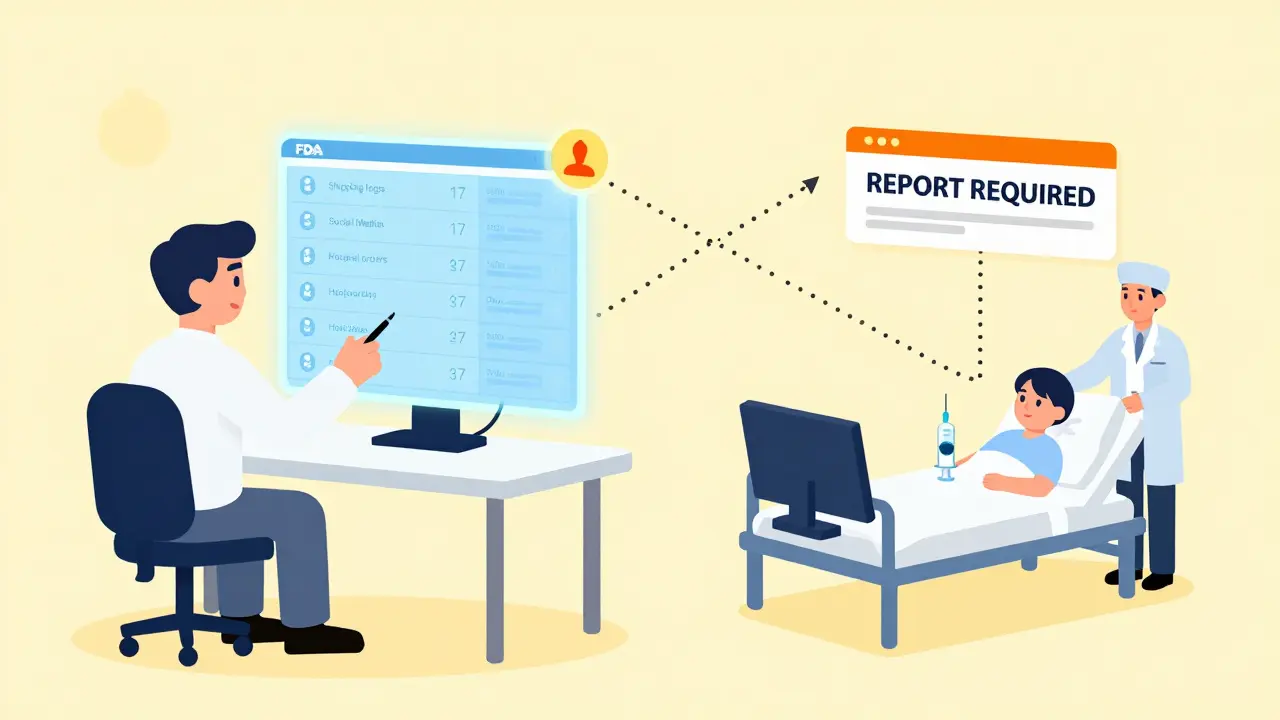
The Gaps in the Strategy
Here’s where things get messy. The SAPIR program targets only 26 drugs. But FDA data shows that 98% of all shortage events involve drugs outside that list. Oncology drugs, for example, make up 31% of all shortages-but only 4% of the SAPIR list. That means most patients in crisis aren’t covered by the government’s main solution. The Government Accountability Office (GAO) found that only 35% of HHS’s recommended shortage prevention actions have been implemented across federal agencies. States aren’t keeping up either. Only 28 out of 50 have set up the supply chain mapping systems required by the 2025 Action Plan. Rural hospitals, already stretched thin, say it takes 3 to 6 months just to get the software running. And then there’s the funding problem. The 2026 HHS budget cuts $1.2 billion from FEMA’s emergency response and $850 million from state public health grants. Biomedical innovation funding from the NIH dropped 18% from 2024 to 2025. Meanwhile, the FDA’s own internal review admitted that even if every current policy works perfectly, it will prevent only 15-20% of projected shortages over the next three years.Why Domestic Manufacturing Isn’t Working
The government keeps saying it wants to bring drug production back to the U.S. But here’s the reality: it’s expensive and slow. Building a new API facility in the U.S. takes 28 to 36 months to get FDA approval. In the EU, it takes 18 to 24 months. And even when new plants open, many end up in Ireland or Singapore-not Ohio or Pennsylvania. In 2024, the FDA approved 56 new manufacturing facilities. Forty-two percent of them were overseas. The Department of Commerce just announced $285 million in CHIPS Act funding for pharmaceutical production. Sounds like progress? Industry analysts say that’s less than 5% of what’s needed to make a real difference. The market is dominated by just three companies that control 68% of sterile injectable production. That’s not competition-it’s a bottleneck waiting to break.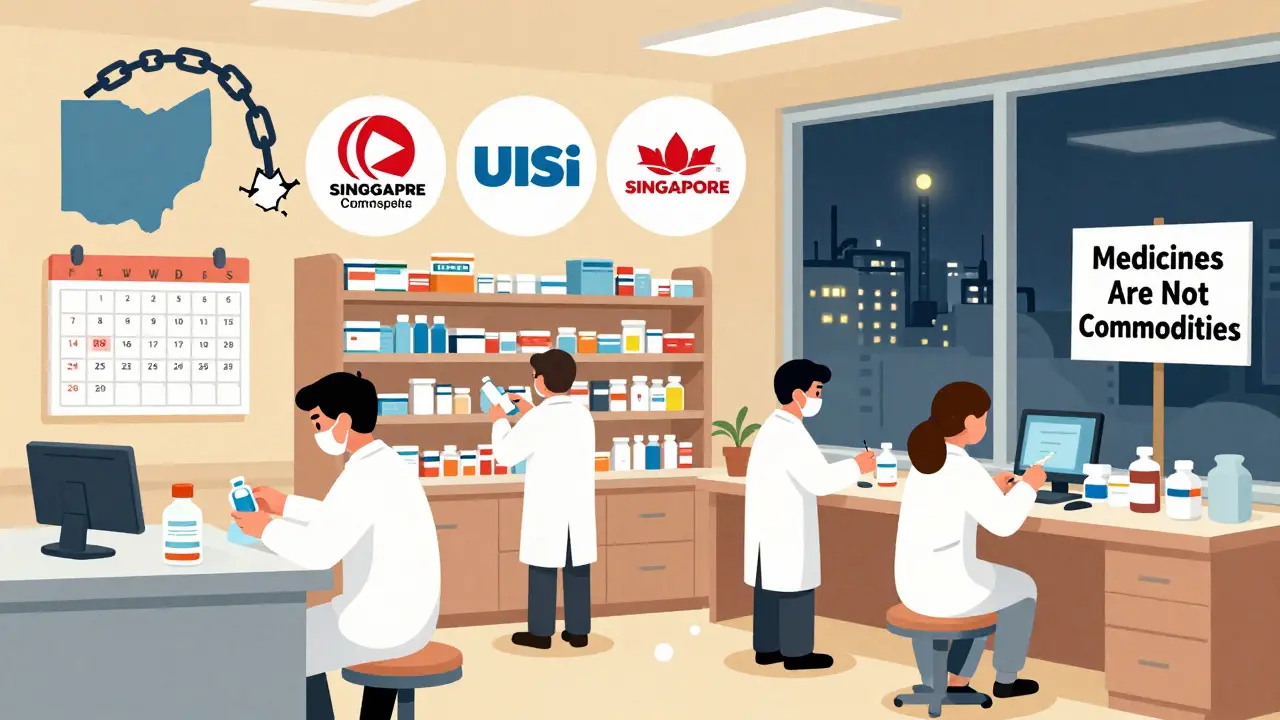
What’s Really Hurting Patients
Behind every statistic is a human impact. Hospitals are spending an average of $1.2 million a year just managing drug shortages. Pharmacists spend 10 or more hours a week tracking down alternatives. In one case, a pharmacist told Reddit users they were compounding cisplatin- a powerful chemotherapy drug-from raw chemicals because the pre-made version wasn’t available. Patients aren’t just delayed. They’re at risk. A National Comprehensive Cancer Network survey found 68% of oncology practices had to modify cancer treatments due to shortages. A Patients for Affordable Drugs report said 29% of Americans skipped doses because the drug wasn’t there-not because they couldn’t afford it, but because it didn’t exist on the shelf. And the substitutions? They’re dangerous. 42% of hospitals have reported medication errors directly tied to switching drugs during shortages. One drug might have a different dosing schedule. Another might interact with a patient’s other meds in ways no one anticipated.What’s Missing From the Plan
Experts agree: the U.S. is treating symptoms, not causes. Stockpiling APIs helps in emergencies, but it doesn’t fix why these shortages happen in the first place. The core problem is economic. Making generic injectable drugs-like antibiotics or anesthetics-isn’t profitable. Companies don’t invest in backup production lines because they can’t make money on them. The market rewards low prices, not resilience. Dr. Luciana Borio, former FDA Acting Chief Scientist, called the current approach “reactive rather than preventative.” She’s right. Without financial incentives for manufacturers to build redundancy, without penalties for non-reporting, without a real plan to diversify production beyond a handful of companies, the U.S. will keep cycling through the same crises. The most promising move? The FDA’s new expedited review pathway for second-source manufacturers. Fourteen applications are already in process. If approved, they could add backup production for eight critical drugs by mid-2026. That’s a start. But it’s not enough.What Comes Next
The federal government has tools. It has data. It has urgency. But it’s missing a unified strategy. The SAPIR reserve is smart. The AI monitoring system is innovative. But without mandatory reporting, without funding for domestic manufacturing, without rewarding hospitals that prepare for shortages, and without fixing the broken economics of generic drug production, these efforts will fall short. The EU reduced shortages by 37% between 2022 and 2024 by requiring member states to stockpile key drugs and creating a centralized monitoring system. The U.S. could do the same-but only if it chooses to treat drug shortages as a public health emergency, not just a supply chain glitch. For now, patients and providers are left waiting-for a drug that might arrive, for a policy that might change, for a system that might finally work.Why are drug shortages getting worse in the U.S.?
Drug shortages are worsening because the U.S. relies too heavily on foreign suppliers-especially China-for active pharmaceutical ingredients (APIs). Just five facilities produce nearly 80% of sterile injectable drugs, creating single points of failure. At the same time, manufacturers have little financial incentive to produce low-margin generic drugs, so they don’t invest in backup production. Reporting requirements are weak, enforcement is rare, and federal efforts focus on emergency fixes rather than long-term solutions.
What is the Strategic Active Pharmaceutical Ingredients Reserve (SAPIR)?
SAPIR is a federal stockpile of raw chemical ingredients-active pharmaceutical ingredients (APIs)-needed to make 26 critical drugs like antibiotics, anesthetics, and cancer treatments. Launched in 2020 and expanded in August 2025, it aims to reduce dependence on foreign suppliers and allow faster production during shortages. APIs are cheaper and last longer than finished drugs, making them more practical to store. But SAPIR only covers 26 drugs, while over 98% of shortages involve drugs outside this list.
How effective is the FDA’s new AI shortage prediction system?
The FDA’s Enhanced Shortage Monitoring System, launched in November 2025, uses AI to analyze 17 data sources-including shipping logs, manufacturing records, and hospital purchase patterns-to predict shortages 90 days in advance with 82% accuracy. It’s the most advanced tool of its kind in the U.S. But its success depends on accurate data from manufacturers, and only 58% of them currently report potential shortages as required by law. Without better reporting, the system’s impact will be limited.
Why aren’t more drug manufacturing facilities being built in the U.S.?
Building a new drug manufacturing facility in the U.S. takes 28 to 36 months to get FDA approval-much longer than the 18 to 24 months it takes in the EU. The process is expensive, and there’s little financial reward. Generic drugs have thin profit margins, so companies prefer to produce them overseas where labor and regulation costs are lower. Even with $285 million in new federal funding, industry experts say that’s less than 5% of what’s needed to make a meaningful difference in domestic production.
What can hospitals do to prepare for drug shortages?
Hospitals can create backup supply chains by identifying alternative medications and pre-negotiating contracts with multiple suppliers. Some are now qualifying for Medicare incentive payments under proposed legislation if they maintain these backups. Training pharmacists to manage shortages (about 40 hours per pharmacist) and using the FDA’s Early Notification Pilot Program can reduce shortage duration by 28%. But many community hospitals lack the staff and technology to do this effectively.
Are drug shortages affecting cancer patients the most?
Yes. Oncology drugs account for 31% of all drug shortages, even though they make up only 4% of the SAPIR target list. A September 2025 survey by the National Comprehensive Cancer Network found that 68% of oncology practices had to modify treatment plans due to shortages-delaying chemo, switching to less effective drugs, or reducing doses. Patients are skipping doses, and in some cases, treatment is postponed entirely, directly impacting survival rates.
What’s the difference between a drug shortage and a drug recall?
A drug recall happens when a specific batch of medicine is found to be unsafe or defective and is pulled from the market. A drug shortage means the medication is unavailable in sufficient quantities-often because of manufacturing delays, supply chain issues, or production halts-not because it’s unsafe. Shortages can last weeks or months; recalls are usually resolved faster once the defective product is removed.
Is the U.S. government doing enough to fix drug shortages?
No. While initiatives like SAPIR and AI monitoring are steps forward, they’re focused on emergency response, not prevention. The government hasn’t addressed the root causes: weak financial incentives for manufacturers, lack of regulatory speed, poor reporting compliance, and extreme market concentration. Without fixing the economics of generic drug production and mandating redundancy in manufacturing, shortages will keep happening-no matter how many APIs are stockpiled.



Tony Du bled
December 22, 2025 AT 03:16The FDA’s AI system is cool and all, but if manufacturers still don’t report shortages, it’s like having a smoke alarm with no batteries. No amount of tech fixes laziness.
Kathryn Weymouth
December 23, 2025 AT 14:30It’s staggering that 98% of drug shortages involve medications outside the 26 covered by SAPIR. This isn’t a strategic reserve-it’s a symbolic gesture. Real preparedness would require mapping every high-risk drug, not just the politically convenient ones.
Julie Chavassieux
December 24, 2025 AT 23:00They’re stockpiling chemicals while patients skip chemo. This is what happens when bureaucrats think solutions are about storage, not sacrifice.
Herman Rousseau
December 25, 2025 AT 23:44Hey, I work in a rural ER-we’ve been using expired saline for weeks. The AI tool? Great idea. But if your hospital can’t afford the software to even use it, what’s the point? We need funding for small hospitals, not just flashy tech.
Vikrant Sura
December 26, 2025 AT 02:41China makes the drugs. So what? They’re not the problem. The problem is American hospitals spending $1.2M/year just to play inventory whack-a-mole.
Candy Cotton
December 26, 2025 AT 19:00Let me be perfectly clear: This crisis exists because weak leadership allowed foreign entities to dominate our medical supply chain. We abandoned American manufacturing for cheapness. Now we pay with lives. This is not a policy failure-it is a moral failure.
Jeremy Hendriks
December 28, 2025 AT 09:27We’re treating symptoms like they’re the disease. The real illness is capitalism-where profit dictates survival. If a drug doesn’t make money, it doesn’t get made. That’s not a supply chain issue. That’s a soul issue.
They can build AI, stockpile chemicals, and write ten-page action plans-but until we stop valuing price over people, we’re just rearranging deck chairs on the Titanic.
Gabriella da Silva Mendes
December 28, 2025 AT 10:52OMG I just saw a nurse post on Instagram that they’re compounding cisplatin from raw powder. Like… what? That’s not medicine, that’s a science experiment gone wrong. And they wonder why people are dying? 🤯
Also, why is the FDA only giving out 17 warning letters? In China, they’d be jailed for this. We’re not fixing this-we’re just pretending.
Kiranjit Kaur
December 29, 2025 AT 08:46India makes 40% of the world’s generics. Maybe we should be working with them instead of treating them like villains? Collaboration > confrontation. We need partnerships, not panic.
And hospitals? They need training, not just funding. A pharmacist can’t fix a shortage if they’ve never been taught how to manage alternatives.
Sai Keerthan Reddy Proddatoori
December 30, 2025 AT 19:43They say China controls the supply. But who really controls China? The deep state. This is all a psyop to make us dependent. The real drug shortage? The truth. They don’t want you to know how broken this system is.
Sam Black
December 31, 2025 AT 09:22There’s a quiet revolution happening in community pharmacies-pharmacists are becoming de facto supply chain managers. They’re calling every distributor, trading favors, even driving to neighboring states. No one’s thanking them. But they’re keeping people alive anyway.
We need to honor that labor, not just throw money at AI dashboards.
jenny guachamboza
December 31, 2025 AT 11:37the FDA is lying. theyre not even using the AI. its just a cover for the fact that they dont care. i saw a tweet from a pharmacist who said they got a response from the FDA saying "well try ordering from canada" like we're in 2010. 🤡
Tarun Sharma
January 1, 2026 AT 15:19Manufacturing redundancy is not a luxury. It is a public health imperative. The current approach is economically irrational and ethically indefensible.
Aliyu Sani
January 1, 2026 AT 19:37yo… this whole thing is a systemic collapse. we got supply chains that look like a house of cards, and the feds are out here playing monopoly with APIs. Meanwhile, real people? They’re just trying to survive. This ain’t policy. This is trauma dressed up as bureaucracy.
Herman Rousseau
January 3, 2026 AT 11:50Man, I just read the GAO report. Only 35% of the HHS plan is implemented? That’s not negligence-that’s sabotage. And now they’re cutting public health grants? Are they trying to make this worse on purpose?