Missing a dose of your medication might feel like a small slip-up, but the reality is far more serious. Research from the New England Journal of Medicine shows that about half of patients with chronic diseases don’t take their meds as prescribed. That gap in adherence increases the chance of a disease flare by 30-40%. It’s not just about feeling worse; it costs the U.S. healthcare system up to $289 billion annually in avoidable hospitalizations and complications. The good news? Building a routine that sticks isn’t about willpower. It’s about strategy.
Start With Habit Stacking, Not Alarms
The most effective way to remember your medication isn’t setting ten alarms on your phone. It’s attaching the act of taking your pills to something you already do every single day without thinking. This concept, known as habit stacking, leverages existing neural pathways to create new behaviors. According to Stanford Medicine, 78% of patients who linked their medication to an established habit saw improved adherence.
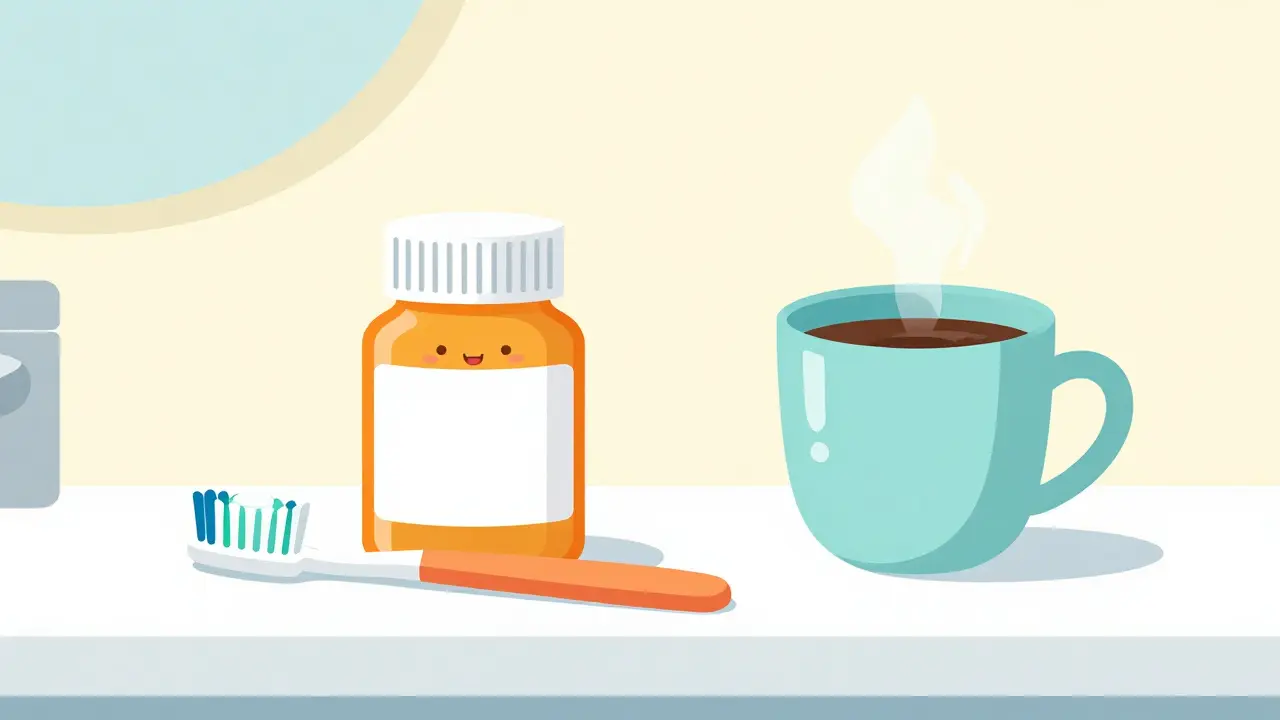
Think about your morning or evening rituals. Do you brush your teeth? Feed the dog? Pour your morning coffee? These are anchor moments. If you take a morning medication, place the bottle right next to your toothbrush. For evening doses, pair it with brushing your teeth before bed. Stanford data suggests that linking medication to toothbrushing routines achieves 72% effectiveness for morning and evening doses. The key is consistency. If your anchor habit changes-like if you start skipping breakfast-the medication routine breaks. Choose an anchor that is truly non-negotiable in your life.
- Morning Anchor: Place meds next to the coffee maker or toothbrush.
- Evening Anchor: Pair with night-time hygiene or pet feeding.
- Meal Anchor: Take with food only if approved by your doctor (see below).
Choose the Right Organizational Tool
Relying on memory alone is a recipe for disaster, especially when you’re managing multiple prescriptions. The American Heart Association notes that weekly pill organizers can reduce missed doses by up to 25%. But not all organizers are created equal. You need one that matches your complexity level.
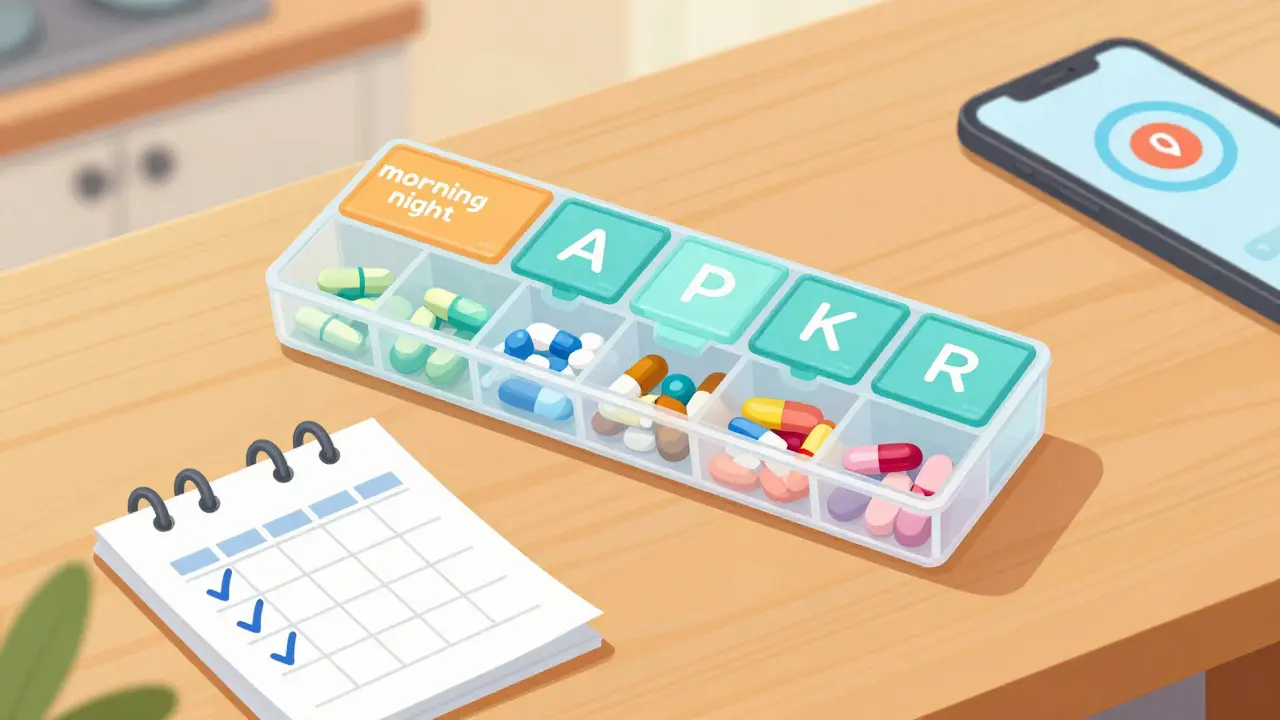
If you take one or two medications once a day, a simple seven-day box works fine. However, if you have AM and PM doses, look for a organizer with separate compartments for each time slot. Research shows that multi-compartment weekly organizers improve adherence by 35% compared to standard bottles. The visual cue of an empty compartment tells you immediately whether you’ve taken your dose, eliminating the "Did I take this yet?" anxiety.
| Tool Type | Effectiveness Boost | Best For | Limitations |
|---|---|---|---|
| Standard Bottle | Baseline | Simple regimens | No visual confirmation of dose |
| Weekly Pill Organizer | +25% | Daily once-a-day meds | Requires weekly refilling ritual |
| AM/PM Weekly Box | +35% | Multiple daily doses | Bulkier, requires more planning |
| Smart Bottle Cap | +35% (in trials) | Tech-savvy users | Costly, battery-dependent |
Make filling your organizer a weekly ritual. Data from the American Heart Association indicates that Friday evenings are the optimal refill time for 68% of patients. Spending 20 minutes on Friday night ensures you’re set for the weekend, reducing stress during busy days.
Navigate Food and Timing Requirements
A common mistake is assuming all medications should be taken with food. Some require an empty stomach to absorb properly, while others cause nausea if taken on an empty stomach. Always check with your pharmacist or provider. MedlinePlus emphasizes that confirming food interactions is a critical first step.
If your medication can be taken with meals, use mealtimes as your anchor. This approach shows 68% effectiveness for compatible drugs. However, if your schedule involves irregular meal times, this method fails. In those cases, revert to fixed-time anchors like waking up or going to bed. Never guess. A quick call to your pharmacy can clarify whether your specific drug needs food, which can save you from ineffective dosing or uncomfortable side effects.
Leverage Technology Wisely
Technology can help, but it’s not a silver bullet for everyone. Smartphone alarms work well for younger demographics. A 2020 study by MedStar Health found that 63% of patients aged 50-75 reported improved adherence using phone reminders. However, effectiveness drops significantly for older adults. Among patients over 75, smartphone alarm adherence falls to 45%, often due to technical confusion or accidentally silencing notifications.
If you struggle with smartphones, consider low-tech digital solutions. Timer caps that beep when opened maintain 62% effectiveness across all age groups because they don’t require screen interaction. For those comfortable with apps, look for tools that offer logging features. Simply tapping a button to confirm a dose creates a record that helps identify patterns of missed doses.
Use Visual Tracking for Accountability
Sometimes, seeing progress is the best motivator. Medication calendars where you physically check off each dose have demonstrated a 32% reduction in missed doses in clinical trials published in the PMC journal. This method provides immediate visual feedback. A row of checkmarks looks satisfying; a blank square stands out starkly.
This technique is particularly powerful for complex regimens. If you take different medications at different times, a calendar allows you to map them out visually. Combine this with colored labels-blue for morning, red for afternoon, yellow for bedtime-as recommended by the American Heart Association. This color-coding simplifies decision-making, improving correct dosing by 28% among visually-oriented patients.
Simplify Your Regimen When Possible
Complexity is the enemy of adherence. Dr. Robert L. Page II, a medication adherence specialist, notes that simplifying routines to once-daily dosing reduces complexity by 40%. If you’re taking four or more medications, talk to your doctor about consolidation. Many drugs are available in combination forms, or timing can be adjusted to align doses.
Medicare data reveals that adherence rates drop from 75% for single-medication regimens to 50% for four or more medications. Every additional pill adds cognitive load. Ask your pharmacist: "Can any of these be taken together?" or "Is there a once-daily alternative?" Small adjustments can dramatically improve your ability to stick to the plan.

Prepare for Disruptions
Life happens. Travel, illness, and routine changes are common failure points. ProMedica’s analysis shows that travel disruptions affect 63% of patients. Plan ahead. When traveling, pack extra medication in your carry-on bag, not checked luggage. Use a small, portable pill case for trips to keep doses organized without the bulk of a weekly organizer.
For home disruptions, have a backup system. If you rely on a smart app, ensure you have a physical calendar as a fallback. If you use a pillbox, keep a spare bottle visible in the kitchen. Anticipating these interruptions prevents the "I’ll deal with it later" mindset that leads to skipped doses.
Involve a Buddy System
Social accountability can boost adherence. The buddy system, where you pair with a friend or family member for mutual reminders, demonstrates 58% effectiveness. However, it depends heavily on relationship stability. Adherence drops 30% when partners change routines or lose interest.
To make this work, choose someone reliable. Set specific times for check-ins. Instead of vague promises like "I’ll remind you," agree on a concrete action: "We’ll text each other at 8 AM after we take our meds." This creates a shared ritual that reinforces the behavior for both parties.
Address Side Effects Honestly
Side effects are a major reason for intentional non-adherence, cited by 49% of patients. If a medication makes you feel sick, dizzy, or anxious, you’re less likely to take it. Don’t suffer in silence. Contact your healthcare provider immediately. They may adjust the dosage, switch medications, or prescribe something to manage the side effect.
Ignoring side effects leads to a cycle of avoidance and worsening health. Remember, the goal is sustainable adherence. A routine that includes unmanaged side effects is doomed to fail. Open communication with your care team is essential for long-term success.
What is the best time of day to take medication?
The best time is when it aligns with your consistent daily habits. For many, this means morning with breakfast or brushing teeth, and evening with dinner or bedtime hygiene. Consistency matters more than the specific hour. Always follow your doctor's instructions regarding food requirements.
How do I stop forgetting my medication?
Use habit stacking by pairing medication with an existing routine like brushing teeth. Utilize visual tools like weekly pill organizers with AM/PM compartments. Set smartphone alarms if you are tech-comfortable, or use timer caps that beep. Visual tracking calendars also help reinforce the behavior.
Are pill organizers worth it?
Yes. Studies show weekly pill organizers can reduce missed doses by up to 25%. Multi-compartment boxes for AM/PM doses improve adherence by 35%. They provide visual confirmation that a dose has been taken, reducing anxiety and errors.
What if I miss a dose?
Check the medication label or consult your pharmacist. Generally, if it's close to the scheduled time, take it immediately. If it's near the next dose, skip the missed one and resume your normal schedule. Never double up unless explicitly instructed by your healthcare provider.
How does technology help with medication adherence?
Smartphone alarms improve adherence for 63% of patients aged 50-75. Smart bottle caps track opening times. However, effectiveness varies by age and tech literacy. Low-tech solutions like timer caps may be more reliable for elderly users who struggle with smartphones.