
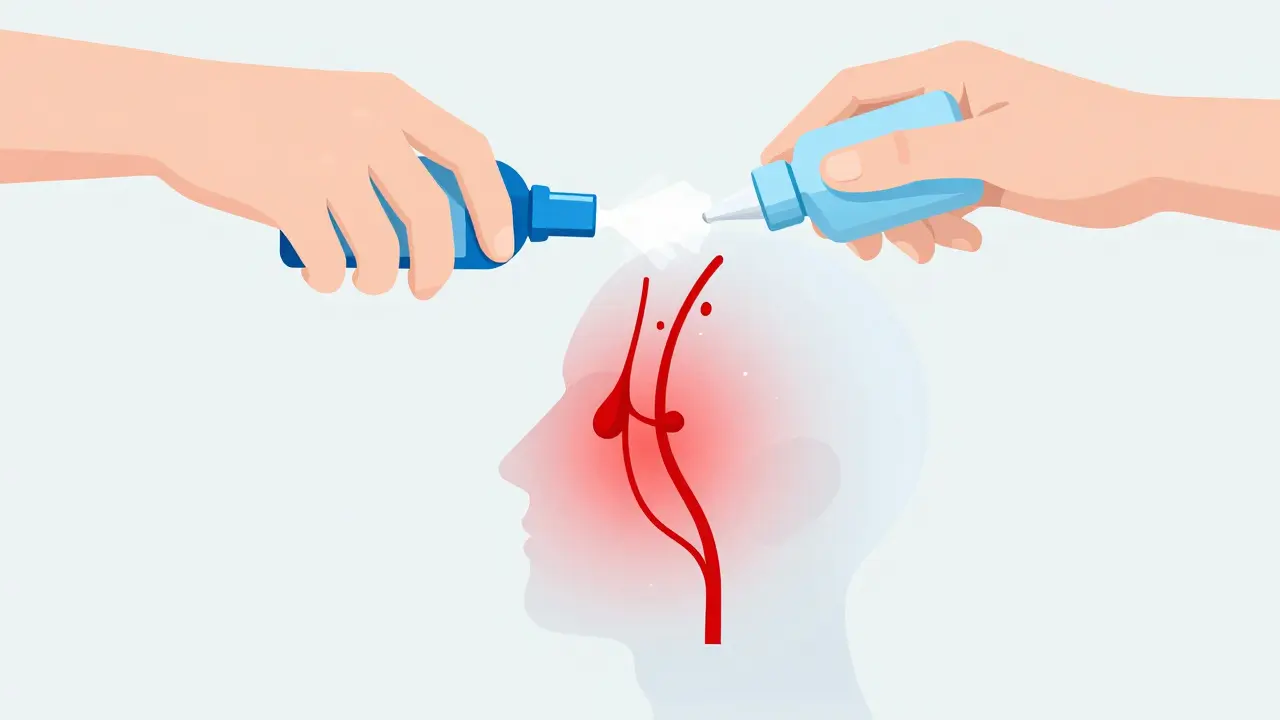
Rhinitis Medicamentosa Recovery Timeline
The Hard Part
Severe congestion peaks as blood vessels dilate excessively (rebound vasodilation). You may feel blocked and tempted to restart the spray.
Turning Point
Congestion begins to stabilize. Nasal membranes start healing if you stick to saline irrigation and corticosteroids. Symptoms remain uncomfortable but manageable.
Significant Improvement
Airflow improves noticeably. Inflammation reduces significantly. Most patients report feeling much better during this window.
Resolution
Nasal function returns to normal. The dependency cycle is broken. Continue preventive measures like saline rinses to maintain health.
You spray it. Your nose clears up instantly. You breathe easy for a few hours. Then, the effect wears off, and the stuffiness comes back worse than before. So you spray again. If this sounds familiar, you might be trapped in a cycle known as rhinitis medicamentosa, also called rebound congestion or medicamentosa rhinitis. This condition is defined as inflammation of the nasal mucosa caused specifically by the overuse of topical nasal decongestants. It is not an allergy, and it is not a cold. It is a direct side effect of relying on medications like oxymetazoline, phenylephrine, or xylometazoline for too long.
This isn't just a minor annoyance. According to data from the National Center for Biotechnology Information (NCBI) StatPearls publication dated 2023, this is a significant clinical problem affecting approximately 10% of patients who use these sprays beyond recommended durations. In the United States alone, there are an estimated 500,000 annual cases diagnosed. The condition was first clinically described in medical literature in the 1950s, but it remains a widespread issue today because the relief these sprays provide is so immediate and tempting. Understanding why this happens and how to break the cycle is crucial for restoring normal breathing without medication dependency.
Understanding the Mechanism of Rebound Congestion
To fix the problem, you need to understand what is happening inside your nose. Topical nasal decongestants work by constricting blood vessels in the nasal lining. When those vessels shrink, swelling goes down, and air can flow through again. However, this effect is temporary. As the medication wears off, the blood vessels don't just return to their normal size; they often dilate excessively-a reaction known as rebound vasodilation. This causes the nasal tissues to swell even more than they did before you used the spray.
This creates a vicious cycle of dependency. You feel blocked, so you spray again to force the vessels to shrink. Over time, your nasal membranes become less responsive to the medication, requiring more frequent applications to achieve the same level of relief. The Mayo Clinic notes that using nonprescription decongestant nasal sprays for more than three or four days can cause worse nasal congestion once the decongestant wears off. The NHS reinforces this, stating clearly that these sprays should not be used for more than one week at a time because using them for too long makes your stuffiness worse. Clinical evidence shows that 92% of patients who use decongestant sprays beyond 10 days develop some degree of rebound congestion.
| Aspect | Details |
|---|---|
| Primary Cause | Overuse of topical nasal decongestants (oxymetazoline, phenylephrine, xylometazoline) |
| Safe Usage Limit | 3 to 7 days maximum (depending on specific product guidelines) |
| Key Symptom | Recurrence of nasal congestion, particularly without rhinorrhea (runny nose) |
| Physical Signs | Nasal mucosa swelling, erythematous (red) and granular appearances, pale and edematous tissue |
| Progression | Initial relief (3-5 days) → Worsening congestion → Frequent spray application → Atrophic/crusty membranes in advanced cases |
If left untreated, the progression follows a predictable pattern. You start with initial relief for a few days. Then, the congestion returns progressively worse, requiring more frequent spray application. In advanced cases, as documented in the Cleveland Clinic's 2023 clinical observations, the nasal membrane can become atrophic and crusty. Patients may experience oral breathing, dry mouth, and snoring due to severe blockage. Recognizing these signs early is key to preventing long-term damage.
Evidence-Based Management Options
The good news is that rhinitis medicamentosa is reversible. The bad news is that fixing it requires patience and a structured approach. The first-line treatment universally recommended across all major medical institutions is complete discontinuation of the offending decongestant spray. However, "just stop" is easier said than done. Withdrawal symptoms can be intense, which is why specific management strategies are essential.
Intranasal corticosteroids represent the most evidence-supported intervention for managing withdrawal symptoms. These medications reduce inflammation in the nasal passages, helping to clear congestion while your body heals from the decongestant dependency. Specific options include mometasone furoate (brand name Nasonex) and fluticasone propionate (brand name Flonase). Clinical studies show that using these consistently for 2-4 weeks during decongestant withdrawal results in a 68-75% symptom reduction. The American Academy of Otolaryngology-Head and Neck Surgery gives intranasal corticosteroids a "strong recommendation" as first-line therapy during decongestant withdrawal, with 98% expert consensus.
Another effective option is saline nasal irrigation. This simple, drug-free method helps flush out irritants and moisturize the nasal passages. A 2022 systematic review in the Journal of Allergy and Clinical Immunology found that saline irrigation provides symptomatic relief for 60% of patients. It is particularly useful in the early stages of withdrawal when congestion is at its peak. For more severe cases, doctors may prescribe short-course oral corticosteroids, such as prednisone at 0.5 mg per kg for five days. A 2021 multicenter trial published in the American Journal of Rhinology & Allergy demonstrated 82% efficacy with this approach.
Strategies for Successful Discontinuation
How you stop using the decongestant spray matters. There are two main approaches, and choosing the right one can make the difference between success and relapse.
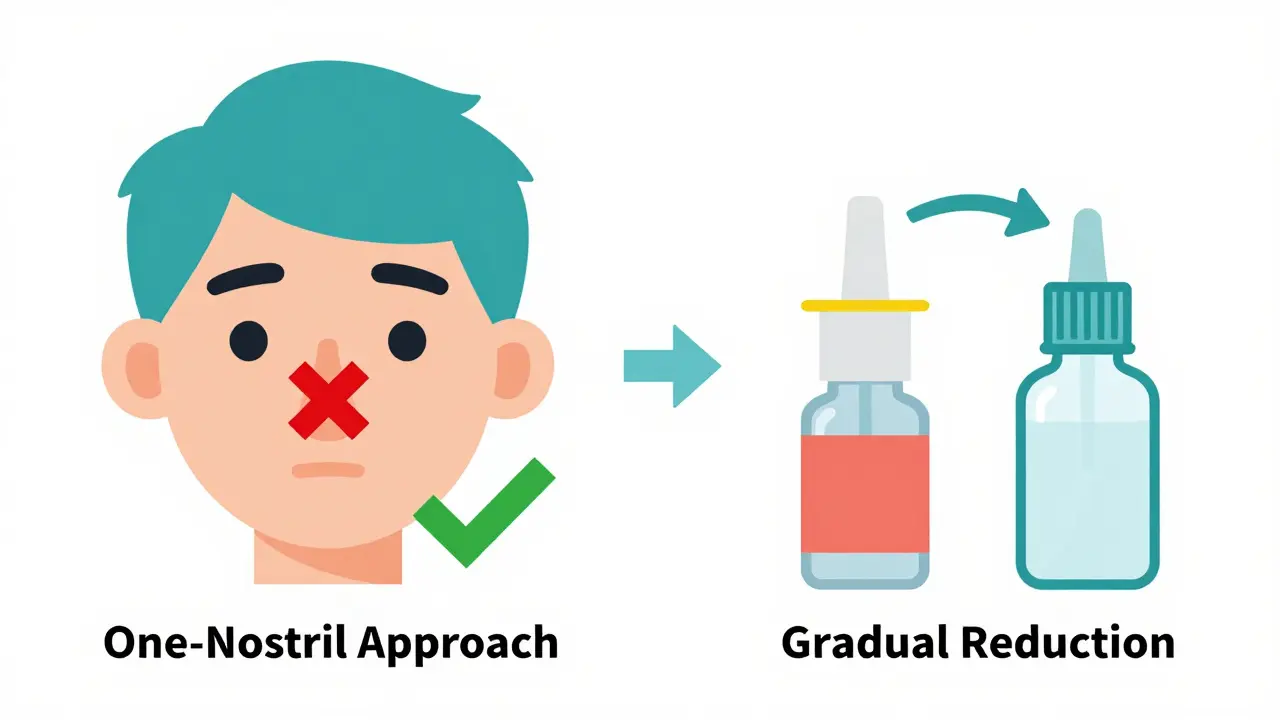
- The One-Nostril Approach: Recommended by Mayo Clinic physicians, this method involves stopping the nasal spray in one nostril until that nostril is clear, then stopping it in the other. This allows you to keep breathing through one side while the other heals. Patient surveys indicate that 63% of people who tried this method reported manageable symptoms, compared to only 41% who stopped both nostrils simultaneously.
- Gradual Reduction: The Cleveland Clinic advises gradually reducing your use of nasal sprays rather than stopping abruptly. This might mean diluting the spray with saline solution or using it less frequently each day. Stopping abruptly can worsen symptoms, leading many patients to give up and restart the cycle.
Whichever method you choose, expect a rough patch. Most people experience severe congestion for the first 3 to 7 days. During this time, stick to your plan. Use saline irrigation every 2 hours if needed, and take your prescribed intranasal corticosteroids twice daily. By days 8 to 14, you should see significant resolution. Consistency is critical-only 76% of patients adhere strictly to corticosteroid regimens, but those who do have a 92% success rate.
Risks of Continued Overuse
Ignoring the problem carries real risks. Beyond the discomfort of constant congestion, chronic overuse can lead to structural changes in the nose. The Cleveland Clinic warns that continuing to use nasal sprays increases your risk of developing small growths called polyps in your nasal passages. Studies document a 15% increased polyp risk after six months of chronic overuse. Nasal polyps can further obstruct airflow and may require surgical removal.
There are also systemic risks. While topical sprays stay mostly in the nose, oral decongestants like pseudoephedrine can affect the whole body. Dr. David Stucky at Harvard Medical School cautions that pseudoephedrine constricts blood vessels throughout the body, which can exacerbate cardiovascular issues. A 2021 study at Massachusetts General Hospital found that 1 in 7 patients with hypertension experienced significant blood pressure elevation when using oral decongestants. If you have high blood pressure, heart disease, or glaucoma, consult your doctor before using any decongestant.
Prevention and Long-Term Care
Once you've broken the cycle, preventing a relapse is vital. The FDA updated labeling requirements in December 2022, mandating clear "DO NOT USE MORE THAN 3 DAYS" warnings in 10-point font on all over-the-counter nasal decongestant packaging. Pay attention to these labels. Treat decongestant sprays as emergency tools, not daily maintenance products.
The American College of Allergy, Asthma, and Immunology recommends saline nasal irrigation as first-line therapy for congestion before considering decongestants. Clinical evidence shows a 40% reduced incidence of rhinitis medicamentosa when saline is used as the initial treatment. Keep a neti pot or squeeze bottle handy. Use it regularly, especially during cold and flu season or allergy flare-ups.
If you suffer from chronic allergies, talk to your doctor about long-term solutions. Intranasal corticosteroids, antihistamines, or immunotherapy may address the root cause of your congestion without the risk of rebound effects. Emerging treatments, such as nasal antihistamine sprays (azelastine), are showing promise in early trials, with 65% efficacy reported in 2023 studies at Johns Hopkins.
Remember, the goal is healthy, natural breathing. It takes discipline to stop the spray, but the reward is freedom from dependency. With the right strategy and support, you can clear your nose and keep it that way.
How long does it take to recover from rebound congestion?
Recovery typically takes 7 to 14 days. The first 3-7 days are usually the hardest, with severe congestion. Most people experience significant improvement by day 8-14 if they follow a structured withdrawal plan including intranasal corticosteroids and saline irrigation.
Can I use Afrin (oxymetazoline) safely for more than 3 days?
No. Using oxymetazoline sprays like Afrin for more than 3 to 7 days significantly increases the risk of developing rhinitis medicamentosa. The FDA and major health organizations recommend limiting use to a maximum of 3 days to avoid rebound congestion.
What is the best medication to help stop decongestant withdrawal?
Intranasal corticosteroids, such as fluticasone (Flonase) or mometasone (Nasonex), are the most evidence-backed treatments. They reduce inflammation and help clear congestion while your nasal passages heal. Saline irrigation is also highly effective for symptomatic relief.
Does rebound congestion go away on its own?
Yes, but only if you stop using the decongestant spray. Continuing to use the spray will perpetuate the cycle. Without intervention, symptoms can persist for months or years, potentially leading to nasal polyps or permanent tissue changes.
Is it better to quit cold turkey or taper off decongestant sprays?
Both methods work, but tapering or using the "one-nostril-at-a-time" approach often leads to better adherence. Quitting cold turkey can cause severe discomfort, leading to relapse. Gradual reduction allows your body to adjust more comfortably.

Mark Hogan
June 2, 2026 AT 09:07hey guys just wanted to say that i tried the one nostril thing and it actually worked for me. took about a week but now i can breathe without the spray. its crazy how bad it gets when you stop though, like your whole head feels like its filled with cement. but hang in there if you are trying to quit.
Hassan Bukhari
June 3, 2026 AT 17:37It is frankly astonishing how many people ignore basic medical advice regarding topical decongestants. The literature has been clear on this since the mid-20th century, yet here we are, still seeing patients ruin their nasal mucosa through sheer ignorance and laziness. One would think reading the label was a prerequisite for using medication, but apparently, common sense is not a widespread trait in this demographic. It is a self-inflicted wound of the highest order.
Alexandre Desbiens
June 3, 2026 AT 18:48The physiological mechanism described here is quite fascinating from a pharmacological standpoint. The rebound vasodilation is essentially a downregulation of adrenergic receptors combined with an inflammatory response. I have observed similar patterns in other vasoactive medications where tolerance develops rapidly. The data suggesting a 92% incidence rate after ten days of use underscores the importance of strict adherence to the three-to-seven-day window recommended by clinical guidelines. It is a classic example of iatrogenic pathology caused by over-the-counter misuse.
Wendy Engelmann
June 5, 2026 AT 01:40I feel for anyone going through this because the anxiety of not being able to breathe is real. It changes how you sleep and how you interact with the world. But remember that your body wants to heal itself, it just needs time to reset those blood vessels. Be patient with yourself during the withdrawal phase because it is temporary even if it feels permanent in the moment. You will get your natural breathing back.
Lisa Thomas
June 5, 2026 AT 07:05oh my god yes i did this for years and i felt so stupid when i finally realized what was happening. the congestion was so bad i thought i had tumors or something serious. saline rinses saved my life literally. i do them every morning now and never touch the sprays again. dont let pride keep you from fixing this
Nicholas Bowling
June 6, 2026 AT 10:28nothing ever works as advertised anyway. these doctors and articles always make it sound simple just stop using it blah blah. try sleeping with a blocked nose for two weeks and see how easy it is. i tried quitting cold turkey and almost passed out from lack of oxygen. maybe some people can handle it but most of us are just victims of bad marketing and weak bodies. why should we suffer because big pharma made addictive products?
Jay Foreman
June 6, 2026 AT 15:03I honestly think the problem is that we treat symptoms instead of causes. Why are our noses congested in the first place? Allergies? Pollution? Stress? Spraying chemicals into your face is just masking the issue while destroying the tissue. I switched to essential oils and steam inhalation and haven't looked back. It's about living naturally, not relying on synthetic shortcuts that turn against you. Plus, the cost of these sprays adds up, so you're losing money and health.
ANGELA CHINENYE
June 8, 2026 AT 03:52As a healthcare professional, I cannot stress enough the importance of intranasal corticosteroids during this withdrawal period. Many patients fail because they attempt to go cold turkey without adjunctive therapy. Fluticasone or mometasone provides the necessary anti-inflammatory effect to bridge the gap while your alpha-adrenergic receptors recover sensitivity. Please consult your physician before starting any new regimen, especially if you have underlying conditions such as glaucoma or hypertension. Proper management yields excellent outcomes.
Francis Saul
June 9, 2026 AT 11:55i used to use afrin every single day for like five years. i was scared to stop because i thought i would never breathe again. but then i read about the one nostril method and decided to give it a shot. it was rough for the first few days, i couldnt sleep at all. but after about ten days, things started getting better. now i just use salt water spray sometimes. hope this helps someone else who is stuck in the same loop.
Dave Villeneue
June 10, 2026 AT 05:59Your reliance on anecdotal evidence is pathetic. The statistical significance of the cited studies is irrelevant if the patient population is not properly controlled. Furthermore, the suggestion that saline irrigation provides 'symptomatic relief' is a gross oversimplification of complex mucociliary clearance dynamics. Most individuals commenting here lack the medical training to understand the pathophysiology of rhinitis medicamentosa. Stop offering unsolicited medical advice based on blog posts.
Rachel Harrypersad
June 10, 2026 AT 15:45its funny how we blame the medicine when really its just our own weakness showing up. the nose swells because we are weak inside too. everything is connected you know. the congestion is a metaphor for the blockages in our souls. spraying chemicals just hides the truth. you need to meditate and clear your mind not your sinuses. the body reflects the spirit and yours is clearly troubled.
Brian Irwin
June 10, 2026 AT 22:01i hear you on the struggle man. it is really hard to break that habit especially when you are already feeling sick or stressed. i found that having a support system helped a lot. telling friends or family what i was doing kept me accountable. also keeping the spray out of the house made it harder to relapse. take it one day at a time and be kind to yourself during the process.
Rosy Centire
June 12, 2026 AT 20:59In many cultures, nasal congestion is treated with herbal remedies long before pharmaceuticals were introduced. However, the specific pathology of rhinitis medicamentosa is a modern phenomenon directly linked to the availability of potent synthetic vasoconstrictors. While traditional methods like neti pots have merit, they must be used with sterile water to avoid severe infections such as amoebic meningoencephalitis. Do not underestimate the power of these drugs; they are designed to be effective, which is precisely why they are dangerous when misused.
Aswin Ashokan
June 13, 2026 AT 15:32western medicine is full of these traps. they sell you the poison and then sell you the cure. in india we have ayurveda which treats the root cause without side effects. but nobody listens because they are too busy trusting these corporate labels. the fact that 500,000 people suffer annually shows the failure of the western healthcare model. stop trusting these pills and sprays and go back to nature.
William Storm
June 14, 2026 AT 09:16The existential dread of suffocation is a powerful motivator, yet we choose dependency over discomfort. This article serves as a mirror to our collective inability to endure short-term pain for long-term gain. We are a society addicted to instant gratification, whether it is breathing, scrolling, or consuming. The nasal passage becomes a microcosm of the human condition: blocked by our own creations, seeking relief in the very things that imprison us. A profound tragedy wrapped in a mundane symptom.