
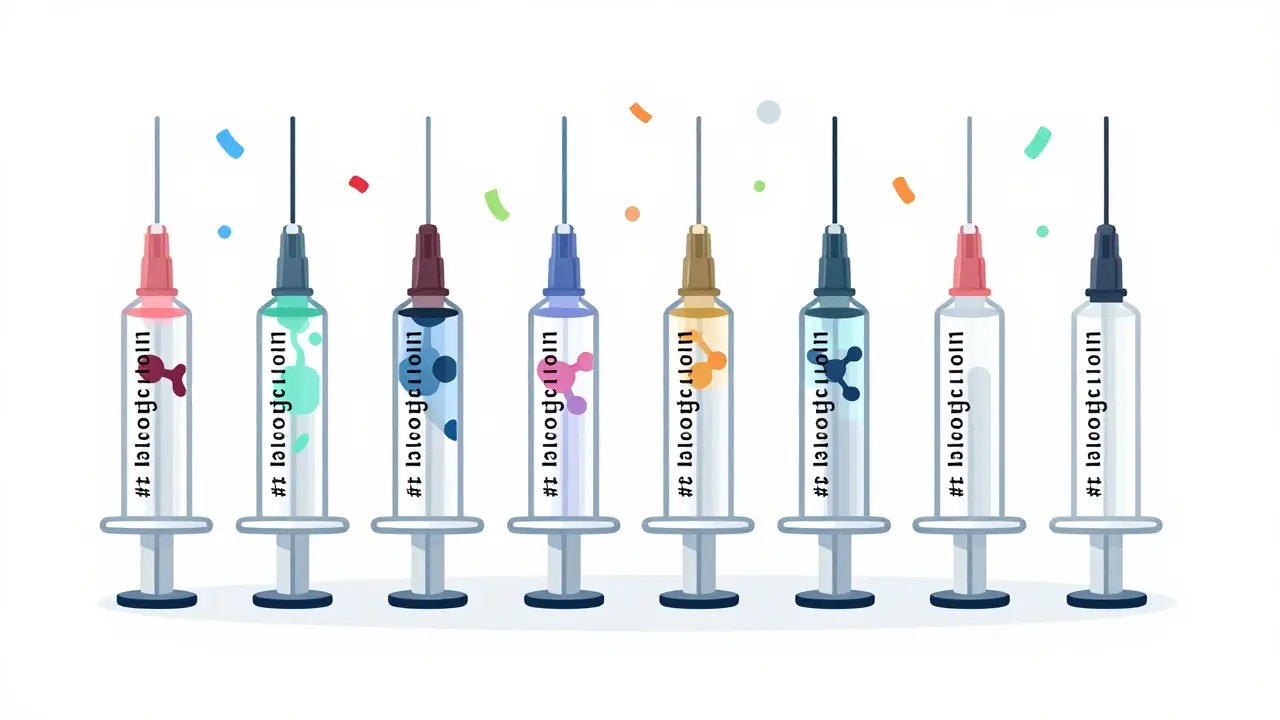
When you take a biologic drug - like a treatment for rheumatoid arthritis, Crohn’s disease, or cancer - you might assume every pill or injection is exactly the same. But that’s not true. Even within the same brand, each batch, or lot, of a biologic contains millions of slightly different versions of the same protein. This isn’t a mistake. It’s normal. And it’s called lot-to-lot variability.
This isn’t something you’ll find on a drug label. But it’s one of the biggest reasons biosimilars aren’t just like generic pills. And why switching between them isn’t as simple as swapping one brand of ibuprofen for another.
Why Biologics Are Never Identical
Small-molecule drugs - think aspirin, metformin, or lisinopril - are made in labs using chemical reactions. Each molecule is identical. If you make 1,000 batches, every pill has the exact same structure. That’s why generics can be approved with just a few bioequivalence tests.
Biologics are different. They’re made inside living cells - usually yeast or Chinese hamster ovary cells. These cells act like tiny factories, producing complex proteins like antibodies. But cells aren’t robots. They don’t build the same thing every time. After the protein is made, tiny changes happen: sugar molecules attach in different spots. Amino acids get tweaked. The shape of the molecule shifts just enough to be detectable by advanced instruments - but not enough to change how it works in your body.
The U.S. Food and Drug Administration (FDA) says this is expected. In fact, they state: "Inherent variation may also exist within lots and between different lots of reference products and biosimilars. A lot of a reference product and biosimilar can contain millions of slightly different versions of the same protein or antibody." This isn’t a flaw. It’s biology.
What Changes Between Lots?
The biggest variations happen in something called post-translational modifications. The most common? Glycosylation - the addition of sugar chains to the protein. These sugars affect how the drug interacts with your immune system, how long it lasts in your bloodstream, and how well it binds to its target.
Other changes include:
- Deamidation (loss of nitrogen groups)
- Oxidation of amino acids
- Fragmentation (the protein breaks into smaller pieces)
- Different folding patterns
Each of these changes is tiny - often less than 1% of the total molecule. But when you’re dealing with millions of molecules in every dose, even small shifts add up. That’s why manufacturers don’t aim for perfect consistency. They aim for controlled similarity.
Biosimilars vs Generics: The Real Difference
Here’s where people get confused. A generic drug is a copy. A biosimilar is a close cousin.
Generics follow the Abbreviated New Drug Application (ANDA) pathway. They only need to prove they’re bioequivalent - meaning your body absorbs them the same way as the brand-name drug. That’s enough because their chemistry is identical.
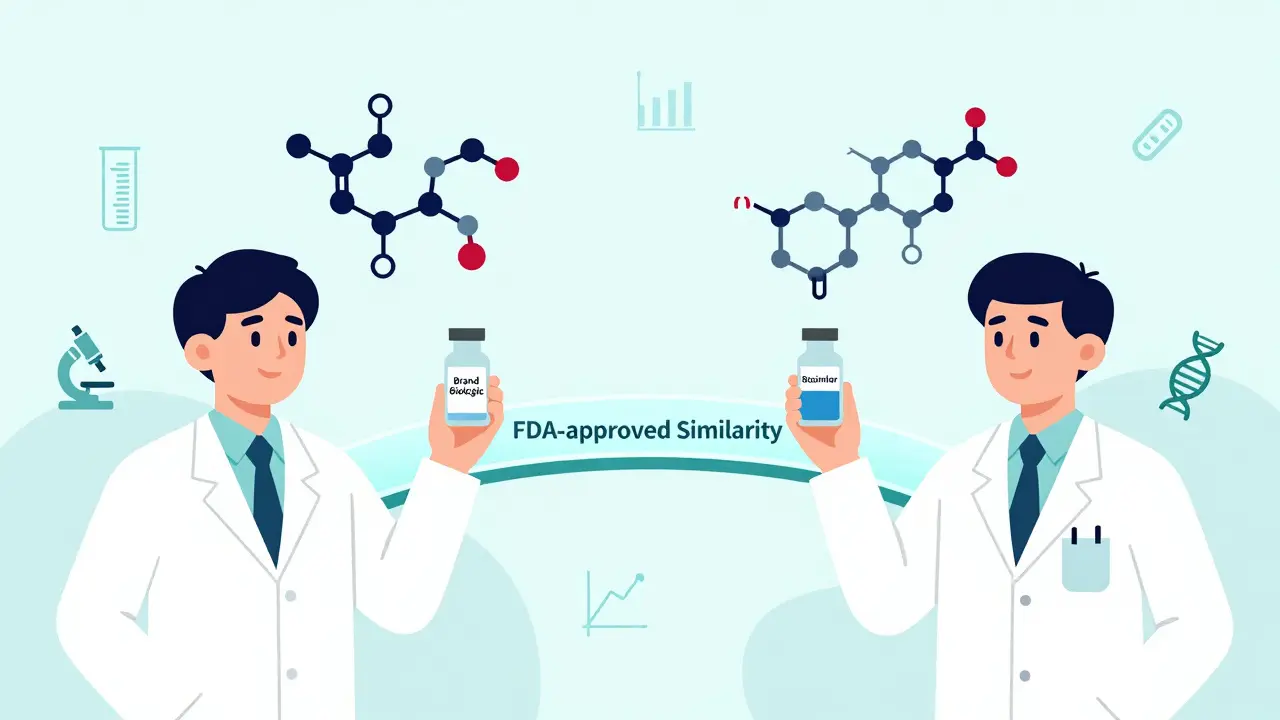
Biosimilars follow the 351(k) pathway under the Biologics Price Competition and Innovation Act of 2010. To get approved, they must prove:
- They’re highly similar to the reference biologic
- There are no clinically meaningful differences in safety, purity, or potency
- Their lot-to-lot variation matches the reference product’s pattern
That last point is critical. The FDA doesn’t just compare one lot of the biosimilar to one lot of the brand. They test multiple lots from both. If the biosimilar’s variation range overlaps with the reference product’s - and both fall within safe, proven limits - approval follows.
And here’s the kicker: even the original brand-name biologic has lot-to-lot variability. The biosimilar isn’t being held to a higher standard than the original. It’s being held to the same standard - and that standard allows for natural differences.
How Do Regulators Handle This?
The FDA uses what they call the "totality of the evidence". That means they look at:
- Thousands of analytical tests comparing molecular structure
- Functional assays testing how the drug binds to targets
- Immunogenicity studies checking for unwanted immune reactions
- Clinical trials comparing safety and effectiveness
Manufacturers must prove they can control their manufacturing process to keep variation within acceptable limits. For example, if the reference product’s glycosylation pattern varies by ±3%, the biosimilar must show the same range.
As of May 2024, there are 53 approved biosimilars in the U.S., with 12 of them designated as interchangeable. That means pharmacists can switch them for the brand-name drug without needing a new prescription - but only if the manufacturer proved that switching back and forth doesn’t affect safety or effectiveness.
Interchangeable biosimilars require an extra step: a switching study. In these trials, patients alternate between the biosimilar and the brand multiple times over several months. Researchers monitor for changes in side effects, disease activity, or immune response. If nothing changes - and the drug performs the same - interchangeability is granted.
What About Lab Tests? The Hidden Risk
Lot-to-lot variability doesn’t just affect drugs. It also affects the tests used to monitor them.
Imagine you’re a diabetic checking your HbA1c levels every three months. Your lab uses a reagent kit to measure blood sugar over time. If they switch to a new lot of that reagent, and the new lot behaves slightly differently - even if it’s still within manufacturer specs - your reported HbA1c could jump by 0.5%.
That might not sound like much. But in diabetes care, a 0.5% change can mean the difference between good control and increased risk of complications. A 2022 study found that 78% of lab directors consider reagent lot changes a significant challenge to consistent results.
Why? Because quality control samples don’t always behave like real patient samples. A QC sample might show no change, while patient results shift. That’s called lack of commutability. Labs have to verify new lots using 20 or more patient samples, with duplicate testing, to catch these hidden shifts. It’s time-consuming. Smaller labs struggle with the workload.
Why This Matters for Patients
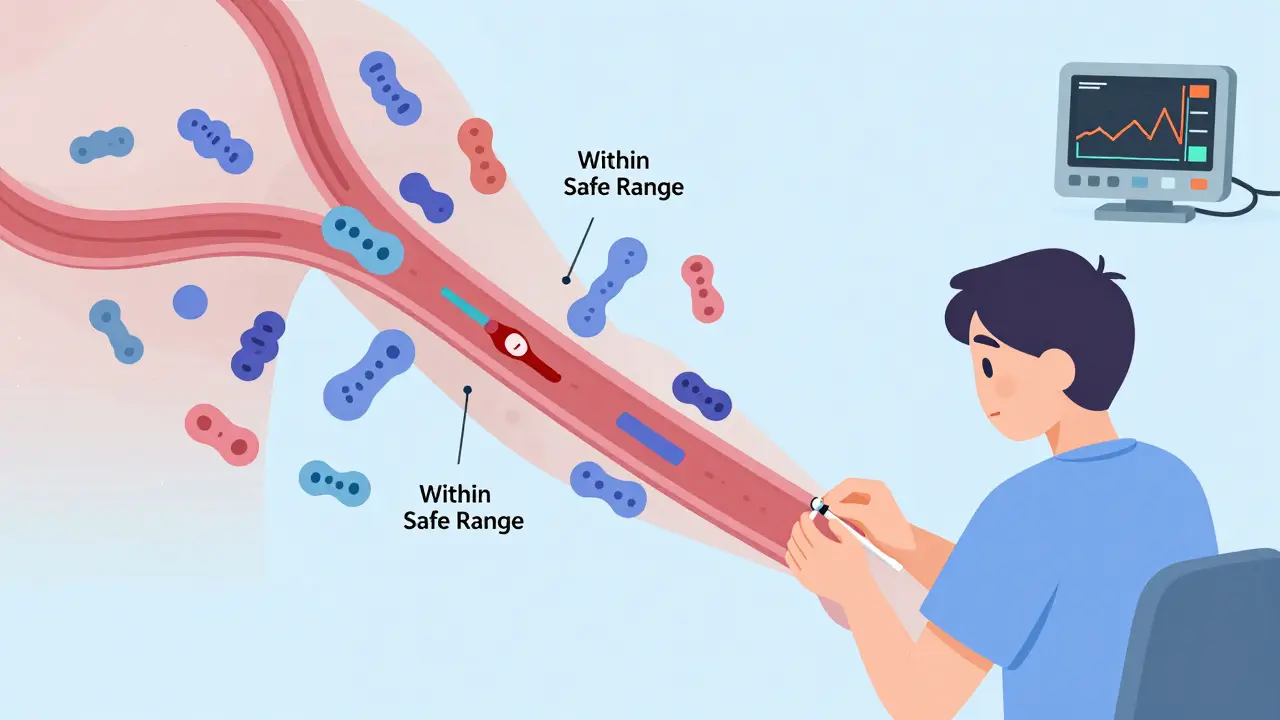
Most patients will never know which lot of their drug they got. And that’s by design. The system works because:
- Variability is controlled
- Changes are tracked
- Outcomes are monitored
But awareness matters. If you’ve been on a biologic for years and your doctor switches you to a biosimilar - or if your pharmacy switches your refill - you should know it’s not a random substitution. It’s a scientifically validated decision.
Some clinicians worry that without proper tracking, subtle shifts could go unnoticed. But the evidence shows that when biosimilars are approved under FDA guidelines, they perform just as reliably as the original. Real-world data from Europe and the U.S. show no increase in adverse events, hospitalizations, or treatment failures when patients switch to biosimilars.
And the benefits are real. Biosimilars now make up about 32% of all biologic prescriptions in the U.S. by volume. They’ve helped cut costs by 20-50% in many cases. Without accepting natural variability, these life-changing treatments would remain out of reach for millions.
The Future: More Complex, More Variable
The next generation of biologics - antibody-drug conjugates, cell therapies, gene therapies - will be even more complex. Their lot-to-lot variability will be harder to measure. But the same principles apply: control the process, measure the variation, prove safety.
Advanced tools like mass spectrometry and AI-driven analytics are helping manufacturers detect changes earlier. The FDA’s guidance continues to evolve, with more emphasis on real-time monitoring and predictive modeling.
By 2026, experts predict 70% of new biosimilar applications will include interchangeability data - up from 45% in 2023. That means more patients will have access to lower-cost options without needing a new prescription.
Lot-to-lot variability isn’t a weakness in biologics. It’s a feature of biology. The real innovation isn’t in eliminating variation - it’s in learning how to live with it, measure it, and still deliver safe, effective medicine.


Aisling Maguire
February 28, 2026 AT 17:28So basically, our bodies are chill with slight protein variations-like how your coffee tastes different every time you brew it, but you still get your caffeine fix. Wild, right? 🤯
Full Scale Webmaster
February 28, 2026 AT 23:38Let me tell you something-this whole ‘lot-to-lot variability’ thing is a scam disguised as science. They’re not telling you the truth because they don’t want you to know that the same drug you’ve been on for years might be a completely different molecule next month. And guess what? The FDA doesn’t even test the actual clinical impact of every single lot change. It’s all based on ‘statistical overlap’-which is just corporate jargon for ‘we hope it’s fine.’ I’ve seen patients crash after a switch. No one talks about that. They just pat themselves on the back for ‘cost savings.’
And don’t even get me started on ‘interchangeable’ biosimilars. That’s not medicine-that’s a Walmart generic version of your life-saving biologic. If your insulin changes its glycosylation pattern by 3%, your HbA1c could spike. And if your lab’s reagent lot changes? Your numbers lie. You think your doctor is tracking this? Nah. They’re too busy trying to get you off your $10,000-a-month drug so they can hit their HMO quota. This isn’t innovation. It’s exploitation dressed up in white coats.
Lisa Fremder
March 2, 2026 AT 20:00They’re just trying to make you scared of your own medicine. We’ve been using biologics for 20 years. People are alive. That’s all that matters.
Justin Ransburg
March 4, 2026 AT 03:22This is an excellent and nuanced overview of a critically underdiscussed topic in modern pharmacology. The distinction between small-molecule generics and biosimilars is foundational to understanding equitable access to advanced therapies. The FDA’s totality-of-evidence framework represents a scientifically rigorous, risk-managed approach that balances innovation with patient safety. It is precisely this regulatory sophistication that enables life-saving treatments to reach patients at sustainable costs without compromising clinical outcomes. We must continue to educate clinicians and the public on these distinctions to prevent misinformation and ensure appropriate therapeutic decision-making.
Sumit Mohan Saxena
March 4, 2026 AT 08:24While the concept of lot-to-lot variability is well-documented in the scientific literature, it is essential to recognize that regulatory oversight in the United States, European Union, and other advanced jurisdictions has evolved significantly over the past two decades. The analytical methodologies employed today-including high-resolution mass spectrometry, multi-attribute monitoring, and advanced chemometric modeling-allow for unprecedented characterization of biologics at the molecular level. Furthermore, post-marketing surveillance systems such as the FDA’s Biologics Effectiveness and Safety (BEST) Initiative provide real-world evidence that supports the safety of biosimilar switching in large populations. The data from over 150,000 patient-years of exposure to biosimilars in Europe alone show no clinically meaningful differences in immunogenicity or efficacy compared to originator products.
Ben Estella
March 5, 2026 AT 04:24Why are we even having this conversation? The drug companies are milking us for cash. They know this variability exists. They’ve known for years. But they won’t tell you because they’re making billions off you being scared to switch. And now they’re calling biosimilars ‘close cousins’? That’s not science-that’s PR. I’ve been on Humira for 8 years. My last two refills felt different. My flare came back. No one asked me. No one tracked it. That’s not acceptable. We need mandatory reporting of lot numbers. Every single time. Like a barcode scan. If you’re gonna change my protein, I deserve to know.
Sneha Mahapatra
March 6, 2026 AT 20:41It’s fascinating how nature doesn’t care about perfection. Our bodies are made of cells that change every day-why should a medicine made from them be any different? Maybe the real lesson here isn’t about chemistry… but about trust. Trust in science. Trust in systems. Trust that even when things aren’t identical, they can still be safe. And maybe, just maybe, that’s the most human thing about medicine: it doesn’t need to be perfect to be powerful.
bill cook
March 8, 2026 AT 13:07Wait so you’re telling me my biologic isn’t even the same from one bottle to the next? So why am I paying $20,000 for something that’s not even consistent? I don’t get it. Are they just guessing what’s in my blood? Are they even testing it? Or is this all just a big lie?
Katherine Farmer
March 9, 2026 AT 05:43How delightfully quaint that you believe the FDA’s ‘totality of evidence’ approach is anything other than regulatory capture dressed up in academic language. The truth is, the biosimilar approval pathway was designed by pharmaceutical lobbyists to maintain monopolies under a new name. The analytical comparability studies? They’re performed on idealized samples under lab conditions that bear no resemblance to real-world patient physiology. And the ‘switching studies’? They last six months with a sample size of 200. Real-world use spans decades. This isn’t science-it’s theater. And you, dear reader, are the audience.
Brandie Bradshaw
March 10, 2026 AT 13:32Let’s be clear: the fact that we’re even debating this is a failure of transparency. If a drug’s molecular composition varies from batch to batch-especially when those variations affect glycosylation, which directly impacts immune response-then patients have an absolute right to know which lot they’re receiving. This isn’t just about safety; it’s about autonomy. Why are we allowing a system that treats patients like lab rats? Why aren’t lot numbers printed on prescriptions? Why aren’t pharmacists required to disclose them? This isn’t ‘normal biology’-it’s negligence masked as inevitability. We need mandatory lot tracking. Now.
Sophia Rafiq
March 11, 2026 AT 22:50Biologics are basically living molecules. Like, literally. Cells make them. So yeah, they’re gonna vary. It’s not a bug-it’s a feature. We’re not talking about aspirin here. We’re talking about proteins that dance with your immune system. If it worked before, it’ll work again. Chill. The system’s not broken. It’s just complex.
Martin Halpin
March 13, 2026 AT 19:16Oh wow, so we’re all just lab rats now? I’ve been on Enbrel for 11 years. I’ve had three switches. Each time, my fatigue spiked. My joints screamed. I called my rheumatologist. She said, ‘It’s probably just stress.’ But now I know-it wasn’t stress. It was the damn lot number. And nobody tracks it. Nobody cares. You think they’d want to know if a 3% glycosylation shift made me flare? No. They’d rather sell you a new $15,000 drug than admit their system is built on a lie. Biosimilars? They’re just cheaper versions of a product that’s already inconsistent. This isn’t progress. It’s a Ponzi scheme with IV bags.
Ajay Krishna
March 14, 2026 AT 02:53Thank you for this thoughtful and deeply informative breakdown. It is crucial that we move beyond binary thinking-either ‘perfect consistency’ or ‘dangerous variability’-and instead embrace a spectrum of controlled, measurable, and monitored heterogeneity. The real triumph of modern biologics is not in eliminating variation, but in understanding it well enough to manage it safely. The fact that we can now predict and mitigate risks through advanced analytics, real-world data, and adaptive manufacturing speaks volumes about the maturity of this field. We must continue to support transparency, patient education, and global harmonization of regulatory standards to ensure equitable access without compromising safety.
Noah Cline
March 14, 2026 AT 14:35Lot-to-lot variability? More like lot-to-lot liability. The entire biosimilar framework is a regulatory loophole designed to circumvent patent cliffs under the guise of innovation. The analytical methods used to demonstrate ‘similarity’ are so sensitive they can detect differences smaller than a single sugar residue-but they’re still not predictive of clinical outcomes. You can’t measure immunogenicity in a test tube. You need real patients. And we’ve got zero long-term data on multiple switches. That’s not science. That’s a gamble with human lives.
Byron Duvall
March 14, 2026 AT 14:42They’re lying. They’re all lying. The FDA, the pharma companies, the doctors-they all know this variability causes hidden reactions. That’s why they don’t track lot numbers. That’s why they don’t tell you. They’re covering up the fact that these drugs are causing autoimmune flares, cancers, and deaths. And now they’re pushing biosimilars because they want you to switch so they can cut costs. You think your insurance cares about you? No. They care about profit. This isn’t medicine. It’s a controlled experiment on millions of people. And you’re the subject.