
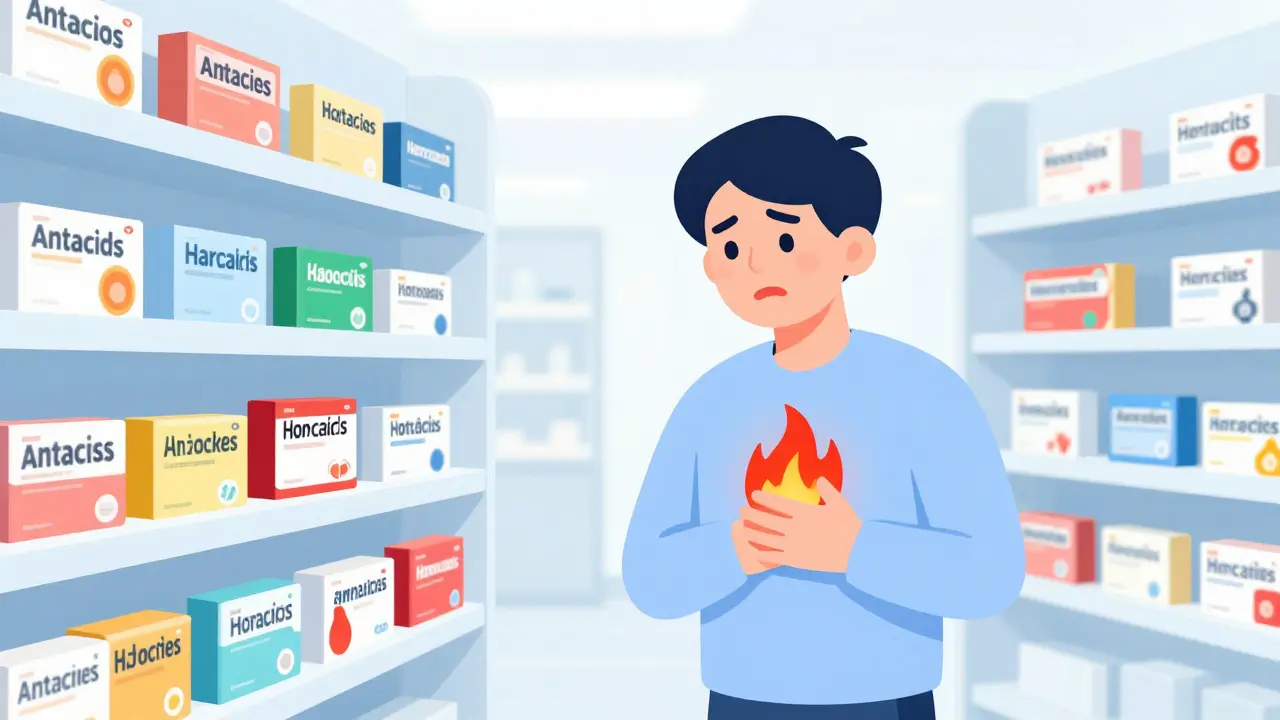
That burning sensation rising in your chest after a spicy dinner is more than just uncomfortable-it’s a signal that your digestive system needs help. For millions of people, the first stop isn’t a doctor’s office but the pharmacy aisle, staring down at rows of colorful boxes promising relief. But which one actually works for you? The answer depends entirely on how often you get heartburn and how fast you need it to go away.
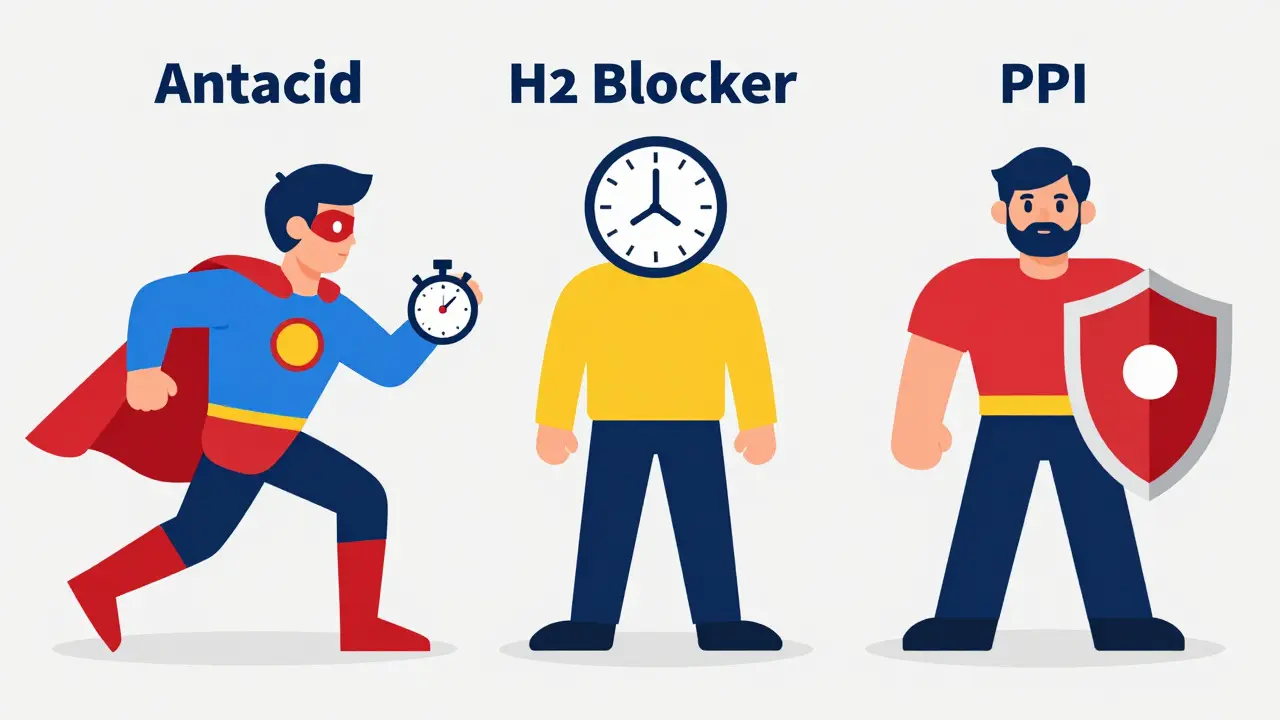
Over-the-counter (OTC) heartburn medications fall into three distinct categories: antacids, histamine-2 (H2) blockers, and proton pump inhibitors (PPIs). Each class attacks acid reflux differently, with varying speeds of action and durations of effect. Choosing the wrong one can mean paying for medicine that doesn’t solve your specific problem-or worse, masking symptoms of a more serious condition. Here is exactly how these medications work, when to use them, and what risks you need to watch out for.
Quick Summary / Key Takeaways
- Antacids provide immediate but short-lived relief (30-60 minutes) by neutralizing existing stomach acid; best for occasional, mild heartburn.
- H2 Blockers reduce acid production for 8-12 hours and work within 60-180 minutes; ideal for predictable heartburn episodes (1-2 times weekly).
- PPIs offer the strongest acid suppression (90-98%) but take 1-3 days to reach full effect; reserved for frequent heartburn (≥2 days weekly) with strict 14-day usage limits.
- Long-term PPI use carries risks including vitamin B12 deficiency, magnesium depletion, and increased infection risk; consult a doctor if symptoms persist beyond two weeks.
- Timing matters: PPIs must be taken 30-60 minutes before breakfast, while H2 blockers work best when taken preventatively before meals.
How Antacids Work: The Quick Fix
The most common active ingredients include calcium carbonate (found in Tums), aluminum hydroxide, and magnesium hydroxide (Milk of Magnesia). These medications start working incredibly fast-often within 30 to 120 seconds. If you just ate a heavy meal and feel that familiar burn starting, an antacid can shut it down almost instantly.
However, this speed comes with a major trade-off: duration. Antacids typically last only 30 to 60 minutes. This makes them perfect for occasional heartburn-say, once a week or less-but useless for chronic issues. If you rely on them daily, you might find yourself chewing tablets constantly, which introduces other problems. Calcium carbonate, for instance, can cause rebound acid hypersecretion in about 30% of users within a few hours, potentially making symptoms worse later.
Another critical consideration is drug interactions. Because antacids change the pH level in your stomach, they can interfere with the absorption of other medications. If you take antibiotics, thyroid medication, or iron supplements, you need to separate them from antacids by at least two hours. Otherwise, you might not be getting the full dose of your prescribed drugs.
H2 Blockers: Moderate Relief for Predictable Episodes
If antacids are the quick fix, H2 Blockers (histamine-2 blockers) are the moderate solution. Unlike antacids, these medications don’t just neutralize acid-they actually reduce the amount of acid your stomach produces. They work by blocking histamine receptors on parietal cells in the stomach lining, which signals those cells to slow down acid secretion.
Common OTC H2 blockers include famotidine (Pepcid AC), cimetidine (Tagamet HB), and nizatidine (Axid AR). Their onset of action is slower than antacids, taking anywhere from 60 to 180 minutes to kick in. However, their effects last much longer-typically 8 to 12 hours. This makes them excellent for people who know they’re going to have heartburn. For example, if you eat a large dinner every Friday night, taking an H2 blocker before the meal can prevent symptoms from starting in the first place.
H2 blockers suppress acid production by approximately 60-70%, which is significant but not complete. They are generally recommended for people experiencing heartburn 1 to 2 times per week. One limitation to keep in mind is tolerance. Some studies suggest that H2 blockers may lose effectiveness after 2 to 3 weeks of continuous use, meaning they aren’t ideal for long-term management without medical supervision.
Drug interactions are also a concern here. Cimetidine, in particular, has been documented to interact with blood thinners like warfarin and seizure medications like phenytoin. If you’re on multiple prescriptions, check with your pharmacist before adding an H2 blocker to your routine.
PPIs: Powerful Suppression for Frequent Heartburn
For those suffering from frequent heartburn-defined as occurring two or more days a week-Proton Pump Inhibitors (PPIs) are the gold standard. PPIs like omeprazole (Prilosec OTC), esomeprazole (Nexium 24HR), and lansoprazole (Prevacid 24HR) target the final step of acid production. They irreversibly inhibit the H+/K+ ATPase pump in gastric parietal cells, effectively shutting down the “proton pumps” that release acid into the stomach.
This mechanism allows PPIs to achieve 90-98% acid suppression, far surpassing both antacids and H2 blockers. However, this power comes with a delay. PPIs do not provide immediate relief. It takes 24 to 72 hours of consistent daily dosing to reach maximum effect. If you take a PPI during an acute heartburn attack, you won’t feel better right away. You need to plan ahead.
Timing is crucial for PPIs. They must be taken 30 to 60 minutes before breakfast, on an empty stomach. Taking them with food or at night significantly reduces their efficacy. The FDA mandates that OTC PPIs be used for no more than 14 consecutive days unless directed by a physician. This limit exists because long-term use carries serious health risks.
These risks include an increased incidence of Clostridium difficile infection (1.7x higher), hip fractures (35% increased risk with high-dose long-term use), and deficiencies in vitamin B12 and magnesium. The FDA has issued boxed warnings regarding these potential side effects. If you find yourself needing PPIs beyond the two-week window, it’s time to see a doctor. Chronic heartburn could indicate gastroesophageal reflux disease (GERD) or another underlying condition that requires professional management.
Comparison Table: Choosing the Right Medication
| Feature | Antacids | H2 Blockers | PPIs |
|---|---|---|---|
| Onset of Action | 30-120 seconds | 60-180 minutes | 24-72 hours (full effect) |
| Duration of Effect | 30-60 minutes | 8-12 hours | 24 hours |
| Acid Suppression Level | Neutralizes existing acid | 60-70% | 90-98% |
| Best For | Occasional heartburn (<1x/week) | Predictable episodes (1-2x/week) | Frequent heartburn (≥2x/week) |
| Key Risk | Drug interactions, rebound acid | Tolerance over time, drug interactions | Vitamin/mineral deficiency, infections |
Practical Tips for Safe and Effective Use
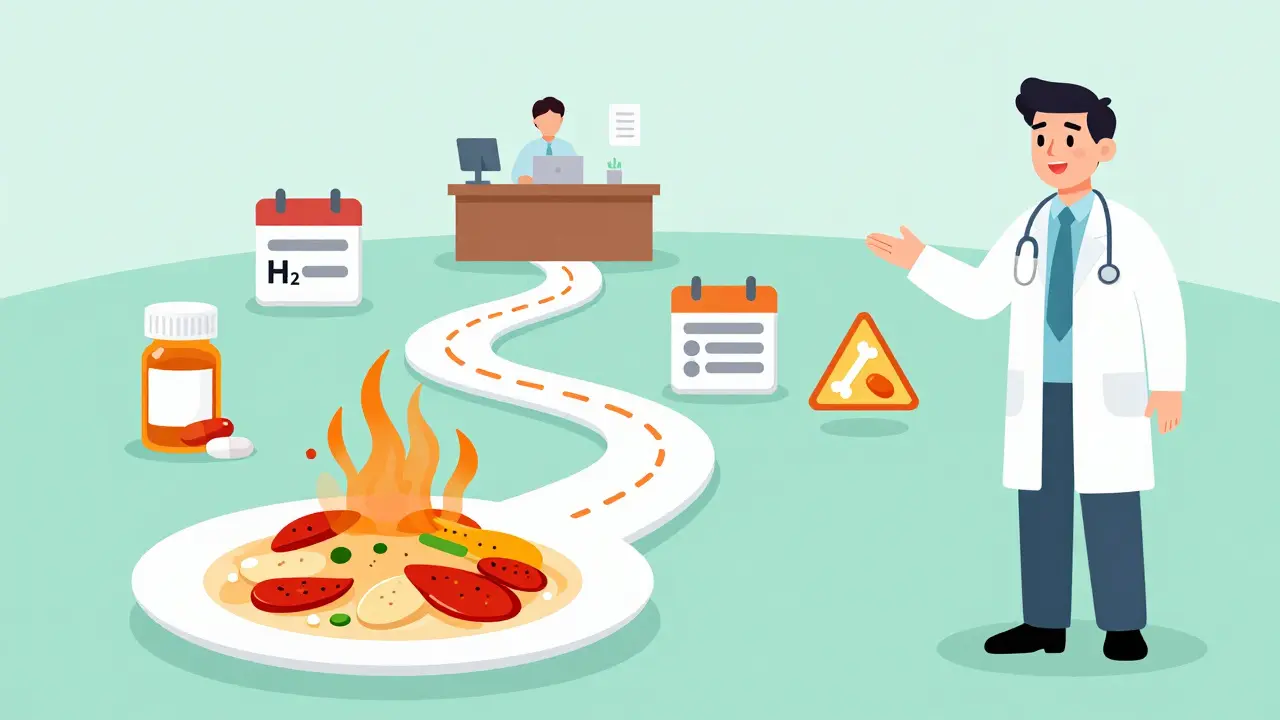
Getting the most out of OTC heartburn medications requires more than just popping a pill. Here are some practical strategies based on clinical guidelines and user experiences:
- Combine therapies wisely: Many people with frequent heartburn use a combination approach. A PPI provides baseline acid control throughout the day, while an antacid handles breakthrough symptoms. Just remember to space them out-take the PPI in the morning and save the antacid for emergencies.
- Avoid orange juice with PPIs: Acidic beverages like orange juice can destroy the enteric coating of delayed-release PPI tablets, causing the medication to dissolve in the stomach instead of the intestines. This renders it ineffective. Stick to water.
- Take H2 blockers preventatively: Don’t wait for pain to start. If you know a certain meal triggers heartburn, take your H2 blocker 60-90 minutes beforehand. This proactive approach is significantly more effective than reactive dosing.
- Watch for red flags: If you experience difficulty swallowing, unexplained weight loss, vomiting blood, or black stools, stop self-medicating and see a doctor immediately. These are signs of complications that OTC meds cannot treat.
- Limit calcium intake: If you’re using calcium carbonate antacids regularly, monitor your total calcium intake. Excessive amounts can lead to kidney stones or hypercalcemia, especially if you’re also taking calcium supplements or drinking lots of milk.
When to See a Doctor
While OTC medications are safe for short-term use, they are not a cure-all. The American Gastroenterological Association recommends seeing a healthcare provider if:
- You need heartburn medication more than twice a week.
- Your symptoms persist despite using OTC meds for 14 days.
- You experience nighttime heartburn that disrupts sleep.
- You have a history of ulcers, kidney disease, or liver problems.
Chronic heartburn can lead to Barrett’s esophagus, a precancerous condition where the lining of the esophagus changes due to repeated acid exposure. Early detection and proper management are crucial. Don’t let convenience mask a serious health issue.
Frequently Asked Questions
Can I take antacids and H2 blockers together?
Yes, but timing matters. Antacids can interfere with the absorption of H2 blockers if taken simultaneously. Wait at least 2 hours after taking an H2 blocker before using an antacid. Alternatively, use the H2 blocker for prevention and the antacid for immediate relief if symptoms break through.
Why do PPIs take so long to work?
PPIs work by permanently disabling acid-producing pumps in the stomach lining. However, your body continuously creates new pumps. It takes 1-3 days of daily dosing to disable enough existing pumps to significantly reduce overall acid levels. This is why they are not suitable for instant relief.
Are generic PPIs as effective as brand-name ones?
Yes. Generic versions of omeprazole, esomeprazole, and lansoprazole are bioequivalent to their brand-name counterparts. They contain the same active ingredients in the same doses and meet the same FDA standards for safety and efficacy. Generic options are often significantly cheaper, offering the same relief for less money.
What are the long-term risks of using PPIs?
Long-term PPI use (beyond 14 days without medical supervision) is associated with several risks, including increased susceptibility to gastrointestinal infections like C. diff, reduced absorption of vitamin B12 and magnesium, and a slightly higher risk of bone fractures. Always use the lowest effective dose for the shortest duration possible.
Can lifestyle changes replace heartburn medication?
For many people, yes. Strategies like losing weight, avoiding trigger foods (spicy, fatty, acidic), eating smaller meals, not lying down within 3 hours of eating, and elevating the head of your bed can significantly reduce heartburn frequency. Combining lifestyle changes with targeted medication use often yields the best results.