
Chemo at Home: How to Handle, Store, and Stay Safe from Exposure
If you're receiving chemotherapy at home, you're not alone. More than 65% of cancer patients now get part of their treatment outside the hospital. It’s convenient. It’s less disruptive. But it also means you and your household must become experts in safety - because chemotherapy drugs aren’t just powerful against cancer. They’re dangerous to anyone else who comes into contact with them.
These drugs don’t care if you’re a caregiver, a child, a pet, or even your partner. Without the right steps, you could be putting everyone at risk. The good news? You don’t need to be a nurse to do this right. You just need to know what to do - and when.
Why Home Chemo Needs Special Rules
Chemotherapy kills fast-growing cells. That’s how it targets cancer. But it doesn’t stop there. It can also harm healthy cells - and that includes the skin, lungs, and reproductive systems of anyone exposed to it. Even tiny amounts left on surfaces, in urine, or on gloves can cause problems.
A 2022 study found that 12.7% of healthcare workers exposed to chemo without proper protection developed skin rashes or irritation within six months. Imagine what could happen in a home without training. That’s why safety isn’t optional. It’s built into every step - from opening the bottle to flushing the toilet.
These rules apply to all types of chemo: IV infusions, pills, injections, even newer targeted therapies and immunotherapies. The drug may look different, but the danger doesn’t change.
Storage: Keep It Locked, Cool, and Clear
Where you store your chemo matters as much as how you take it.
- Always keep medications in a locked cabinet, out of reach of children and pets. Even a curious toddler touching a pill can be dangerous.
- Check the label. Some drugs need refrigeration: between 2°C and 8°C (36°F-46°F). Others stay at room temperature: 15°C to 30°C (59°F-86°F). Don’t guess. Look at the package insert from Pfizer, Roche, or Bristol Myers Squibb - they’ll tell you exactly.
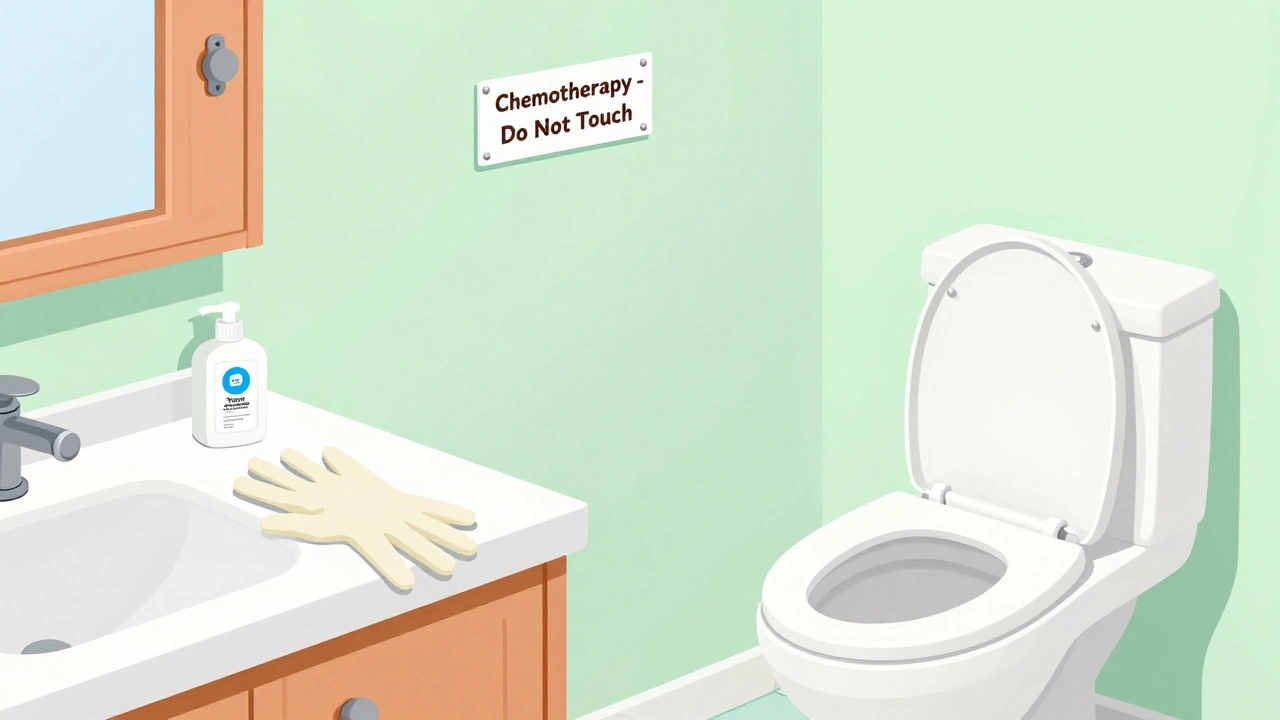
- Never store chemo in the kitchen or bathroom medicine cabinet. Heat, moisture, and food contamination increase risk.
- Keep a separate shelf or bin labeled “Chemotherapy - Do Not Touch.” This isn’t just for you. It’s for everyone in the house.
Many cancer centers now give you a free safety kit when you start treatment. It usually includes gloves, spill pads, and disposal bags. If you didn’t get one, ask your nurse. They’re not expensive - around $50 - but they could save a life.
Handling Pills: Don’t Crush, Don’t Touch, Don’t Risk It
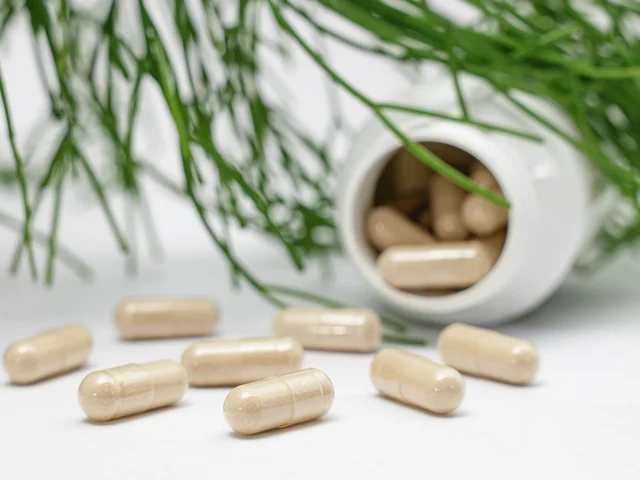
Oral chemo pills are the most common type given at home. About 25-35% of outpatient treatments are pills. But they’re also the easiest to mishandle.
- Never crush, cut, or chew a chemo pill. Breaking it can turn the drug into dust you breathe in or spread on your skin.
- Use a dedicated cup or spoon to transfer pills from the bottle to your hand. Don’t pour them directly into your palm.
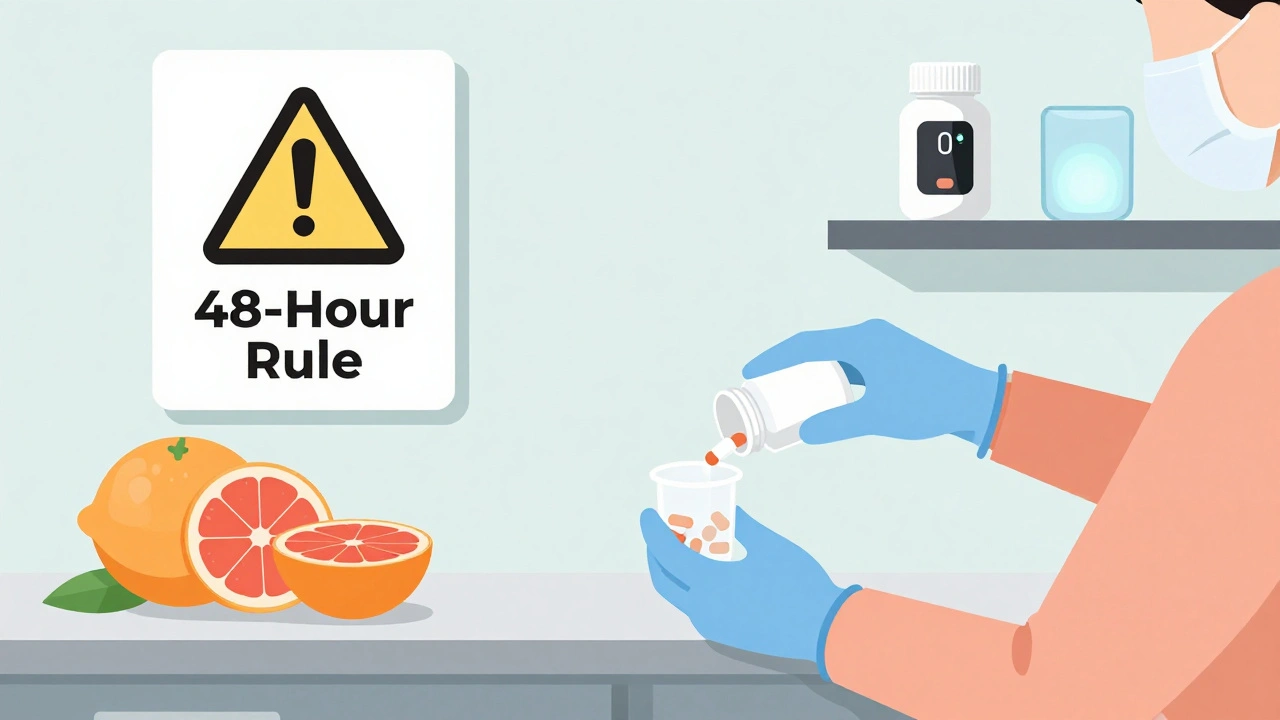
- Wear nitrile gloves every single time. Latex gloves don’t block chemo chemicals. Nitrile does. Make sure they’re at least 5 mil thick.
- Wash your hands for at least 20 seconds before and after handling pills - even if you wore gloves.
- Avoid grapefruit, Seville oranges, and pomelos. They interfere with how your body breaks down chemo drugs, which can make side effects worse or reduce effectiveness.
One patient told her nurse she’d been swallowing her pill with orange juice every morning. She didn’t know grapefruit was the problem. She stopped - and her nausea dropped by half.
IV Chemo at Home: Bags, Pumps, and Spills
If you’re getting chemo through an IV pump at home, your setup needs to be just as careful.
- Always wear gloves when touching the IV bag, tubing, or pump. Even if it looks clean, traces of the drug are there.
- Use a chemo spill kit. It should include absorbent pads, forceps, a sealed disposal bag, and extra gloves. Keep it near your treatment area.
- If a spill happens - even a drop - don’t wipe it with a paper towel. Put on two pairs of gloves. Use the absorbent pad. Pick up the soaked pad with forceps. Seal it in the disposal bag. Label it “Chemotherapy Waste.”
- Don’t throw chemo waste in the regular trash unless your nurse says it’s safe. Most home waste can go in the regular trash, but never recycle it.
Many patients set up a “chemo zone” - usually a bathroom with good ventilation. Cover the counter with plastic-backed pads. Use a dedicated sink. Keep everything you need in one spot. That way, you minimize the chance of spreading contamination.
The 48-Hour Rule: Your Biggest Safety Window
This is the rule most people forget - and the one that causes the most accidents.
After you take chemo - whether by pill or IV - your body gets rid of the drug through urine, stool, sweat, vomit, and even semen or vaginal fluid. These fluids stay dangerous for 48 hours after your last dose. Some drugs, like cyclophosphamide, can stay active for up to 72 hours.
Here’s what that means for your household:
- Flush the toilet twice after every use - with the lid down. This keeps aerosols from spreading.
- Wash your hands after using the bathroom - every time.
- Wear gloves if you’re cleaning up vomit, stool, or blood. Use disposable wipes or paper towels. Seal them in a bag.
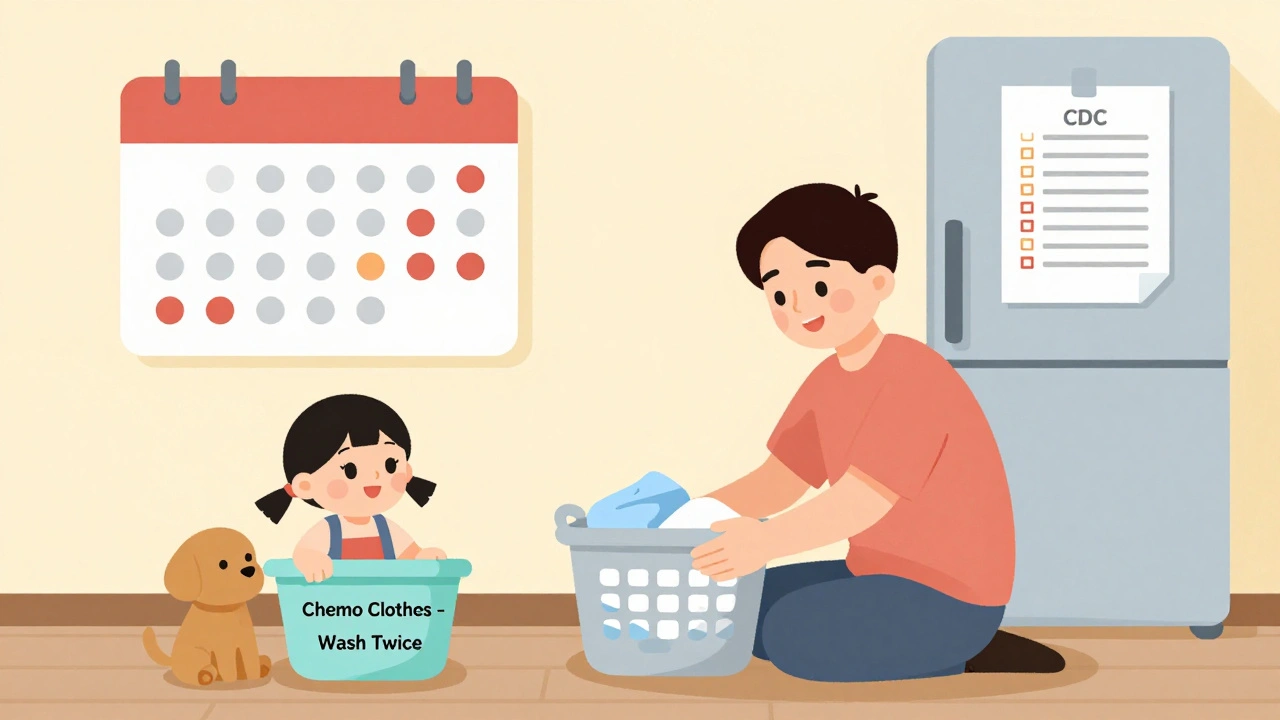
- Wash soiled clothes and bedding separately in hot water (140°F or 60°C) with regular detergent. Wash them twice.
- Avoid close contact during the first 24 hours after treatment. Keep 6 feet away if possible, especially if you’re pregnant or immunocompromised.
Dr. Mary Daly from the National Comprehensive Cancer Network says: “The single most important safety measure is sticking to the 48-hour window.” That’s not a suggestion. It’s a rule.
Special Cases: Pregnancy, Breastfeeding, and Kids
If you’re pregnant, trying to get pregnant, or breastfeeding - you need to take extra steps.
A 2019 study in Cancer found chemotherapy drugs in breast milk up to 72 hours after treatment. That means:
- Stop breastfeeding while on chemo. Talk to your doctor about pumping and dumping.
- Pregnant caregivers should not handle chemo meds or clean up bodily fluids.
- If you’re trying to get pregnant, use birth control during treatment. Chemo can harm a developing baby.
Children and pets should never be in the room during treatment. They’re more sensitive to toxins. Keep them away from the chemo zone. Don’t let them touch your clothes, towels, or bedding until they’ve been washed twice.
Disposal: What Goes Where?
Confusion about disposal is one of the top safety mistakes.
According to a 2021 Mayo Clinic survey, 37.5% of patients didn’t know whether to throw gloves in the trash or medical waste. Here’s the simple answer:
- Used gloves, pads, wipes, and empty pill bottles → Regular trash (sealed in a plastic bag).
- Unused pills or liquid chemo → Do NOT flush or throw away. Return to your pharmacy or cancer center for proper disposal.
- IV bags and tubing → Usually goes in regular trash unless your provider says otherwise.
- Sharps (needles) → Always use a sharps container. Never put them in regular trash.
Don’t recycle chemo packaging. Don’t compost it. Don’t give it to someone else. Treat it like hazardous waste - because it is.
Tools That Help: Diaries, Apps, and Kits
You don’t have to remember everything. Use tools to stay safe.
- Keep a chemo diary. Write down the date and time you take each dose. That helps you track the 48-hour window.
- Use a smart pill dispenser like MedMinder Pro Chemo. It was FDA-approved in 2022. It gives voice reminders, logs when you take your pill, and even alerts your care team if you miss a dose.
- Download the CDC’s free Home Chemo Safety Checklist. It’s been downloaded over 87,000 times since 2022. Print it. Tape it to your fridge.
- Call the Oncology Nursing Society’s 24/7 hotline: 1-866-877-7851. They answer in under a minute. No question is too small.
One rural patient in Ohio didn’t know about the 48-hour rule until she called the hotline. She’d been letting her grandkids hug her right after treatment. After one call, she changed everything. Her family stayed healthy.
What If You’re Still Not Sure?
It’s okay to ask. Over and over.
Many patients feel embarrassed to ask “dumb questions.” But there’s no such thing. Nurses hear these questions every day. If you’re unsure about gloves, storage, or what to do after vomiting - call your oncology team. Ask your pharmacist. Call the hotline.
And if you live in a rural area, you’re not alone. A 2022 survey found only 58% of rural patients knew about the 48-hour rule - compared to 82% in cities. The National Cancer Institute is now funding education programs to close that gap. You deserve clear, accurate info - no matter where you live.
What’s Next?
Home chemo is growing fast. By 2030, 75-80% of cancer treatments will happen outside the hospital. That means safety protocols will keep evolving. New drugs are added to the hazardous list every year. The CDC now lists 297 home-administered chemo drugs - up from 270 in 2020.
But the core rules haven’t changed: gloves, distance, time, and disposal. Master those, and you’re not just protecting yourself. You’re protecting everyone who loves you.
Can I touch my pet after taking chemo at home?
Avoid close contact with pets for at least 48 hours after your dose. Pets can pick up chemo residues on their fur from touching you, your bedding, or contaminated surfaces. If you must pet them, wash your hands first and avoid letting them lick your skin. Keep their bedding separate and wash it in hot water if it comes into contact with bodily fluids.
Is it safe to have sex while on home chemotherapy?
Use condoms during sex for at least 48 hours after your treatment. Chemo drugs can be present in semen and vaginal fluids. Even if you feel fine, the risk of exposure to your partner is real - especially if they’re pregnant or trying to conceive. Talk to your doctor about how long to use protection based on your specific drugs.
What if I forget to wear gloves when handling chemo pills?
Wash your hands immediately with soap and warm water for at least 20 seconds. If you touched your face, eyes, or mouth, rinse thoroughly. Monitor for skin redness, itching, or rash in the next 24-48 hours. If symptoms appear, call your oncology nurse. Going forward, always use gloves - even if you think you’re being careful. One slip can lead to exposure.
Can I reuse chemo gloves?
No. Chemo gloves are single-use only. Even if they look clean, microscopic amounts of drug residue remain. Reusing them increases your risk of exposure. Always use a fresh pair for every handling task - whether you’re opening a bottle, cleaning up a spill, or changing a dressing.
Do I need to clean my whole house after chemo treatment?
No. Focus only on areas where you’ve handled medication or had bodily fluids - like the bathroom, kitchen sink, or treatment area. Use regular household cleaner on surfaces. Avoid bleach unless instructed - it can react with chemo residues. Wipe down counters, doorknobs, and faucets daily during the 48-hour window. You don’t need to deep-clean the entire house.
What should I do if my child touches a chemo pill?
Call your oncology team or poison control immediately - even if the pill looks intact. Do not wait for symptoms. Wash the child’s hands and face with soap and water. If the pill was crushed or broken, rinse the area where it fell. Keep the pill container and packaging handy for medical staff. Never assume it’s harmless - children are more vulnerable to chemo toxicity.
Can I travel with chemo meds at home?
Yes, but plan ahead. Keep pills in their original bottles with labels. Use a cooler with ice packs if they need refrigeration. Never leave chemo in a hot car. Carry a copy of your prescription and a note from your doctor. When flying, inform TSA agents - they’re trained to handle medical substances. Never check chemo in luggage - keep it in your carry-on.
Lisa Whitesel
December 11, 2025 AT 11:02Ryan Brady
December 11, 2025 AT 13:49Darcie Streeter-Oxland
December 11, 2025 AT 20:02Taya Rtichsheva
December 12, 2025 AT 13:41Mona Schmidt
December 13, 2025 AT 23:47Guylaine Lapointe
December 14, 2025 AT 15:21Sarah Gray
December 15, 2025 AT 12:36Kathy Haverly
December 17, 2025 AT 12:33Andrea Petrov
December 18, 2025 AT 15:46Suzanne Johnston
December 20, 2025 AT 05:59George Taylor
December 20, 2025 AT 21:37ian septian
December 21, 2025 AT 05:16Chris Marel
December 22, 2025 AT 21:26precious amzy
December 23, 2025 AT 20:42