
When you’re a veteran relying on the VA for your prescriptions, you don’t just get medicine-you get a system designed to keep costs low and access consistent across the country. At the heart of that system is the VA formulary, a single, nationwide list of approved medications that every VA pharmacy must carry. And here’s the key thing most people don’t realize: if a generic version exists, the VA will cover it-every time. Brand names? Only if there’s a clear medical reason.
How the VA Formulary Works
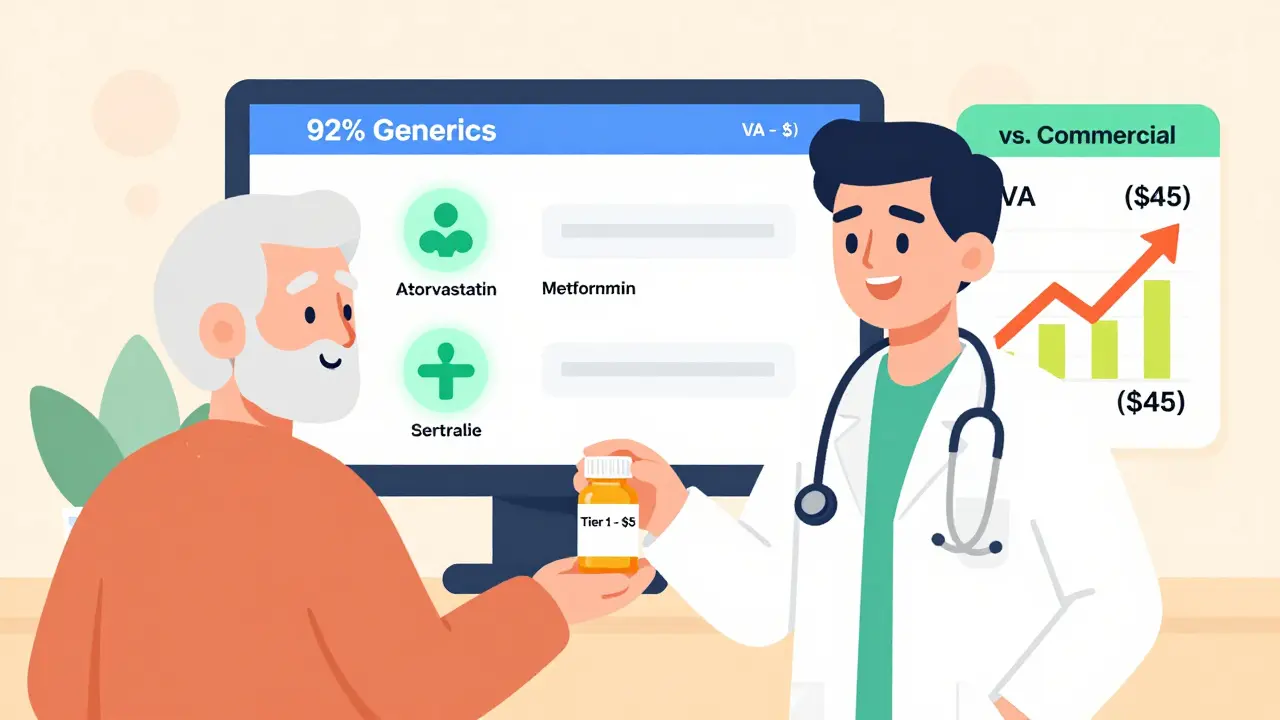
The VA National Formulary isn’t just a suggestion. It’s a mandatory list. Every VA clinic, hospital, and mail-order pharmacy across 1,293 facilities must stock these medications. The system was officially created in 1998 and has been refined ever since, with updates happening every single month. The goal? To give veterans the same high-quality drugs at the lowest possible price-without cutting corners on safety or effectiveness.The formulary is broken into three tiers. Tier 1 is where the savings kick in. These are the preferred generic drugs. Think of them as the VA’s top picks: alendronate for bone health, atorvastatin for cholesterol, fluoxetine for depression. These medications typically cost veterans $5 to $10 for a 30-day supply. Compare that to commercial insurance, where the same generic might cost $20 to $50.
Tier 2 includes brand-name drugs when no generic is available, or when a generic isn’t preferred for clinical reasons. Copays here are higher-usually around $15 to $20. Tier 3 is for specialty medications, often newer or more complex drugs. These can cost $30 or more per month. But even here, the VA pushes for generics first. If a brand-name drug is on the list, it’s because there’s no approved generic, or clinical evidence says the brand is needed.
Why Generics Are the Default
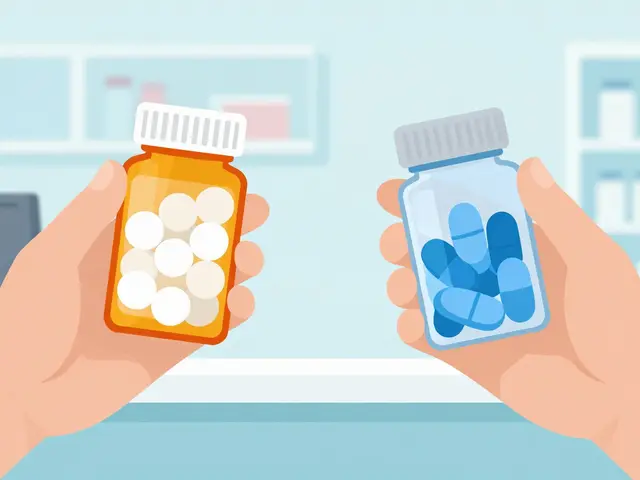
The VA doesn’t just prefer generics-it requires them. If a drug has a generic version, that’s what you get. Period. This isn’t about saving money alone. It’s about consistency. The VA’s Pharmacy Benefits Management Service tracks every prescription filled. Their data shows 92% of all prescriptions issued through VA pharmacies are generics. That’s higher than any other major U.S. health system, including Medicare Part D (85%) and commercial insurers (89%).Why does this matter? Because generics aren’t cheap knockoffs. They’re exact copies of brand-name drugs, approved by the FDA. The active ingredient, dosage, and how the body absorbs it-all match. The only difference? The price. And the VA uses that to stretch taxpayer dollars further. In 2024 alone, this approach saved $2.8 billion in pharmaceutical costs, according to VA officials.
Some veterans worry switching to generic versions might affect how well their medication works. A 2024 VA survey found 12% of veterans had initial concerns. But after talking with their provider, 94% continued the generic without issue. For most drugs, the difference is invisible.
What’s Covered? Real Examples from the 2025 Formulary
The VA formulary isn’t static. It changes every month. But here’s what’s consistently covered as of October 2025:- Arthritis and pain: Aspirin buffered tablets, ibuprofen, allopurinol
- Heart and blood pressure: Furosemide, hydrochlorothiazide, lisinopril
- Cholesterol: Atorvastatin, pravastatin, ezetimibe
- Mental health: Sertraline, fluoxetine, trazodone
- Diabetes: Metformin, glimepiride, insulin glargine
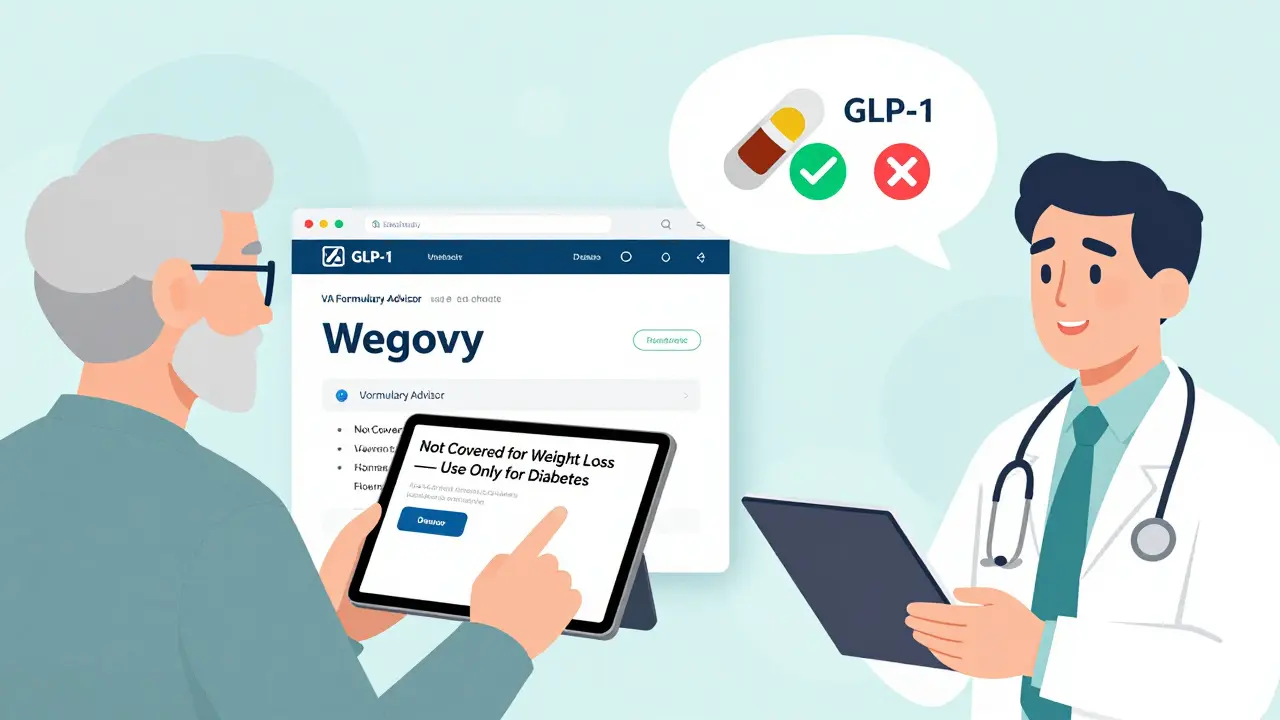
Notice anything? No brand names. No fancy new drugs without generics. Even drugs like Wegovy (semaglutide), which can cost over $1,000 a month elsewhere, are only covered by the VA if prescribed for type 2 diabetes or cardiovascular risk-not for weight loss alone. That’s because the VA’s coverage rules follow FDA-approved uses. If the FDA hasn’t approved a drug for a specific condition, the VA won’t pay for it, even if your doctor thinks it could help.
How to Check If Your Medication Is Covered
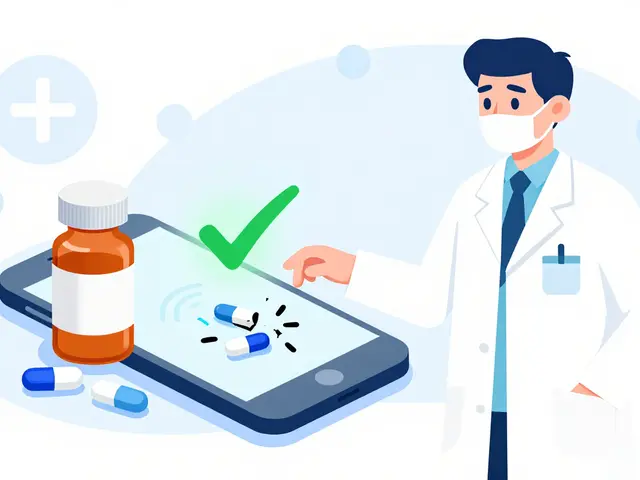
You don’t have to guess. The VA gives you tools to find out exactly what’s covered:- VA Formulary Advisor: A free online tool on VA.gov. Just type in your drug name, and it tells you the tier, copay, and whether a generic is available.
- Meds by Mail: If you take maintenance medications (those you use every day), you can order them through mail order. No copay for many Tier 1 drugs, and no deductible for CHAMPVA beneficiaries.
- VA Pharmacy: Walk into any VA clinic pharmacy and ask. Staff are trained to explain formulary rules.
Many veterans don’t know about the Formulary Advisor. In a 2024 VA survey, 40% of new enrollees said they didn’t realize they could check coverage online before filling a prescription. That’s a missed opportunity. A quick search can save you time-and money.
When You Need More Than a Generic
Sometimes, a generic just won’t work. Maybe you had a bad reaction. Maybe your condition is complex. In those cases, the VA allows exceptions. Your provider can request a prior authorization for a brand-name drug. They’ll need to explain why the generic won’t work. The VA reviews these requests based on clinical evidence-not convenience.Some veterans report frustration when trying to get newer drugs approved. For example, GLP-1 medications like Mounjaro or Ozempic are covered for diabetes, but not for weight loss unless it’s tied to a specific condition like metabolic syndrome. A veteran on Reddit wrote in October 2025: “My doctor said Wegovy could help my joint pain from obesity. VA said no-only for diabetes. Felt like I had to fight for basic care.”
That’s the trade-off. The VA’s system is designed for broad access and cost control. It doesn’t always move fast with new drugs. But it does ensure that when a drug is approved, it’s because the science supports it-and the price is fair.
How VA Compares to Other Insurance
Let’s put this in perspective. Medicare Part D has five tiers. The most expensive drugs are in Tier 5, with copays over $100. Commercial insurers often have high deductibles and complex step therapy rules. The VA? Three tiers. No annual deductible for most veterans. No surprise bills. No pharmacy networks to navigate.The numbers tell the story:
- VA average annual drug cost per veteran: $1,850
- Medicare Part D: $2,300
- Commercial insurance: $2,700
And it’s not just about price. The VA’s generic usage rate is the highest in the country. That’s not luck. It’s policy. The VA’s National Drug Formulary Committee reviews every drug submission using strict criteria: clinical effectiveness, cost, and whether there’s a therapeutic alternative. Their decisions are published monthly. No hidden agendas. No pharmaceutical lobbying.
Common Challenges and How to Solve Them
Even the best system has bumps. Here are the top issues veterans face-and how to fix them:- Confusion over tiers: 35% of new enrollees don’t understand why one drug costs $5 and another costs $20. Solution: Use the Formulary Advisor. Look up your drug. It shows the tier clearly.
- Delays in getting new drugs: New medications take time to be added. The VA waits for long-term safety data. If you need a drug not on the formulary, ask your provider about prior authorization or community care.
- Medication switches: If your doctor changes your prescription to a generic, and you feel different, don’t assume it’s the drug. Talk to your VA pharmacist. They can help determine if it’s the formulation or something else.
- Mail-order issues: Some medications, like refrigerated biologics, can’t be shipped. Check the VA’s Meds by Mail guide before ordering.
The VA offers 24/7 pharmacy support at 1-800-877-8339. They handle about 18,000 calls a day. Don’t hesitate to call. They’re there to help you navigate the system.
What’s Coming Next?
The VA isn’t standing still. By late 2026, the system will start using AI to suggest generic alternatives directly in your provider’s electronic health record. This means your doctor will get a real-time alert: “A generic version of this drug is available and approved.” No extra steps. No paperwork. Just better, cheaper care.The VA is also expanding access to specialty drugs for cancer and rare diseases. But even there, the rule stays the same: generics first. The goal isn’t to limit care-it’s to make sure every dollar spent delivers the best possible outcome for veterans.
If you’re a veteran, you’re part of one of the most efficient, transparent, and cost-effective prescription systems in the country. It’s not perfect. But it’s built on one simple idea: if a generic works, you shouldn’t pay more for a brand name. And for millions of veterans, that’s worth more than any marketing slogan.
Are all VA prescriptions covered under the formulary?
No. The VA National Formulary lists medications that are guaranteed to be covered at VA pharmacies. If a drug isn’t on the list, it’s not automatically covered. But your provider can request prior authorization if there’s a medical need. Some medications, like certain biologics or experimental drugs, may never be added to the formulary.
Can I get brand-name drugs through the VA?
Yes, but only if there’s no generic available or if clinical evidence shows the brand is medically necessary. The VA requires providers to justify brand-name use. For most common conditions, generics are the standard-and they work just as well.
How do I check if my medication is on the VA formulary?
Go to VA.gov and use the Formulary Advisor tool. Enter your drug’s name, and it will show you the tier, copay amount, and whether a generic is available. You can also download monthly formulary updates in Excel or CSV format from the VA’s open data portal.
Why does the VA restrict weight-loss drugs like Wegovy?
The VA covers GLP-1 medications like Wegovy only for FDA-approved uses: type 2 diabetes, obesity-related cardiovascular risk, or obstructive sleep apnea. Weight loss alone isn’t an approved indication under current CHAMPVA policy. This is based on clinical guidelines and cost-effectiveness, not personal preference.
Is Meds by Mail cheaper than using a local pharmacy?
For maintenance medications, yes. Meds by Mail offers $0 copay for most Tier 1 generics and no annual deductible for CHAMPVA beneficiaries. Local pharmacies may charge more, especially if they’re not VA-partnered. Plus, Meds by Mail delivers directly to your door-no trips, no waiting.
Carolyn Benson
December 19, 2025 AT 09:11The VA formulary isn't just smart policy-it's a middle finger to Big Pharma's greed. They want you to pay $1,200 for a drug that costs $3 to make? Nah. We're not buying it. Generics aren't 'cheap'-they're honest. The VA gets it: medicine isn't a luxury, it's a right. And if you're mad you can't get Wegovy for weight loss? Maybe your body doesn't need a $1,000/month Band-Aid. Fix your diet. Move. Sleep. The real medicine isn't in a pill bottle-it's in your daily choices.
Chris porto
December 19, 2025 AT 14:47I've been on VA care for 12 years. Took me a while to trust the generics, but once I did, I never looked back. My blood pressure meds? Same effect. My antidepressants? Same relief. The only difference? I'm not broke at the end of the month. The VA doesn't care about stock prices. They care if you're alive tomorrow. That's worth more than any brand name.
William Liu
December 19, 2025 AT 16:05This is exactly why I stay in the VA system. No surprise bills. No insurance hoops. Just get the meds I need, pay what I can afford, and move on with my life. Simple. Effective. Human.
Aadil Munshi
December 21, 2025 AT 11:30Let’s be real-this system works because the VA doesn’t care about your marketing budget. Big Pharma spends billions convincing you that your fluoxetine needs a rainbow logo and a jingle. The VA? They just want you to take the damn pill. And guess what? It works. The 92% generic rate isn’t a flaw-it’s a feature. The fact that Medicare and commercial insurers lag behind says more about their corruption than the VA’s limitations. Also, if you think Wegovy’s a miracle drug, you’ve never met a person who actually lost weight with it. The real drug is discipline. The pill is just a placebo with a price tag.
Frank Drewery
December 22, 2025 AT 21:57I used to think the VA was too rigid. Then my dad got his insulin switched to a generic and his numbers improved. He didn’t even notice. That’s the quiet victory here-no fanfare, no ads, just people getting better because the system works the way it should. Keep doing what you’re doing, VA.
Danielle Stewart
December 23, 2025 AT 16:18For anyone confused about tiers or prior auth: call the pharmacy. Seriously. They’ve got people on the line 24/7 who’ve seen every scenario. I used to stress over my meds until I learned to ask, ‘What’s the alternative?’ and ‘Why?’ They don’t judge. They help. And if your provider says no to a brand? Ask them to file the prior auth with you. You’re not asking for special treatment-you’re asking for your rights. The VA’s system is built to serve you, not to gatekeep.
mary lizardo
December 24, 2025 AT 12:39It is regrettable that the VA’s formulary system, while ostensibly fiscally prudent, constitutes a form of utilitarian paternalism that systematically devalues patient autonomy. The presumption that generics are universally equivalent to brand-name pharmaceuticals is scientifically reductive and ethically questionable. One cannot equate bioequivalence with therapeutic equivalence across all physiological contexts, particularly in patients with complex polypharmacy regimens. The VA’s rigid adherence to cost-driven protocols, while statistically laudable, risks pathologizing individual variation under the guise of efficiency. One must ask: who is the true beneficiary of this system-the veteran, or the federal budget?
Adrienne Dagg
December 24, 2025 AT 13:21Y’all act like the VA is some kind of miracle worker. 🤡 I got switched from my brand-name migraine med to a generic and ended up in the ER. They said ‘it’s the same thing.’ It wasn’t. The VA doesn’t care if you suffer-they care if they hit their quarterly savings targets. This isn’t healthcare. It’s accounting with a badge.
Andrew Kelly
December 25, 2025 AT 05:18They say the VA saves billions. But who’s really paying? The veterans who get sick because their meds don’t work right. The VA’s formulary? It’s not about cost-it’s about control. They don’t want you to have access to new drugs because they don’t want you getting better too fast. Why? Because if you’re healthy, you’ll start asking questions about why you were deployed in the first place. This isn’t healthcare. It’s social engineering. And the ‘Formulary Advisor’? It’s a distraction. They don’t want you to know what’s really in those pills. Look up the inactive ingredients. You’ll see why some people get weird side effects. They’re not testing for that.
Dev Sawner
December 26, 2025 AT 06:05While the VA’s formulary demonstrates commendable fiscal discipline, it is fundamentally incompatible with the principles of evidence-based individualized medicine. The assertion that 92% generic utilization constitutes a metric of success is statistically misleading, as it conflates volume with therapeutic adequacy. The FDA’s bioequivalence standards permit a 20% variation in pharmacokinetic parameters-this is not equivalence, it is approximation. Moreover, the VA’s refusal to cover GLP-1 agonists for obesity-related comorbidities outside of FDA-labeled indications reflects a dangerous conflation of regulatory orthodoxy with clinical wisdom. One must question whether the VA’s administrative bureaucracy has become the arbiter of medical necessity, thereby displacing the physician-patient relationship with algorithmic rationing.
Moses Odumbe
December 26, 2025 AT 18:07Bro, the VA is the only system that actually works. I used to pay $150 for my blood pressure med. Now I get it for $5, no hassle. The VA doesn’t care if you’re rich or poor-you get the same meds. And yeah, the generics work. I’ve been on them for 5 years. My doctor even said, ‘You’re doing better than most people on the brand.’ 🙌 Stop complaining and be grateful.
Meenakshi Jaiswal
December 28, 2025 AT 03:42If you’re worried about switching to generics, talk to your VA pharmacist-they’re trained to help you transition. I’m a nurse and I’ve seen veterans panic over this, only to find out their symptoms were from stress, not the med. The VA formulary is strict, but it’s also safe. And if you need something outside it? Prior auth isn’t a battle-it’s a conversation. Bring your records, be clear, and don’t give up. You’ve earned this care. Don’t let fear stop you from getting it.