Elderly Medication Risk & Symptom Checker
Risk Estimator
Estimate the complexity of a patient's medication regimen based on factors discussed in the article.
Assessment Result
Did you know that a standard dose of sleeping pills can keep an older adult drowsy for days instead of just one night? It sounds extreme, but it is the reality of how aging bodies handle medicine. For adults over 65, the same drug that works perfectly for a 40-year-old can cause confusion, dangerous falls, or even hospitalization. This isn't about being "weak"; it is about biology. As we age, our liver slows down, our kidneys filter less efficiently, and our body composition shifts. These changes mean that medications stay in the system longer and hit harder.
If you are caring for an older parent or managing your own health as you age, understanding these risks is not optional-it is essential. The goal isn't to stop all medication, but to use them smarter. Here is what you need to know about why elderly patients are more sensitive to drugs and how to protect them from avoidable harm.
The Biological Shift: Why Older Bodies React Differently
To understand why side effects happen, we have to look at what happens inside the body. Pharmacokinetics is the study of how the body absorbs, distributes, metabolizes, and eliminates drugs. In younger people, this process is efficient. In older adults, several key systems change significantly.
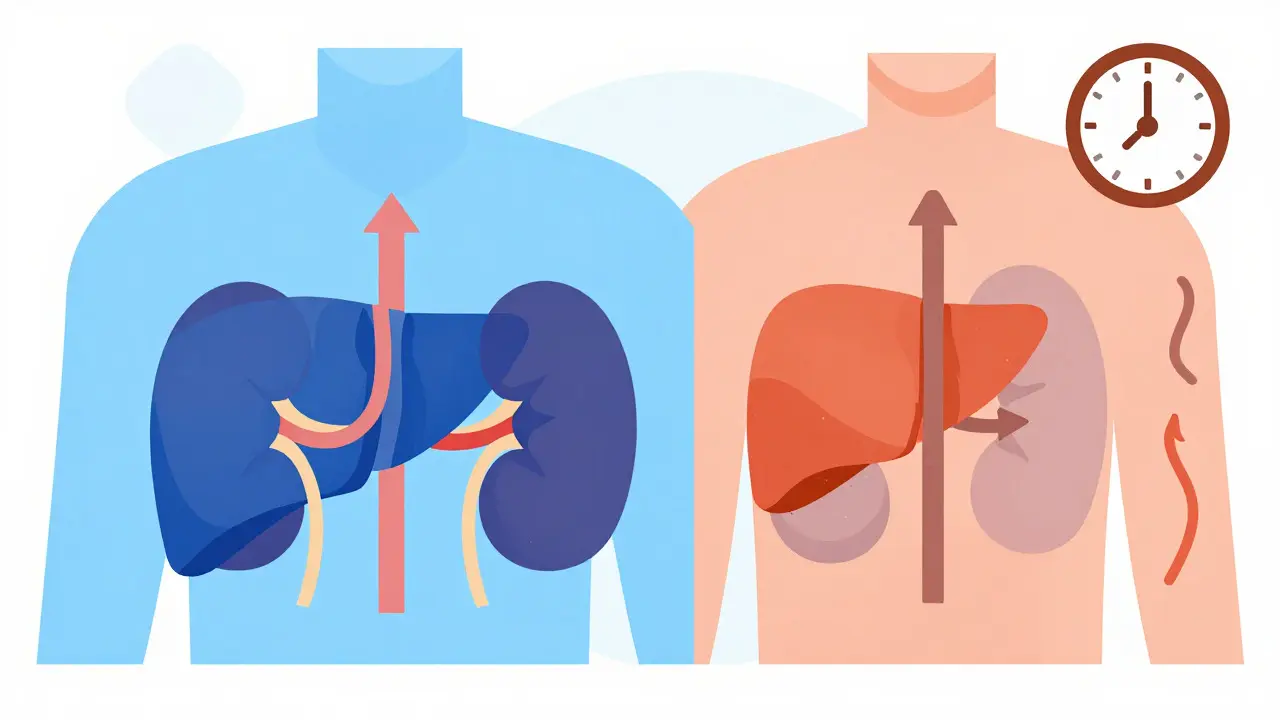
First, consider the liver. Between the ages of 25 and 75, blood flow to the liver drops by about 30% to 40%. Since the liver is responsible for breaking down most medications, this reduction means drugs linger in the bloodstream much longer. Take benzodiazepines like diazepam (Valium) or chlordiazepoxide. In a young person, these might clear out in 24 to 48 hours. In an elderly patient, the half-life can extend to several days. This prolonged presence leads to cumulative sedation, increasing the risk of falls and cognitive fog.
Second, look at the kidneys. The glomerular filtration rate (GFR)-essentially how well your kidneys clean your blood-declines by approximately 0.8 mL/min/1.73m² every year after age 40. Many common drugs, including certain antibiotics and diabetes medications, rely on healthy kidney function to exit the body. If the kidneys slow down, these drugs build up to toxic levels.
Finally, body composition changes. As we age, muscle mass decreases while body fat percentage increases, rising from around 25% at age 30 to 35-40% by age 70. Fat-soluble drugs distribute differently in this new environment, often staying in the body longer than expected. This biological triad-slower liver, weaker kidneys, and more body fat-creates a perfect storm for adverse drug reactions (ADRs).
The Danger of Polypharmacy
Biology is only half the story. The other half is behavior, specifically Polypharmacy is the concurrent use of multiple medications, typically defined as five or more drugs. This is incredibly common in older adults who often manage multiple chronic conditions like hypertension, diabetes, and arthritis simultaneously.
When you take five or more medications, the chances of a drug-drug interaction skyrocket. One major danger zone is combining nonsteroidal anti-inflammatory drugs (NSAIDs) with other common prescriptions. For example, taking NSAIDs like ibuprofen alongside corticosteroids increases the risk of peptic ulcer disease by 15 times compared to non-users. Even more dangerous is mixing oral anticoagulants (blood thinners) with NSAIDs, which dramatically raises the risk of hemorrhagic ulcers and hospitalization in patients over 65.
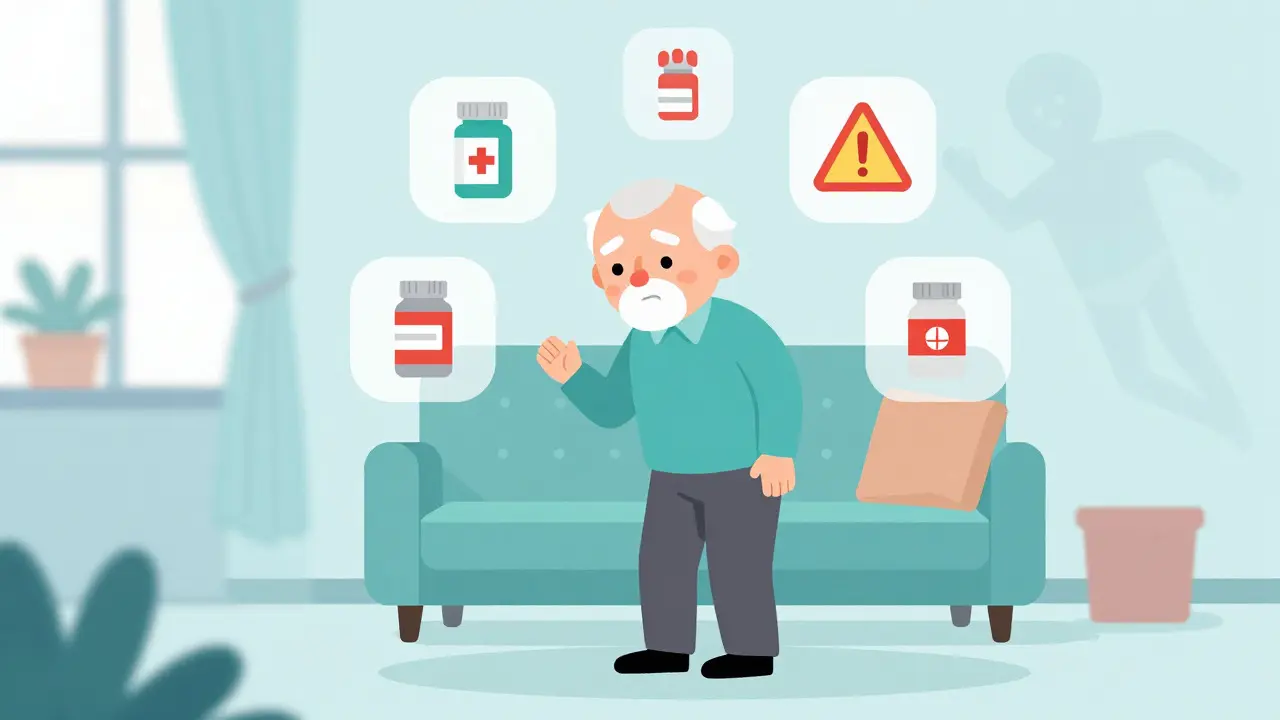
According to data from the American Academy of Family Physicians, adverse drug reactions occur in at least 15% of older patients across various care settings. What makes this worse is that symptoms in the elderly are often vague. Instead of a rash or stomach upset, an older adult might experience sudden confusion, memory loss, unexplained weight changes, or simply "feeling off." These non-specific signs are frequently misdiagnosed as dementia or natural aging, when they are actually caused by medication toxicity.
High-Risk Medications to Watch
Not all drugs are created equal when it comes to older adults. Some medications carry disproportionately high risks due to their mechanism of action. The Beers Criteria is a clinical guideline published by the American Geriatrics Society that identifies potentially inappropriate medication use in older adults. First introduced in 1991 and updated regularly (most notably in 2012 and 2019), this list serves as a critical tool for doctors and pharmacists.
| Medication Class | Specific Examples | Primary Risk in Elderly |
|---|---|---|
| Sedatives/Hypnotics | Diazepam, Chlordiazepoxide | Prolonged sedation, increased fall risk, confusion |
| NSAIDs | Indomethacin, Ibuprofen | CNS side effects (confusion), GI bleeding, kidney stress |
| Opioids | Pentazocine, Propoxyphene | Hallucinations, respiratory depression, minimal pain relief benefit |
| Anticholinergics | Certain antidepressants, bladder control meds | Cognitive impairment, dry mouth, constipation, urinary retention |
| SSRIs | Fluoxetine, Sertraline | Increased risk of falls and fractures, hyponatremia |
For instance, indomethacin produces the highest rate of central nervous system side effects among NSAIDs, making it particularly risky for seniors. Pentazocine, an opioid, is known to cause hallucinations and confusion more frequently than other narcotics due to its mixed agonist-antagonist properties. Even seemingly safe drugs like SSRIs (selective serotonin reuptake inhibitors) require caution; while effective for depression, they are linked to an increased risk of falls and fractures in older populations.
Signs That Medication Is Causing Harm
Recognizing an adverse drug reaction (ADR) in an older adult requires a keen eye because the symptoms rarely look like typical "side effects." You won't always see nausea or hives. Instead, watch for these subtle red flags:
- Sudden Confusion or Delirium: If a previously clear-headed relative becomes disoriented shortly after starting a new medication, suspect the drug.
- Falls and Dizziness: Approximately 20-30% of falls in older adults are directly attributable to medication side effects. Sedatives, blood pressure meds, and painkillers are common culprits.
- Memory Changes: New onset of forgetfulness may not be Alzheimer's; it could be anticholinergic burden from multiple drugs affecting the brain.
- Unexplained Weight Loss or Gain: Changes in appetite or metabolism driven by steroids, insulin, or thyroid medications.
- Orthostatic Hypotension: A drop in blood pressure when standing up, leading to lightheadedness, often caused by antihypertensives or diuretics.
If any of these symptoms appear within days or weeks of a prescription change, do not assume it is part of the aging process. Contact the healthcare provider immediately.
Practical Steps for Safer Medication Management
So, how do we fix this? The solution lies in proactive management and open communication. Here is a step-by-step approach to minimizing risk.
- Maintain a Master Medication List: Create a single, up-to-date document that includes every prescription, over-the-counter drug, vitamin, supplement, and herbal remedy. Share this list with every doctor, dentist, and pharmacist you visit. Hidden interactions often come from OTC products like antacids or sleep aids.
- Request a Comprehensive Medication Review: Ask your primary care physician or a clinical pharmacist to review all medications at least once a year. Use tools like the Beers Criteria to screen for inappropriate drugs. This is not just about stopping meds; it's about ensuring each one still has a valid purpose.
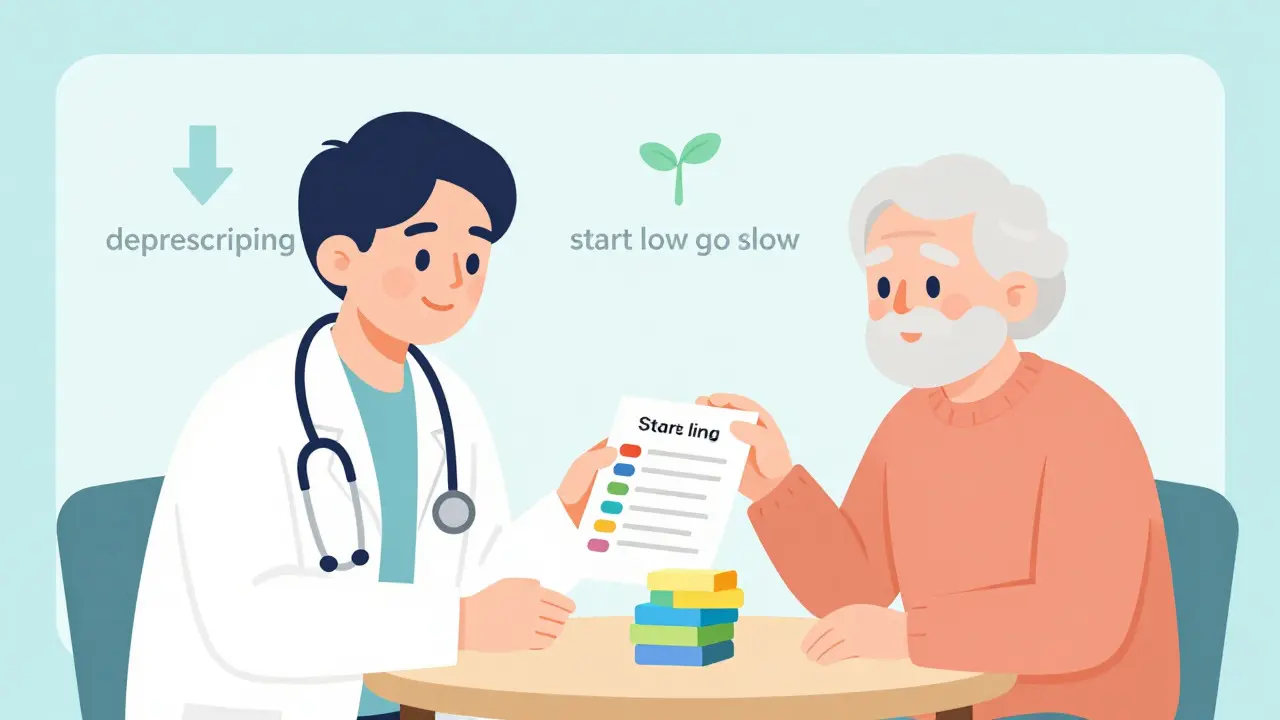
- Embrace Deprescribing: Deprescribing is the planned and supervised tapering of medications that may be causing harm or are no longer needed. As life expectancy changes or health status stabilizes, some drugs become unnecessary. For example, aggressive cholesterol management might be scaled back in very frail patients where quality of life is the priority.
- Start Low, Go Slow: When initiating new therapies, clinicians should start with the lowest possible dose and titrate up slowly. This allows the body to adjust and helps identify side effects before they become severe.
- Involve Caregivers: If the patient has cognitive impairments, a caregiver must manage pill organizers and monitor for missed doses or double-dosing. Functional impairments like poor eyesight or arthritis can also make reading labels difficult, leading to errors.
Interdisciplinary collaboration is key. Pharmacists play a vital role in medication therapy management, catching interactions that doctors might miss during a brief appointment. Nurses and caregivers provide the day-to-day observation needed to spot early signs of toxicity.
The Future of Geriatric Pharmacology
The landscape of elder care is shifting. With the US population aged 65 and older projected to reach 95 million by 2060, the economic and health burden of adverse drug reactions is unsustainable. Current estimates place the cost of ADR-related hospitalizations at $3.5 billion annually. This has spurred interest in personalized medicine, including pharmacogenomics-the study of how genes affect a person's response to drugs.
Future guidelines will likely incorporate genetic testing to determine how specific individuals metabolize drugs via cytochrome P-450 enzymes. This could move us away from "one-size-fits-all" dosing toward tailored regimens that minimize side effects from the start. Until then, vigilance remains our best defense.
Remember, medication is a powerful tool that saves lives and improves function. Vaccines prevent pneumonia, antihypertensives prevent strokes, and insulin enables normal life for diabetics. The goal is not to fear medicine, but to respect the unique physiology of aging. By staying informed, asking questions, and regularly reviewing prescriptions, you can ensure that treatments help rather than harm.
What is the Beers Criteria?
The Beers Criteria is a widely used clinical guideline developed by the American Geriatrics Society. It lists medications that are potentially inappropriate for older adults due to increased risks of side effects or lack of efficacy. It helps doctors and pharmacists identify drugs that should be avoided or used with extreme caution in patients aged 65 and older.
Why are older adults more susceptible to medication side effects?
Age-related physiological changes alter how the body processes drugs. Key factors include reduced liver blood flow (slowing metabolism), decreased kidney function (slowing elimination), and increased body fat (altering drug distribution). These changes cause medications to stay in the body longer and at higher concentrations, leading to toxicity.
What is polypharmacy and why is it dangerous?
Polypharmacy refers to the use of multiple medications, typically five or more, concurrently. It is dangerous because it increases the likelihood of drug-drug interactions, which can amplify side effects or create new toxicities. For example, combining NSAIDs with blood thinners significantly raises the risk of internal bleeding.
How can I tell if a medication is causing confusion in an elderly person?
Sudden onset of confusion, delirium, or memory loss shortly after starting a new medication or changing a dose is a strong indicator. Other signs include dizziness, falls, or changes in behavior. If these symptoms appear, consult a healthcare provider immediately to evaluate potential adverse drug reactions.
What is deprescribing?
Deprescribing is the systematic process of reducing or stopping medications that are no longer beneficial or are causing harm. It involves carefully tapering doses under medical supervision to prevent withdrawal symptoms while improving the patient's quality of life and reducing side effect risks.
Are there any medications that are generally safe for elderly patients?
Many medications are safe when dosed correctly. Essential drugs like vaccines (for flu, pneumonia, RSV), certain antihypertensives, and insulin are crucial for health. Safety depends on individual kidney and liver function, so regular monitoring and dose adjustments by a healthcare provider are necessary to maintain safety.