

ACE Inhibitor and ARB Risk Calculator
How Safe Is Combining ACE Inhibitors and ARBs?
This calculator estimates your personalized risk of serious complications when taking both drug classes together, based on data from major clinical trials like ONTARGET and VA NEPHRON-D.
Your Personalized Risk Assessment
Risk of Serious Complications
- Low-dose diuretic (e.g., hydrochlorothiazide)
- Mineralocorticoid receptor antagonist (e.g., spironolactone)
- ARNI (e.g., sacubitril/valsartan - Entresto)
Important Note: Regular monitoring is essential when taking any RAS blocker. Check potassium and kidney function 1-2 weeks after starting or changing dose, and regularly thereafter as recommended by your doctor.
Why You Should Never Mix ACE Inhibitors and ARBs Without a Doctor’s Watchful Eye
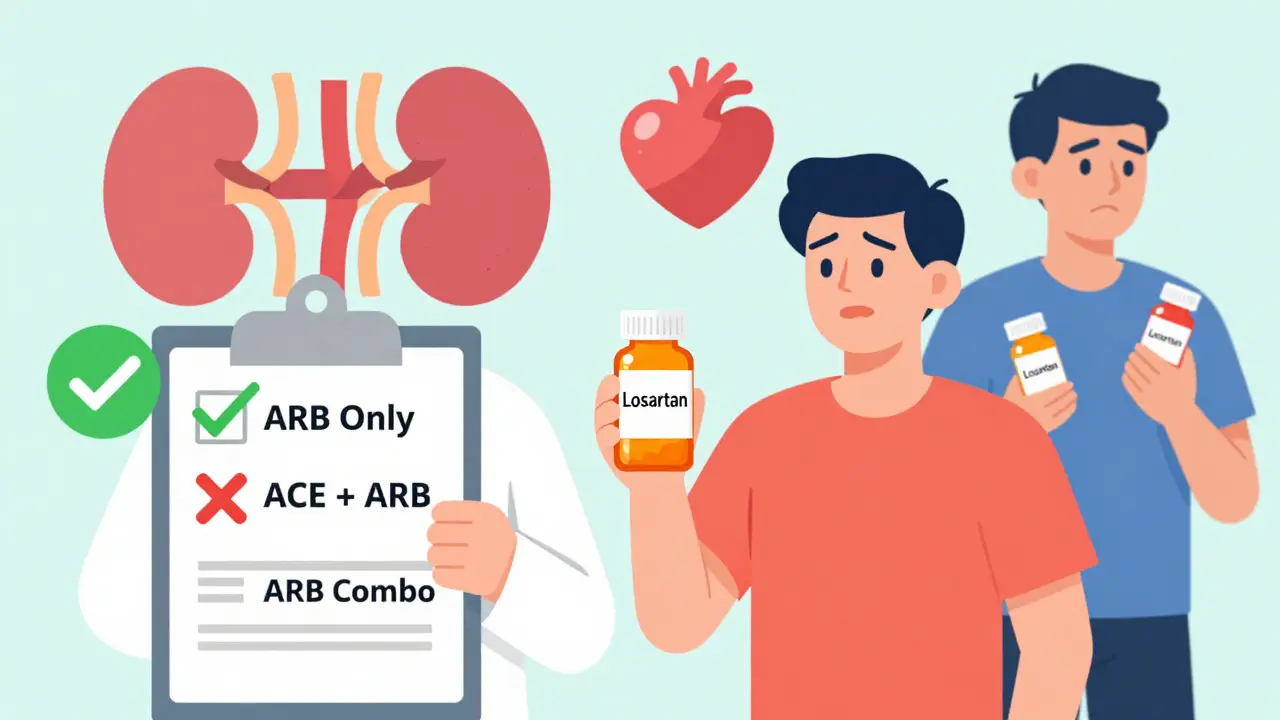
Imagine taking two different medications for high blood pressure, thinking more is better. You’re not alone. Many patients assume combining an ACE inhibitor and an ARB will give them tighter control over their numbers. But here’s the hard truth: ACE inhibitors and ARBs should almost never be taken together. The slight extra drop in blood pressure isn’t worth the risk of kidney failure, dangerously high potassium, or hospitalization.
Both drugs target the same system in your body-the renin-angiotensin system (RAS)-but they do it in different ways. ACE inhibitors like lisinopril or enalapril block the enzyme that turns angiotensin I into angiotensin II, a powerful blood vessel constrictor. ARBs like losartan or valsartan let angiotensin II form but stop it from binding to receptors that raise blood pressure. On paper, they sound like a perfect team. In real life, they’re a dangerous pair.
The Real Difference Between ACE Inhibitors and ARBs
It’s easy to think these drugs are interchangeable. They’re not. ACE inhibitors are the older, more studied class. They’ve been shown to cut death risk in heart failure patients by about 23%, according to the 2021 European Society of Cardiology guidelines. ARBs, while effective at lowering blood pressure, don’t quite match that survival benefit. That’s why doctors still start with ACE inhibitors for most people with heart failure or diabetic kidney disease.
But here’s where ARBs shine: tolerability. About 1 in 7 people on ACE inhibitors get a persistent, dry cough. It’s not an allergy-it’s caused by bradykinin buildup, a side effect of blocking the ACE enzyme. ARBs don’t affect bradykinin, so only 3-5% of users report coughing. That’s why if you can’t tolerate an ACE inhibitor, switching to an ARB is the standard next step.
Angioedema-swelling of the face, lips, or throat-is rare but serious. It happens in about 0.1-0.7% of ACE inhibitor users. With ARBs, that number drops to 0.1-0.2%. Still, if you’ve had angioedema on one, you’re at higher risk on the other. That’s cross-reactivity. And it’s not theoretical. Emergency rooms see this every year.
Why Combining Them Is a Bad Idea
Back in the early 2000s, doctors thought combining an ACE inhibitor with an ARB might give better kidney protection, especially in patients with heavy proteinuria. The logic made sense: block the system harder. But then came the big studies.
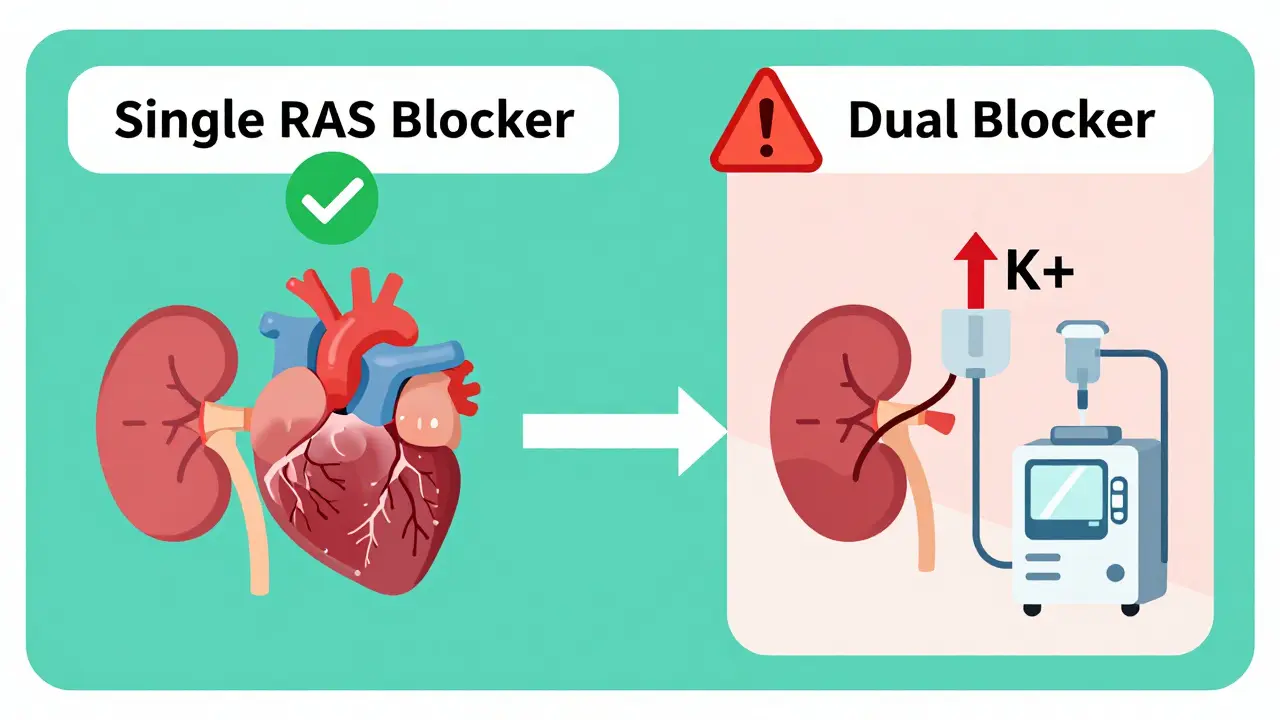
The ONTARGET trial in 2008 followed over 25,000 high-risk patients. Those on both drugs had no fewer heart attacks, strokes, or deaths than those on just ramipril (an ACE inhibitor). But they had twice the rate of high potassium levels and an 80% higher risk of acute kidney injury. Dialysis-requiring kidney failure jumped from 1% to 2.3%.
The VA NEPHRON-D trial in 2018 confirmed it: in diabetic kidney disease, adding an ARB to an ACE inhibitor didn’t slow kidney decline. Instead, it raised the risk of serious adverse events by 27%. The FDA and major medical societies now explicitly warn against this combo. The American Heart Association’s 2023 guidelines say dual RAS blockade should only happen in research settings.
Real-world data backs this up. A 2023 survey of 317 U.S. primary care doctors found 89% had stopped prescribing the combo after seeing the evidence. One nephrologist in Boston reported discontinuing it in 87% of her patients with diabetic kidney disease because of rising potassium or dropping kidney function.
When Might a Doctor Still Consider It?
There are exceptions-but they’re rare, risky, and tightly controlled. A small group of specialists may consider adding an ARB to an ACE inhibitor in non-diabetic patients with massive proteinuria (over 1 gram per day) who haven’t responded to the highest tolerated dose of an ACE inhibitor alone. This might be true for conditions like focal segmental glomerulosclerosis.
Even then, it’s not a casual decision. These patients need weekly blood tests for potassium and creatinine for the first month. If potassium rises above 5.5 mmol/L or creatinine jumps more than 30%, the ARB is stopped immediately. No exceptions. Only about 1-2% of patients ever get this combo, and it’s usually a last resort.
Dr. Srinivasan Beddhu from the University of Utah has written about this niche use. But even he stresses: “It’s not standard care. It’s a calculated gamble with a lot of monitoring.” Most patients are better off with other options.
What to Do Instead of Combining Them
If your blood pressure isn’t controlled on an ACE inhibitor or ARB alone, there are safer ways to step up. The Cleveland Clinic recommends adding a low-dose diuretic like hydrochlorothiazide or a mineralocorticoid receptor antagonist like spironolactone. Spironolactone can reduce proteinuria by 30-40% without the kidney or potassium risks of dual RAS blockade.
For heart failure patients who still have symptoms, angiotensin receptor-neprilysin inhibitors (ARNIs) like sacubitril/valsartan (Entresto) have proven better than ACE inhibitors alone in reducing hospitalizations and death. These are now first-line for many patients with reduced ejection fraction.
And if you’re on an ACE inhibitor and develop a cough, don’t just quit. Talk to your doctor about switching to an ARB. The transition is simple: stop the ACE inhibitor for about four weeks to let the drug clear from your system, then start the ARB. Skipping the washout can lead to additive side effects-even if you’re not adding another RAS blocker.
Monitoring Is Non-Negotiable
Even when you’re on just one of these drugs, you need regular blood tests. Both ACE inhibitors and ARBs can raise potassium and lower kidney function, especially in older adults, people with diabetes, or those with existing kidney disease.
After starting either drug, get your potassium and creatinine checked in 1-2 weeks. If they’re stable, check every 3 months. If you’re on a higher dose or have other health issues, check every 6-8 weeks. Don’t skip these tests. A potassium level of 5.8 mmol/L might not make you feel sick-but it can trigger a dangerous heart rhythm.
Also, avoid salt substitutes that contain potassium chloride. Many patients think they’re helping by cutting sodium, but those substitutes can push potassium into the danger zone when combined with RAS blockers.
What About Drug Recalls and Impurities?
In 2018-2020, several ARBs-including losartan, valsartan, and irbesartan-were recalled because of trace amounts of cancer-causing nitrosamine impurities. About 15% of the ARB market was affected. The issue was traced to manufacturing changes in a few overseas facilities.
Since then, manufacturers have fixed their processes. The FDA now requires strict testing. If you’re on an ARB and haven’t heard from your pharmacy or doctor about a recall, your current supply is likely safe. But always check the lot number on the bottle if you’re worried. Most recalls were resolved by late 2023.
ACE inhibitors didn’t have the same issue. So if you’re concerned about impurities, switching to an ACE inhibitor is a valid option-especially if you’ve had no side effects.
What’s Next for These Drugs?
Research hasn’t stopped. The FINE-REWIND trial (NCT05192641), running from 2024 to 2028, is testing whether half-doses of both an ACE inhibitor and ARB might offer kidney protection without the usual risks. Early results aren’t expected until late 2026. But even if this works, it’s unlikely to change the rule: full-dose combinations remain unsafe.
Industry analysts predict that by 2028, less than 1% of RAS blocker prescriptions will involve combining ACE inhibitors and ARBs. The focus is shifting to newer drugs like ARNIs and SGLT2 inhibitors, which offer heart and kidney benefits without the same safety concerns.
For now, the message is clear: one RAS blocker is enough. More isn’t better. It’s riskier.
Can I take an ACE inhibitor and ARB together if my blood pressure is still high?
No. Combining an ACE inhibitor with an ARB increases your risk of serious side effects like dangerously high potassium, acute kidney injury, and even dialysis-requiring kidney failure. Studies show no added benefit in preventing heart attacks, strokes, or death. If your blood pressure isn’t controlled, talk to your doctor about adding a diuretic, a calcium channel blocker, or switching to an ARNI like Entresto-these are safer and more effective options.
I had a cough on lisinopril. Will I get it on losartan too?
Probably not. The dry cough from ACE inhibitors like lisinopril is caused by bradykinin buildup, which ARBs like losartan don’t affect. About 10-15% of people on ACE inhibitors get this cough, but only 3-5% on ARBs do. Switching from an ACE inhibitor to an ARB is the standard solution for cough. Make sure to wait about four weeks after stopping the ACE inhibitor before starting the ARB to avoid any overlap effects.
How often should I get blood tests if I’m on an ACE inhibitor or ARB?
Get your potassium and creatinine checked 1-2 weeks after starting the medication or after any dose change. If those levels are stable, check every 3 months. If you’re over 65, have diabetes, or have kidney disease, check every 6-8 weeks. High potassium or rising creatinine can happen without symptoms, so regular testing is the only way to catch problems early.
Is it safe to switch from an ACE inhibitor to an ARB?
Yes, switching is common and generally safe-but timing matters. You should wait at least 4 weeks after stopping the ACE inhibitor before starting the ARB. This allows the drug to fully clear your system and reduces the risk of overlapping side effects like low blood pressure or sudden kidney changes. Don’t just stop one and start the other the next day. Always do this under your doctor’s supervision.
Do ARBs cause kidney damage like ACE inhibitors?
Both ACE inhibitors and ARBs can cause a temporary drop in kidney function, especially in people with narrowed kidney arteries or severe heart failure. This isn’t damage-it’s a normal effect of how these drugs work. They reduce pressure in the kidney’s filtering units, which can lower the glomerular filtration rate (GFR). But if your creatinine rises more than 30% from baseline or your potassium goes above 5.5 mmol/L, your doctor may need to adjust your dose or stop the medication. Monitoring is key.


Lu Gao
February 1, 2026 AT 06:32Jamie Allan Brown
February 2, 2026 AT 19:37Lisa Rodriguez
February 4, 2026 AT 16:53Nicki Aries
February 4, 2026 AT 19:09Ed Di Cristofaro
February 6, 2026 AT 04:10Lilliana Lowe
February 6, 2026 AT 20:33Deep Rank
February 8, 2026 AT 03:28Ishmael brown
February 8, 2026 AT 19:16Nancy Nino
February 9, 2026 AT 04:30June Richards
February 11, 2026 AT 02:42Jaden Green
February 12, 2026 AT 22:53Angel Fitzpatrick
February 14, 2026 AT 20:04franklin hillary
February 15, 2026 AT 09:04