
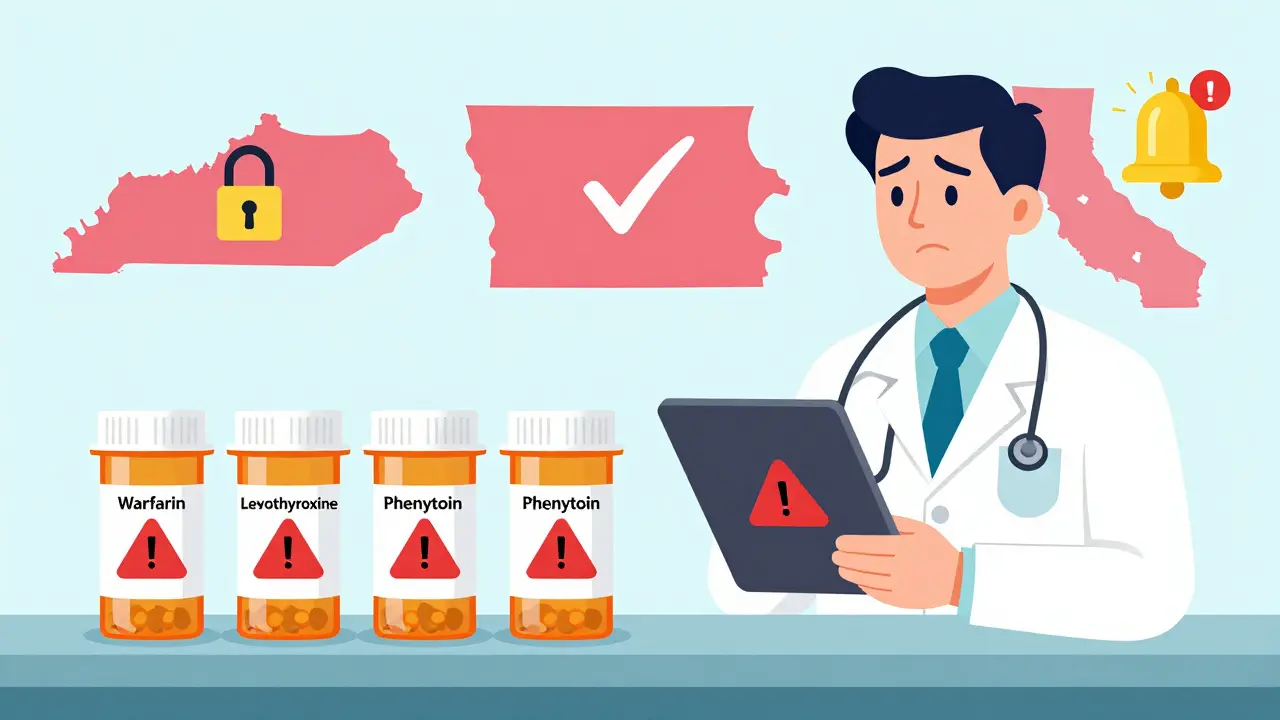
When you take a medication like warfarin, levothyroxine, or phenytoin, even a tiny change in dose can make the difference between healing and hospitalization. These are NTI drugs-Narrow Therapeutic Index medications-where the gap between a safe dose and a dangerous one is razor-thin. You might assume that if a generic version is approved by the FDA, it’s interchangeable with the brand name. But in the U.S., that’s not always true. State laws on NTI drug substitution vary wildly, and pharmacists are caught in the middle.
What Makes an NTI Drug Different?
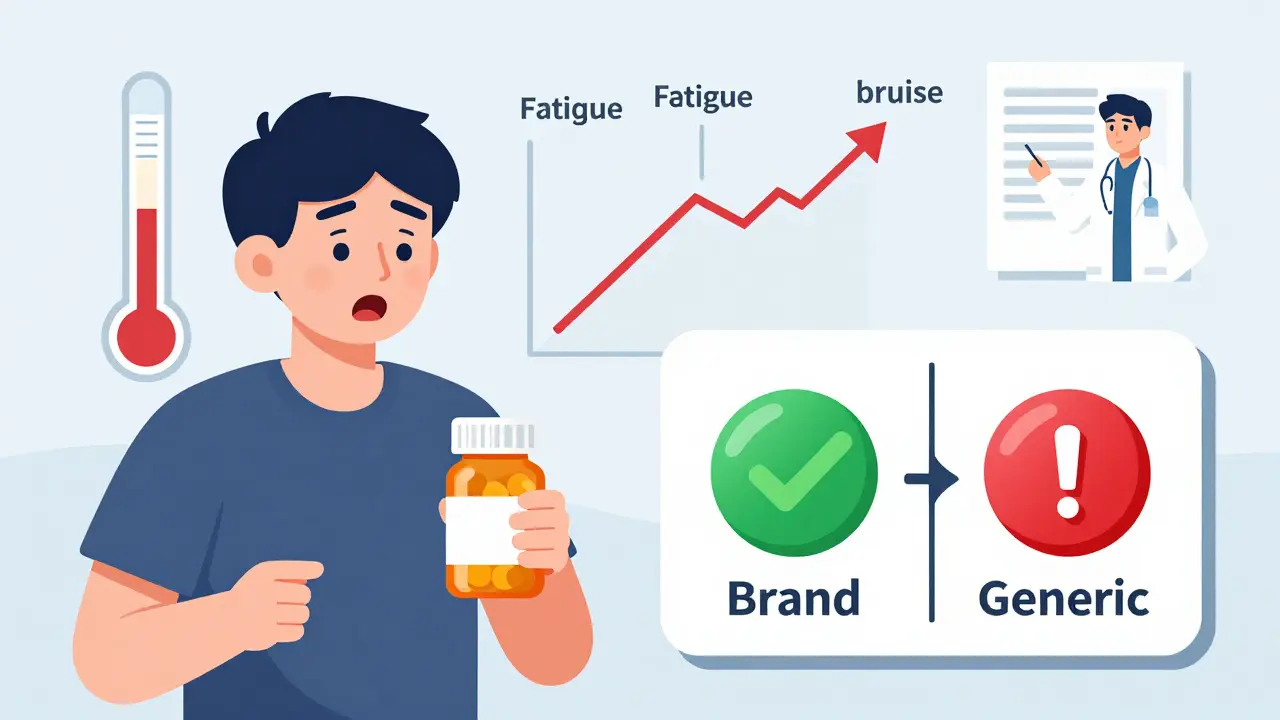
NTI drugs are not just any strong medication. They’re ones where a 10% change in blood concentration can trigger serious side effects or treatment failure. Take warfarin: too much, and you risk internal bleeding; too little, and a clot could form. Levothyroxine? A slight drop in thyroid hormone levels can cause fatigue, weight gain, or even heart problems in sensitive patients. These aren’t theoretical risks-they’re real, documented dangers.
The FDA doesn’t officially label any drug as NTI. Instead, it uses a therapeutic equivalence rating system in the Orange Book, where drugs get an "A" (therapeutically equivalent) or "B" (not equivalent) rating. But here’s the catch: the FDA doesn’t separate NTI drugs from others in this system. It treats them like any other drug, assuming that a 20% bioequivalence range is safe. That’s the core of the conflict.
Why States Step In
While the FDA takes a hands-off approach, states have seen what happens when generics are swapped without oversight. A 2022 study in the Journal of the American Pharmacists Association found that states with specific NTI substitution rules had 18.7% fewer adverse events linked to warfarin. That sounds small, but in real terms, it means fewer ER visits, fewer strokes, fewer deaths.
States aren’t acting out of caution-they’re responding to evidence. The American College of Clinical Pharmacy reviewed 17 studies and found that 32.4% of patients stabilized on brand-name levothyroxine had their thyroid hormone levels shift after switching to a generic. For someone with hypothyroidism, that shift isn’t just inconvenient-it’s life-altering.
How States Differ: From Lists to Loopholes
There’s no national standard. Instead, you’ve got a patchwork of rules:
- Kentucky and Pennsylvania have official lists. Pharmacists can’t substitute drugs like digitalis, warfarin, or antiepileptics unless the prescriber says "dispense as written."
- South Carolina goes further-not just NTI drugs, but also brand-specific meds like Synthroid and insulin. They call them "critical drugs" and recommend against substitution.
- Tennessee allows substitution for most A-rated drugs but bans it for antiepileptics in patients with epilepsy. It’s not about the drug class-it’s about the patient.
- California defines "critical dose drugs" as those where a 10% or less concentration change can be dangerous. Pharmacists must notify the prescriber before substituting.
- Texas prohibits substitution of anticonvulsants for epilepsy patients without explicit prescriber approval.
- Iowa sticks to the FDA’s Orange Book and doesn’t maintain its own NTI list.
One pharmacist in a multistate chain told the American Journal of Managed Care they once accidentally substituted a generic antiepileptic in Tennessee-because they were used to Iowa’s rules. The patient had a seizure. That’s not a rare mistake. A 2023 survey found 41.7% of pharmacists had accidentally broken substitution laws in the past year.
The Hidden Cost of Complexity
For patients, this system is confusing. For pharmacies, it’s a nightmare. A single pharmacy chain operating in five states might need five different software rules, five different training manuals, five different ways to flag prescriptions. The National Community Pharmacists Association found that 68.3% of pharmacists working across state lines get confused about the rules.
It’s not just about pills. The rise of biosimilars has added another layer. Forty-eight states now have laws governing biosimilar substitution-rules that often don’t align with NTI drug rules. Pharmacy benefit managers like Express Scripts say NTI restrictions have increased their administrative costs by 5.7% compared to standard generics.
Who’s Right: FDA or the States?
The FDA’s stance has been consistent since 1997: if a drug passes bioequivalence testing, it’s safe to substitute. Dr. John Jenkins, former head of the FDA’s drug review office, says the 20% range is scientifically sound.
But experts like Dr. Jerry Avorn from Harvard argue that for drugs like levothyroxine, even 5% variation can destabilize patients. The FDA’s own data shows that 1,200 drugs are potential NTI candidates-though they’re not officially labeled as such. Meanwhile, the Government Accountability Office reported 2,847 adverse events tied to NTI substitutions between 2019 and 2023.
It’s not about distrust in generics. It’s about precision. A generic insulin or thyroid pill might be chemically identical-but in practice, small manufacturing differences can change how your body absorbs it. For someone with heart disease or epilepsy, that’s not a gamble worth taking.
The Push for Standardization
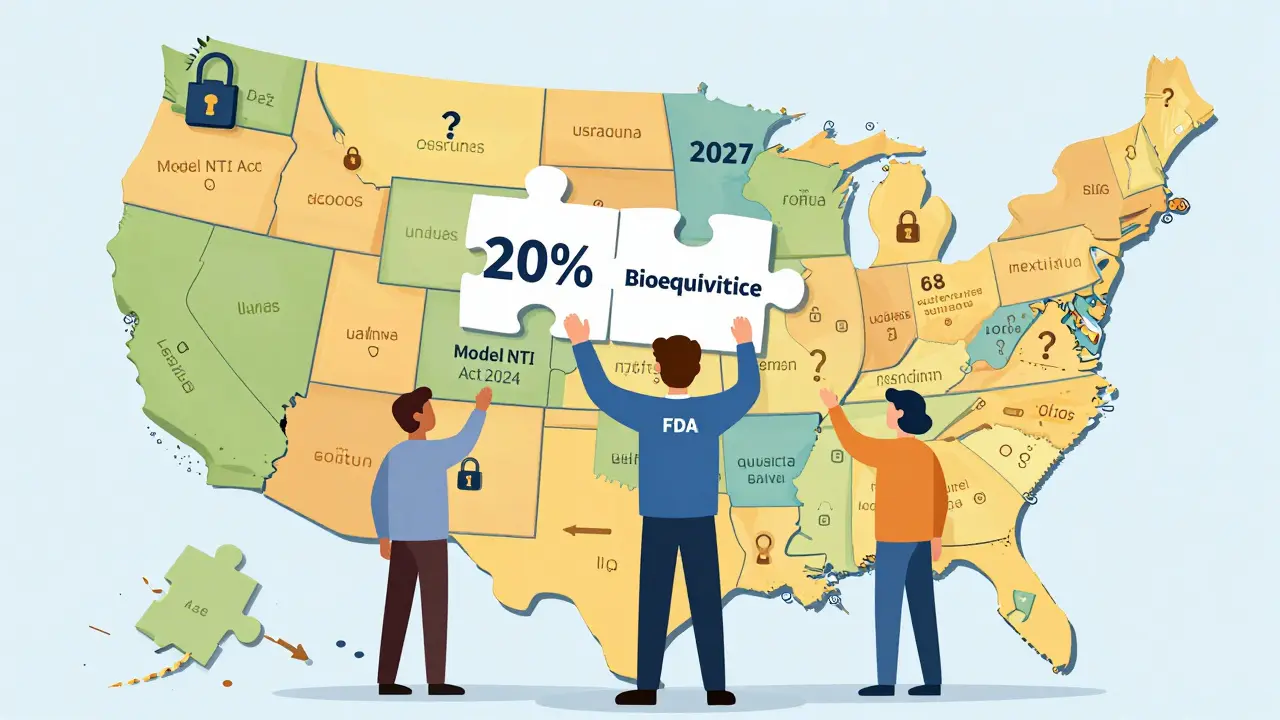
Change is coming. In January 2024, the National Association of Boards of Pharmacy released the Model State NTI Substitution Act. It proposes a single, evidence-based list of NTI drugs, adopted by all states. Twelve states have already introduced it as legislation.
The FDA, under pressure from the Senate Committee on Aging, announced in September 2024 it’s reconsidering its position. And with the U.S. Department of Labor linking NTI substitution rules to medical leave policies in January 2025, the issue is moving beyond pharmacies into workplaces and insurance systems.
By 2027, analysts predict 38 states will adopt standardized NTI rules. That could cut prescription errors by 22.4%. But it might also reduce generic use for these drugs by over 8 percentage points-meaning higher costs for patients and insurers.
What You Need to Do
If you take an NTI drug:
- Check your prescription. If it says "dispense as written," that’s your protection.
- Ask your pharmacist: "Is this the same brand I’ve been on?" Don’t assume.
- Monitor your symptoms. If you feel off after a refill change, call your doctor. A simple blood test can catch a shift before it becomes dangerous.
- Know your state’s rules. A few states have public lists online-Kentucky, Pennsylvania, and California do.
For prescribers: Always write "do not substitute" on NTI prescriptions. And if you’re unsure whether a drug is high-risk, consult the Orange Book or your state’s pharmacy board.
Are all generic drugs safe to substitute for NTI medications?
No. While the FDA considers all "A-rated" generics therapeutically equivalent, NTI drugs like warfarin, levothyroxine, and phenytoin are exceptions. Small differences in absorption or formulation can lead to dangerous changes in blood levels. Many states prohibit substitution for these drugs unless the prescriber explicitly allows it.
Does the FDA recognize NTI drugs as a separate category?
No. The FDA does not officially classify or label any drugs as NTI in the Orange Book or in regulatory guidance. It uses a single bioequivalence standard (20% variation) for all drugs. However, states like Kentucky, Pennsylvania, and California have created their own NTI lists based on clinical evidence and patient safety concerns.
Can a pharmacist substitute an NTI drug if the patient asks for it?
In most states, no. Even if the patient requests a cheaper generic, pharmacists are legally bound by state law. In restrictive states like Kentucky and Pennsylvania, substitution is prohibited regardless of patient preference. In other states, substitution may be allowed only if the prescriber has not written "dispense as written."
What should I do if my medication was switched without my knowledge?
Contact your prescriber immediately. Symptoms like increased fatigue, heart palpitations, seizures, or unexplained bruising could signal a change in drug levels. Request a blood test to check therapeutic levels (e.g., INR for warfarin, TSH for levothyroxine). Ask your pharmacist for a record of the substitution and your state’s NTI rules.
How can I find out if my state restricts NTI drug substitution?
Visit your state’s Board of Pharmacy website-most post their substitution laws online. States like California, Kentucky, Pennsylvania, and South Carolina have public lists of restricted drugs. The National Association of Boards of Pharmacy also maintains a state-by-state summary. If you’re unsure, ask your pharmacist or prescriber directly.



Sally Lloyd
March 15, 2026 AT 04:15They say it's about safety, but let's be real - this whole NTI thing is just Big Pharma's way of keeping generics off the market. You think the FDA doesn't know about the 20% variation? Of course they do. They're just letting states panic so the brand-name companies keep raking in cash. I've seen the data - the 'adverse events' are often just people who stopped taking their meds because they couldn't afford the brand. The real danger? Profit motives dressed up as patient care.
Emma Deasy
March 16, 2026 AT 15:44Let me tell you something - this isn't just about 'substitution.' This is about survival. I have a cousin who had a seizure because a pharmacist swapped her antiepileptic drug - because 'it was FDA-approved.' She was 23. She had a job. A future. Now? She's on disability. And the worst part? The pharmacist didn't even know Tennessee had a ban. They were from Iowa. I'm not exaggerating. This isn't theory. This is blood on the floor. And if you think this isn't a national emergency - you're not paying attention.
tamilan Nadar
March 16, 2026 AT 17:43In India, we don't have this problem. Generics are the norm. We trust them because they work. The issue here isn't science - it's bureaucracy. Why do Americans need five different rules for five states? In Chennai, a pharmacist knows levothyroxine is levothyroxine. If the pill has the same molecule, it does the same job. Maybe the real problem isn't the drugs - it's the system that makes us doubt them.
Adam M
March 17, 2026 AT 01:09Rosemary Chude-Sokei
March 17, 2026 AT 11:32I appreciate the thorough breakdown of state-level variations - it’s clear that patient safety is being prioritized in some regions over cost-cutting. However, the inconsistency creates a dangerous patchwork. Pharmacists are overburdened, and patients are left guessing. A standardized national framework - even if conservative - would reduce errors more effectively than 50 different policies. I’d support a model that includes mandatory prescriber notification and patient education, with a tiered list based on clinical evidence.
Noluthando Devour Mamabolo
March 18, 2026 AT 12:44OMG this is so 🤯‼️ I just got my levothyroxine switched last month and felt like a zombie for 3 weeks. My TSH went from 2.1 to 6.8 - no one told me! Now I’m on the hunt for my state’s NTI list (looking at you, California 🙌). Also - biosimilars?? Are we even talking about the same science?? 🧬💊 #PatientAdvocate #NTIAlert
Leah Dobbin
March 20, 2026 AT 07:12How is it possible that anyone still believes generics are interchangeable for NTI drugs? The FDA’s 20% bioequivalence standard is laughably outdated - it’s like saying two different models of a heart monitor are 'equivalent' because they both display numbers. This isn't chemistry - it's clinical nuance. If you're willing to gamble with someone's life over a 12-cent difference, you shouldn't be near a pharmacy.
Ali Hughey
March 22, 2026 AT 04:34THEY'RE HIDING SOMETHING. I've been reading the Orange Book for years - there's no way the FDA doesn't know which drugs are NTI. They just don't want to admit it - because then they'd have to admit they've been approving dangerous substitutions for decades. And who benefits? The same companies that own the patents. This isn't regulation - it's collusion. I've seen the emails. The FDA advisory panel meetings? They're closed. The data? Redacted. This is a cover-up. And now they're pushing this 'Model Act' to make it look like they care. Wake up.
Alex MC
March 23, 2026 AT 12:56It’s good to see some states stepping up - Kentucky and California’s rules make sense. But I also think we need to stop blaming pharmacists. They’re doing their best with conflicting systems. Maybe the real solution is a national database - one app, one rule set, updated in real time. A simple 'NTI Flag' on e-prescriptions that auto-blocks substitution unless overridden. No more guesswork. No more seizures. Just tech doing what it should - making safety easier.