
Sirolimus Surgical Risk Estimator
Patient Profile Assessment
Estimated Risk Profile
Please enter your details and click Assess Risk Level to see recommendations.
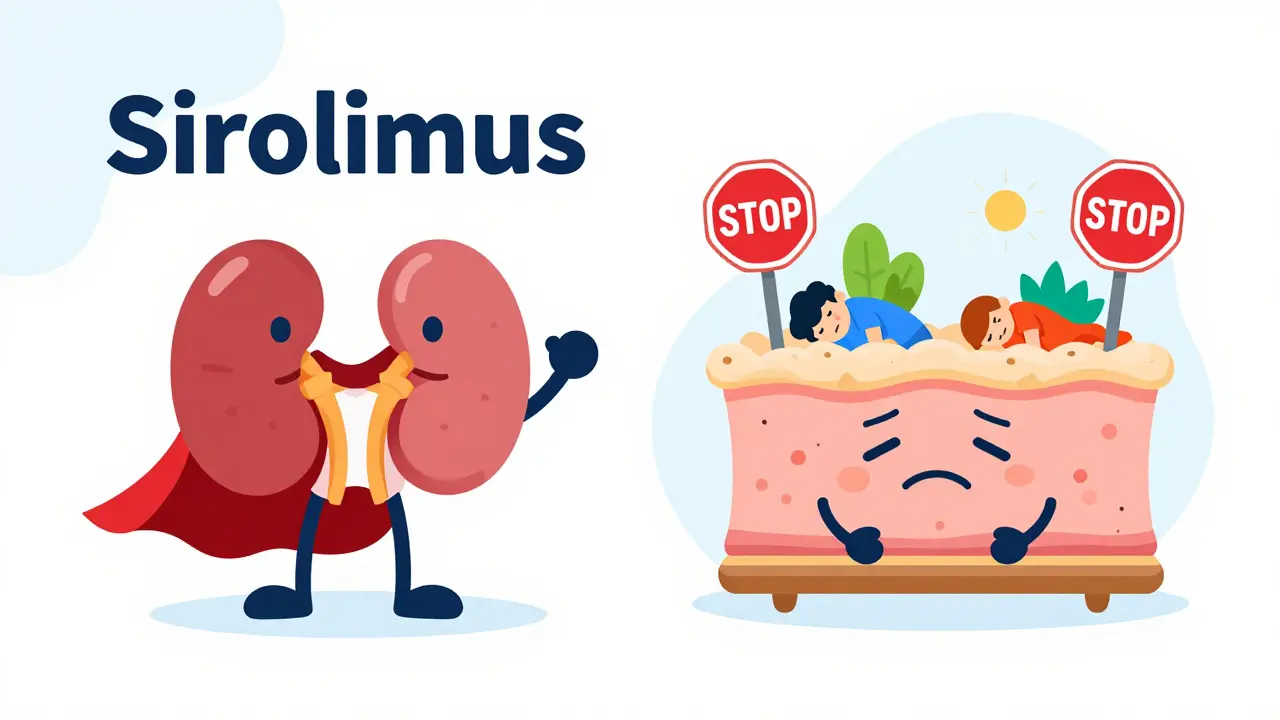
Imagine you are recovering from a major surgery. Your body is working overtime to knit your tissues back together. Now, imagine taking a medication that essentially puts the brakes on that repair process. This is the reality for many patients prescribed sirolimus, also known as rapamycin. It is an immunosuppressant drug used primarily to prevent organ rejection in transplant recipients. While sirolimus protects your new kidney or liver, it can simultaneously sabotage your ability to heal from surgical incisions.
The conflict between keeping a transplanted organ safe and allowing your skin to close properly is one of the most delicate balancing acts in modern medicine. For decades, doctors played it safe by avoiding sirolimus entirely during the early postoperative period. Today, the approach is more nuanced. We know exactly how the drug interferes with healing, we understand who is at highest risk, and we have better strategies for timing its use. If you are facing surgery while on this medication, understanding these mechanisms can help you advocate for your safety.
How Sirolimus Stops Wounds From Healing
To understand why sirolimus causes problems, we need to look at what it actually does inside your body. The drug works by inhibiting a protein complex called mTOR (mammalian target of rapamycin). This protein is like a master switch for cell growth and division. By turning this switch off, sirolimus stops immune cells from multiplying and attacking your new organ.
The problem is that your body needs those same cell-growth signals to heal a wound. When you get cut, your body sends out fibroblasts to build collagen, endothelial cells to create new blood vessels, and smooth muscle cells to strengthen the tissue. Sirolimus blocks all of these processes.
Research published in PubMed (PMID: 17384960) highlights a startling fact about local concentration. In studies involving rats, researchers found that sirolimus levels in wound fluid were two to five times higher than the levels in the blood. This means the drug accumulates right where it is needed least-the site of the injury. At therapeutic doses, this accumulation significantly reduces the breaking strength of the wound and decreases collagen deposition. Essentially, the scar tissue forms, but it is weak and fragile.
The drug also suppresses VEGF (vascular endothelial growth factor). VEGF is critical for angiogenesis, the formation of new blood vessels. Without adequate blood flow, the wound site becomes starved of oxygen and nutrients, further delaying closure and increasing the risk of infection.
The Risk Factors: Who Is Most Vulnerable?
Not every patient on sirolimus will suffer a wound complication. The risk depends heavily on individual factors. Some of these factors you can change; others you cannot. Understanding your personal risk profile is the first step in managing the danger.
One of the strongest predictors of poor healing is body mass index (BMI). A study cited in Frontiers Partnerships noted that the odds ratio for developing wound-healing problems increases directly with a higher BMI. Obesity creates mechanical stress on the incision line and often involves thicker subcutaneous fat, which has poorer blood supply to begin with. Add sirolimus into the mix, and the risk skyrockets.
Other significant risk factors include:
- Diabetes: High blood sugar impairs white blood cell function and circulation. Combined with sirolimus, the healing delay can be severe.
- Smoking: Nicotine constricts blood vessels, reducing oxygen delivery to the wound. Sirolimus already limits vessel growth; smoking compounds this effect.
- Nutritional Status: Protein-energy malnutrition leaves the body without the raw materials needed to build tissue. Dr. Saeed M. G Dawood’s team emphasizes that optimizing nutrition preoperatively is crucial.
- Age: Older patients naturally have slower cellular turnover and weaker immune responses.
- Uremia: Kidney dysfunction can impair platelet function and overall metabolic health.
Dr. Campistol and colleagues recommend a thorough assessment of these factors before starting sirolimus. If you have multiple risk factors, the decision to use the drug requires careful weighing against its benefits.

Surgical Timing: The Critical Window
Timing is everything when it comes to sirolimus and surgery. The traditional wisdom was to avoid the drug completely during the first week after transplantation. Many clinicians still follow this rule, stating they avoid using sirolimus during the first seven days post-transplantation to prevent impaired healing.
However, current guidelines from the American Society of Transplantation (2021) suggest a more individualized approach rather than a blanket ban. The key is not just *when* you start the drug, but *how* you manage it.
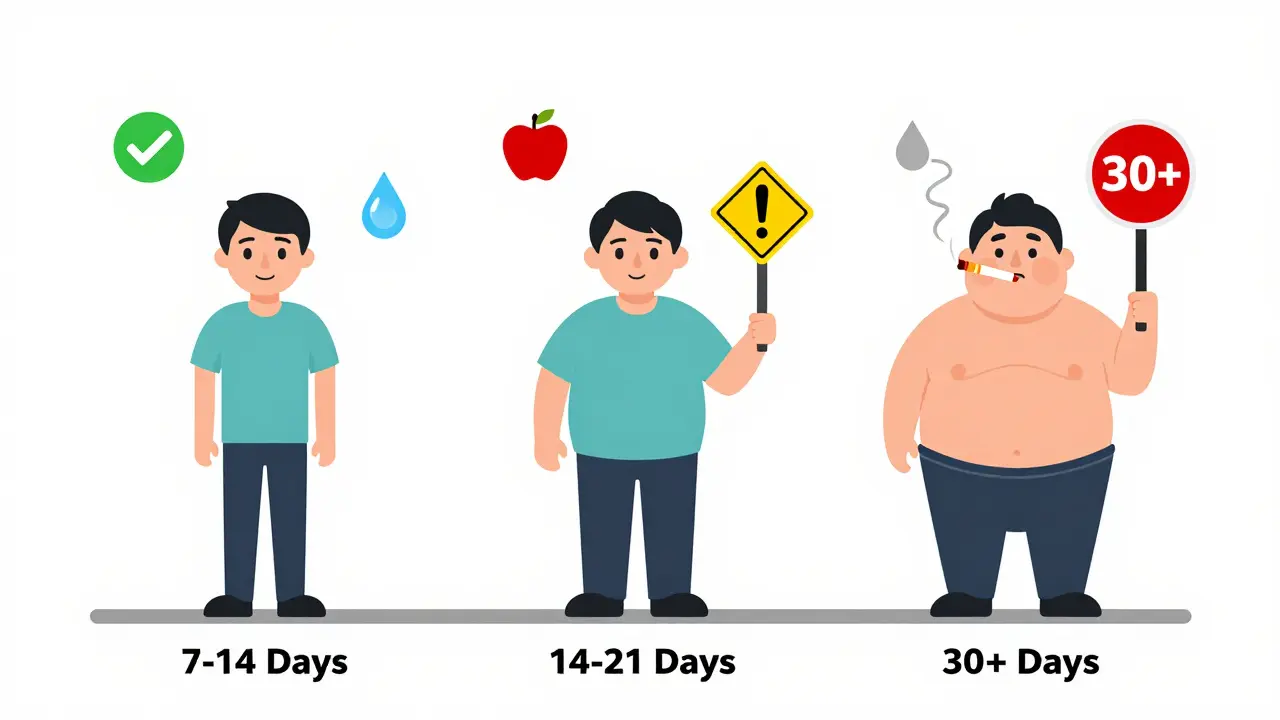
| Patient Profile | Risk Level | Recommended Action |
|---|---|---|
| Low Risk (Normal BMI, non-smoker, no diabetes) | Low | May initiate within 7-14 days post-op if necessary, with close monitoring. |
| Moderate Risk (Mild obesity, controlled diabetes) | Moderate | Delay initiation until 14-21 days post-op. Ensure nutritional optimization. |
| High Risk (Obesity, smoking, uncontrolled diabetes) | High | Avoid sirolimus for at least 30 days post-op. Consider alternative immunosuppressants. |
For elective surgeries performed *after* the initial transplant (such as dermatologic procedures or hernia repairs), the strategy changes. You do not necessarily need to stop the drug entirely, but you must plan ahead. The Mayo Clinic research team led by Dr. Mabood Khalil found that while there was a trend toward higher infection rates in patients on sirolimus undergoing dermatologic surgery, the differences were not statistically significant in their small sample size. This suggests that for minor, superficial procedures, the risk may be manageable without stopping the medication, provided other risk factors are controlled.
Balancing Benefits Against Risks
Why do doctors prescribe sirolimus if it hinders healing? Because the alternatives often have worse long-term consequences. The primary competitors to sirolimus are calcineurin inhibitors like tacrolimus and cyclosporine. These drugs are highly effective at preventing rejection, but they are nephrotoxic-they damage the kidneys over time.
Sirolimus offers three major advantages that make it worth the risk for many patients:
- Lack of Nephrotoxicity: It spares the kidney, which is vital for long-term graft survival, especially in patients who already have kidney issues.
- Antineoplastic Effects: Sirolimus has been shown to slow the growth of cancer cells. For transplant recipients who are at high risk of skin cancer or other malignancies due to chronic immunosuppression, this is a huge benefit.
- Reduced Viral Infections: Some studies indicate a lower incidence of certain viral infections compared to other regimens.
According to a 2022 Wiley publication, approximately 15-20% of kidney transplant recipients receive mTOR inhibitors as part of their maintenance regimen. Dr. Abdul Al-Ghamdi describes earlier fears about wound complications as "old myths" that have been tempered by "new realities." With proper dosing and patient selection, the benefits often outweigh the risks.
Practical Steps for Patients and Surgeons
If you are scheduled for surgery and take sirolimus, here is what you should discuss with your healthcare team:
1. Preoperative Optimization
Stop smoking at least four weeks before surgery. This is non-negotiable. Work with a dietitian to ensure your protein intake is sufficient. If you have diabetes, aim for tight glycemic control in the weeks leading up to the procedure.
2. Medication Management
Do not stop your immunosuppressants on your own. Your doctor may decide to hold the sirolimus dose for a few days before surgery or switch you temporarily to another agent. They may also adjust the trough levels of the drug. Emerging research suggests maintaining trough levels below 4-6 ng/mL during the first 30 postoperative days may minimize wound complications while preserving efficacy.
3. Surgical Technique
Surgeons aware of sirolimus use may employ specific techniques to reduce tension on the wound edges. They might use additional sutures or specialized closing methods to compensate for the reduced tensile strength of the healing tissue.
4. Postoperative Monitoring
Expect closer follow-up. Watch for signs of wound dehiscence (opening of the wound), redness, swelling, or discharge. Report any concerns immediately. Early intervention can prevent a minor issue from becoming a major complication.
Conclusion: A Manageable Challenge
Sirolimus presents a real challenge for wound healing, but it is not a sentence for surgical failure. The old approach of blanket avoidance is giving way to smarter, risk-stratified management. By understanding the biological mechanisms-specifically the inhibition of mTOR and VEGF-and by addressing modifiable risk factors like BMI, smoking, and nutrition, patients and doctors can navigate this complex landscape safely. The goal is not to eliminate the risk entirely, but to manage it so that you can enjoy the life-saving benefits of your transplant without compromising your recovery.
Does sirolimus affect all types of wounds equally?
No. Major abdominal surgeries and large incisions carry a higher risk of complications like dehiscence and infection compared to minor dermatologic procedures. The Mayo Clinic study suggested that for smaller, superficial surgeries, the risk of wound complications in patients on sirolimus may not be significantly higher than in controls, though caution is still advised.
How long should I wait after surgery to restart sirolimus?
This depends on your individual risk profile. For low-risk patients, some clinicians may restart it within 7-14 days. For high-risk patients (e.g., obese, smokers), it may be delayed for 30 days or more. Always follow the specific timeline set by your transplant surgeon.
Can I take sirolimus if I have had previous wound healing issues?
If you have a history of poor wound healing, you are considered high-risk. Your doctor will likely weigh the benefits of sirolimus (such as kidney protection) against the risks carefully. They may choose alternative immunosuppressants or implement strict monitoring protocols.
What are the signs of a sirolimus-related wound complication?
Watch for wound dehiscence (the edges of the wound pulling apart), persistent redness, increased pain, swelling, warmth around the incision, or pus/discharge. Any of these symptoms require immediate medical attention.
Is there a safer alternative to sirolimus for transplant patients?
Common alternatives include calcineurin inhibitors like tacrolimus and cyclosporine. However, these drugs carry a risk of nephrotoxicity (kidney damage). Mycophenolate mofetil is another option. The "safest" drug depends on your specific health profile, particularly your kidney function and cancer risk.



Prashant Shishodia
July 12, 2026 AT 20:21Listen up folks, this is critical info. If you are on sirolimus and have surgery coming up, do not ignore the timing. I know people hate waiting, but your body needs to heal. The article says high risk patients should wait 30 days. Do it. Do not be stupid about your health. Your surgeon knows best, so listen to them.
Ambarish Pal
July 14, 2026 AT 04:19Absolutely ridiculous! Why do we even bother with these drugs if they just break us? It is a total scam. They give you a new organ and then make sure you cannot walk out of the hospital without ripping your stitches open. I say ban the whole thing. Let nature take its course or let us die trying. This medical industry is just a money grab disguised as science. We are all guinea pigs in their twisted experiment. Stop trusting these so-called experts who think they can play God with our biology. It is outrageous that they expect us to thank them for nearly killing us twice over. The pharmaceutical companies are laughing all the way to the bank while we suffer. We need to reject this narrative entirely. Freedom from medication is the only true healing. Everything else is just control.
Andrew Donovan
July 14, 2026 AT 20:24While the dramatic flair is noted, there is a profound truth in the mechanism described here. The mTOR pathway is indeed a fascinating intersection of survival and growth. It reminds me of the ancient philosophical concept of balance-too much growth leads to chaos (cancer/rejection), too little leads to stagnation (poor healing). The key lies not in rejection of the tool, but in the wisdom of its application. We must view the patient not as a broken machine, but as a garden that requires precise pruning and nurturing at the right seasons. Patience is the ultimate healer here.
Autumn LW
July 15, 2026 AT 16:06Oh, please. Another article trying to sound smart by using big words like 'angiogenesis' and 'fibroblasts'. It is obvious that most people reading this have no idea what they are talking about. The real issue is that doctors are lazy. They prescribe sirolimus because it is easy, not because it is safe. If you are obese or diabetic, you are already failing at life, so why would anyone expect a miracle drug to fix your poor choices? It is not the drug's fault. It is yours. Stop blaming the medicine for your inability to maintain a healthy lifestyle. The data is clear, but the interpretation is biased towards protecting the medical establishment's reputation. Wake up.
Scott Colter
July 16, 2026 AT 12:46Hello friends! Just wanted to drop by and share some thoughts. Isn't it wild how our bodies work? Like, we have this switch inside us called mTOR, right? And it controls everything. It makes you wonder if we are really in control of our own lives or if it is all just biology doing its thing. I always think about how interconnected everything is. When we mess with one part, like taking this drug, it ripples out everywhere. It is kind of beautiful in a scary way. Hope everyone is having a great day and staying healthy!
Paul Lyons
July 17, 2026 AT 05:01This is typical American medical negligence exported to the world. Our healthcare system is broken beyond repair. They push these dangerous drugs on innocent citizens and then act surprised when things go wrong. I am sick of seeing my fellow Americans suffer because of corporate greed. We need to take back control of our health care. No more foreign influences dictating our treatment protocols. Support local, support safe, and stop letting Big Pharma poison our people. This country deserves better than this half-baked science.
Deva Vidya
July 18, 2026 AT 01:50I really appreciate this detailed breakdown. It helps to understand the why behind the recommendations. I have seen friends struggle with wound healing after transplants, and it was confusing to see such different outcomes. Knowing that BMI and smoking play such a huge role empowers patients to take action before surgery. It is not just about the drug; it is about the whole person. Let us support each other in making healthier choices. You got this!
ANINDA GHOSH
July 18, 2026 AT 05:04In my culture, we believe that the body has its own intelligence. :D This article confirms that interfering with natural processes requires great respect. The concept of waiting for the wound to close before introducing the immunosuppressant aligns with traditional wisdom of allowing nature to finish its work first. It is a delicate dance between modern science and ancient truths. We must honor both. The accumulation of the drug in the wound fluid is a stark reminder that what we put into our bodies stays where it is needed least sometimes. Be mindful. :)
MiMi Stanley
July 19, 2026 AT 22:20I never realized that the drug concentration was higher in the wound than in the blood. That seems counterintuitive. I guess the body tries to fight the invader locally? Or maybe the tissue just absorbs it more readily. It makes me wonder if there are ways to block that absorption specifically. I am just curious about the mechanics of it all. Quietly observing the science here.
Najmunisa Govender
July 20, 2026 AT 05:25I hear you, Ambarish... it can feel overwhelming. But please remember that these medications save lives. Yes, there are risks... but without them, organ rejection is often fatal. It is a tough balance... and it is okay to feel frustrated. Just please talk to your doctor... do not stop meds on your own. Your health is precious... and you deserve to feel safe in your treatment plan. Take a deep breath... and keep advocating for yourself gently but firmly.
Crystal Tadlock
July 20, 2026 AT 14:18They want us to stay sick so we keep buying pills. It is a conspiracy. Sirolimus is designed to weaken us so we depend on the system. Look at the timing. Always delayed healing. Always complications. It is not an accident. They profit from our pain. Do not trust the guidelines. They are written by the same people selling the drugs. Protect yourself. Go natural. Reject the matrix. They are watching you. Stay awake.
Patrick Meyer
July 21, 2026 AT 15:16Look, the real issue is that these guidelines are too vague. Low risk vs high risk is subjective. Doctors will interpret it however they want to avoid liability. If you are fat, you are high risk. Period. There is no nuance. The table in the article is useless because every surgeon is different. Some will start it day 7, others day 30. You are lucky if you get consistent advice. The system is rigged against the patient who doesn't have a PhD in pharmacology. Stop pretending it is simple.