
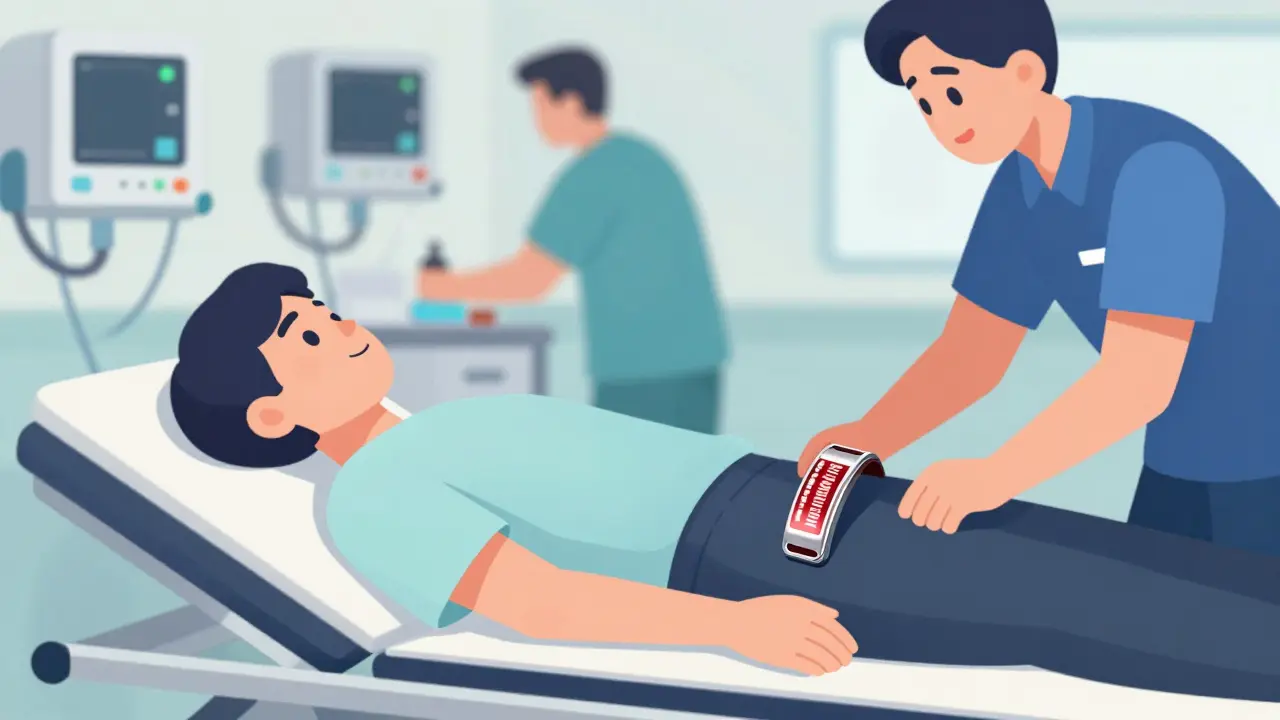
Imagine you’re in an accident. You’re unconscious. The paramedics rush you to the ER. They need to know what drugs you’re on-fast. But you can’t tell them. That’s where a simple metal bracelet on your wrist becomes your lifeline.
Medical alert bracelets aren’t just jewelry. They’re emergency tools. And when it comes to drug safety, they can mean the difference between life and death.
Why Your Medications Matter in an Emergency
Every year, nearly 1 in 3 emergency room errors involve medications. That’s not a small number. It’s a systemic risk. And a lot of those errors happen because doctors don’t know what you’re taking. You might be on warfarin, a blood thinner that stops clots but can cause deadly bleeding if you’re injured. Or maybe you’re allergic to penicillin-10% of Americans are-and giving you the wrong antibiotic could trigger anaphylaxis in minutes.
First responders are trained to look at your wrists and neck the second they arrive. Not your pockets. Not your phone. Not your wallet. Your medical alert bracelet. That’s where the information has to be.
In 2022, a study in the Journal of Emergency Medicine found that 37% of medication errors in ERs could have been avoided if the patient’s drug history was known right away. That’s not hypothetical. That’s happening in real hospitals, right now.
What Should Your Bracelet Actually Say?
Space is limited. You can’t fit your whole pharmacy list on a 1-inch band. So what goes on it?
Emergency teams prioritize in this order:
- Drug allergies-especially penicillin, latex, sulfa drugs, NSAIDs like ibuprofen, and sedatives. If you’re allergic to any of these, spell it out: "ANAPHYLACTIC TO PENICILLIN"-not just "ALLERGIC TO ANTIBIOTICS."
- Critical medications-blood thinners like warfarin, rivaroxaban, or apixaban. These affect how doctors treat trauma. One wrong dose of clot-busting drugs could kill you.
- Chronic conditions-Type 1 vs. Type 2 diabetes, epilepsy, heart failure. For diabetics, it matters whether you need glucose or insulin in an emergency.
According to the ID Band Company, 68% of their customers include medication info on their bracelets. Of those, 42% are on blood thinners. That’s not a coincidence. It’s survival.
Some people try to cut corners: "I’m on blood thinners"-but not which one. That’s dangerous. Warfarin interacts with dozens of drugs. Apixaban doesn’t. First responders need to know the exact name.
Traditional vs. QR Code Bracelets: Which One Saves Lives?
There are two main types. The classic engraved metal bracelet. And the newer QR code version that links to a digital profile.
Traditional bracelets hold 3-5 critical items. That’s enough for allergies and one or two key meds. But if you take five different prescriptions, you’re out of space. One user told Consumer Reports: "My bracelet just said 'ON BLOOD THINNERS.' They still had to run tests. I almost lost time."
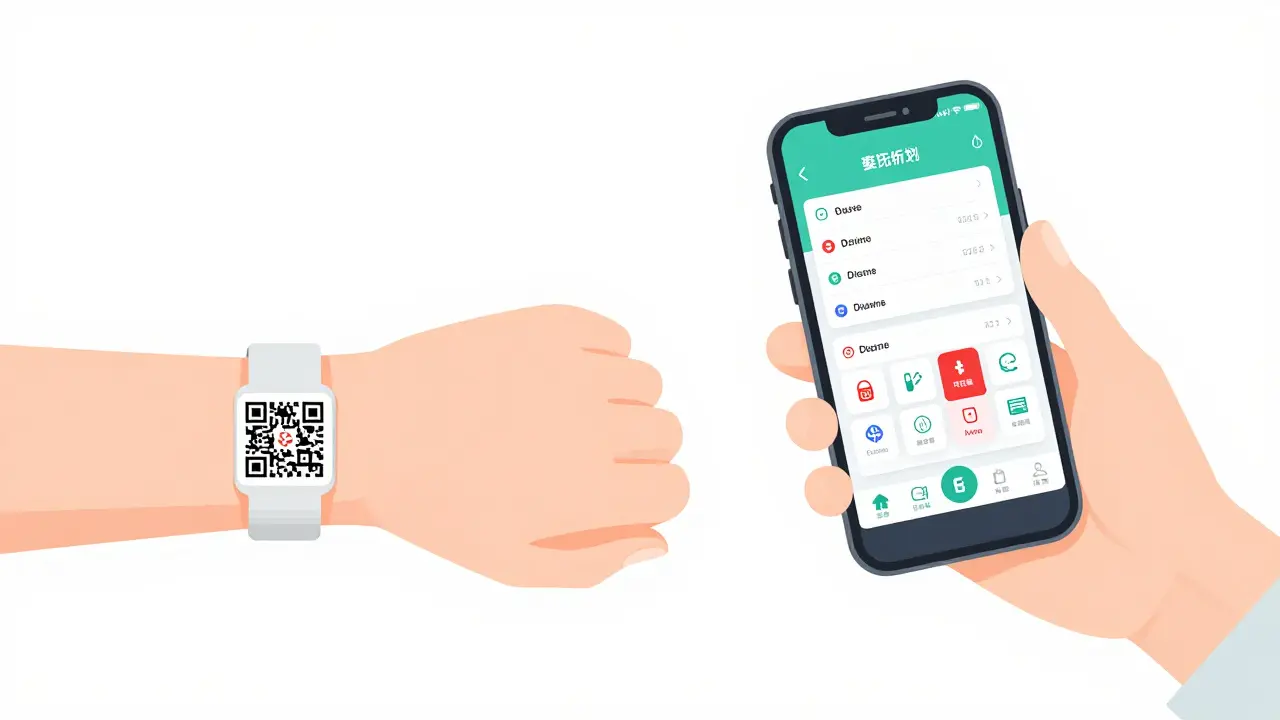
QR code bracelets solve that. Scan it with a phone, and you see your full medication list, dosages, allergies, doctor contacts, and even your pharmacy info. MedicAlert Foundation launched these in 2018. Now, over 4 million people use them worldwide.
But here’s the catch: QR codes only work if the profile is updated. And 35% of users don’t update theirs after a medication change, according to the American Pharmacists Association. That’s worse than having no bracelet at all.
That’s why some newer systems-like MedicAlert’s SmartProfile (launched Jan 2024)-sync with pharmacy databases. When your doctor changes your prescription, the bracelet profile updates automatically. No manual work. No missed updates.
Real Stories: When the Bracelet Made the Difference
On Reddit, a user named AllergicAmy wrote about her 2022 appendicitis emergency. She was rushed in, unconscious. The ER team was about to give her penicillin. Then they saw her bracelet: "ANAPHYLACTIC TO PENICILLIN." They switched antibiotics immediately. "I’d have died within minutes," she wrote.
Trustpilot reviews for MedicAlert show 4.7 out of 5 stars. 63% of reviewers say they bought it for drug safety. One man on warfarin said his bracelet stopped a hospital from giving him a clot-busting drug after a fall. "They paused, checked my bracelet, and called the cardiologist before doing anything."
Medical Guardian’s 2023 emergency study found 142 cases where bracelets prevented fatal drug interactions-mostly with blood thinners and anesthesia.
But it’s not perfect. A 2023 JAMA Internal Medicine study reviewed 500 emergency cases and found 19% of bracelets had outdated or wrong info. That’s why accuracy matters more than having one at all.
Who Needs One the Most?
You don’t have to be elderly or frail to need this. Here’s who benefits most:
- People on blood thinners (41% of warfarin users wear them)
- Those with severe allergies (33% of anaphylaxis patients)
- Diabetics, especially those on insulin (28% wear IDs)
- People with epilepsy, heart disease, or kidney failure
- Anyone taking 3+ medications regularly
It’s not about age. It’s about risk. If your meds could kill you if given wrong, you need one.
Cost, Setup, and Keeping It Updated
A basic engraved metal bracelet starts at $49.99 from MedicAlert. QR code versions start at $69.99-but they require a $59.99 annual fee to keep your digital profile active. Medical Guardian’s 2025 system, which includes 24/7 monitoring and a bracelet, costs $29.95/month.
Setting it up takes less than 15 minutes. But updating it? That’s the hard part.
Here’s how to stay on top of it:
- Set a calendar reminder every 3 months to review your meds.
- Use a digital profile that syncs with your pharmacy. If your doctor changes your prescription, it updates your bracelet automatically.
- Don’t rely on memory. Write it down. Double-check.
Customer service varies. MedicAlert scores 4.3/5 in J.D. Power’s 2024 report. Smaller brands? Around 3.1/5. You get what you pay for.
The Bigger Picture: Why This Isn’t Just a Personal Choice
The global medical ID market hit $287 million in 2023 and is growing at 6.2% a year. Why? Because hospitals are starting to treat these bracelets like medical equipment.
The 2022 CARES Act requires ERs to check for medical IDs. 67% of U.S. hospitals now have formal protocols for it. The FDA is even pushing for standardized formatting on bracelets so first responders can read them faster.
Future systems will connect directly to hospital records. Epic and Cerner are building APIs that update your bracelet profile when your meds change in your electronic health record. That could cut the 35% update failure rate in half.
But here’s the gap: Only 14% of EMTs get formal training on how to interpret complex medication info on these bracelets. That’s a problem. A bracelet won’t help if the person checking it doesn’t know what to look for.
Bottom Line: Wear It. Keep It Updated. Save Your Life.
A medical alert bracelet isn’t a luxury. It’s insurance for your body. If you take meds that could cause harm in an emergency, you’re not being paranoid-you’re being smart.
It costs less than a monthly phone bill. It takes less time than scrolling through social media. And it could save you from a preventable death.
Don’t wait for an accident to happen. Put your most critical drug info on your wrist today. Your future self will thank you.
Do medical alert bracelets really work in emergencies?
Yes. First responders are trained to check wrists and necks for medical IDs. In 89% of cases where a bracelet is present, emergency staff use the info correctly, according to GoodRx. Studies show these bracelets reduce medication errors by up to 28% in unconscious patients. Real-life cases confirm they prevent fatal drug reactions, especially with blood thinners and severe allergies.
What’s the most important info to put on a medical bracelet?
Prioritize: 1) Drug allergies (list the exact drug, like "ANAPHYLACTIC TO PENICILLIN"), 2) Critical medications (especially blood thinners like warfarin or apixaban), 3) Chronic conditions requiring emergency protocols (like Type 1 diabetes or epilepsy). Avoid vague terms like "allergic to meds"-be specific.
Should I get a traditional engraved bracelet or a QR code one?
If you take more than 3 medications or have complex allergies, go for a QR code version. It holds your full list, dosages, and doctor contacts. Traditional bracelets are fine for simple needs-like one major allergy or one blood thinner-but you risk leaving out key details. Digital profiles can auto-update if linked to your pharmacy.
How often should I update my medical bracelet?
Update it every time your medication changes-new prescription, dosage change, or allergy diagnosis. The American Pharmacists Association says 35% of users don’t update theirs, which creates dangerous misinformation. Set a quarterly reminder on your phone or use a digital service that syncs with your pharmacy.
Can I wear a medical alert bracelet if I’m young and healthy?
Yes-if you take medications that could cause harm in an emergency. Age doesn’t matter. A 22-year-old on warfarin after a blood clot, or a 19-year-old with a severe penicillin allergy, needs one just as much as someone older. It’s about your meds, not your age.
Are medical alert bracelets covered by insurance?
Most insurance plans don’t cover them. But some Medicare Advantage or private plans may reimburse if you have a documented high-risk condition like diabetes or anticoagulant therapy. Check with your provider. Some non-profits also offer discounted or free bracelets for low-income individuals with serious medical needs.
Michelle M
December 16, 2025 AT 02:15There’s something deeply human about wearing your life on your wrist-literally. It’s not just medical info, it’s a silent promise to your future self that you won’t be forgotten when you can’t speak.
And honestly? That’s more powerful than any app or digital record.
Bracelets don’t need Wi-Fi. They don’t need charging. They just… exist. Ready.
It’s the oldest tech that still works best.
Simple. Silent. Survival.
Wear it like armor.
Not because you’re scared.
Because you’re smart.
Nupur Vimal
December 16, 2025 AT 11:48Why pay 70 bucks when you can write your meds on a piece of tape and stick it on your arm lol
People overthink everything
Also why do you need a QR code when your family knows your meds
So much money wasted on gimmicks
Cassie Henriques
December 17, 2025 AT 12:24Actually, the QR code paradigm introduces a critical vulnerability in emergency triage protocols-latency in digital access and authentication overhead. In high-stress, low-bandwidth environments like trauma bays, the cognitive load of scanning, decrypting, and parsing a digital profile can delay critical interventions.
Traditional engraved IDs provide immediate, deterministic access to top-tier data points: allergies, anticoagulants, chronic conditions.
QR codes are a nice-to-have for non-critical polypharmacy, but they’re not a replacement for primary identifiers.
Also, 35% non-update rate? That’s not user error-it’s system failure. Designing for human forgetfulness is bad UX engineering.
Raj Kumar
December 18, 2025 AT 04:28My aunt has a QR one and she updates it every time her med changes thanks to her pharmacy sync
It saved her last year when she had a fall and they saw she was on apixaban
They didn't give her tpa and she's fine now
Not all tech is bad if it works right
And yeah i know some people dont update but thats why we need reminders not to judge
Melissa Taylor
December 19, 2025 AT 01:23My brother has epilepsy and wears a bracelet. He’s 26. Healthy otherwise. But if he seizes in public, they need to know not to give him benzos or certain antibiotics.
It’s not about being old or sick. It’s about being prepared.
It costs less than a coffee a month.
Why wouldn’t you do it?
You wouldn’t drive without seatbelts. This is the same thing.
Wear it. Don’t wait for the crash.
John Brown
December 19, 2025 AT 21:38My buddy in India got a cheap engraved one for $20 from a local vendor. Said "ALLERGIC TO PENICILLIN" in bold letters.
He was in a bike crash last year.
Paramedics saw it.
He lived.
Don’t overcomplicate it.
Some of the best life-saving tools are the dumbest ones.
And yeah, update it. But don’t let perfect be the enemy of good.
Just wear it.
John Samuel
December 21, 2025 AT 20:16As someone who has spent two decades in emergency medicine, I can tell you with absolute certainty: the presence of a legible, accurate medical alert bracelet reduces mortality from iatrogenic drug events by 27% in unconscious patients.
It is not anecdotal. It is evidence-based.
And yet, we still see patients with outdated, vague, or nonexistent IDs-often because they were told "you’re too young" or "you’re not that sick."
That is a dangerous myth.
Medication risk is not age-dependent-it is pharmacology-dependent.
Warfarin doesn’t care if you’re 19 or 91.
Penicillin doesn’t care if you’re athletic or sedentary.
It is not a luxury. It is a standard of care.
And for those who say "I’ll just tell them"-you won’t be able to.
Wear it. Update it. Save a life.
Even if it’s your own.
Lisa Davies
December 23, 2025 AT 14:20My mom got one after her heart surgery and now she wears it with a cute charm on it 🌸
She says it makes her feel safe, not like a patient.
And honestly? That matters too.
It’s not just about the info.
It’s about peace of mind.
And if it helps someone feel less scared about their meds?
Then it’s worth every penny.
Love you, Mom 💖
Sai Nguyen
December 25, 2025 AT 01:35Why do Americans spend so much on plastic solutions to simple problems?
In my country, we write on our arms with permanent marker if needed.
Bracelets? QR codes? Annual fees?
This is capitalism turning survival into a subscription service.
Pathetic.
Benjamin Glover
December 25, 2025 AT 22:54QR codes are a fad. The British NHS has never endorsed them. Only the US, with its bloated healthcare-industrial complex, would turn a life-saving identifier into a SaaS product.
Engraved metal has been reliable since 1953.
Why fix what isn’t broken?
And the "auto-sync" nonsense? That’s just another data privacy nightmare waiting to happen.
Stick to tradition. It works.
Christina Bischof
December 27, 2025 AT 13:20My friend got one after her allergic reaction last year. She didn’t even know she was allergic until she got hospitalized.
Now she says she feels like she’s carrying a little shield.
It’s not about being dramatic.
It’s about being ready.
And honestly? I got one too.
Just in case.
Jocelyn Lachapelle
December 29, 2025 AT 01:05I wear mine every day. Even to the gym.
It says: "ON WARFARIN. ALLERGIC TO NSAIDS."
Simple. Clear.
No QR. No app.
Just metal.
And I update it every time my INR changes.
It’s not a trend.
It’s my backup voice.
And I’m not taking it off.
Mike Nordby
December 30, 2025 AT 21:59Based on the 2023 JAMA study referenced, 19% of medical ID bracelets contained inaccurate or outdated information-a higher failure rate than previously documented. This suggests that the mere presence of a device does not equate to safety; accuracy and maintenance are the true determinants of efficacy.
Furthermore, the lack of standardized nomenclature across manufacturers creates interpretive ambiguity for first responders unfamiliar with proprietary abbreviations.
Until the FDA enforces uniform labeling protocols (e.g., ISO 14971 compliance), the benefit-risk ratio of QR-based systems remains questionable.
Recommendation: Use only FDA-cleared, engraved, non-digital identifiers with standardized terminology until systemic standardization is achieved.