
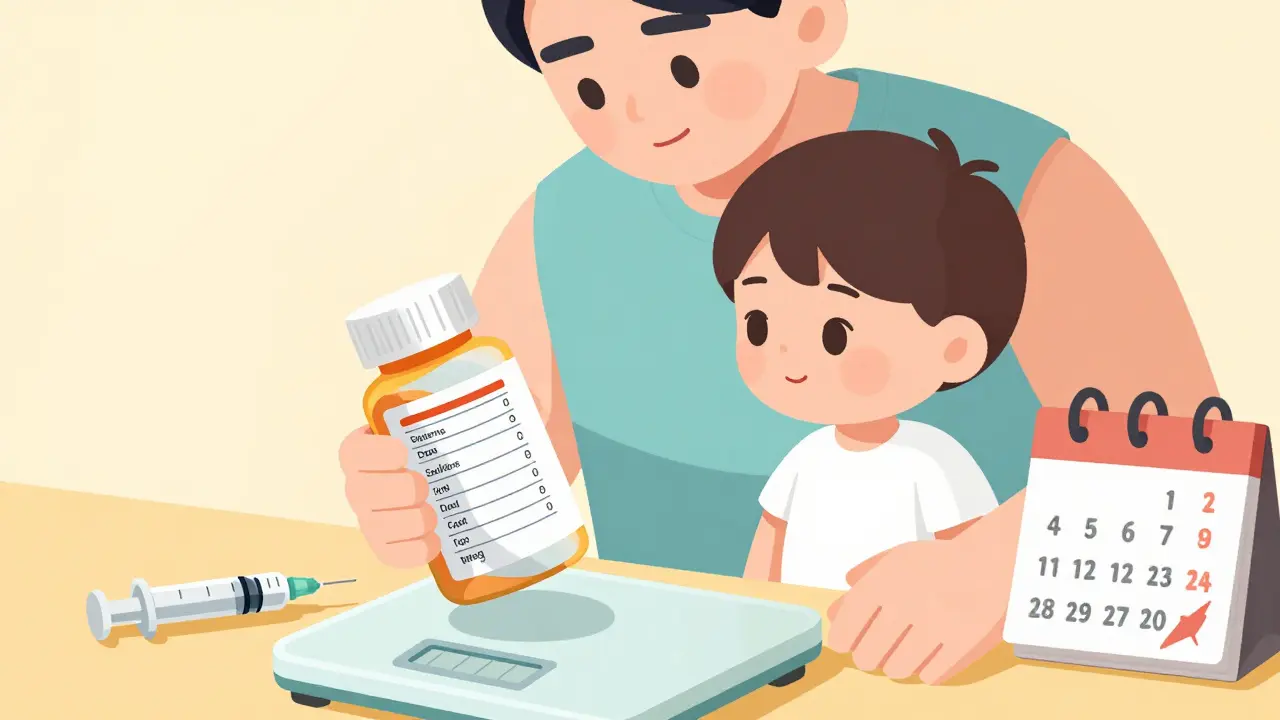
Every year, over 1.4 million children in the U.S. end up in the emergency room because of medication errors. Most of these mistakes happen at home-when parents give the wrong dose of an over-the-counter (OTC) medicine like acetaminophen or ibuprofen. The problem isn’t always carelessness. It’s confusion. Labels look similar, measurements are tricky, and weight-based dosing feels unfamiliar. But reading these labels correctly isn’t rocket science. It’s about knowing what to look for-and what to ignore.
Why Weight Matters More Than Age
You’ve probably seen a bottle that says "For children 2-3 years old: 5 mL." It’s tempting to go by that. But age is just a rough guess. Weight is the real key.A 2-year-old who weighs 40 pounds needs more medicine than a 2-year-old who weighs 22 pounds. Giving the same dose to both can mean underdosing one child-or overdosing the other. According to a study from Johns Hopkins Children’s Center, using age instead of weight leads to dosing errors in 23% of cases. That’s more than 1 in 5 times.
The American Academy of Pediatrics (AAP) says this clearly: weight should be your first guide. If you don’t know your child’s weight, use age. But as soon as you can, weigh them. Use a bathroom scale: hold your child, step on, then subtract your own weight. Or use a baby scale at the pediatrician’s office. Write it down. Keep it on your phone. You’ll thank yourself the next time they have a fever.
What’s on the Label-And What to Ignore
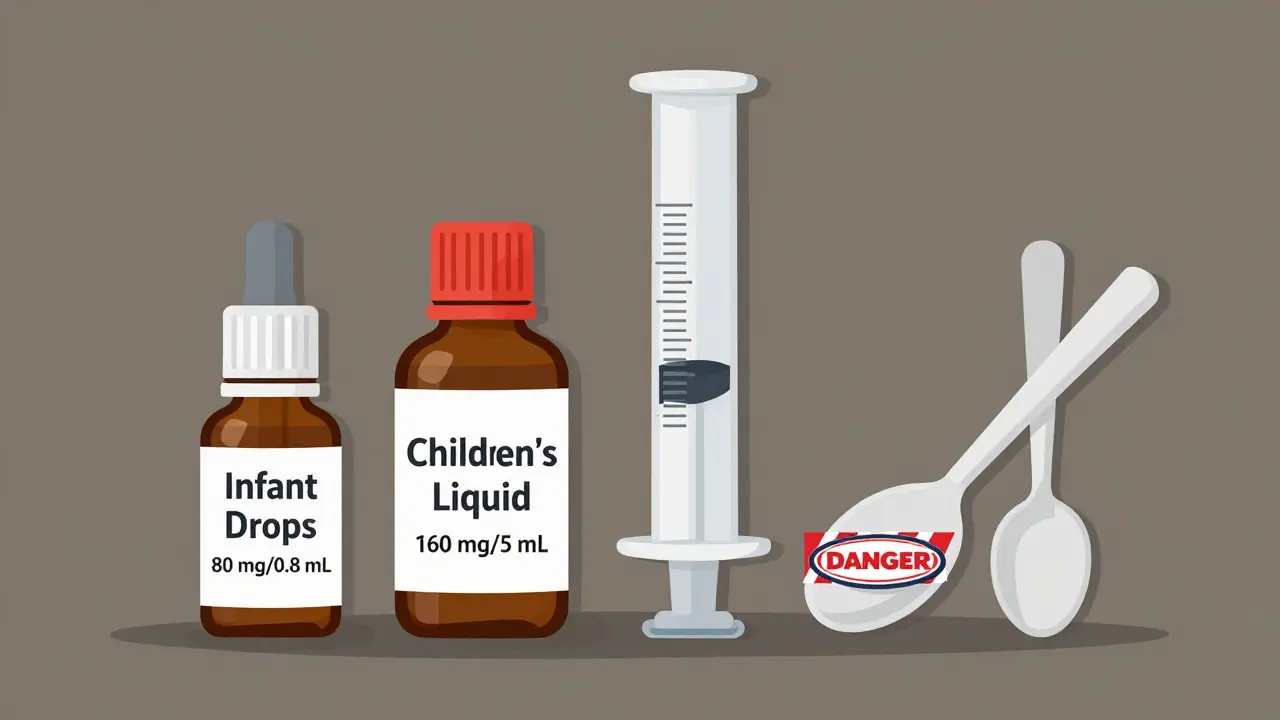
OTC children’s medicine labels have changed a lot since 2011. The FDA made rules to fix dangerous confusion. Here’s what you’ll see now-and what it means.- Concentration: All liquid acetaminophen must now be 160 mg per 5 mL. That’s the standard. No more "infant drops" with different strengths hiding in plain sight. Ibuprofen is 100 mg per 5 mL. Always check this line. If it says "80 mg per 0.8 mL," you’re holding infant drops. Don’t use a regular syringe-use the one that came with it.
- Weight ranges: Look for a chart. It’ll break kids down by pounds: 12-17 lbs, 18-23 lbs, 24-35 lbs, and so on. If your child falls between two ranges, always go with the lower weight. It’s safer. Overdosing is far more dangerous than underdosing.
- Age warnings: "Do not use for children under 6 months" is now required on ibuprofen. Acetaminophen can be used as early as 2 months-but only with your doctor’s okay. Never assume it’s safe just because it’s "children’s" medicine.
- Dosing frequency: Acetaminophen: every 4 hours, max 5 doses in 24 hours. Ibuprofen: every 6-8 hours, max 4 doses in 24 hours. Don’t mix them unless your doctor says so.
Ignore anything that says "tsp" or "tbsp." Those are kitchen measurements. They’re not accurate. A teaspoon from your drawer might hold 4 mL or 7 mL. That’s a 40% error. Always use the measuring tool that came with the bottle-a syringe, cup, or dropper. Never use a regular spoon.
Acetaminophen vs. Ibuprofen: Know the Difference
Parents often think these two are interchangeable. They’re not.Acetaminophen (Tylenol) works well for fever and pain. It’s gentler on the stomach. But it’s hard on the liver if you give too much. That’s why the daily limit is strict: no more than 5 doses in 24 hours. And here’s the big trap: many cold and flu medicines also contain acetaminophen. If you give your child Tylenol and a cold medicine, you could easily double the dose. Always check the "Active Ingredients" section. If it says "acetaminophen," don’t add more.
Ibuprofen (Advil, Motrin) works longer and is better for inflammation. But it can upset the stomach, and it’s not approved for babies under 6 months. It’s also more likely to cause kidney issues if your child is dehydrated. Don’t give it if they haven’t had fluids in hours.
Here’s a quick comparison:
| Feature | Acetaminophen | Ibuprofen |
|---|---|---|
| Standard concentration | 160 mg per 5 mL | 100 mg per 5 mL |
| Minimum age | 2 months (with doctor approval) | 6 months |
| Dosing interval | Every 4 hours | Every 6-8 hours |
| Max doses per day | 5 | 4 |
| Biggest risk | Liver damage from overdose | Stomach upset, kidney stress |
How to Measure Correctly
The most common mistake? Using the wrong tool.Here’s what you need:
- A medicinal syringe (the kind with mL markings)
- A dosage cup with clear lines
- Never use a kitchen teaspoon, tablespoon, or shot glass
One parent on Reddit shared how they gave their 2-year-old 15 mL instead of 5 mL because they read "tsp" and thought it meant "tablespoon." That’s three times the dose. That’s an emergency.
Remember: 1 teaspoon = 5 mL. 1 tablespoon = 15 mL. But don’t rely on memory. Use the syringe. Even if the label says "give 1 tsp," pour it into the syringe and measure 5 mL. Then give it.
Some newer bottles now include a QR code. Scan it. You might get a video showing exactly how to use the syringe. That’s a recent change-FDA-approved in 2024. If your bottle doesn’t have one yet, it will soon.
What to Do When You’re Not Sure
You’re holding the bottle. You’ve weighed your child. You’ve read the label. But you’re still unsure? Don’t guess.Call your pediatrician. Or your pharmacist. Even if it’s 11 p.m. and your child has a fever. That’s what they’re there for.
Here’s when to call immediately:
- Your child is under 3 months old and has a fever
- You think you gave too much medicine
- You gave medicine meant for adults
- You gave two medicines with the same active ingredient
The Acute Liver Failure Study Group reports that acetaminophen overdose is the #1 cause of sudden liver failure in kids. It can happen fast. And it’s often silent-no vomiting, no crying. Just liver damage. You won’t know until it’s too late.

Common Mistakes (And How to Avoid Them)
Here are the top 5 errors parents make-and how to dodge them:- Using a kitchen spoon → Always use the syringe that came with the medicine.
- Assuming "children’s" means safe for all ages → Check the minimum age. Ibuprofen is not for babies under 6 months.
- Giving two medicines with the same active ingredient → Always read the "Active Ingredients" list. If it says acetaminophen, don’t give Tylenol on top.
- Guessing weight → Weigh your child. Write it down. Update it every 6 months.
- Skipping the concentration line → If it says "80 mg per 0.8 mL," you’re holding infant drops. Don’t use a regular syringe.
Hyde Park Pediatrics tracked 1,200 medication errors over two years. 42% were from using kitchen spoons. 19% were from combining cold medicine with acetaminophen. These aren’t rare. They’re predictable-and preventable.
What’s Changing in 2025-2026
The FDA is pushing for even clearer labels. By 2025, all children’s liquid medicines will include a second measurement: "syringe units" in 0.2 mL increments. That means instead of "5 mL," you’ll see "25 units"-easier to read on a small syringe.By 2026, 75% of OTC children’s meds will have QR codes that link to short videos showing dosing instructions. Some brands already do this. Check the label.
Also, all acetaminophen bottles now must say "LIVER WARNING" in bold for kids under 12. That’s new as of February 2024. It’s there for a reason: 47 children had acute liver failure from accidental overdose between 2020 and 2023.
These changes aren’t just paperwork. They’re saving lives.
Can I give my child acetaminophen if they’re under 2 years old?
Yes, but only with your pediatrician’s approval. Acetaminophen can be used in infants as young as 2 months for fever or pain. But never give it to a child under 3 months without calling your doctor first. Fever in babies under 3 months can be a sign of a serious infection, and medication alone won’t fix it.
What if my child’s weight is between two dosing ranges?
Always round down to the lower weight category. For example, if your child weighs 37 pounds and the chart lists 24-35 lbs and 36-47 lbs, use the dose for 24-35 lbs. Overdosing is riskier than underdosing. If the lower dose doesn’t seem to help after an hour, call your doctor before giving more.
Is it safe to give ibuprofen and acetaminophen together?
Only if your doctor says so. Alternating them every 3-4 hours can help manage high fevers, but it’s easy to lose track and give too much. Keep a written log: time, medicine, dose. Never mix them unless you’re sure of the timing and total daily limit. More than 1 in 5 overdoses happen because parents think alternating is safe without knowing the rules.
Why can’t I use a regular teaspoon to measure liquid medicine?
Household teaspoons vary by 20-30%. One might hold 4 mL, another 7 mL. A 5 mL dose could become 7 mL-that’s 40% too much. That’s enough to cause liver damage in a small child. Only use the syringe, cup, or dropper that came with the medicine. They’re calibrated for accuracy.
What should I do if I think I gave my child too much medicine?
Call Poison Control immediately at 1-800-222-1222. Don’t wait for symptoms. Acetaminophen overdose can take 12-24 hours to show signs. By then, liver damage may already be happening. Have the medicine bottle with you when you call. Know the weight, the dose given, and the time.
Can I use children’s Tylenol for my baby if I don’t have infant drops?
No. Infant drops are 80 mg per 0.8 mL. Children’s liquid is 160 mg per 5 mL. If you give the same volume, you’re giving double the dose. That’s dangerous. Always use the right product. If you don’t have infant drops, call your doctor or pharmacy. Don’t wing it.
Next Steps: What to Do Today
You don’t need to memorize every dose. But you do need to be ready.- Find your child’s current weight and write it down.
- Keep a syringe in your medicine cabinet, diaper bag, and car.
- Take a photo of the dosing chart on your child’s medicine bottle.
- Check all your cold and flu medicines for acetaminophen.
- Set a reminder to weigh your child every 6 months.
Medicine labels are designed to keep your child safe. But they only work if you read them right. Weight isn’t just a number. It’s your child’s best defense against a mistake that could change everything.


Alexandra Enns
January 24, 2026 AT 22:45Wow, this is the most condescending pile of common sense I’ve ever read. Like, wow, you’re telling me to use a syringe instead of a spoon? Newsflash: I’m not an idiot. Also, why is everything in mL? We’re in North America. Use teaspoons like normal people. Also, why does the FDA think they’re my mom now? I’ve been giving Tylenol since 2010 and my kid’s still alive. 🙄
Marie-Pier D.
January 26, 2026 AT 12:31Thank you for writing this. As a mom of twins with a history of febrile seizures, I’ve had panic attacks over dosing. I keep a laminated chart taped to the fridge with my kids’ weights and the exact mL for each med. I also take pics of the syringe with the dose marked in sharpie. You’re right - weight > age. And yes, the kitchen spoon is a death trap. I used to do it too. Not anymore. ❤️
blackbelt security
January 27, 2026 AT 09:44Just read this before bed. Good stuff. I’m printing it out and taping it to the medicine cabinet. Also, bought a digital baby scale last week. Best $25 I’ve spent. No more guessing. No more stress. Simple. Effective. Done.
Patrick Gornik
January 28, 2026 AT 00:06Let’s deconstruct the epistemology of pediatric dosing. The FDA’s standardization of 160mg/5mL isn’t science - it’s bureaucratic hegemony disguised as safety. The real issue is the infantilization of parental autonomy. We’ve traded critical thinking for compliance. The syringe isn’t a tool - it’s a symbol of institutional control. And yet, paradoxically, the very act of measuring precisely is an act of resistance against the chaos of modern parenting. So… maybe the FDA is right? But only because they’re accidentally channeling Heidegger. 🤯
Josh McEvoy
January 28, 2026 AT 07:59bro i gave my kid 15ml bc i thought tsp meant tablespoon and now i’m scared to even look at the medicine cabinet 😭 i just bought a new syringe and i’m gonna cry if i see another tsp on a label
Heather McCubbin
January 28, 2026 AT 19:57So you’re telling me I’ve been a terrible mom for 3 years because I used a spoon? Wow. Thanks for the guilt trip. My kid’s fine. He’s 4. He’s alive. He’s running around. But sure, let’s blame me because I didn’t know the FDA had a parenting app. And why is everyone so scared of acetaminophen? It’s not poison. It’s Tylenol. Get a grip.
Amelia Williams
January 29, 2026 AT 17:01This is so helpful! I didn’t know about the QR codes on newer bottles - just scanned mine and it showed a 30-second video on how to use the syringe. Mind blown. I’m going to share this with my mom group. Also, I just weighed my daughter and she’s grown 3 lbs since last checkup - I’m updating my chart right now. Small steps, big safety wins 💪
venkatesh karumanchi
January 30, 2026 AT 14:02Great post. I’m from India and we don’t have these labels here. We just use whatever is available. But after reading this, I’m going to ask my doctor about weight-based dosing. My niece had a fever last week and I gave her half a spoon. Now I feel scared. Thank you for making me think.
Jenna Allison
January 31, 2026 AT 04:30As a pediatric nurse, I see this every day. The #1 mistake? Mixing cold meds with Tylenol. Parents don’t even check the ingredients. I keep a free printable dosing chart on my clinic’s website - link in my profile. Also - yes, weigh your kid. Even if it’s just on your bathroom scale. Write it down. It saves lives.
lorraine england
January 31, 2026 AT 17:00I love how this article doesn’t shame you. It just gives you the facts. I used to think the syrup was the same no matter the bottle. Now I check the concentration every time. And I keep the syringe in my purse. My 18-month-old has a cold right now - I’m holding it in my hand as I type this. Safety first. No drama. Just smart.
Darren Links
February 2, 2026 AT 05:32Wow, this is so American. In my country, we just give half a capful and hope for the best. Also, why are you so obsessed with weight? My kid’s 2 and weighs 28 lbs - that’s fine. Stop making parents paranoid. The world’s not out to kill your children. Chill.
Kevin Waters
February 2, 2026 AT 09:40Just wanted to say thank you. I used to wing it until my daughter had a bad reaction to a cold med + Tylenol combo. I didn’t know they both had acetaminophen. That was a wake-up call. Now I keep a notebook. I write down every dose. I use the syringe. I weigh her every 6 months. It’s not hard. It’s just… necessary. You’re right - it’s not rocket science. It’s responsibility.