
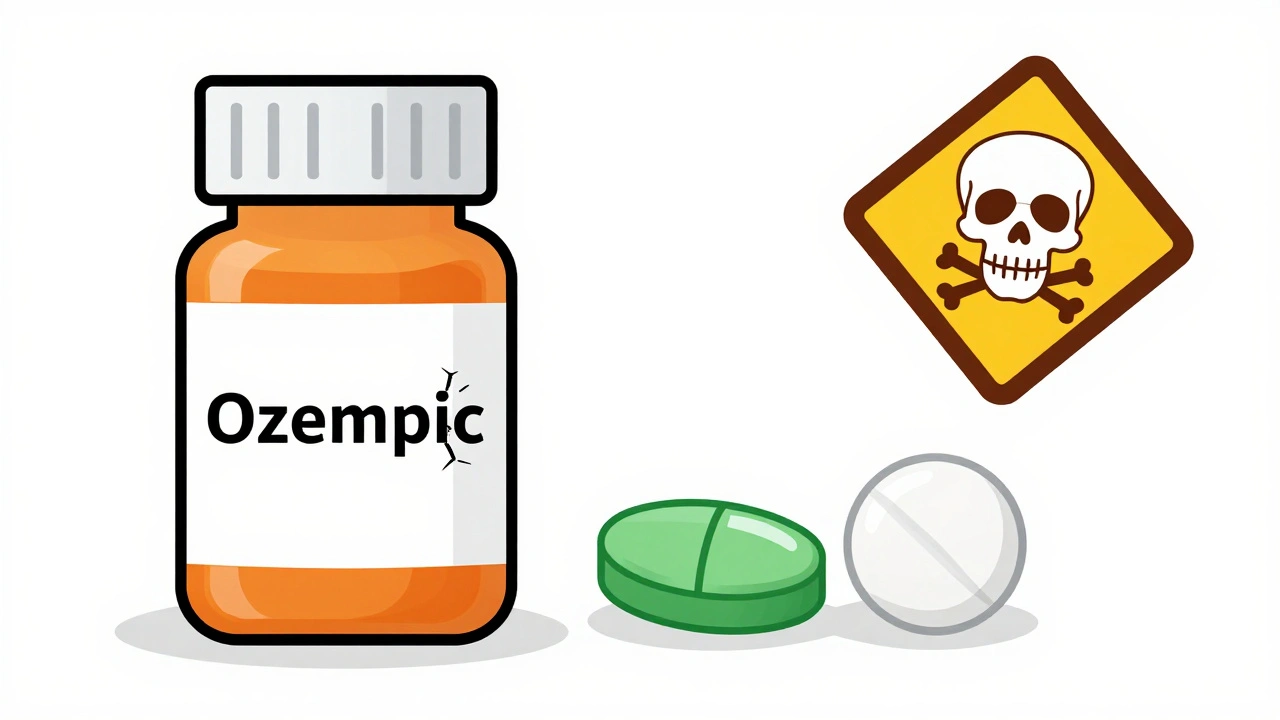
Every year, millions of people around the world take generic medications because they’re affordable, effective, and approved by health regulators. But what if the pill you’re swallowing isn’t what it claims to be? Counterfeit generics are fake versions of real drugs-packaged to look identical, but often containing no active ingredient, the wrong chemical, or even toxic substances. These aren’t just poor-quality copies. They’re dangerous. And they’re easier to find than you think.
What Makes a Generic Medication Fake?
Authentic generic drugs are exact copies of brand-name medications, approved by the FDA, EMA, or other global health agencies. They must contain the same active ingredient, in the same strength, and work the same way in your body. That’s called bioequivalence-meaning the drug is absorbed into your bloodstream at nearly the same rate and amount as the original. Counterfeit generics break all those rules. They might have 0% of the active ingredient. Or 5%. Or a completely different drug-like caffeine, rat poison, or chalk-mixed in. Some contain the right ingredient but in the wrong dose, making them useless or deadly. A 2024 report from the Pharmaceutical Security Institute found that over half of all counterfeit medicines tested had no active pharmaceutical ingredient at all. These fakes aren’t just sold on shady websites. They’re showing up in legitimate-looking online pharmacies, pop-up clinics, and even some local drugstores. In 2025, U.S. Customs seized counterfeit versions of Ozempic, Botox, and erectile dysfunction pills coming in from Asia. An Iowa pharmacy was fined $25,000 for selling fake Ozempic. If it can happen in a licensed pharmacy, it can happen anywhere.Who’s Most at Risk?
People in low- and middle-income countries face the highest risk. The World Health Organization estimates that 1 in 10 medicines in these regions are substandard or falsified. In parts of Africa, that number jumps to 70%. But the problem is spreading. High-income countries like the U.S. and Canada are seeing a surge in counterfeit weight-loss drugs, diabetes medications, and antibiotics. Why? Because these drugs are in high demand-and expensive. Ozempic, Wegovy, and other semaglutide-based medications cost hundreds of dollars a month. Counterfeiters know people will pay anything to get them. So they make fakes that look real, sell them for half the price, and profit from desperation. And it’s not just about money. People with chronic conditions like diabetes, heart disease, or HIV are especially vulnerable. Taking a fake version of their medication can lead to organ damage, uncontrolled illness, or death. In Nigeria, counterfeit malaria drugs caused liver failure in multiple patients. In South Africa, fake insulin and antibiotics were linked to preventable deaths.How to Spot a Fake Medication
Counterfeiters are getting better. Some fakes have perfect packaging, holograms, and even QR codes. But they still make mistakes. Here’s what to look for:- Spelling or grammar errors on the label, box, or leaflet-even small ones like “Ozempic” misspelled as “Ozempic” or “take with food” written as “take wit food.”
- Unusual color, shape, or size of the pill. If your usual generic metformin is white and round, but now it’s green and oval, that’s a red flag.
- Missing or incorrect NDC number. Every U.S. drug has a National Drug Code. Check it against the FDA’s database or ask your pharmacist to verify.
- Unusual smell or taste. If your pills taste bitter, metallic, or like plastic, don’t take them.
- Unlicensed sellers. If a website doesn’t list a physical address, doesn’t require a prescription, or offers “free shipping from Canada” with no licensing info, walk away.
Where Not to Buy Medications
The biggest source of counterfeit drugs is illegal online pharmacies. Interpol’s 2025 operation shut down over 13,000 fake pharmacy websites and social media accounts. Most of them don’t require prescriptions. According to the FDA, 89% of online pharmacies that hide their physical address are illegal. Avoid:- Websites that offer “discounted” or “overseas” versions of brand-name drugs
- Social media ads promoting “miracle weight-loss pills” or “cheap ED meds”
- Text message links to pharmacies you’ve never heard of
- Pharmacies that don’t have a licensed pharmacist on staff
Verification Tools That Actually Work
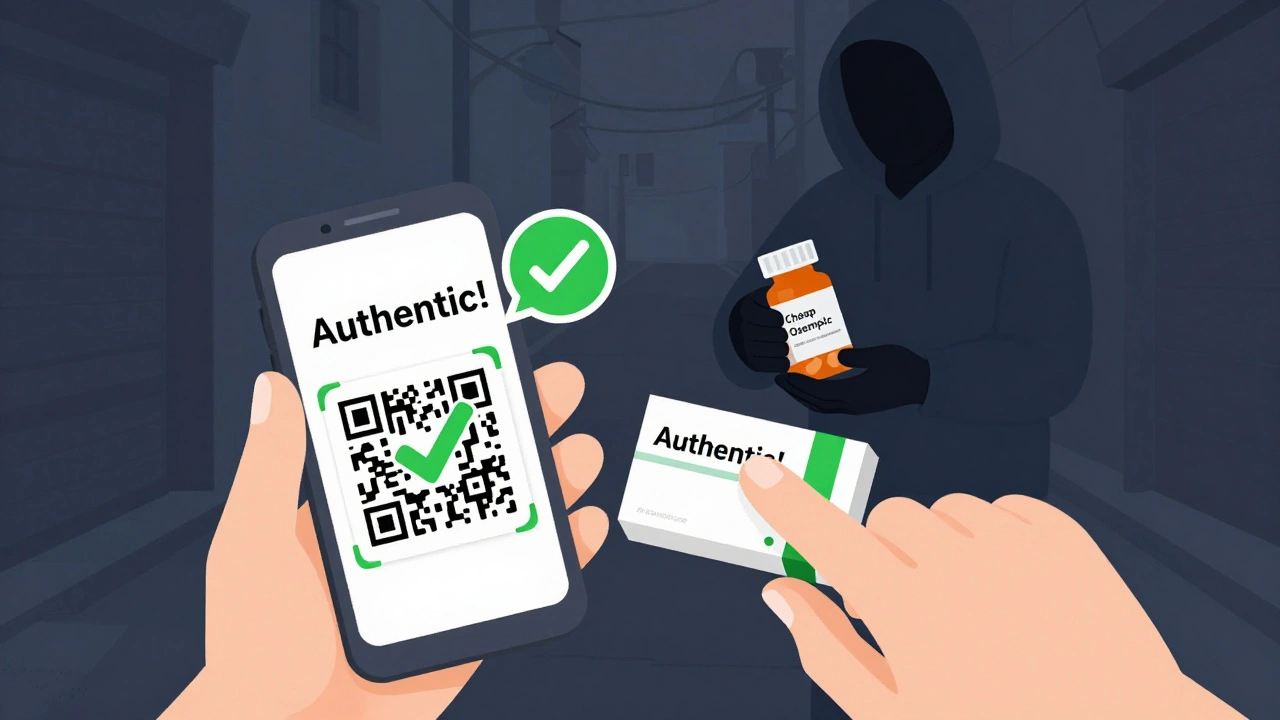
Some manufacturers have built real-time verification systems. If you’re taking a drug like Ozempic, use Novo Nordisk’s “Verify Your Pen” tool. Scan the QR code on the box with your phone. If it says “authentic,” you’re good. If it flags it as suspicious, stop using it and report it. Pfizer, Gilead, and other major companies offer similar tools for their products. The TrueMed app, with over 1,200 reviews and a 4.7-star rating on Google Play, lets users scan barcodes on pills and instantly check authenticity. It’s especially popular for erectile dysfunction medications. For those with access to more advanced tools, portable spectrometers can analyze the chemical makeup of a pill in seconds. But most people won’t need that. Just stick to the basics: check the packaging, verify the NDC, and buy from trusted sources.What to Do If You Suspect a Fake
If you think you’ve been sold a counterfeit medication:- Stop taking it immediately. Even one dose can be dangerous.
- Save the packaging and pills. Don’t throw them away. Authorities need them to track the source.
- Contact your pharmacist. They can help verify the product and report it.
- Report it to the FDA. Use the MedWatch program at fda.gov/medwatch. You can report online or call 1-800-FDA-1088.
- Call Pfizer’s Anti-Counterfeiting Hotline at 1-800-593-5685 if it’s one of their products.
Why This Matters More Than You Think
Counterfeit drugs don’t just hurt individuals. They fuel global crime. The illicit pharmaceutical trade is now worth $200 billion a year-larger than the GDP of many countries. Criminal gangs use the profits to fund other illegal activities: human trafficking, weapons smuggling, even terrorism. There’s also a public health crisis brewing. When people take fake antibiotics, they don’t get cured. Instead, bacteria survive, adapt, and become resistant. The Review on Antimicrobial Resistance warns that by 2050, up to 10 million deaths per year could be linked to ineffective treatments-including counterfeit drugs. And it’s not just about money. People who rely on these drugs for chronic conditions are being betrayed. A Reddit user in August 2025 wrote: “I took fake Ozempic for three months. My blood sugar didn’t drop. I lost weight anyway-because I was sick.” That’s not a side effect. That’s a medical emergency.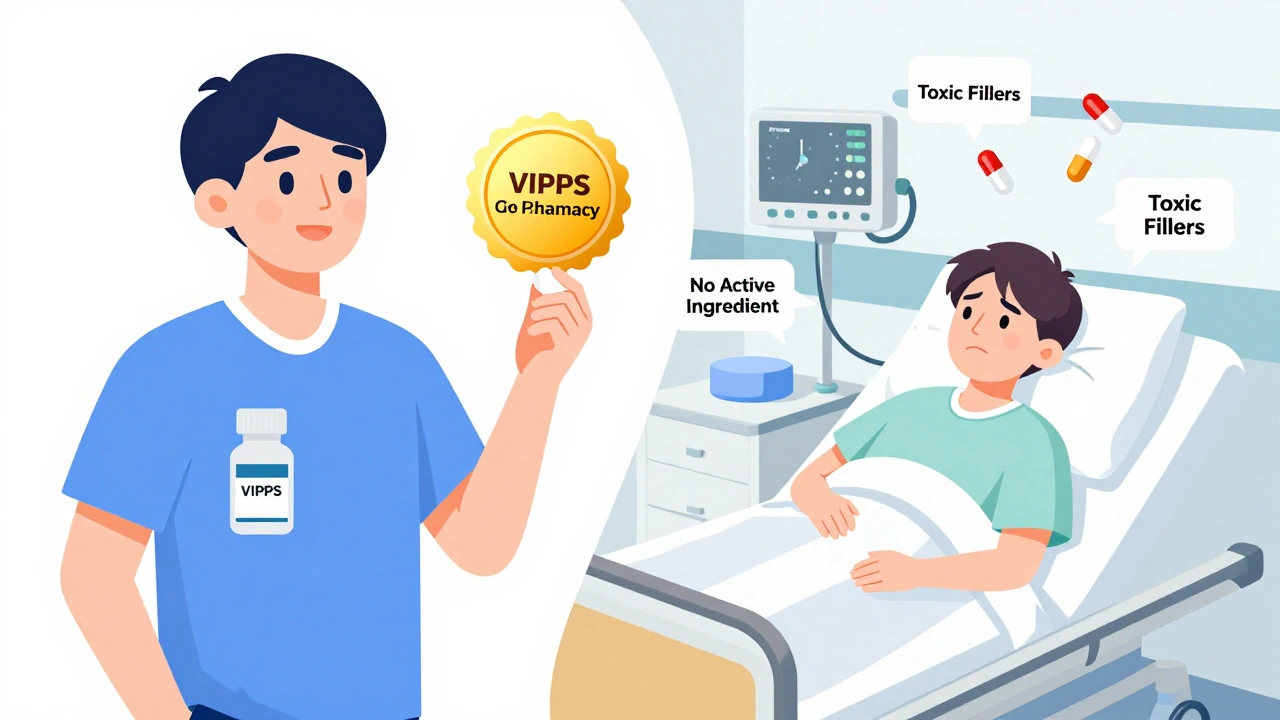
How to Stay Safe Going Forward
You can’t stop counterfeiters. But you can protect yourself:- Always buy from licensed pharmacies. If you’re unsure, call the pharmacy and ask if they’re VIPPS-certified.
- Don’t trust “too good to be true” prices. If a generic drug is 70% cheaper than the market rate, it’s probably fake.
- Use manufacturer verification tools. Especially for high-risk drugs like Ozempic, Viagra, insulin, or HIV meds.
- Ask your doctor or pharmacist to help you verify. They’re trained to spot red flags.
- Report anything suspicious. Your report could save someone’s life.
Frequently Asked Questions
How can I tell if my generic medication is real?
Check the packaging for spelling errors, verify the National Drug Code (NDC) on the FDA website, and compare the pill’s color, size, and shape to previous batches. Use manufacturer verification tools like Novo Nordisk’s ‘Verify Your Pen’ for drugs like Ozempic. If the pill looks, smells, or tastes off, don’t take it.
Can I get counterfeit drugs from a regular pharmacy?
Yes. While rare, counterfeit drugs have entered legitimate supply chains. In 2025, a pharmacy in Iowa was fined for selling fake Ozempic. Always buy from pharmacies with the VIPPS seal, and if you notice anything unusual about your medication, ask your pharmacist to check its source.
Are online pharmacies ever safe?
Only if they’re VIPPS-certified and require a valid prescription. Most online pharmacies that don’t list a physical address, offer “no prescription needed,” or have prices far below market rate are illegal. Use the NABP’s website to verify any online pharmacy before buying.
What should I do if I took a fake medication?
Stop taking it immediately. Contact your doctor or go to urgent care if you feel unwell. Save the packaging and pills. Report it to the FDA through MedWatch or call 1-800-FDA-1088. Your report helps authorities track and shut down criminal networks.
Why are counterfeit generics so common now?
Demand for affordable medications like Ozempic, Viagra, and antibiotics has skyrocketed. Criminal networks exploit this by making convincing fakes and selling them online. The pandemic made it worse, as supply chains got disrupted and people turned to unregulated sources. With AI now helping counterfeiters create better packaging, the problem is growing.

Bonnie Youn
December 2, 2025 AT 10:14Just bought my metformin from a local pharmacy with the VIPPS seal and scanned the QR code-authentic. Seriously folks, this stuff saves lives. Don’t be lazy. Check your meds. Your body will thank you.
Stop risking it for a few bucks.
Edward Hyde
December 3, 2025 AT 17:24So let me get this straight-some dude in Bangalore is mixing chalk and caffeine into Ozempic vials and shipping them to Iowa like it’s Amazon Prime? And we’re supposed to trust Big Pharma when they say their $900 insulin is legit? Wake up. The whole system’s rigged. The real counterfeit is the price tag.
They sell you the lie that generics are safe. Then they charge you for the privilege of being scared.
Charlotte Collins
December 5, 2025 AT 04:32The FDA received 12,000 reports in 2024. That’s 0.003% of all prescriptions filled. The real danger isn’t counterfeit drugs-it’s the manufactured panic that drives people to distrust every pill they take. You’re not being protected. You’re being manipulated into buying overpriced brand-name drugs under the guise of safety.
Stop conflating fear with vigilance.
Margaret Stearns
December 6, 2025 AT 10:08i just checked my diabetes pills and the ndc matched the fda site. i didnt know you could do that. thank you for the info. i always trusted my pharmacy but now i know to double check. this is really helpful.
small steps matter.
amit kuamr
December 7, 2025 AT 09:09India makes 60 percent of global generics. You think we dont know how to make medicine? You think every pill from here is poison? You westerners are scared of your own shadows. If you cant afford your meds buy from licensed Indian pharmacies not some scam site.
Stop blaming the source blame the greed.
Scotia Corley
December 8, 2025 AT 15:22It is imperative to underscore the necessity of regulatory compliance in pharmaceutical distribution. The integrity of the global supply chain hinges upon adherence to internationally recognized standards. The presence of counterfeit medications is not merely a consumer safety issue-it is a systemic failure of oversight and enforcement.
One must consult only those entities accredited by recognized bodies such as VIPPS and NABP.
elizabeth muzichuk
December 8, 2025 AT 20:41Have you ever wondered why the FDA doesn’t shut down the entire online pharmacy industry? Why they let these sites operate for months before issuing a warning? Because they’re in bed with Big Pharma. They need you scared. They need you buying $1,200 Ozempic pens instead of $30 generics. This isn’t about safety. It’s about control.
They want you to think you’re safe. You’re not.
Debbie Naquin
December 10, 2025 AT 20:18The epistemological crisis here isn’t the counterfeit pill-it’s the collapse of trust in institutional verification. When the NDC becomes a performative artifact rather than a reliable datum, and when manufacturer QR codes are replicated with AI-generated fidelity, the very concept of authenticity becomes unmoored.
We are no longer verifying substances-we are verifying interfaces. And interfaces can be gamed.
Karandeep Singh
December 12, 2025 AT 05:58fake meds are bad but so is paying 500 for a pill that cost 2 to make. the system is broken not the pills
Mary Ngo
December 13, 2025 AT 06:48Did you know the WHO is funded by pharmaceutical giants? And the FDA’s advisory board includes executives from Novo Nordisk and Pfizer? They’re not trying to stop counterfeits-they’re trying to stop competition. The real fake is the myth that generics are dangerous. They’re dangerous because they’re too cheap.
They want you dependent. They want you afraid.
James Allen
December 13, 2025 AT 20:06Look I’m American and I love my country but this whole fake meds thing? It’s a global problem. China, India, Nigeria-they’re not the enemy. The real enemy is the greed that makes people sell poison to the sick. We need real reform not fear-mongering.
And if you’re buying meds from some sketchy website? Yeah you’re dumb. But you’re not alone.