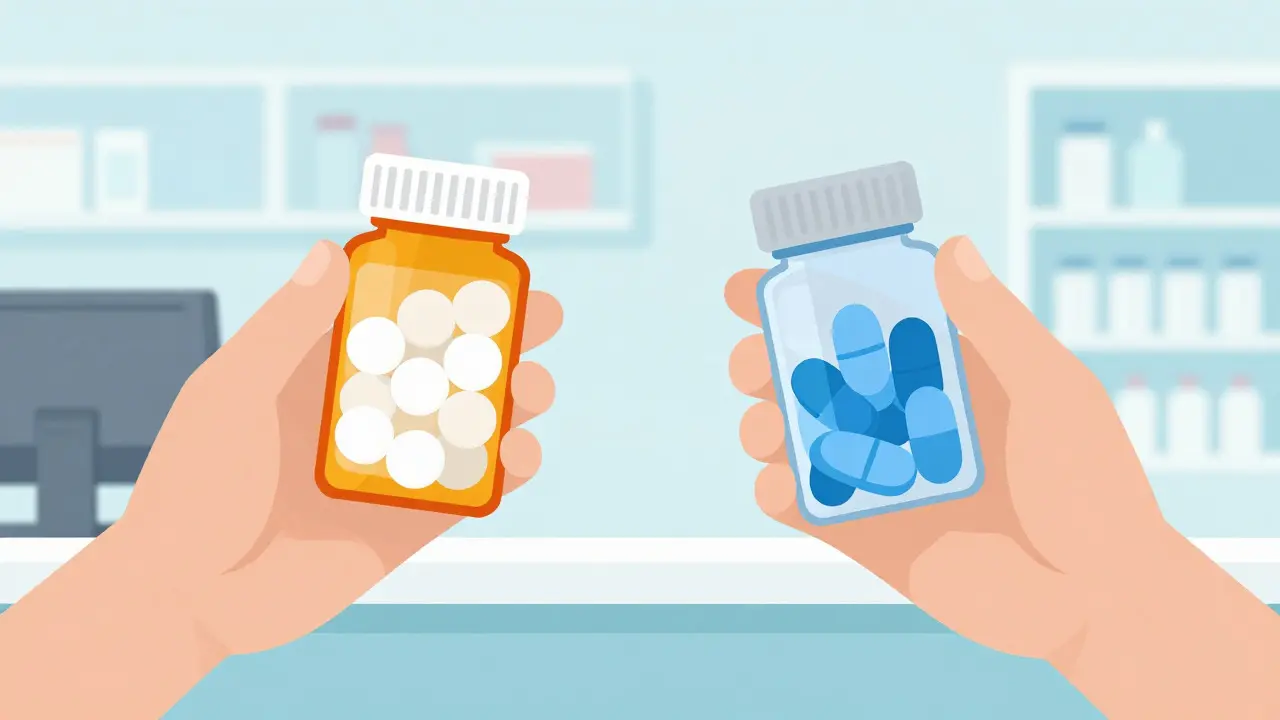
You pick up your prescription at the pharmacy counter. The pharmacist hands you a bottle, but the pills inside look nothing like what you had last month. Maybe they’re blue instead of white, or oval instead of round. Your stomach drops. Did they give you the wrong medication? Is this new manufacturer cutting corners?
This confusion is incredibly common. In fact, a 2023 survey by the National Community Pharmacists Association found that 37% of community pharmacists deal with patients who mistake legitimate generic substitutions for errors simply because the pill looks different. But here’s the reality: pill appearance varies widely between manufacturers due to trademark laws and inactive ingredient choices, not necessarily quality differences. To make smart decisions about your health, you need to understand how to compare generic manufacturers beyond just looking at the tablet.
Why Do Pills Look Different If They Are the Same Drug?
The core reason lies in intellectual property law. When a brand-name drug loses its patent protection, other companies can sell copies. However, they cannot copy the brand’s trade dress-the specific color, shape, and size that identifies the original product. This prevents consumer confusion. If every generic version of Lipitor looked exactly like the Pfizer original, patients might accidentally mix them up or think they were buying the brand when they weren’t.
Consequently, generic manufacturers must choose distinct visual characteristics. A 2020 study published in Nature Scientific Reports noted that color differences occur in 78% of generic substitutions, shape variations in 65%, and size differences in 42%. These changes are driven by two main factors:
- Trademark Restrictions: You can’t use the brand’s unique look.
- Inactive Ingredients: Fillers, binders, and dyes differ between factories. One company might use lactose; another uses microcrystalline cellulose. These ingredients affect the final texture, hardness, and color of the tablet.
While these visual cues change, the active ingredient remains identical. The U.S. Food and Drug Administration (FDA) mandates that generics contain the same amount of active drug, in the same dosage form, administered by the same route as the brand-name counterpart.
Understanding Bioequivalence: The Real Measure of Quality
If you can’t judge a drug by its cover, how do you know it works? The answer is bioequivalence. This is a scientific standard ensuring that the generic drug delivers the active ingredient into your bloodstream at the same rate and extent as the brand-name reference listed drug (RLD).
The FDA requires generic manufacturers to prove that their product falls within a strict statistical range. Specifically, the 90% confidence interval for the geometric mean ratios of maximum concentration (Cmax) and area under the curve (AUC) must be between 80% and 125%. Think of this as a performance tolerance band. As long as the generic stays within this window, it is considered therapeutically equivalent.
Does this wide range mean some generics are significantly weaker? Not really. A landmark analysis of over 2,000 bioequivalence studies revealed that the average difference in absorption between generic and brand-name drugs was only 3.5%. This variance is comparable to batch-to-batch differences seen in brand-name products themselves. For most medications, a 3.5% difference is clinically irrelevant.
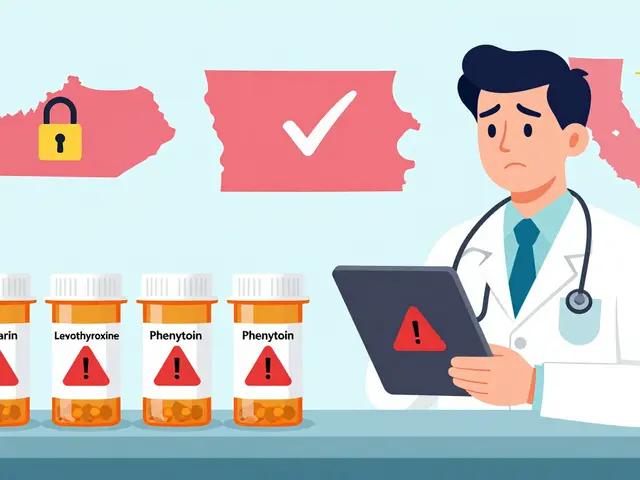
However, exceptions exist. For Narrow Therapeutic Index Drugs (NTIDs)-such as warfarin, levothyroxine, or phenytoin-the margin for error is much tighter. For these critical medications, the FDA tightens the bioequivalence range to 90-111%. Small changes in blood levels can lead to toxicity or treatment failure, so consistency matters more here than with standard antibiotics or painkillers.

How to Verify Manufacturer Reputation and Approval Status
Not all generic manufacturers are created equal. Some have decades of experience and robust quality control systems; others are newer entrants facing supply chain hurdles. Knowing which company made your pill helps you assess reliability.
The primary tool for this is the FDA’s Orange Book. Updated monthly, it lists all approved drug products with therapeutic equivalence evaluations. It also links each product to its Abbreviated New Drug Application (ANDA). By checking the ANDA number, you can see if the product has been approved recently or if it has faced any manufacturing issues.
Additionally, consider the market position of the manufacturer. Major players like Teva Pharmaceutical Industries, Viatris (formerly Mylan), and Sandoz dominate the landscape. Teva, for instance, holds about 9% of the U.S. generic prescription market. Large manufacturers often have more resources for quality assurance but may face higher scrutiny. Smaller manufacturers might offer lower prices but could have less redundancy in their supply chains.
| Manufacturer Type | Typical Market Share | R&D Spend (% of Revenue) | Approval Timeline | Key Risk Factor |
|---|---|---|---|---|
| Major Global Players (e.g., Teva, Viatris) | High (10-20% combined) | 5-10% | 2-3 years | Supply chain complexity |
| Specialized/Complex Generics (e.g., Hikma) | Niche (5-10%) | 10-15% | 4+ years | Technical formulation challenges |
| New Entrants | Low (<5%) | Variable | 1-2 years | Regulatory approval delays |
Navigating Switches Between Manufacturers
Pharmacies frequently switch suppliers based on contracts, availability, and cost. You might receive a pill from Manufacturer A one month and Manufacturer B the next. For most drugs, this is harmless. But for NTIDs, frequent switching can cause fluctuations in blood levels.
If you take a narrow therapeutic index drug, ask your pharmacist to maintain the same manufacturer. You can request this using "Dispense as Written" (DAW) codes. DAW-1 indicates that substitution is not permitted, effectively locking you into the prescribed brand or specific generic. While this might increase out-of-pocket costs slightly, it ensures consistency.
For standard medications, switching is generally safe. A comprehensive review by the European Medicines Agency involving over 9 million patients found no clinically significant differences in effectiveness between branded and generic cardiovascular medications. The hazard ratios for major adverse cardiac events ranged from 0.98 to 1.02-essentially identical outcomes.

Practical Steps to Identify and Compare Your Pills
Don’t rely on memory alone. Use technology and official databases to verify what you’re taking.
- Use the National Drug Code (NDC): Every package of medication has an NDC number. This unique identifier tells you exactly who made the drug, the strength, and the package size. You can search the NDC Directory online to find the manufacturer’s name.
- Leverage Pill Identifier Apps: Tools like the Drugs.com Pill Identifier allow you to match color, shape, and imprint codes visually. With millions of users, these apps are updated regularly to reflect new market entries.
- Check the Imprint Code: Since 1970, federal law requires unique imprints on prescription tablets. If the imprint matches the database entry for your drug, you have the right medication, regardless of color or size.
- Consult the FDA Drugs@FDA Database: This daily-updated resource provides labeling information. It allows you to compare inactive ingredients across different versions, helping you identify potential allergens like dyes or gluten.
Remember the "5 Rights" framework taught in pharmacy schools: Right Drug, Right Dose, Right Time, Right Route, and Right Patient. Appearance isn’t part of this list for a reason. Focus on the imprint and the NDC, not the aesthetic.
When Should You Be Concerned About Appearance Changes?
While most changes are benign, there are red flags. If a pill suddenly tastes bitter, crumbles easily, or smells different, contact your pharmacist. These physical anomalies might indicate degradation or storage issues.
Also, pay attention to subjective effects. A 2023 Reddit thread with over 1,200 comments showed that while 68% of respondents had no issues switching manufacturers, 22% reported perceived efficacy differences, particularly with psychiatric medications. While placebo effects play a role, individual sensitivity to inactive ingredients (like dyes or fillers) can cause real side effects. If you notice a rash, digestive upset, or lack of effect after a switch, report it to your doctor. You might need to stick with a specific manufacturer whose inactive ingredients suit you better.
Are generic drugs less effective than brand-name drugs?
No. The FDA requires generics to demonstrate bioequivalence, meaning they deliver the active ingredient into the bloodstream at the same rate and extent as the brand. Studies show the average difference in absorption is only 3.5%, which is clinically insignificant for most conditions.
Why do my pills look different every time I refill my prescription?
Generic manufacturers cannot copy the brand's trademarked appearance. Additionally, pharmacies often switch suppliers based on price and availability. Each manufacturer uses different inactive ingredients (dyes, binders), resulting in variations in color, shape, and size.
What is a Narrow Therapeutic Index Drug (NTID)?
An NTID is a medication where the difference between an effective dose and a toxic dose is small. Examples include warfarin and levothyroxine. For these drugs, the FDA enforces stricter bioequivalence standards (90-111%) and recommends maintaining the same manufacturer to avoid blood level fluctuations.
Can I tell if a generic is good quality just by looking at it?
No. Visual appearance does not correlate with potency or quality. A pill’s color and shape are determined by inactive ingredients and trademark restrictions. Always check the imprint code and NDC number to verify the medication’s identity and manufacturer.
What should I do if I feel worse after switching to a new generic manufacturer?
Contact your pharmacist or doctor. While rare, some individuals are sensitive to specific inactive ingredients like dyes or fillers used by certain manufacturers. Your provider can help determine if the issue is related to the formulation change and may prescribe a specific manufacturer or the brand name.