
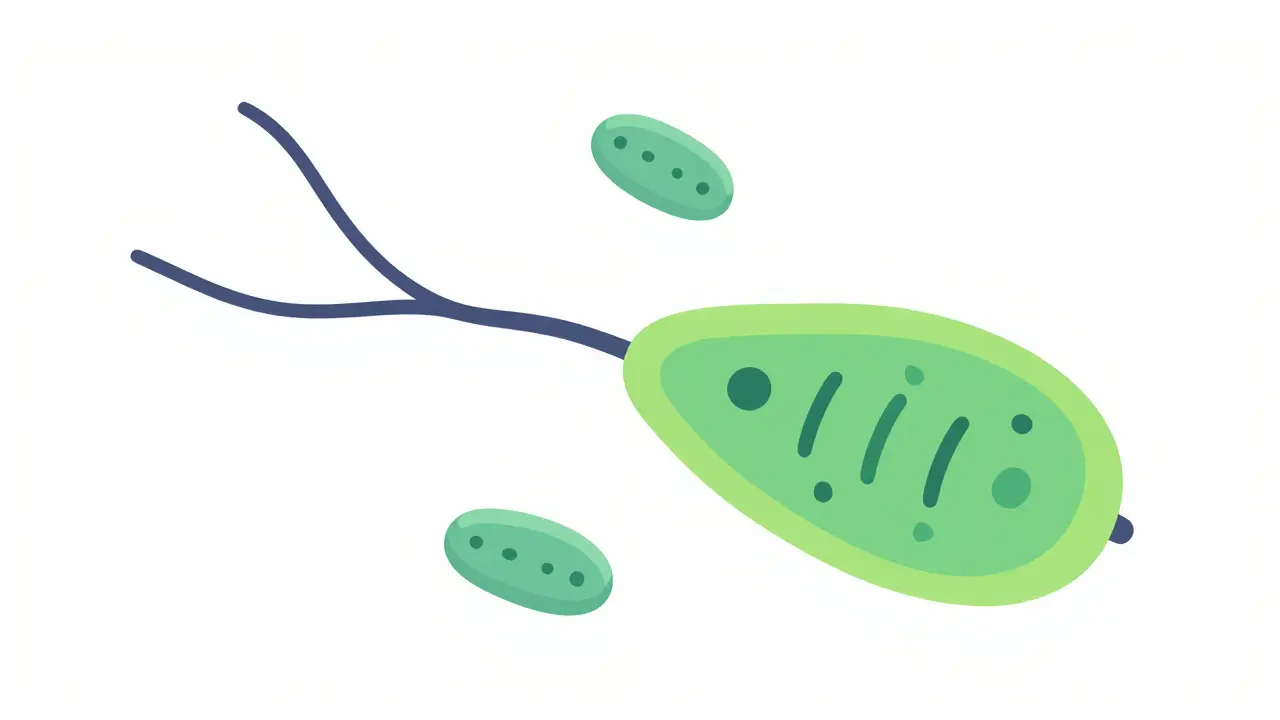
Itching at night. Unexplained diarrhea that just won't quit. These aren't just minor annoyances; they are classic signs of two of the most common parasitic infections affecting humans worldwide: giardiasis caused by Giardia lamblia, and pinworm infection caused by Enterobius vermicularis. While these organisms seem worlds apart-one is a microscopic protozoan, the other a tiny worm-they share a nasty habit of thriving in human intestines and spreading easily through poor hygiene or contaminated environments.
You don't need to be traveling in a remote jungle to catch these bugs. In fact, pinworms are so common in the United States that they affect millions of children annually, often in schools and daycare centers. Giardia, meanwhile, remains the leading cause of parasitic diarrhea in developed nations, lurking in campgrounds, swimming pools, and even municipal water supplies if filtration fails. Understanding how these infections work, how to spot them, and how to treat them effectively is crucial for protecting your health and your household.
Understanding Giardia: The Waterborne Protozoan
Giardia lamblia (also known as Giardia duodenalis or Giardia intestinalis) is a pear-shaped, flagellated protozoan parasite. It exists in two forms: the active trophozoite, which attaches to the lining of your small intestine, and the hardy cyst form, which allows it to survive outside the body for months in cold water. This resilience is what makes Giardia such a persistent public health threat.
Infection occurs when you ingest as few as 10 to 25 cysts. This usually happens through the fecal-oral route-meaning you accidentally swallow microscopic traces of feces from an infected person or animal. Common sources include drinking untreated water from lakes or streams, eating food prepared by someone with poor hand hygiene, or swallowing pool water where chlorine levels were insufficient. Once inside, the cysts hatch into trophozoites, which multiply and damage the brush border of your intestinal epithelium. This damage disrupts nutrient absorption, leading to the hallmark symptoms of the disease.
The incubation period typically ranges from one to two weeks, with an average of seven days. When symptoms strike, they can be severe. You might experience voluminous, foul-smelling watery diarrhea, significant abdominal cramping, excessive flatulence, nausea, and profound fatigue. Weight loss is also common because your gut cannot properly absorb fats and sugars. While acute cases often resolve within a few weeks, the infection can become chronic, lasting months and causing long-term malabsorption issues, particularly in immunocompromised individuals.
Pinworms: The Nighttime Itch
If Giardia is the troublemaker of the water supply, Pinworms (Enterobius vermicularis) are the stealthy invaders of the bedroom. These are small, thin, white roundworms, about the size of a staple (approximately 1 cm long). Unlike Giardia, pinworms do not migrate to other organs; they stay strictly in the large intestine and rectum.
The life cycle of the pinworm is deceptively simple but highly effective for spread. Adult worms live in the colon, but the females have a specific mission: at night, while you sleep, they migrate out of the anus to lay thousands of eggs on the surrounding skin. This movement causes intense perianal itching, which is the primary symptom. Scratching this area transfers the microscopic eggs under your fingernails and onto bedding, clothing, and toys. Because these eggs can become airborne when sheets are shaken, they can be inhaled and then swallowed, restarting the cycle. They can also survive on surfaces for two to three weeks, waiting for a new host.
Pinworms are incredibly contagious among people who live together. If one child in a family has them, it is highly likely that siblings and parents are already infected, even if they show no symptoms. This is why treating the entire household simultaneously is non-negotiable. The infection is most prevalent in children aged 5 to 10, but anyone can get it. The good news is that pinworms rarely cause serious medical complications beyond discomfort and sleep disruption, but the social stigma and itchiness can be miserable.
Diagnosis: How Doctors Confirm the Bug
Self-diagnosing based on internet searches is risky because many gastrointestinal issues share similar symptoms. Accurate diagnosis requires specific testing methods tailored to each parasite.
For Giardia, the gold standard has shifted away from traditional stool microscopy, which only catches the bug about 70% of the time. Instead, infectious disease specialists now prefer stool antigen testing. This method detects specific proteins produced by the parasite and boasts a sensitivity rate of around 95%. Sometimes, doctors may order multiple stool samples over several days to increase accuracy, as the shedding of cysts can be intermittent. In some cases, a PCR test might be used for its high precision.
For pinworms, a standard stool test is almost useless because the worms don't lay eggs in the bowel. Instead, doctors use the "scotch tape test." Early in the morning, before bathing or using the toilet, you press a piece of clear adhesive tape against the skin around the anus. The sticky tape picks up any eggs present. You then place the tape on a glass slide for a lab technician to examine under a microscope. Because egg-laying isn't consistent every single night, the CDC recommends repeating this test three times on consecutive mornings to achieve a detection rate of up to 90%.
Treatment Basics: Medications and Protocols
Once diagnosed, both conditions are highly treatable with prescription antiparasitic medications. However, simply taking a pill isn't always enough; understanding the protocol is key to preventing reinfection.
| Feature | Giardia (Giardiasis) | Pinworms (Enterobiasis) |
|---|---|---|
| First-Line Drug | Metronidazole | Mebendazole |
| Dosage Regimen | 250 mg three times daily for 5-7 days | 100 mg single dose, repeated after 2 weeks |
| Alternative Drugs | Tinidazole (single 2g dose), Nitazoxanide | Albendazole (400 mg), Pyrantel pamoate |
| Cure Rate | 80-95% | >90% with proper hygiene |
| Common Side Effects | Metallic taste, nausea | Mild stomach upset |
Giardia Treatment: Metronidazole is the most commonly prescribed drug. While effective, it is notorious for causing a metallic taste in the mouth and nausea. Tinidazole offers a convenient alternative as a single-dose cure, though it may be more expensive. Nitazoxanide is another option, particularly approved for children. It is vital to complete the full course of antibiotics even if symptoms improve early, to ensure all trophozoites are eradicated.
Pinworm Treatment: The strategy here is different. A single dose of mebendazole or albendazole kills the adult worms, but it does not kill the eggs. Therefore, a second dose is mandatory two weeks later to eliminate any new worms that hatched from surviving eggs during that interval. For resistant cases, recent guidelines suggest a triple-dose regimen of albendazole. Crucially, every member of the household must take the medication at the same time, regardless of whether they have symptoms. Treating only the symptomatic person guarantees reinfection.
Prevention and Hygiene: Breaking the Cycle
Medication clears the current infection, but hygiene prevents the next one. The strategies differ slightly depending on the parasite.
To prevent Giardia, focus on water safety. When camping or traveling in areas with questionable sanitation, never drink untreated water from lakes, rivers, or streams. Boiling water for one minute is the most reliable way to kill cysts. Alternatively, use filters with pore sizes smaller than 1 micron. Handwashing with soap is critical, especially after using the bathroom and before handling food. The WHO notes that proper handwashing can reduce transmission rates by 30-50%. Avoid swallowing water from pools or hot tubs, as chlorine does not instantly kill Giardia cysts.
To prevent pinworms, the battle is fought in the home environment. Eggs thrive on fabrics. During treatment, wash all bedding, pajamas, and underwear in hot water and dry them on high heat. Vacuum carpets and upholstered furniture thoroughly to remove airborne eggs. Keep fingernails short and clean to minimize egg accumulation under the nails. Encourage children to shower in the morning rather than bathe at night, which helps wash away eggs laid overnight. Remind everyone to avoid scratching the anal area and to wash hands immediately after using the toilet.
When to See a Doctor
You should seek medical attention if you experience persistent diarrhea lasting more than a few days, especially if you have recently traveled or consumed untreated water. Severe dehydration, blood in the stool, or unexplained weight loss are red flags requiring immediate care. For pinworms, if nighttime itching disrupts sleep or causes skin irritation from scratching, consult a pediatrician or general practitioner. They can confirm the diagnosis and prescribe the appropriate medication. Do not attempt to treat these conditions with over-the-counter dewormers alone without confirmation, as incorrect dosing can lead to resistance or incomplete clearance.
Can you get Giardia from your dog?
Yes, although it is less common than human-to-human transmission. Dogs can carry strains of Giardia that infect humans. If your pet has diarrhea and you handle their waste or come into contact with contaminated fur, you risk ingestion of cysts. Always wear gloves when cleaning up pet waste and wash your hands thoroughly.
How long do pinworm eggs survive on surfaces?
Pinworm eggs can survive on objects like bedding, clothing, and toys for 2 to 3 weeks. This longevity is why environmental cleaning is just as important as medication. Washing fabrics in hot water and vacuuming frequently helps remove these resilient eggs.
Is metronidazole safe for children?
Metronidazole is commonly prescribed for children with Giardia, but dosage must be carefully calculated by a doctor based on weight. Nitazoxanide is often preferred for younger children due to its favorable side effect profile. Never self-medicate a child with adult doses.
Why do I still have symptoms after taking medication?
For Giardia, post-infectious irritable bowel syndrome can cause lingering digestive issues even after the parasite is gone. For pinworms, symptoms may persist if household members were not treated simultaneously or if environmental recontamination occurred. If symptoms last more than two weeks post-treatment, see your doctor for re-testing.
Can chlorine in pools kill Giardia?
Standard chlorine levels in pools do not kill Giardia cysts quickly enough to prevent infection. Cysts can remain infectious for hours in chlorinated water. The best prevention is avoiding swallowing pool water entirely and ensuring proper handwashing before entering the pool.