
The Danger Zone: Why Temperature Matters
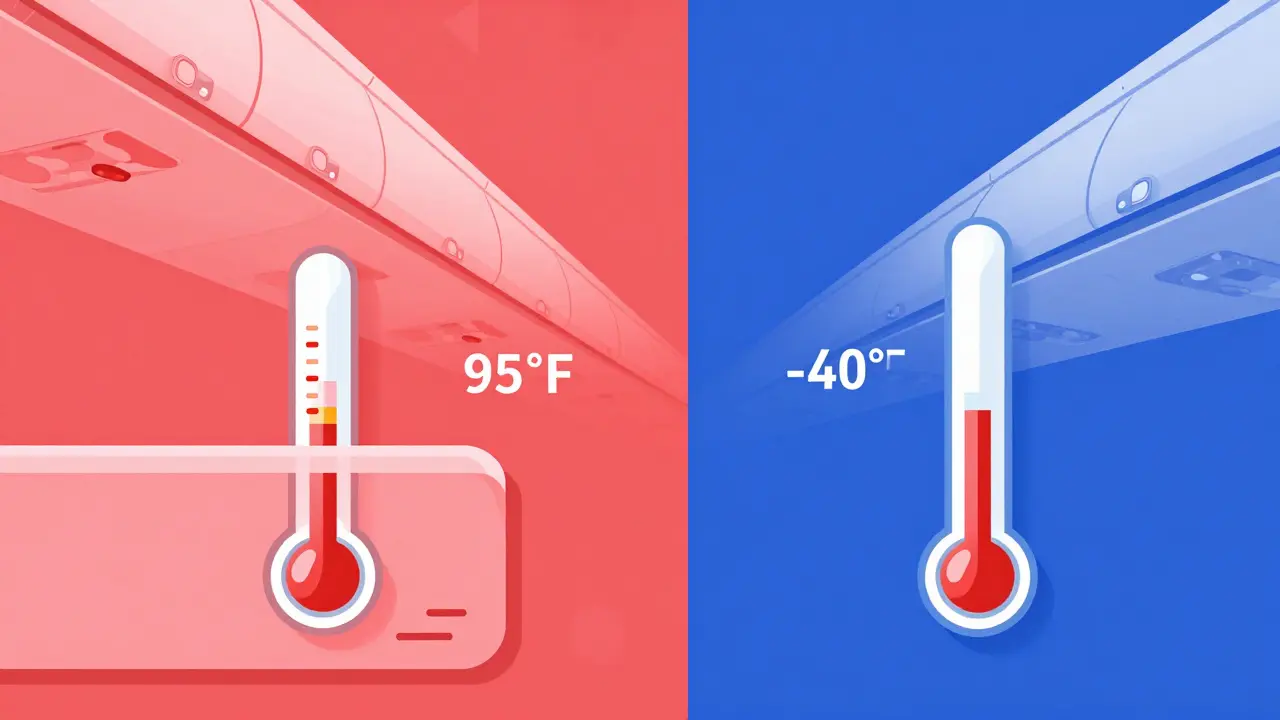
Most people think the main risk is heat, but freezing is actually the faster way to ruin your medication. According to the American Diabetes Association, insulin begins to break down if it hits temperatures above 86°F (30°C) or drops below 32°F (0°C). If your insulin freezes, the damage is irreversible. You can't just thaw it out and hope for the best; the protein structure is destroyed, and the dose becomes unreliable. This can lead to hyperglycemia, which in a high-stress travel environment, can quickly turn into a medical emergency.
The tricky part is that airplane temperatures aren't uniform. While the Federal Aviation Administration (FAA) keeps the main cabin between 65°F and 75°F, the areas near the aircraft skin-like the outer pockets of overhead bins-can spike to 95°F (35°C). Conversely, the cargo hold can plummet to -40°F. If you're carrying Ozempic or other biologics, the stakes are even higher, as these often require strict refrigeration (36°F-46°F) until the first time they are used.
Choosing Your Cooling Strategy
You have a few options for keeping your meds stable, but not all are created equal. The biggest mistake travelers make is using a standard ice pack. If your insulin touches a frozen gel pack directly, it will likely freeze. A study from the University of Colorado found that nearly a quarter of insulin samples froze when placed just 1cm away from a standard ice pack.
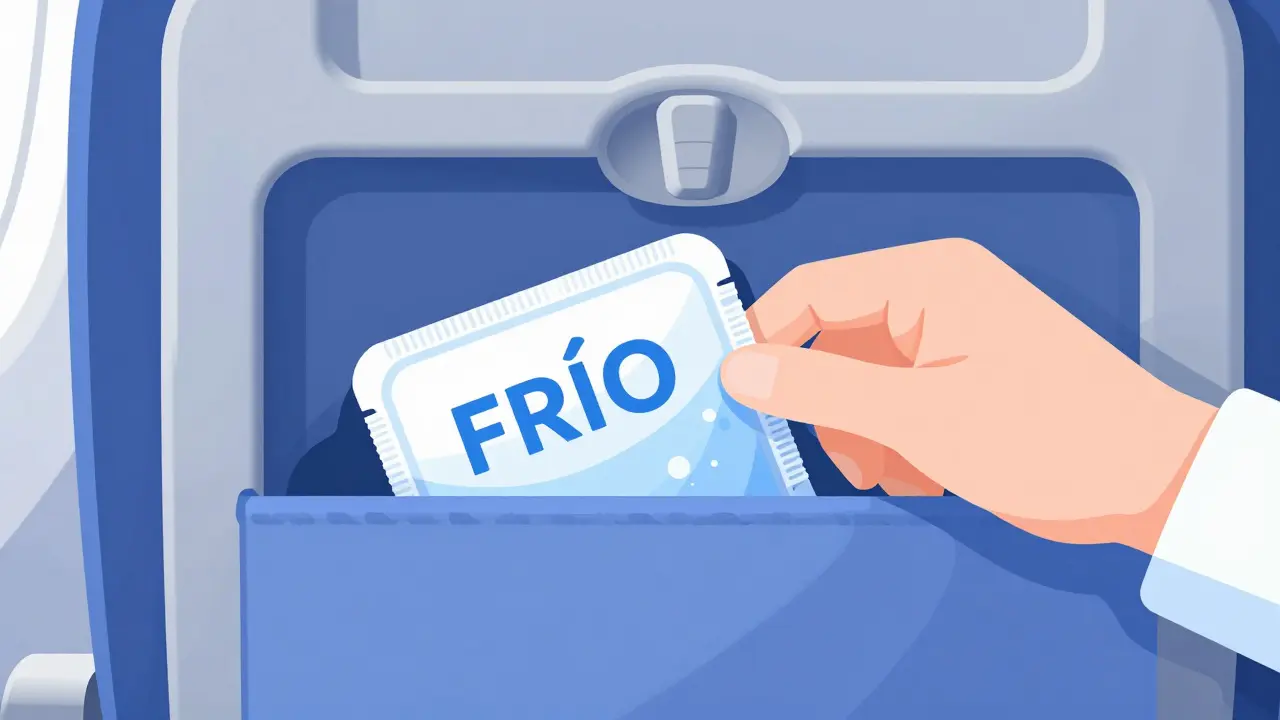
Instead, look into phase-change materials or water-activated solutions. These are designed to keep meds in a "safe window" rather than just making them cold. The FRÍO Wallet is a popular choice because it uses crystals that absorb heat, maintaining a temperature between 59°F and 72°F for up to 45 hours. It's far safer than a cooler bag because there's virtually no risk of freezing the medication. If you need something more heavy-duty, devices like the BreezyPack Pro offer higher stability for longer durations, though they can be bulkier.
| Method | Temperature Range | Duration | Main Risk |
|---|---|---|---|
| Standard Ice Packs | 35°F - 75°F | 8-12 Hours | High risk of freezing meds |
| FRÍO Cooling Wallet | 59°F - 72°F | 45 Hours | Requires activation time |
| BreezyPack Pro | 50°F - 72°F | 72 Hours | Bulkier size |
| Thermostatic Case | 39°F - 46°F | 120 Hours | Heavy; requires pre-cooling |
Practical In-Flight Storage Protocol
Where you put your medication once you're in your seat is just as important as the container you use. Forget the overhead bin; as mentioned, those areas are thermal hotspots. The best place for your cooling pouch is the seat-back pocket. Boeing environmental data suggests these areas stay closer to the controlled cabin temperature (roughly 68°F-75°F), providing a stable buffer for your meds.
If you're using a Continuous Glucose Monitor (CGM), keep it on. However, if you use an insulin pump, be mindful of time zone jumps. The European Association for the Study of Diabetes suggests that if you're crossing more than three time zones, you may need to manually adjust your basal rates to avoid hypoglycemia or hyperglycemia during the transition.
Here is a quick checklist for your flight day:
- Double your supply: The CDC recommends carrying 200% of the insulin you expect to use to cover unexpected delays or lost luggage.
- Check for "clouds": Every 4 hours, quickly inspect your vials or pens. If the insulin looks cloudy or has clumps (and it's not a cloudy-type insulin), it may have been exposed to extreme temperatures and should be swapped.
- Avoid the aircraft skin: Never place your meds in a pocket that touches the outer wall of the plane.
Navigating Airport Security and Regulations
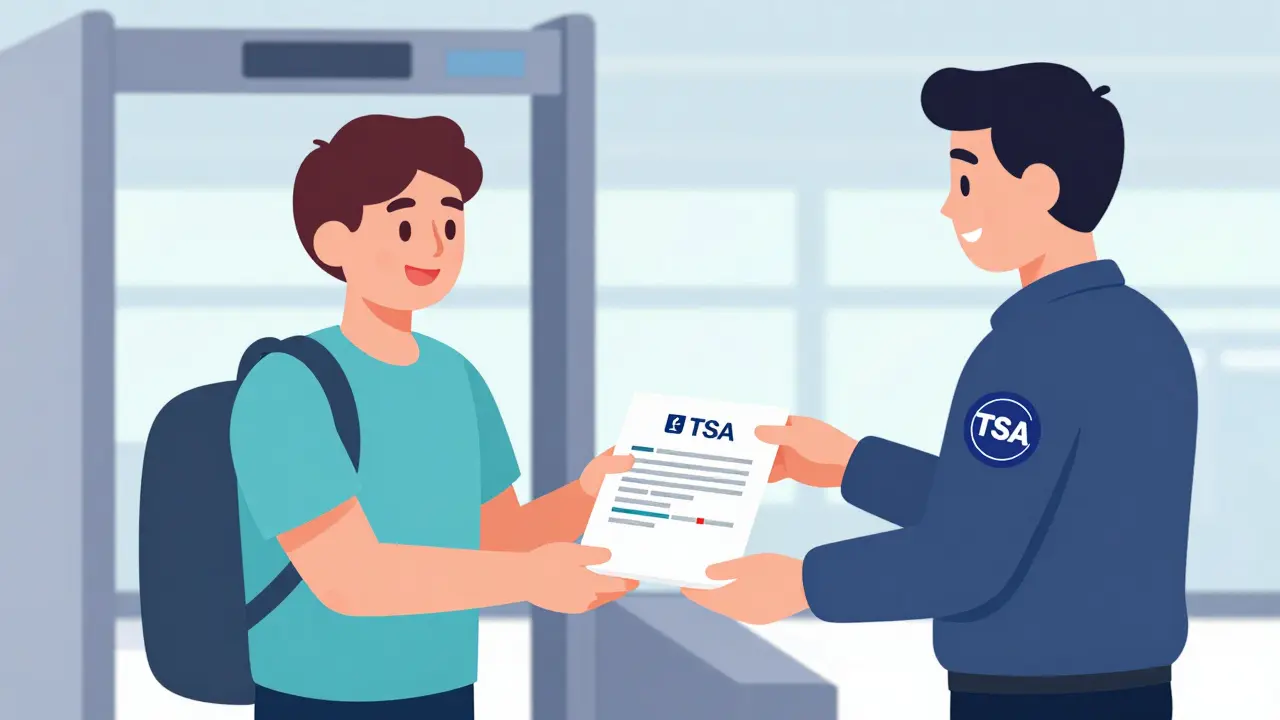
The TSA and other security agencies are generally familiar with medical needs, but paperwork prevents headaches. To avoid having your cooling packs confiscated or your bags searched for an hour, carry a physician's letter dated within the last six months. This letter should explicitly state your medical necessity for the medication and the cooling devices. Statistics show this reduces security delays by over 90%.
Keep your medication in its original pharmacy packaging. Labels that show your name and the drug name have a near-perfect acceptance rate at security checkpoints. If you're using a cooling wallet, be aware that some security agents might not know what it is. Mentioning that it is a medical cooling device permitted under TSA regulation 1544.219 can help resolve disputes quickly.
Advanced Monitoring and Future Tech
If you're someone who can't stop worrying about temperature, there are now "smart" solutions. The TempMed Smart Case uses Bluetooth to send an alert to your phone if the internal temperature exceeds 82°F. For those who prefer a low-tech approach, the TempTraq sensor can track the entire journey's temperature history, allowing you to see if your meds ever hit the danger zone.
Looking ahead, the industry is moving toward more stable formulations. The ADA is currently working on versions of insulin that can stay stable at room temperature for up to 45 days, which would eventually make these bulky cooling wallets a thing of the past. Until then, staying proactive with a cooling wallet and a physician's letter is your best bet for a stress-free trip.
Can I put my insulin in the airplane's onboard refrigerator?
It is generally not recommended. Most airline refrigerators are for food and drinks and are not calibrated to the strict 36°F-46°F range required for medication. Furthermore, they are often inaccessible during the flight, and there is a risk of your medication being misplaced or accidentally discarded by crew members.
What happens if my insulin freezes during the flight?
If insulin freezes, its protein structure is permanently damaged. You should discard any vial or pen that has frozen, even after it thaws, as the medication will no longer work predictably and could lead to dangerous blood sugar spikes.
Do biologics like Ozempic have different storage rules than insulin?
Yes, some biologics are more sensitive. For example, Ozempic must be stored in a refrigerator until first use. Once in use, it can either be refrigerated or kept at room temperature for up to 56 days. Always check the specific package insert for your biologic's "room temperature window."
How do I activate a FRÍO wallet before a flight?
You activate it by soaking it in cool water for about 15 minutes. The crystals inside will absorb the water and create a cooling effect. Once activated, it stays cool for several days, making it ideal for long-haul flights.
Should I carry my insulin in my carry-on or checked luggage?
Always carry your insulin and biologics in your carry-on. Checked luggage is subjected to extreme temperature swings in the cargo hold, which can reach -40°C, almost guaranteeing that your medication will freeze and become useless.

dwight koyner
April 4, 2026 AT 17:41The emphasis on avoidng the aircraft skin is absolutely critical. Many travelers mistakenly believe that any enclosed space is safe, but the conductive heat transfer from the fuselage can be significant during taxiing on a hot tarmac. It is also worth noting that for those using insulin pumps, keeping the infusion set site away from extreme temperature fluctuations can prevent local absorption issues.
Stephen Luce
April 4, 2026 AT 18:03I really appreciate these tips. Traveling with a chronic condition is already stressful enough without worrying if your meds are spoiling.
jack hunter
April 5, 2026 AT 13:23why do we trust these gov regulations anyway. a lettr from a doc is just a piece of papre to make you feel safe while they scan your brain. its all about control not health
Ethan Davis
April 6, 2026 AT 11:54Exactly. The TSA doesn't care about your insulin. They just want a reason to flag your bag and put you on a list. Those "regulations" are just suggestions to keep the sheep in line while they track everything you carry.
Jamar Taylor
April 6, 2026 AT 16:33You guys can do this! Just stay organized and follow the checklist. A little preparation goes a long way toward a great vacation!
Srikanth Makineni
April 6, 2026 AT 17:34frio wallets are the way to go. simple and works
Jay Vernon
April 8, 2026 AT 04:52This is so helpful! 🌟 Thanks for sharing the tips on where to put the pouch ✈️
Brady Davis
April 9, 2026 AT 07:26Oh sure, let's just trust that the flight attendant won't "accidentally" toss your life-saving meds in the trash while cleaning the fridge. What a wonderful, relaxing way to travel!
Timothy Burroughs
April 10, 2026 AT 15:40most people are just too weak to handle the heat anyway this is why america needs to get back to basics and stop relying on these fancy gadgets just use common sense if you had any
Nikhil Bhatia
April 11, 2026 AT 15:50too much text for something that basically says don't freeze your meds
Jitesh Mohun
April 11, 2026 AT 18:50stop whining about the text length some people actually need this info to stay alive you know
Dhriti Chhabra
April 13, 2026 AT 12:15It is indeed prudent to maintain a comprehensive set of documentation to ensure a seamless transition through security checkpoints. The suggestion to carry double the supply is a most wise precaution.
shelley wales
April 15, 2026 AT 01:00It's so heartening to see these guides available for everyone. If you're feeling overwhelmed by the logistics, just take it one step at a time. You've got this, and your health is worth the extra effort! It's all about making sure you can enjoy your trip without any scary surprises. Just remember to breathe and double-check your bag before you leave the house. Safe travels to all the warriors out there managing their health on the go!
Ruth Swansburg
April 15, 2026 AT 06:44Stay positive and prepared!