
When someone experiences their first psychotic episode, everything changes-suddenly, the world feels off. Voices that shouldn’t be there. Beliefs that don’t match reality. Confusion. Fear. For families watching this unfold, it’s terrifying. But here’s the truth: first-episode psychosis is not a life sentence. With the right support, starting within weeks, recovery isn’t just possible-it’s likely.
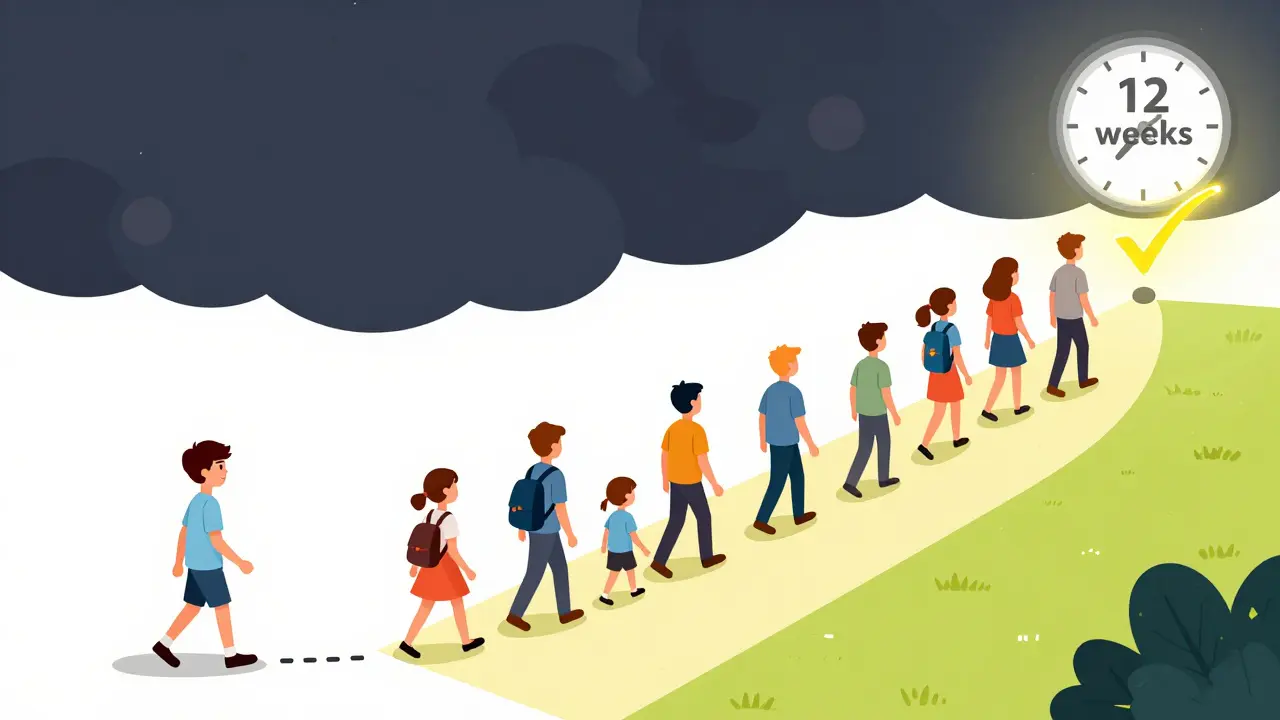
Most people don’t realize that psychosis isn’t a single disease. It’s a symptom, often the first sign of something deeper-like schizophrenia, bipolar disorder, or even a severe reaction to stress or drugs. The key isn’t waiting for it to get worse. It’s acting fast. The window for the best outcomes? Just 12 weeks after symptoms start. After that, the brain starts to lose ground. And the longer treatment is delayed, the harder it becomes to regain normal function-school, work, relationships.
What Happens During a First-Episode Psychosis?
First-episode psychosis (FEP) means the first time someone experiences symptoms like hallucinations (hearing voices, seeing things others don’t), delusions (strong false beliefs, like being watched or persecuted), disorganized speech, or behavior that seems strange or out of context. It usually hits between ages 15 and 30. Teenagers and young adults are most at risk. And it’s more common than you think-about 1 in 100 people will go through it at some point.
But here’s what most people don’t know: the brain is still changing during this time. It’s not broken. It’s in a sensitive, plastic phase. That means the right treatment now can literally reshape how the illness develops. Think of it like rehab after a sports injury. The sooner you start, the better the long-term outcome.
Why Early Intervention Makes All the Difference
In the past, people with psychosis were often left to figure things out on their own-or sent to hospitals only after things got really bad. That approach didn’t work. Studies show that people who waited months or even years to get help had higher rates of hospital stays, job loss, and social isolation.
Then came the RAISE project, launched by the National Institute of Mental Health in 2008. It was one of the largest studies ever done on early psychosis. The results were clear: coordinated specialty care (CSC)-a team-based approach-worked dramatically better than standard care.
Participants in CSC programs stayed in treatment longer. They improved 25% more on quality of life. Their symptoms dropped 32% faster. And 40% more were back in school or working after two years. That’s not a small difference. That’s life-changing.
And the timing? Critical. People who got help within six months had 45% better symptom recovery than those who waited longer. Every week counts.
The Five Pillars of Coordinated Specialty Care
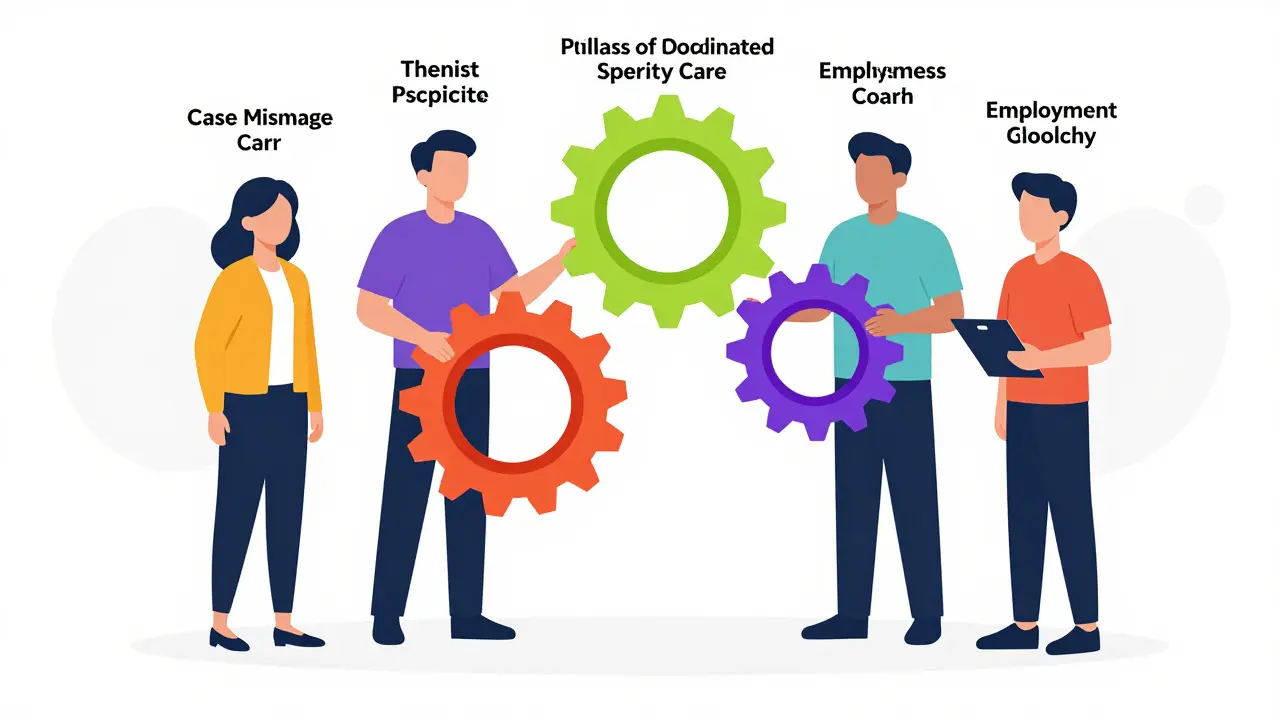
Coordinated specialty care isn’t just one thing. It’s five evidence-based services wrapped into one team. Each part works together, and skipping even one reduces the chance of success.
- Case Management: A dedicated case manager helps the person navigate the system-appointments, insurance, housing, transportation. They check in 2-3 times a week during the worst of it. This isn’t a nice-to-have. It’s what keeps people from falling through the cracks.
- Medication Management: Antipsychotics are often needed, but not at full adult doses. For first episodes, doctors start with half the usual dose. High doses? They increase side effects without helping more. The National Institute for Health and Care Excellence (NICE) specifically warns against doses over 400mg chlorpromazine equivalent. Metabolic risks-weight gain, diabetes-are real. Blood sugar, waist size, and weight are tracked from day one.
- Recovery-Oriented Psychotherapy: This isn’t talk therapy as usual. It’s CBT adapted for psychosis. The goal? Help the person understand what’s happening, reduce distress, build coping skills, and regain control. Sessions happen weekly for at least six months.
- Family Psychoeducation: This is where many programs fail. Families need to understand psychosis-not blame themselves, not panic, not push too hard. Structured family sessions (at least 8-12 over six months) cut relapse rates by 25%. Families learn how to communicate, set boundaries, and support without enabling. It’s not optional. It’s essential.
- Supported Employment and Education: Keeping a job or staying in school is one of the best predictors of long-term recovery. The Individual Placement and Support (IPS) model is the gold standard. It’s not about job training. It’s about finding real work, fast, with on-the-job coaching. People in IPS programs get employed at rates of 50-60%. In traditional programs? Only 20-30%.
Teams meet weekly. Everyone talks. Everyone is trained. Fidelity matters. Programs that score above 70% on the Quality Assessment Tool for CSC (QAT-CSC) have the best outcomes. Washington State’s New Journeys program? 95% of its teams hit that mark. That’s not luck. That’s system design.
Why Families Are the Secret Weapon
Family involvement isn’t just helpful. It’s the difference between relapse and recovery. When families are educated and involved, they become part of the treatment team-not bystanders.
Many parents feel guilty. They wonder if they caused it. They don’t know what to say. Should they argue with delusions? Should they ignore hallucinations? The answer? Neither. Families are taught to respond with calm, curiosity, and consistency. "I see you’re feeling scared. I’m here with you." That’s the script.
Programs that offer family sessions in the home, via video call, or in community centers see higher participation. Louisiana’s mobile crisis units and telehealth options boosted family engagement by 35% during the pandemic. That’s the kind of innovation that works.
And it’s not just parents. Siblings, partners, close friends-they all need support. A 2023 meta-analysis found that family involvement reduced relapse by 35%. That’s a huge number. It’s like adding a second layer of protection.
The Real Barriers to Getting Help
Even with all this evidence, most people still don’t get early help. Why?
- Access: Only 35% of U.S. counties have a certified CSC program. In rural areas? 62% have zero access.
- Cost: CSC costs $8,000-$12,000 per person per year. Standard care? $5,000-$7,000. But untreated psychosis costs the U.S. $155 billion annually. The math is clear: early help saves money.
- Insurance: Only 31 states have Medicaid waivers covering all CSC services. Many families hit walls with insurers who don’t understand psychosis as a treatable condition.
- Stigma: People still think psychosis means "crazy" or "dangerous." That fear delays care. Teachers, doctors, even ER staff often don’t recognize early signs.
- Workforce: There aren’t enough trained clinicians. Turnover in CSC teams hits 22% a year. Training takes 40 hours of class and 120 hours of supervised practice. It’s hard to build and keep teams.
And here’s the quiet crisis: only 18% of people get help within the WHO’s recommended 12-week window. That’s not a failure of the system. It’s a failure of awareness.
What’s Changing Now?
Things are moving. Slowly, but they’re moving.
The number of certified CSC programs jumped from 15 in 2010 to 347 by 2023. Federal funding through SAMHSA hit $25 million in 2023, helping 12,000 people. New tools are being tested-like the PRIME Care app, which tracks symptoms in real time and cuts hospitalizations by 30%. The VA/DOD updated its guidelines in September 2023, adding 17 new evidence-based recommendations.
And research is getting smarter. The RAISE-2 project showed that extending CSC from two to four years keeps people employed and stable. That’s huge. It means recovery isn’t a sprint-it’s a marathon with a support crew.
But the biggest shift? The language. We’re moving away from "schizophrenia" as a label and toward "first-episode psychosis" as a treatable condition. That’s not semantics. It’s hope.
What Should You Do If You Suspect Psychosis?
If you or someone you care about is showing signs-social withdrawal, odd speech, paranoia, declining school or work performance, unusual beliefs-don’t wait. Don’t hope it goes away. Here’s what to do:
- Reach out to a mental health provider who specializes in early psychosis. Ask if they offer coordinated specialty care.
- Call a crisis line or visit an ER if safety is a concern. Many hospitals now have psychosis-specific intake teams.
- Involve family-even if it’s hard. They need to be part of the plan.
- Ask about medication options and insist on low-dose, monitored treatment. Avoid high doses.
- Push for employment or education support. Keeping routines matters more than you think.
And if you’re in a state without a CSC program? Demand one. Write to your state health department. Share the data. Tell them what works. The system only changes when people speak up.
Final Thought: Recovery Is Possible
People with first-episode psychosis can and do recover. They go back to school. They get jobs. They build relationships. They have families of their own. But it starts with recognition, speed, and support.
Psychosis doesn’t have to be the end of a life. It can be the beginning of a better one-if we act early, act together, and act with compassion.
What are the early warning signs of first-episode psychosis?
Early signs include social withdrawal, declining performance at school or work, unusual thoughts or beliefs (like being watched or having special powers), difficulty concentrating, strange speech patterns, lack of emotional expression, and increased anxiety or paranoia. These often appear gradually over weeks or months, not suddenly.
How long does coordinated specialty care last?
Most programs last two years, but research shows extending care to four years leads to better long-term outcomes. People who stay in CSC for four years are more likely to maintain employment, avoid hospitalization, and sustain relationships. The first six months are the most intensive, with sessions and check-ins weekly.
Can someone recover from psychosis without medication?
Some people improve with therapy and support alone, but for most, low-dose antipsychotic medication is necessary to reduce symptoms and prevent relapse. The goal isn’t lifelong use-it’s to use medication as a bridge while building coping skills. Many people eventually reduce or stop meds under careful supervision, but skipping them entirely increases the risk of recurrence.
Is family therapy really that important?
Yes. Studies show that structured family psychoeducation reduces relapse rates by 25%. Families who learn how to respond calmly, avoid arguments about delusions, and provide consistent support help the person feel safe and understood. Without this, stress at home can trigger worsening symptoms.
What if my loved one refuses treatment?
It’s common for someone in early psychosis to not believe they’re ill. Don’t force it. Instead, focus on building trust. Talk about how you’ve noticed changes in their mood or energy. Offer to go with them to a low-pressure appointment. Many programs offer outreach teams that visit homes. Sometimes, just having someone show up-without pressure-opens the door.
Are there any new treatments on the horizon?
Yes. Digital tools like the PRIME Care app are being tested in 22 programs and have cut hospitalizations by 30%. Researchers are also exploring biomarkers-like brain scans and blood tests-to detect psychosis before symptoms appear. The National Institute of Mental Health has committed $50 million through 2026 to speed up this research. The goal: prevent psychosis before it starts.
How can I find a coordinated specialty care program near me?
Start by contacting your state’s department of mental health or visiting the Early Psychosis Intervention Network (EPINET) registry. You can also call SAMHSA’s helpline at 1-800-662-HELP. If no program exists nearby, ask your doctor to refer you to a psychiatrist who specializes in early psychosis. Even if it’s not a full CSC team, getting low-dose medication and therapy quickly can still make a difference.

Bhaskar Anand
February 23, 2026 AT 04:19William James
February 23, 2026 AT 17:33David McKie
February 25, 2026 AT 11:57Gabrielle Conroy
February 26, 2026 AT 18:01Valerie Letourneau
February 28, 2026 AT 11:46Jacob Carthy
March 1, 2026 AT 19:29Nick Hamby
March 3, 2026 AT 08:57kirti juneja
March 3, 2026 AT 17:22Haley Gumm
March 4, 2026 AT 13:19Spenser Bickett
March 5, 2026 AT 00:29Christopher Wiedenhaupt
March 5, 2026 AT 19:30John Smith
March 7, 2026 AT 16:49