
When your prescription runs out and the pharmacy can’t restock it-again-you’re not alone. In 2025, over 350 drug shortages were reported in the U.S., affecting everything from antibiotics to heart medications. For many, the solution isn’t waiting for a corporate warehouse to restock. It’s walking into a compounding pharmacy.
What Exactly Is a Compounding Pharmacy?
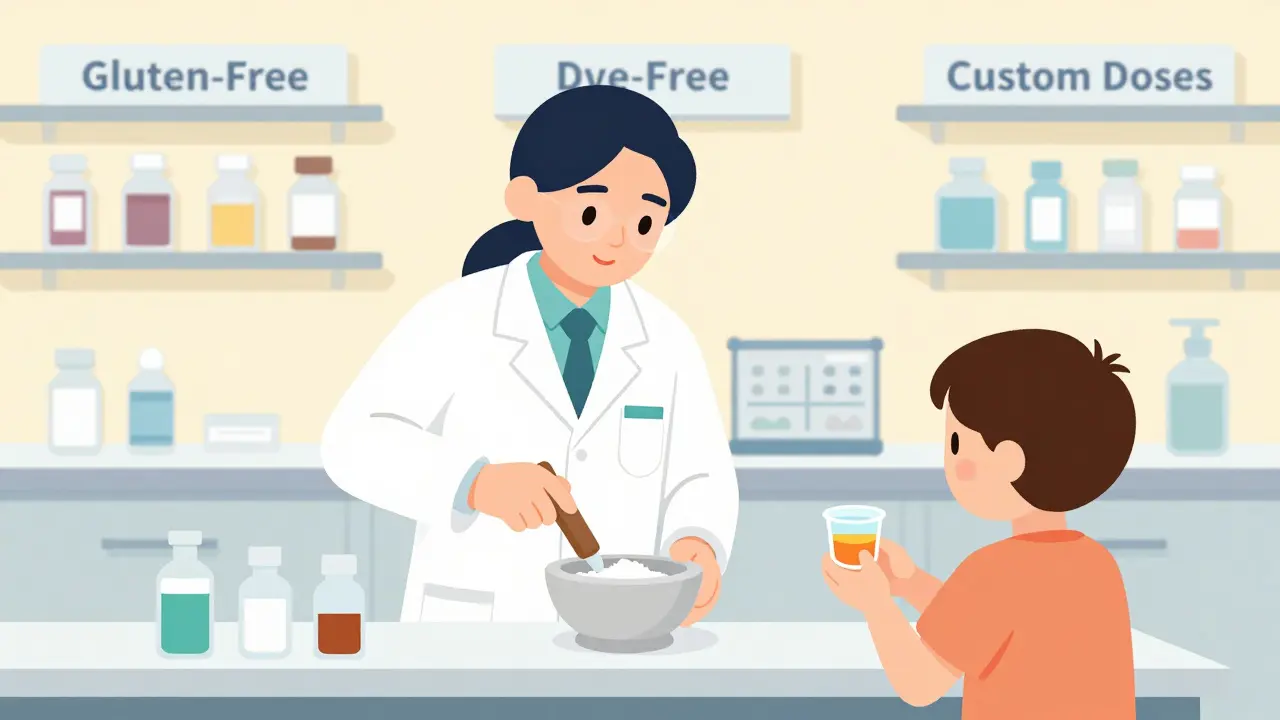
A compounding pharmacy doesn’t just fill prescriptions. It builds them. These labs take raw pharmaceutical ingredients and mix them into custom formulas that aren’t available anywhere else. Think of it like ordering a cake from a bakery instead of buying a pre-made one from the grocery store. If you’re allergic to eggs, the baker leaves them out. If you need a smaller slice, they cut it to size. That’s what compounding pharmacies do with medicine. They can turn a pill into a liquid for kids who can’t swallow tablets. They can remove dyes or gluten for people with sensitivities. They can make a cream that absorbs through the skin instead of a pill that upsets the stomach. And when a drug is pulled from shelves because of a recall or shortage, they often step in to fill the gap. According to the FDA, compounding isn’t meant to replace FDA-approved drugs when they’re available. But when they’re not? It becomes essential.When Do You Need a Compounded Medication?
You don’t need to be sick in a hospital to need one. Here are the most common reasons people turn to compounding pharmacies:- Allergies or sensitivities: About 1 in 5 people react to dyes, preservatives, or lactose in commercial pills. A compounding pharmacy can make the same drug without those triggers.
- Difficulty swallowing: Nearly 40% of children and 30% of seniors struggle with pills. Liquid forms, chewables, or topical gels make treatment possible.
- Dosage needs that don’t exist: You need 12.5 mg of a drug, but the only pills made are 25 mg or 50 mg. Compounding pharmacies can measure exact doses down to the milligram.
- Drug shortages: When manufacturers can’t keep up with demand-like with thyroid medication or certain antibiotics-compounding pharmacies become lifelines.
- Specialized treatments: Hormone therapy, pain creams, pediatric formulations, and even veterinary meds are often made this way.
One mother in Brisbane told me her 6-year-old refused to take his ADHD medication because of the bitter taste. After switching to a strawberry-flavored liquid made by a compounding pharmacy, his adherence jumped from 30% to 90%. That’s not a miracle. That’s smart customization.
How Is It Different From a Regular Pharmacy?
A regular pharmacy orders pre-made drugs from big manufacturers. A compounding pharmacy makes them from scratch. That means:- More control: You get exactly what your doctor prescribes-no fillers, no unnecessary additives.
- Slower turnaround: While a standard prescription can be picked up in 10 minutes, compounded meds often take 24 to 72 hours to prepare.
- Higher cost: Insurance doesn’t always cover compounded drugs. About 45% of patients pay out-of-pocket, compared to 15% for standard prescriptions.
- More pharmacist time: Each compounded prescription takes 25-35% longer to prepare. Pharmacists double-check every ingredient, every measurement.
It’s not faster or cheaper. But for the right person, it’s the only option that works.
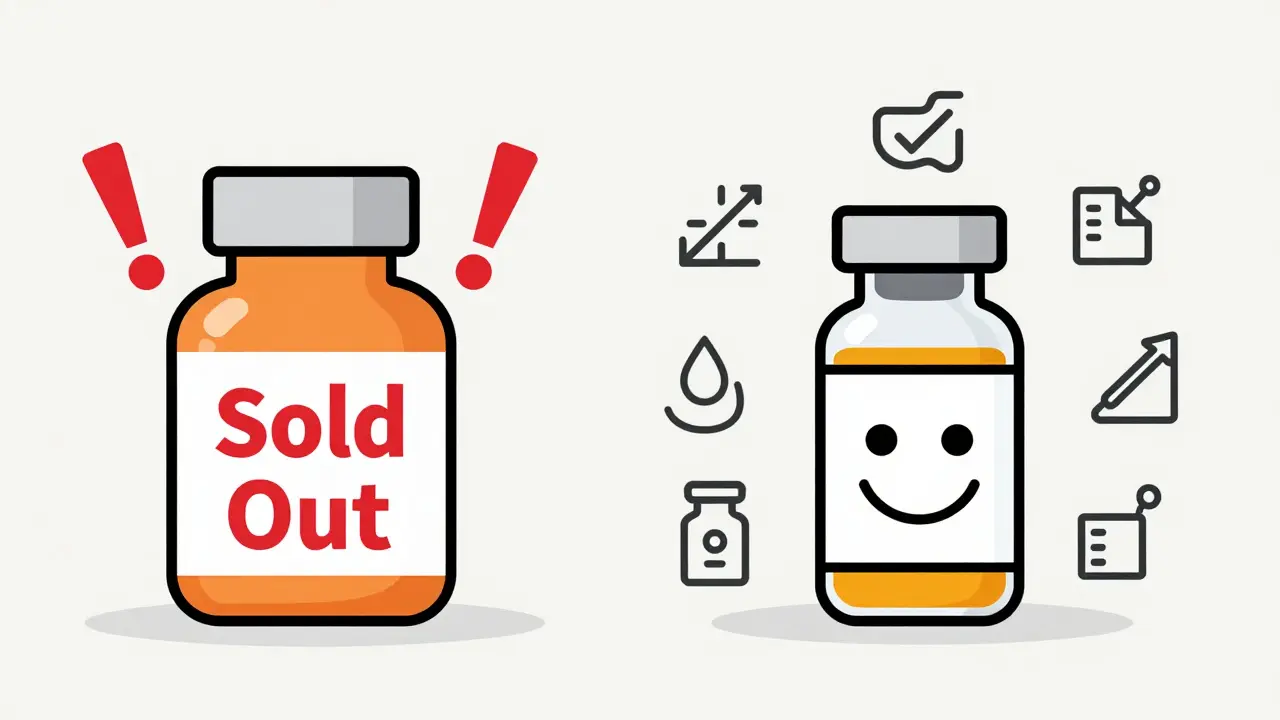
What Can’t They Make?
Compounding pharmacies aren’t magic. They can’t replicate everything. Here’s what’s off-limits:- Biologics: Insulin, vaccines, monoclonal antibodies-these are too complex to make in a lab setting.
- Drugs requiring FDA-approved manufacturing: If a drug has a specific chemical structure only one company can produce, compounding can’t copy it exactly.
- Mass-produced generics: If the drug is available, affordable, and safe, compounding shouldn’t be used as a workaround.
That’s why experts warn against using compounding as a first choice. It’s a backup plan-not a trend. As Dr. Robert Smith from the National Community Pharmacists Association says, “About 15% of compounded prescriptions could have used commercial products. That’s unnecessary risk.”
How to Find a Reliable Compounding Pharmacy
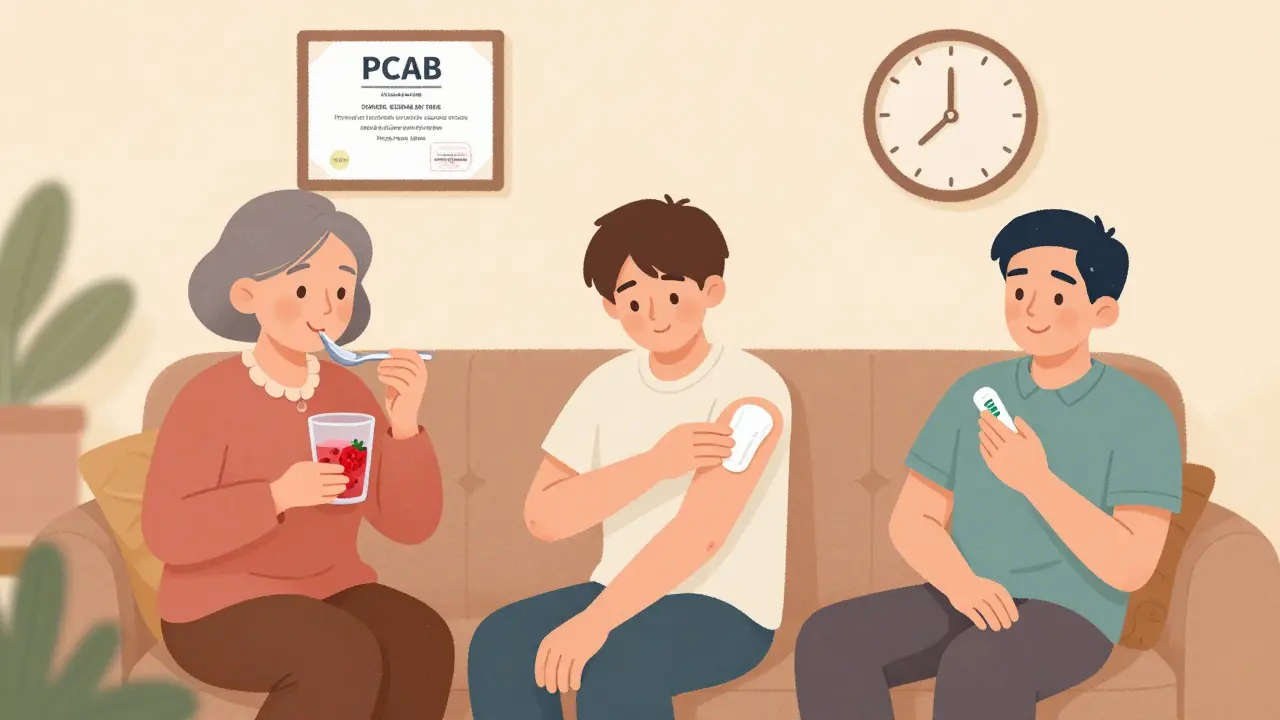
Not all compounding pharmacies are created equal. Some are small, local labs with clean rooms and certified staff. Others cut corners. Here’s how to pick the right one:- Look for PCAB accreditation: The Pharmacy Compounding Accreditation Board (PCAB) certifies about 1,200 pharmacies nationwide. Their standards include strict hygiene, equipment calibration, and stability testing.
- Ask about USP guidelines: They should follow USP <795> for non-sterile compounds and USP <797> for sterile ones (like IVs or injections).
- Check their ingredients: Reputable pharmacies use only FDA-registered suppliers. Ask where their raw materials come from.
- Read patient reviews: Look for mentions of consistency, communication, and turnaround time. Reddit’s r/Pharmacy community has real stories from patients who’ve switched to compounding.
Don’t be shy. Ask the pharmacist: “Do you follow PCAB standards? Can I see your certificate?” If they hesitate, move on.
Insurance and Cost: What to Expect
This is the biggest hurdle. Most insurance plans cover FDA-approved drugs. Compounded ones? Not so much.- Some plans cover it: If your doctor writes a letter explaining why the commercial version won’t work, some insurers will approve it.
- Others won’t: You might pay $50-$200 per prescription, depending on complexity.
- Ask for a cash price: Some compounding pharmacies offer lower rates if you pay upfront.
- Use GoodRx or similar tools: They sometimes list prices for compounded meds, helping you compare.
One patient I spoke with paid $160 out-of-pocket for a compounded thyroid med. The commercial version was $12-but she couldn’t tolerate the fillers. For her, the cost was worth the relief.
Real Stories, Real Results
- A man with chronic pain switched from oral opioids to a compounded topical gel. His nausea dropped from daily to once a week. His sleep improved. He cut his pill count in half. - A teenager with severe eczema couldn’t use standard steroid creams because of fragrance allergies. A compounding pharmacy made a fragrance-free version. Within two weeks, her skin cleared up. - A grandmother with dementia couldn’t swallow her blood pressure pill. Her pharmacist made it into a flavored oral suspension. Her family says it’s the first time she’s taken her meds consistently in years.These aren’t rare cases. A 2023 NCBI study found that 85% of patients with allergies to commercial drug ingredients had better adherence with compounded versions.
The Future of Compounding
The market for compounding is growing fast. It was worth $11.2 billion in 2022 and is projected to hit $15.8 billion by 2027. Why? Drug shortages aren’t going away. Personalized medicine is. Genetic testing is making it easier to tailor treatments-and compounding pharmacies are the ones who can deliver them. New tech is helping too. Digital formulation tools have cut compounding errors by 37%. Stability testing now extends shelf life by up to 40%. That means fewer wasted doses and more reliable meds. But regulation is tightening. After the 2012 fungal meningitis outbreak, Congress passed the Drug Quality and Security Act. Now, there are two types of compounding pharmacies: 503A (small, local) and 503B (larger, outsourcers). The FDA is watching closely. They want to protect patients-not stop innovation.Bottom Line: Is It Right for You?
If you’re stuck because your medication isn’t available-or it makes you sick-compounding pharmacies offer a real solution. They’re not for everyone. But for people with allergies, swallowing issues, or rare dosing needs? They’re often the only way forward. Talk to your doctor. Ask if a compounded version is possible. Find a PCAB-accredited pharmacy. Be prepared for longer wait times and higher costs. But if it means you can finally take your medicine without vomiting, or your child can finally swallow their pill, it’s worth it.Medicine isn’t one-size-fits-all. And when the system fails, compounding pharmacies are the ones who still make room for the individual.
Are compounded medications safe?
Yes-when they’re made by accredited pharmacies following USP guidelines. Compounded drugs aren’t FDA-approved, but they’re held to strict standards for purity, strength, and cleanliness. Always choose a PCAB-accredited pharmacy and ask to see their certification. Avoid online vendors that ship without a prescription or don’t disclose their ingredients.
Can any pharmacist compound medications?
Technically, yes-but not all are trained or equipped. Most community pharmacies do basic compounding, like flavoring liquids. But complex formulations-sterile injections, hormone creams, or allergen-free capsules-require specialized labs, equipment, and training. Look for pharmacies that advertise compounding as a core service, not an afterthought.
How long does it take to get a compounded prescription?
Most take 24 to 72 hours. Sterile compounds (like IVs or eye drops) can take longer because they require extra testing to ensure they’re free of bacteria. Non-sterile items like creams or flavored liquids are usually ready in a day or two. Always ask for a pickup time when you drop off the prescription.
Why isn’t my insurance covering my compounded medication?
Insurance companies only cover FDA-approved drugs by default. Compounded meds are seen as custom-made, not mass-produced. But if your doctor submits a letter of medical necessity explaining why the commercial version won’t work, some insurers will approve it. You can also ask the pharmacy for a cash price or use a discount service like GoodRx.
Can I get compounded medications online?
Be very careful. Many online sellers claim to offer compounded drugs, but they’re often unregulated and may sell unsafe or fake products. Only use pharmacies that require a valid prescription from your doctor and are physically located in the U.S. with PCAB accreditation. If a website offers to ship without a prescription or doesn’t list their location, avoid it.

Dave Old-Wolf
January 7, 2026 AT 15:04I never thought about how hard it is for seniors to swallow pills until my grandma started on blood pressure meds. She’d just spit them out. Then her pharmacist made a cherry-flavored liquid-suddenly she’s taking it like candy. No more hospital trips. Just a little creativity and a good compounding lab.
Molly Silvernale
January 9, 2026 AT 11:38Compounding isn’t just medicine-it’s rebellion against the industrialization of healing. We’ve turned healthcare into a conveyor belt: same pill, same dose, same side effects for everyone. But bodies aren’t widgets. They’re ecosystems. Fragile. Unique. Compounding pharmacies? They’re the last holdouts of artisanal care in a world obsessed with scale. And yeah, it’s expensive. But so is ignoring someone’s suffering because the FDA says ‘it’s not cost-effective.’
Aubrey Mallory
January 11, 2026 AT 10:55Look-I get it. Compounding saves lives. But don’t romanticize it. Some of these places are sketchy. I worked in a clinic where a patient got a compounded hormone cream that had double the dose because the pharmacist didn’t calibrate the scale. She ended up in the ER. Accreditation isn’t optional. It’s the difference between healing and harm. If your pharmacy won’t show you their PCAB certificate? Walk out.
Joanna Brancewicz
January 12, 2026 AT 09:21USP-795/797 compliance is non-negotiable for sterile compounding. Non-sterile still needs USP-800 for hazardous drugs. If your pharmacy doesn’t document batch records and stability testing, it’s a liability.
Manish Kumar
January 13, 2026 AT 09:03Let’s be real-this whole thing is just capitalism’s way of charging extra for what should be basic. In India, we’ve been making custom formulations for decades because the system’s broken. We don’t need fancy accreditation to know what works. My uncle had a thyroid issue, so the local pharmacist mixed him a paste from powder and glycerin. He’s fine. No insurance. No paperwork. Just human beings helping each other. Why do we need a board to tell us that’s okay? We’ve been doing this since before the FDA was a gleam in some bureaucrat’s eye.
And don’t get me started on the cost. $160 for a thyroid med? In Mumbai, you’d pay 200 rupees-less than $2. We don’t need American corporate pharmacy drama to treat people. Compounding should be accessible, not a luxury for the insured.
Yes, safety matters. But so does dignity. When your body rejects the mass-produced version, you shouldn’t have to beg an insurance company for permission to feel better.
Prakash Sharma
January 15, 2026 AT 08:15Wait, so if I need a 12.5 mg dose and the only pills are 25 mg, they can just split it? Why don’t regular pharmacies do that? I’ve been crushing pills for years and it’s a mess. Also-can they make meds without the weird chalky taste? My kid gagged on his ADHD pill until we found a compounding place that made it taste like bubblegum. Game changer. No joke. He actually asks for it now.
And the 72-hour wait? Totally worth it. Better than driving three pharmacies and getting ‘out of stock’ every time.
Kristina Felixita
January 15, 2026 AT 15:21OMG I JUST FOUND OUT MY DOCTOR CAN PRESCRIBE A COMPUNDED VERSION OF MY ANTI-DEPRESSANT WITHOUT LACTOSE AND WITH A LEMON ZEST FLAVOR?? I’VE BEEN SWALLOWING THOSE TINY WHITE PILLS LIKE A ROBOT FOR 5 YEARS. I’M CRYING. I’M SO HAPPY. I’M GOING TO CALL HIM TOMORROW. I’M TELLING EVERYONE. THIS IS THE BEST THING I’VE HEARD SINCE MY CAT LEARNED TO SIT ON COMMAND.
Donny Airlangga
January 16, 2026 AT 07:07My mom’s on a compounded pain cream now. No more stomach issues from the pills. She says it feels like a warm hug when she rubs it on. And she doesn’t get dizzy anymore. I didn’t even know this was an option until last month. Honestly? This post saved her quality of life. Thank you.