

Imagine you’re taking medicine to control your blood pressure. The label says "tome dos tabletas dos veces diario" - take two tablets twice daily. But what if it actually said "tome dos tabletas dos veces semanal"? That’s twice a week. One small mistake. One life-changing consequence. This isn’t fiction. It happens every day in pharmacies across the U.S., especially for people who don’t speak English fluently.
Why Prescription Labels Get Translated Wrong
Most pharmacies don’t hire professional translators. Instead, they rely on cheap, automated systems that turn English into another language using basic software. These tools don’t understand medical context. They don’t know that "once" in English means "one time," but in Spanish, it’s also the word for "eleven." So a label that says "take once daily" might get translated as "take eleven times daily." That’s not a typo. That’s a deadly error. A 2010 study in the Bronx found that 86% of Spanish-language prescription labels were generated by machines. Half of them had mistakes. Some were harmless, like awkward phrasing. Others? Life-threatening. A patient given the wrong dosage of insulin, heart medication, or antibiotics can end up in the ER - or worse. Even when human translators are used, they’re often pharmacy staff with no medical training. They might know some Spanish, but they don’t know the difference between "alcohol" as in rubbing alcohol (Latin America) versus drinking alcohol (Spain). That’s not just language - it’s culture. And culture matters when someone’s health is on the line.The Most Dangerous Translation Errors
Some mistakes are shockingly common:- "Once" = "eleven" - This false cognate has caused multiple overdoses. "Take once a day" becomes "take eleven times a day."
- "Twice daily" vs. "twice weekly" - A single letter change in Spanish can turn a daily dose into a weekly one, making treatment useless.
- "Take with food" vs. "take after food" - Timing changes how the drug works. Some medications need to be taken before eating, not after.
- "As needed" vs. "every day" - Confusing these can lead to underdosing or dangerous overuse.
- Wrong medication name - Automated systems sometimes swap drug names entirely. A label for metformin might say "glipizide" - two completely different drugs.
Which States Actually Require Accurate Translations?
You’d think every state would require accurate, professional translation for prescriptions. But only two do. California passed Senate Bill 853 in 2016. It requires all prescription labels for non-English speakers to be translated by certified medical translators - not machines - and verified by a second professional. Since then, medication errors among Spanish-speaking patients dropped by 32%. ER visits related to prescription mistakes fell by 27%. New York followed with Local Law 30 in 2010. It mandates translation for Spanish, Chinese, Russian, and Arabic - but only in certain counties. The rest of the country? No rules. Pharmacies in Texas, Florida, or Ohio can use machine translation and face zero penalties. That’s a patchwork. And it’s dangerous. If you live in a state without laws, you’re at the mercy of your pharmacy’s budget - not your safety.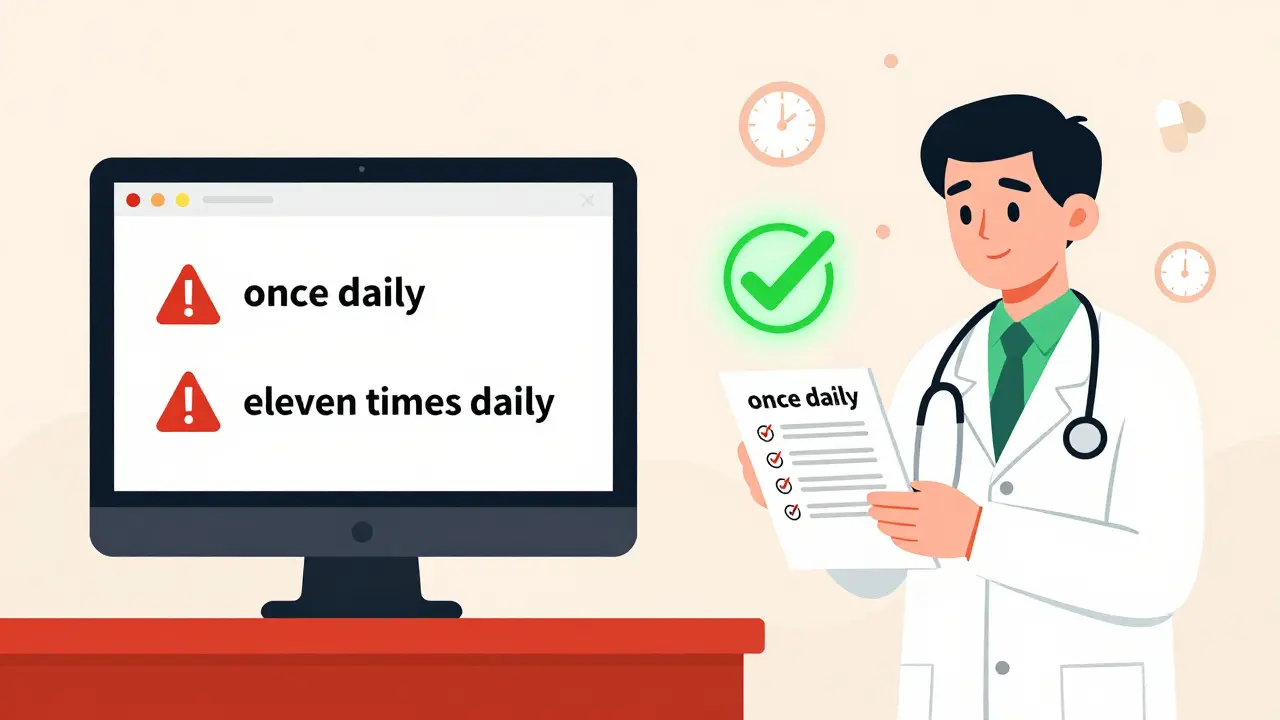
What’s the Difference Between Machine and Human Translation?
It’s not close. Machine translation (like Google Translate or pharmacy software) gets about 65-75% of medical instructions right. That means 1 in 3 prescriptions could be wrong. For critical drugs like blood thinners or insulin, that’s unacceptable. Professional human translation - done by certified medical translators with at least five years of experience in pharmaceuticals - is 98-99% accurate. That’s nearly perfect. Here’s the catch: professional translation costs 5 to 15 times more. Automated systems run about $0.02-$0.05 per label. Certified human translation? $0.15-$0.30. For a pharmacy filling 10,000 prescriptions a week, that’s $500 extra per week. Many say they can’t afford it. But here’s what they don’t tell you: every dollar spent on accurate translation saves $3.80 in avoided hospital visits, ER trips, and long-term complications. California’s program proved that. So it’s not about cost. It’s about priorities.How to Get Help If Your Label Doesn’t Make Sense
You don’t have to accept a wrong label. Here’s what to do:- Ask for a certified translator - Say: "I need to speak with someone who is certified to translate medical instructions." Most major chains (CVS, Walgreens, Rite Aid) have them - but they’re not always on-site. Ask if they can connect you via phone or video.
- Request a bilingual verification - Ask: "Can two people check this label? One who speaks my language and one who is a pharmacist?" California law requires this. You have the right to ask for it anywhere.
- Call your doctor - If the label confuses you, call your doctor’s office. Read the label aloud. Ask them to confirm the dosage, timing, and purpose. Write it down.
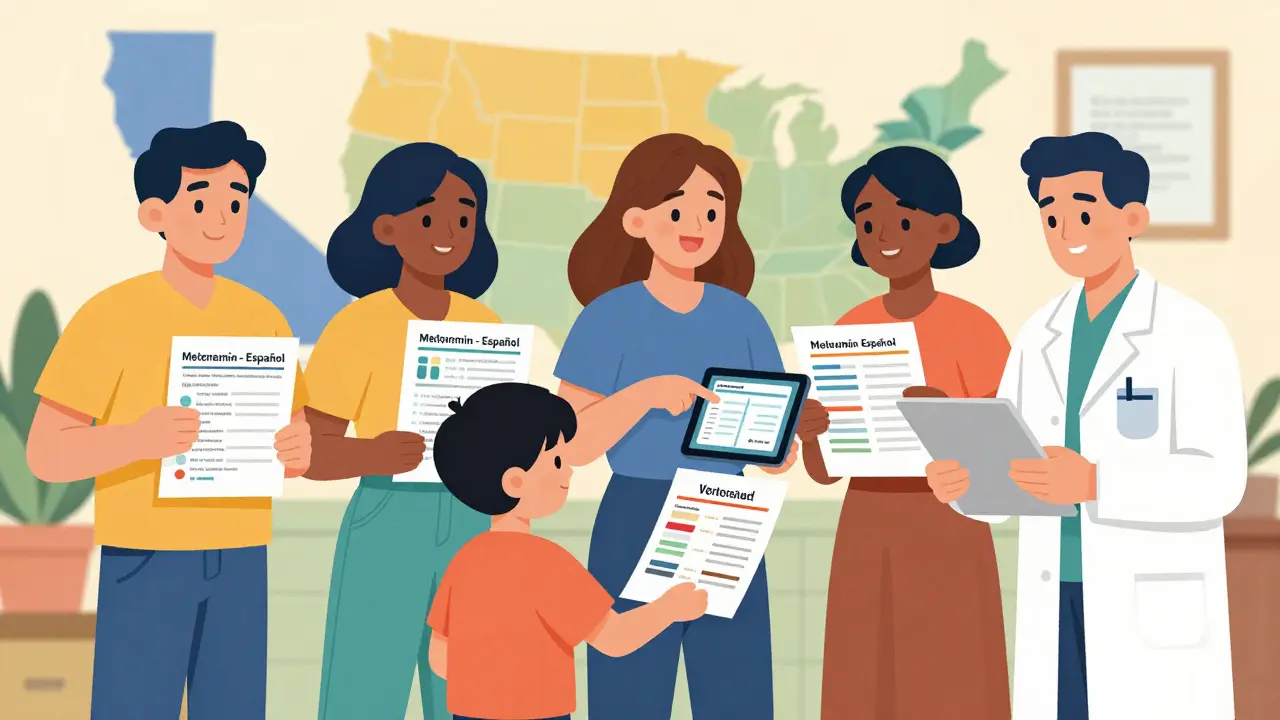
- Use free translation services - Organizations like the National Health Law Program and Health Literacy Media offer free multilingual medication guides. Search for "[drug name] + [your language] + medication guide" - you’ll often find printable PDFs.
- Report bad translations - File a complaint with your state’s pharmacy board. If you’re in California or New York, they’re required to respond. In other states, report it to the FDA’s MedWatch program. One complaint can start a review.
What’s Changing - And What’s Coming
Change is coming, slowly. Walgreens launched MedTranslate AI in late 2023. It uses artificial intelligence to flag suspicious translations - then sends them to a pharmacist for review. Pilot locations saw a 63% drop in errors. CVS Health rolled out LanguageBridge in early 2024. It combines neural machine translation with human checks. It’s not perfect - but it’s better. The FDA just released new draft guidelines in January 2024. They’re pushing for plain-language labels - simpler words, clearer symbols - so even machine translations have a better chance of being correct. The U.S. government is also investing. In March 2024, the Department of Health and Human Services launched a $25 million grant program to help pharmacies buy translation tools and train staff. But here’s the reality: until every state passes laws like California’s, progress will be uneven. And people will keep getting hurt.What You Can Do Right Now
You don’t need to wait for policy changes. You can act today:- Always double-check your prescription label - even if it’s in English.
- Bring someone who speaks your language to the pharmacy with you.
- Keep a printed copy of your medication list - including dosage and timing - in your native language.
- Ask your pharmacy if they use certified translators. If they say no, ask why - and consider switching.
- Share your story. If you’ve had a bad experience, tell someone. It might save a life.
Why do pharmacies use machine translation instead of human translators?
Most pharmacies use machine translation because it’s cheaper - about 5 to 15 times less expensive than hiring certified medical translators. For busy pharmacies filling thousands of prescriptions daily, saving pennies per label adds up. But this cost-saving comes at a high risk: machine translations make errors in about half of all non-English labels, according to a 2010 Pediatrics study. Many pharmacies don’t have the budget or infrastructure to hire professional translators, and there’s no federal law requiring them to do so - except in California and parts of New York.
Can I ask my pharmacy to translate my prescription label for free?
Yes. Under Title VI of the Civil Rights Act, pharmacies that receive federal funding (which includes nearly all major chains) must provide language assistance at no cost to patients with limited English proficiency. You have the right to ask for a certified translator - in person, over the phone, or via video. If they refuse or say it’s not available, ask to speak with a manager or file a complaint with your state’s pharmacy board or the U.S. Department of Health and Human Services.
What should I do if I think my prescription label is translated wrong?
Don’t take the medication until you’re sure. Call your doctor and read the label aloud to them. Ask them to confirm the dosage, frequency, and purpose. You can also contact your pharmacy and ask for a bilingual verification - two people checking the translation. If the error is confirmed, ask them to correct it and issue a new label. If they refuse or ignore you, report it to the FDA’s MedWatch program or your state’s pharmacy board. Your report helps track patterns and push for change.
Are there free resources to help me understand my prescription in my language?
Yes. The National Health Law Program, Health Literacy Media, and the FDA offer free multilingual medication guides in over 30 languages. Search online for your medication name + your language + "medication guide" - you’ll often find printable PDFs with clear instructions. Some community health centers also provide printed materials in common languages like Spanish, Chinese, Vietnamese, and Arabic. Libraries and immigrant support organizations may have them too.
Which languages are most commonly translated on prescription labels?
Spanish is by far the most common - offered at 87% of major pharmacy chains. Chinese and Vietnamese are available at about 23% of locations. Arabic, Russian, and Korean are even rarer. For less common languages, you’ll often need to request translation services in advance or rely on phone interpreters. Most automated systems only support Spanish and sometimes French. If your language isn’t listed, don’t assume it’s unavailable - ask for human-assisted translation. You have the right to it.


Praseetha Pn
January 18, 2026 AT 09:12Okay but let’s be real - this isn’t just about pharmacies. It’s about the entire medical-industrial complex exploiting non-English speakers like they’re disposable beta testers. Machine translation? That’s not laziness, that’s genocide by algorithm. I’ve seen my cousin almost die because a label said ‘take once daily’ and the software turned it into ‘take eleven times daily.’ They didn’t even apologize. Just gave her a new label and said ‘sorry for the confusion.’ Confusion? My cousin was in the ICU for three days. This is systemic racism wrapped in a barcode.
Selina Warren
January 18, 2026 AT 14:01They treat language like it’s a checkbox, not a lifeline. I work in public health - I’ve seen grandparents skip doses because they didn’t trust the label. And when they ask for help? They’re told to ‘learn English’ or ‘just call your doctor.’ But what if your doctor speaks zero of your language? What if you’re blind? What if you’re 80 and scared? This isn’t a translation problem - it’s a moral failure. We’re letting people die because it’s cheaper to automate compassion.
Robert Davis
January 18, 2026 AT 19:07Interesting how no one mentions that the real issue is the lack of standardized medical terminology across languages. You can’t just translate ‘as needed’ into Spanish and expect it to mean the same thing. The word ‘necesario’ implies urgency, while ‘opcional’ implies choice. And that’s before you get into regional dialects - ‘alcohol’ in Mexico isn’t the same as in Spain. This isn’t a software flaw. It’s a linguistic minefield. The solution isn’t more human translators - it’s a unified medical lexicon. And that’s never going to happen.
Jake Moore
January 19, 2026 AT 17:23Actually, I’ve worked in pharmacy IT for 8 years. The real bottleneck isn’t cost - it’s liability. If you use a human translator, and they mess up, the pharmacy is on the hook. If a machine messes up? It’s ‘system error.’ No one gets fired. No one gets sued. That’s why CVS and Walgreens are slowly rolling out AI-assisted human review systems - it’s the only way to cover their asses legally. The $0.30 per label? That’s not the cost. It’s the risk. And right now, the risk of doing nothing is cheaper than the risk of doing it right.
Joni O
January 19, 2026 AT 18:12My abuela got her insulin label wrong last year. Took it wrong for two weeks. She didn’t tell anyone because she didn’t want to ‘cause trouble.’ I found out because her glucose monitor kept screaming. We called the pharmacy - they said ‘oh, that’s just Google Translate.’ I cried in the parking lot. Please, if you see someone struggling with a label - stop. Ask. Help. It’s not hard. Just say ‘let me check this with you.’ That’s all it takes.
Max Sinclair
January 20, 2026 AT 03:18California’s law is the gold standard - and it’s working. But here’s the thing: it’s not just about translation. It’s about dignity. When you hand someone a label in their language, you’re saying, ‘I see you. I value your life.’ That’s not a cost. That’s a covenant. And if we’re willing to spend billions on new drugs but balk at $500 a week to save lives, we’ve lost our way. Let’s not wait for another death to fix this.
Nishant Sonuley
January 21, 2026 AT 20:08Let me tell you something about India - we’ve been dealing with this for decades. My uncle, a diabetic, got a prescription in Hindi that said ‘take one tablet after meals’ - but the pharmacist misread ‘baad’ as ‘pehle’ - before meals. He had a hypoglycemic seizure. The pharmacist? Said ‘oops, sorry’ and gave him a new one. No follow-up. No training. No accountability. And here in the U.S.? Same thing. Only difference? You have lawyers. We have silence. So stop acting like this is an American problem. It’s a global failure of systems that treat language as an afterthought - not a human right.
Emma #########
January 22, 2026 AT 22:03I’m a nurse. I’ve watched patients stare at their labels like they’re ancient scrolls. Some don’t speak English. Some can’t read at all. We have these beautiful multilingual pamphlets in the break room - but no one ever uses them. Why? Because no one asks. No one says, ‘Can you help me understand this?’ So I started doing it. I sit with them. I read it out loud. I draw pictures. It takes five minutes. But it saves lives. You don’t need a translator. You just need to care enough to ask.
Andrew McLarren
January 23, 2026 AT 14:10It is imperative to recognize that the dissemination of accurate pharmaceutical information constitutes a non-negotiable component of equitable healthcare delivery. The current regulatory vacuum, wherein jurisdictions permit the use of non-certified, algorithmically generated translations, represents a profound dereliction of professional duty. The economic calculus that prioritizes marginal cost savings over patient safety is not merely flawed - it is ethically indefensible. A systemic recalibration, grounded in mandatory certification standards and federal oversight, is not merely advisable - it is a moral imperative.
Andrew Short
January 24, 2026 AT 05:51Of course people are dying - they’re too lazy to learn English. Why should taxpayers fund translators for people who refuse to assimilate? You want to live here? Learn the language. The pharmacy isn’t your babysitter. If you can’t read a label in English, that’s your problem. And don’t blame the system. Blame the people who think they deserve special treatment because they can’t be bothered to adapt. This isn’t discrimination - it’s consequences.