
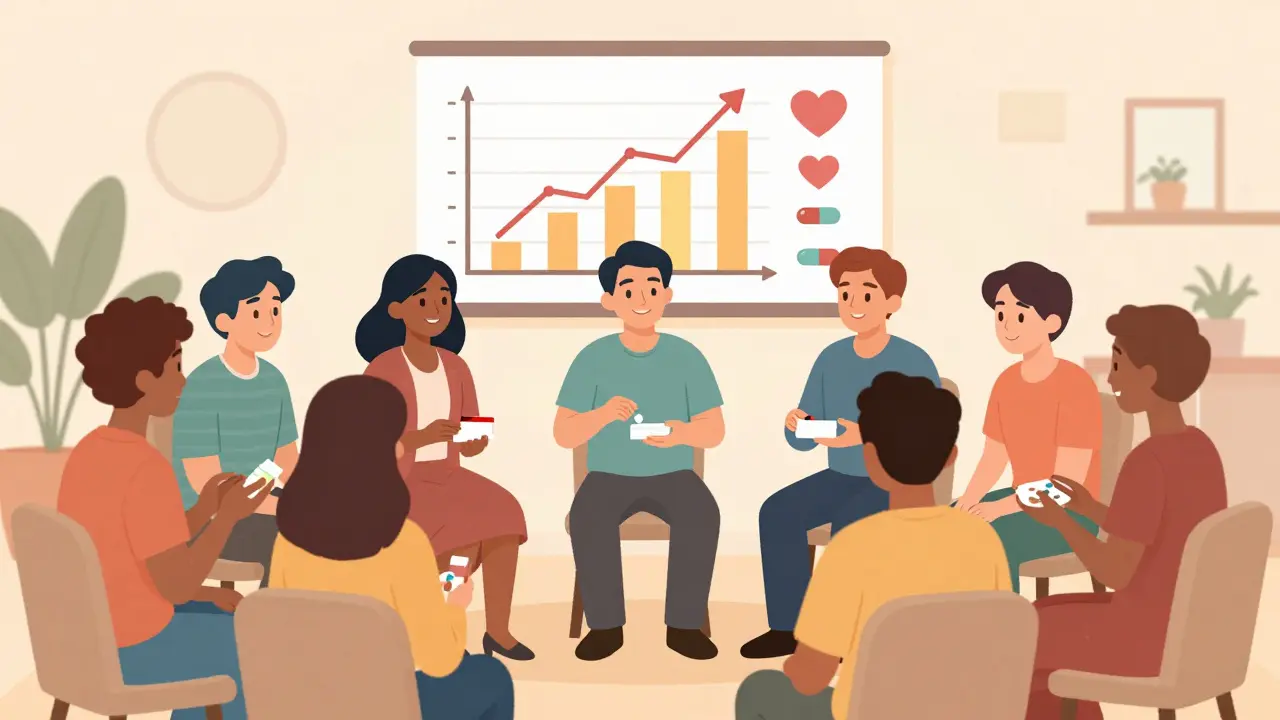
Missing a pill here and there might seem harmless, but for millions of people managing chronic conditions like diabetes, high blood pressure, or depression, it adds up. About half of all patients don’t take their meds as prescribed. That’s not laziness or forgetfulness - it’s often loneliness, confusion, or feeling overwhelmed. That’s where support groups and community programs step in. These aren’t fancy clinics or high-tech apps. They’re real people, sharing real struggles, and helping each other stay on track. And the data shows it works.
Why Medication Compliance Is So Hard
Taking medicine daily sounds simple. But think about it: if you’re on five different pills, at different times, with different food rules, side effects, and refill schedules, it’s a full-time job. Add in cost, stigma, depression, or just plain burnout, and it’s no surprise people drop off. The World Health Organization estimates medication non-adherence costs the U.S. healthcare system between $100 billion and $300 billion every year. That’s not just money - it’s more ER visits, more hospital stays, and more suffering.How Peer Support Makes a Difference
Traditional advice - like handing out pamphlets or telling patients to "take your meds" - doesn’t cut it. Studies show peer-led programs do. When someone who’s been there for years shares how they handle side effects, remember doses, or talk to their doctor, it lands differently. A 2020 review in the Journal of Medical Care found peer support had more than double the impact of education-only methods. The effect size? Cohen’s d=0.40. That’s not small. That’s meaningful.Take the American Heart Association’s Heart360 program. It pairs people with heart conditions with peer mentors who’ve successfully managed their own for at least two years. These mentors aren’t doctors. They’re neighbors, friends, people who know what it’s like to forget a pill or feel discouraged. Participants report feeling less alone, and studies show they’re more likely to stick with their meds.
Real Stories, Real Results
On Reddit, a user named DiabetesWarrior87 posted that after joining a weekly diabetes support group, their missed doses dropped from 3-4 a week to less than one. Their A1c - a key blood sugar marker - fell from 8.5% to 6.9% in just six months. That’s not luck. That’s structure, accountability, and empathy.The PatientsLikeMe platform surveyed over 12,000 users in 2022. Seventy-eight percent said being in a condition-specific group helped them take their meds more consistently. And the #1 thing they credited? Hearing how others handled side effects. Not a doctor’s lecture. Not a warning label. Another person’s story.
Types of Programs That Work
Not all programs are the same. Here are the most effective models:- Face-to-face peer groups: Usually meet once or twice a week, 8-12 people. Led by trained peers or community health workers. These have the highest long-term adherence - 28% better than apps alone, according to Frontiers in Pharmacology (2023).
- Home visitation programs: Community health workers come to your house 4-12 times over 3-6 months. They check in, help organize pill boxes, and answer questions. Especially effective for elderly or mobility-limited patients.
- Digital support communities: Apps or online forums with moderated peer chats. Good for 24/7 access, but lack emotional depth. They improve adherence, but not as deeply as in-person groups.
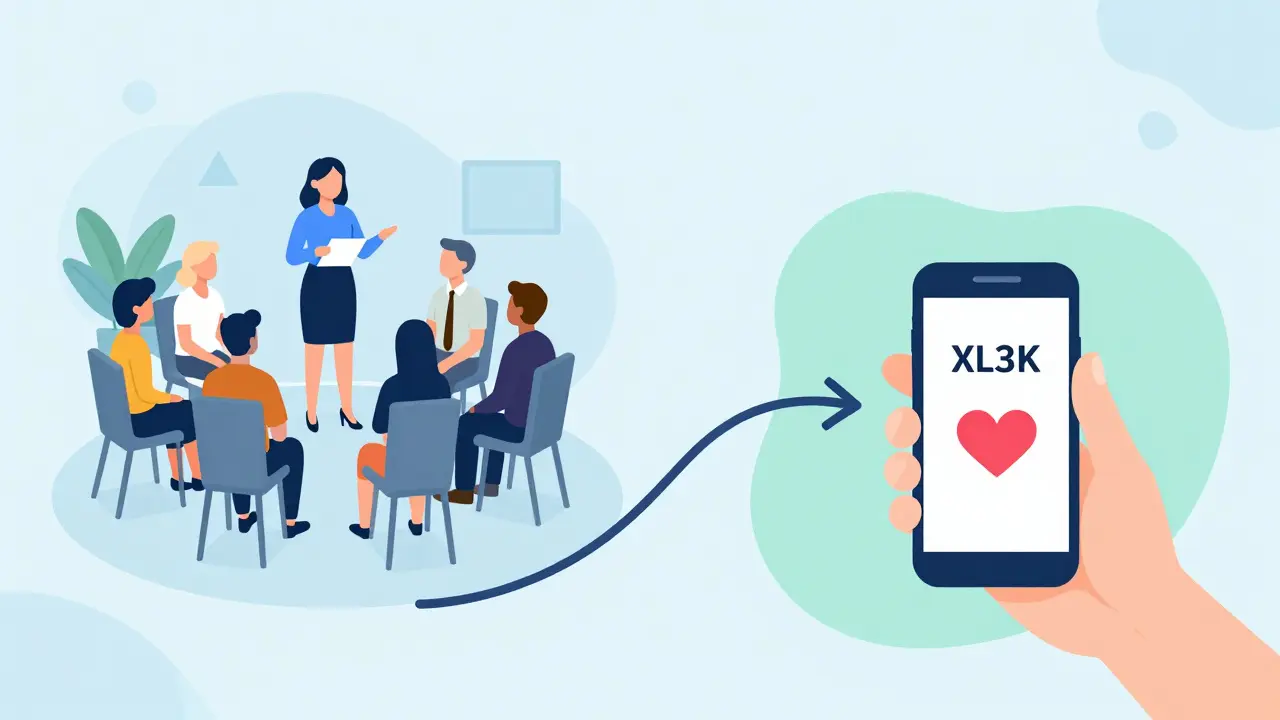
- Hybrid models: The best of both worlds. In-person meetings + daily text reminders or app check-ins. A 2023 study found this combo boosted adherence by 34% in hypertension patients.
Who Runs These Programs?
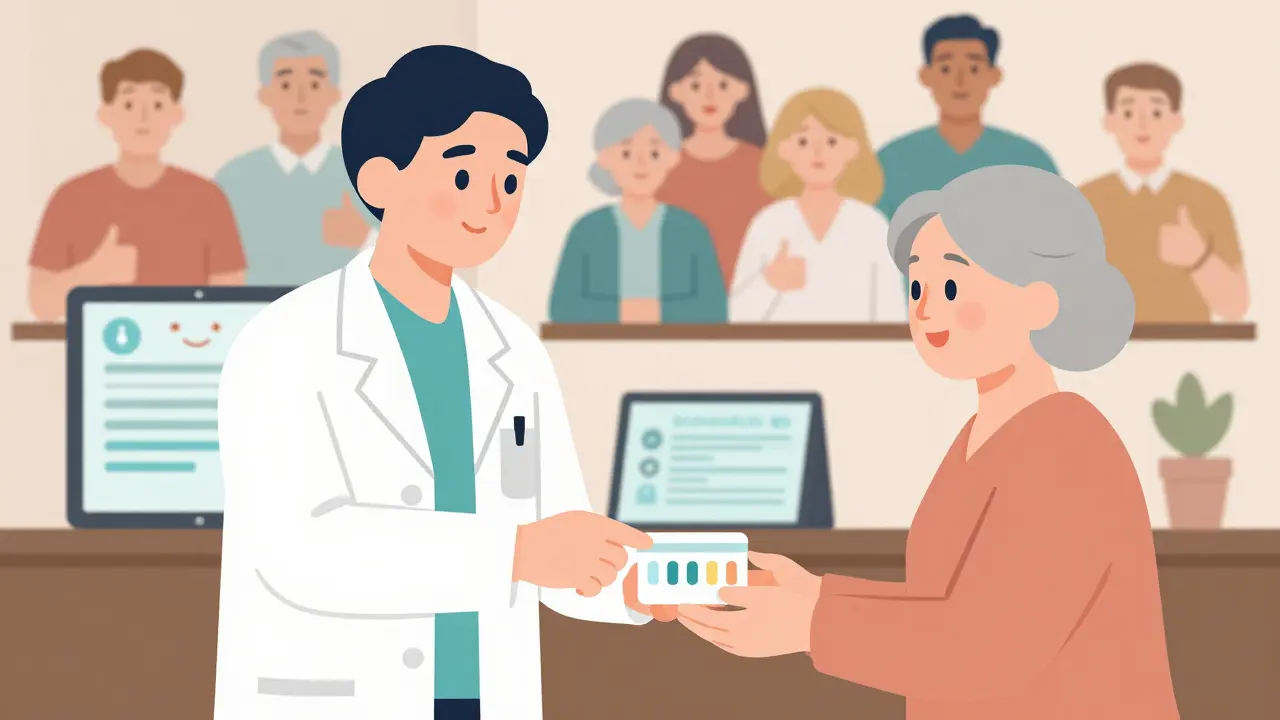
You might assume hospitals run them all. But many are community-based. Nonprofits, churches, libraries, even pharmacies. The Veterans Health Administration runs one of the largest, with peer support in 140 facilities, helping 250,000 veterans each year. Kaiser Permanente has 147 condition-specific groups. And Medicare Advantage plans now cover some form of adherence support in 63% of their offerings.Pharmacists are key. A 2023 study in Frontiers in Pharmacology found 73% of effective programs included pharmacists. Why? They know the meds inside out - how they interact, what side effects to watch for, how to simplify regimens. A pharmacist-led group had 23% higher adherence than one led by a doctor.
What Makes a Program Actually Work?
Not every group succeeds. The difference? Structure and training.- Facilitators need at least 40 hours of training. Programs with less than 20 hours were 37% less effective.
- Active listening matters more than medical knowledge. Ninety-two percent of successful programs say it’s essential.
- Cultural matching helps. African American participants in hypertension groups reported 35% higher satisfaction when led by peers from similar backgrounds.
- They use real tools - like the Morisky Medication Adherence Scale - to track progress. Only 38% of community programs do this.
And it’s not just about pills. The best programs tie medication use to bigger goals: "I want to play with my grandkids," or "I don’t want to end up in the hospital again." They help people connect their meds to their life.
The Limits of Support Groups
They’re not magic. Rural areas have 47% fewer programs than cities. Many don’t offer non-English support, even though 25% of the U.S. population has limited English proficiency. Some people hate group settings - 29% of survey respondents said they felt uncomfortable. Others struggle with inconsistent meeting times - 39% cited scheduling as a problem.And here’s the hard truth: support groups alone can’t fix a complicated regimen. Dr. John Urquhart from Stanford pointed out that simplifying a pill schedule - say, from four times a day to twice - improved adherence more than peer support alone. That’s why the best programs combine peer support with med review, dose simplification, and pharmacist input.
Cost and Sustainability
Many programs are free for participants, funded by grants averaging $75,000-$150,000 per year. Hospitals pay $200-$500 per patient annually to run them. That’s a bargain. A 2022 study in JAMA Network Open found a diabetes support program saved $18 for every $1 spent by cutting hospitalizations by 27%. That’s an 18:1 return.But many nonprofits are struggling. A 2023 survey found 41% of community programs are financially unstable. Without sustainable funding - like Medicaid reimbursement or value-based care payments - these programs vanish. CMS launched a $50 million initiative in 2023 to pay community health workers to support medication adherence for dual-eligible beneficiaries. That’s a step forward.
What You Can Do
If you or someone you care about is struggling with meds:- Ask your doctor or pharmacist: "Do you know of any local support groups?"
- Check with your local library, community center, or church.
- Look for programs tied to your condition - diabetes, heart disease, depression - they’re often more targeted.
- Try a hybrid: join a group, and set daily phone alarms or use a free app like Medisafe or MyTherapy.
- If you’re the caregiver: attend a meeting with them. Your presence matters.
It’s not about being perfect. It’s about having people who get it. Who’ve been there. Who remind you that you’re not alone - and that your meds aren’t just a chore. They’re how you keep living your life.
Are support groups only for people with serious illnesses?
No. Support groups exist for many conditions - from high blood pressure and diabetes to asthma, thyroid disorders, and even mental health conditions like anxiety and depression. Anyone taking daily medication for a chronic issue can benefit. Even if your condition seems "manageable," missing doses can lead to bigger problems down the road. These groups help at every level.
Can I join a support group if I’m not comfortable talking in front of others?
Absolutely. Many groups offer low-pressure options - you can just listen at first. Some use written sharing instead of speaking. Others have one-on-one peer buddy systems instead of group meetings. Digital forums let you participate anonymously. You don’t have to share anything until you’re ready. The goal is connection, not performance.
Do I need a referral to join a support group?
Usually not. Most community-based groups are open to anyone. Hospitals or clinics may have internal programs that require a referral, but many are self-enrolled. Check with your local pharmacy, public health department, or nonprofit organizations like the American Heart Association or American Diabetes Association. They often list nearby groups online.
What if my medication schedule is too complicated?
That’s exactly why you should bring it up in a support group. Many groups include pharmacists or have connections to medication therapy management services. They can help you simplify your regimen - like switching to combination pills or using once-daily dosing. One woman in a hypertension group found out her four daily pills could be cut to two - and her adherence jumped from 50% to 90%.
Are these programs free?
Most community-based programs are free to join. Some hospital-based programs may charge a small fee, but many are covered by insurance or grants. Medicare Advantage plans often include them at no extra cost. If you’re asked to pay, ask if financial assistance is available. The goal is access, not profit.
How long should I stick with a support group?
There’s no set timeline. Some people stay for months, others for years. The biggest drop-off happens after six months - that’s when people feel they’ve "gotten it" and leave. But long-term adherence often comes from ongoing connection. Think of it like exercise: you don’t stop going to the gym because you lost five pounds. You keep going because it becomes part of how you live.
Can family members join?
Yes - and they should. Family involvement is one of the strongest predictors of adherence. A 2021 study found 11 out of 14 studies showed clear improvement when family members were included. They can help with reminders, manage refills, or just offer emotional support. Many programs now offer separate family sessions or welcome caregivers.
What’s Next?
The future of medication compliance isn’t just about better pills - it’s about better support. Hybrid models combining in-person connection with digital tools are rising. More insurers are paying for them. More pharmacists are stepping into coaching roles. And more patients are realizing they don’t have to do this alone.If you’re struggling, don’t wait for a perfect solution. Start small. Call your local health department. Ask your pharmacist. Join one meeting. You might find the person who helps you remember your next dose - not because they told you to, but because they’ve been there too.

Emily Wolff
February 24, 2026 AT 22:42Lou Suito
February 26, 2026 AT 15:23Joseph Cantu
February 27, 2026 AT 15:36Jacob Carthy
March 1, 2026 AT 10:18Lisandra Lautert
March 2, 2026 AT 02:50Cory L
March 3, 2026 AT 14:49Bhaskar Anand
March 4, 2026 AT 21:15William James
March 6, 2026 AT 11:25David McKie
March 7, 2026 AT 03:44Southern Indiana Paleontology Institute
March 8, 2026 AT 10:01Stephen Archbold
March 10, 2026 AT 03:48Erin Pinheiro
March 11, 2026 AT 15:35