

You wake up feeling like you’ve been hit by a truck, even though you slept for eight hours. You try to run errands, and by the time you get home, you’re so exhausted you can barely speak. This isn’t just "being tired." It’s Myalgic Encephalomyelitis/Chronic Fatigue Syndrome, commonly known as ME/CFS or Chronic Fatigue Syndrome. It is a complex neuroimmune disease that causes severe fatigue not relieved by rest and worsened by physical or mental exertion.
For years, doctors dismissed this condition as psychological. Today, science proves otherwise. With new clinical evidence showing brain changes and immune dysfunction, understanding ME/CFS is shifting from mystery to medical reality. If you or someone you love is struggling with unexplained exhaustion, knowing the facts about symptoms, diagnosis, and management-especially pacing strategies-can change your life.
What Is ME/CFS? Understanding the Core Problem
ME/CFS is not laziness. It is not depression. It is a physiological disorder where the body’s energy production systems fail under stress. The defining feature is Post-Exertional Malaise (PEM), which is a worsening of symptoms after physical or mental activity that lasts for days or weeks.
Think of it like a battery that charges slowly but drains instantly when used. A healthy person might feel tired after a workout but recover in a day. Someone with ME/CFS might crash for three days after walking around a grocery store. This "crash" involves extreme fatigue, cognitive fog, pain, and flu-like feelings.
The condition affects millions globally. In the US alone, an estimated 836,000 to 2.5 million people live with ME/CFS. Yet, up to 90% remain undiagnosed. Why? Because there is no single blood test for it. Diagnosis relies on recognizing specific patterns of symptoms and ruling out other conditions.
Key Symptoms: Beyond Just Feeling Tired
To be diagnosed with ME/CFS, symptoms must last at least six months and significantly reduce your ability to function. Different diagnostic criteria exist, but they all point to a cluster of issues:
- Unrefreshing Sleep: You sleep, but you don’t feel rested. Your body doesn’t enter deep, restorative sleep cycles properly.
- Cognitive Impairment ("Brain Fog"): Difficulty concentrating, remembering words, or processing information. This is linked to reduced connectivity in the brain’s executive function areas.
- Orthostatic Intolerance: Dizziness, lightheadedness, or heart palpitations when standing up. This suggests autonomic nervous system dysfunction.
- Pain: Widespread muscle pain, joint pain without swelling, or new types of headaches.
- Immune Issues: Sore throat, tender lymph nodes, or sensitivity to infections.
If you have these symptoms plus PEM, you likely meet the criteria set by the Institute of Medicine (IOM) or the CDC. The IOM criteria are often easier for primary care doctors to use because they focus on three core signs: substantial reduction in activity level, PEM, and unrefreshing sleep.
Clinical Evidence: Proof That ME/CFS Is Real
Skeptics used to say ME/CFS was "all in your head." Modern research has dismantled that myth. Here is what the data shows:
| System | Finding | Impact |
|---|---|---|
| Brain Structure | Reduced connectivity in brainstem and hippocampus | Causes cognitive fog and memory issues |
| Immune System | Elevated cytokines (IL-1β +42%, TNF-α +37%) during PEM | Inflammation drives symptom flares |
| Energy Metabolism | 28% lower ATP production; 50% slower lactate clearance | Muscles fatigue faster and recover slower |
| Autonomic Nervous System | 35% reduction in heart rate variability | Leads to dizziness and heart rate spikes |
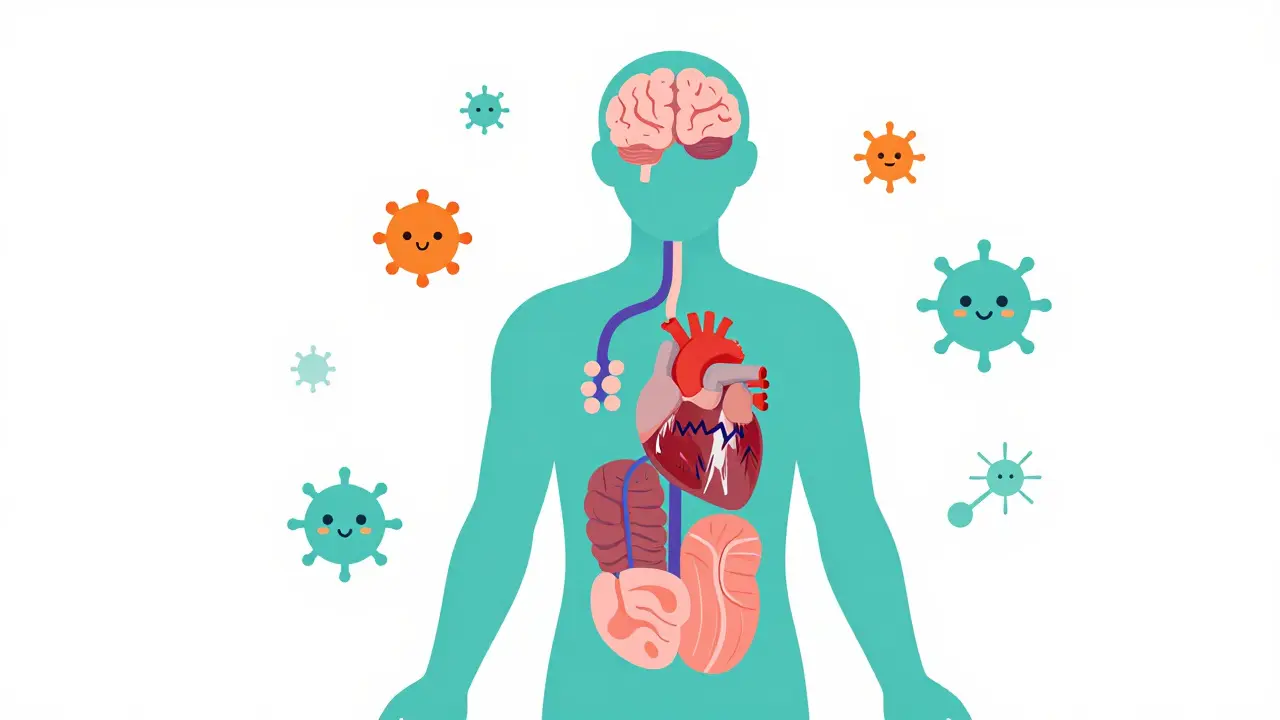
These aren’t minor glitches. They are measurable biological abnormalities. For example, advanced MRI studies show that the reticular activating system (RAS)-which controls alertness-is less active in ME/CFS patients. This explains why stimulants often don’t work well; the hardware itself is impaired.
Furthermore, cardiopulmonary exercise testing (CPET) reveals that ME/CFS patients cannot sustain aerobic capacity. On the second day of testing, their oxygen consumption drops by 28%. This objective proof of PEM helps validate the patient’s experience in court cases and disability claims.

The Gold Standard Management: Pacing Strategies
If there is no cure yet, how do you live with ME/CFS? The answer is Pacing, which is managing energy expenditure to stay within your body's limits and avoid post-exertional malaise.
Pacing is not about pushing through pain. It is about staying below your threshold. Many patients fall into the "boom-bust" cycle: they feel good one day, overdo it, and then crash for days. Pacing breaks this cycle.
How to Start Pacing
- Find Your Baseline: Track your activities for two weeks. Note what triggers crashes. Identify your "energy envelope"-the amount of activity you can handle daily without getting sick.
- Use the Spoon Theory: Imagine you have a limited number of "spoons" (energy units) each day. Brushing teeth costs one spoon. Cooking costs three. Assign values to tasks and stop before you run out.
- Monitor Heart Rate: Use a heart rate monitor. Keep your heart rate below your anaerobic threshold (often around 120-130 bpm). If it spikes, stop immediately.
- Rest Proactively: Don’t wait until you’re exhausted. Rest before you need it. Lie down with eyes closed for 15-20 minutes between tasks.
Studies show that patients who pace consistently see a 30% improvement in symptoms within six months. Those who ignore pacing and try graded exercise therapy (GET) often get worse. In fact, 41% of patients report worsening symptoms after GET, while only 12% worsen with pacing-only approaches.
Diagnosis Challenges and What to Expect
Getting diagnosed is hard. The average time to diagnosis is 5.2 years. Most patients see five or more doctors before finding one who listens. Common hurdles include:
- Dismissal: 82% of patients report being told their symptoms are "psychological."
- Lack of Awareness: Many general practitioners haven’t updated their knowledge since the 1990s.
- No Biomarker Test: Doctors must rule out anemia, thyroid issues, sleep apnea, and autoimmune diseases first.
To speed up the process, keep a detailed symptom diary. Record your sleep, activity levels, and crashes. Bring this to your doctor. Ask specifically about PEM. If your doctor dismisses you, seek a specialist in infectious disease, neurology, or rheumatology who recognizes ME/CFS as a physiological disorder.
Treatment Options and Future Hope
There is no FDA-approved drug for ME/CFS yet, but several treatments help manage symptoms:
- Ampligen (Rintatolimod): An immunomodulator that showed 35% symptom improvement in phase 3 trials. It is available via expanded access programs.
- Rituximab: An antibody drug that helped some patients in early studies, though results have been mixed.
- Fludrocortisone/Midodrine: Medications to help with orthostatic intolerance and low blood pressure.
- Cognitive Behavioral Therapy (CBT): Not a cure, but helpful for coping with chronic illness stress. It does not fix the underlying biology.
Research is accelerating. The NIH has launched a $17.8 million network of five collaborative research centers. New studies are exploring gut microbiome interventions and metabolic reprogramming. The FDA now requires objective PEM measurement for clinical trials, ensuring future drugs target the real problem.
Living Well with ME/CFS
Life with ME/CFS requires adaptation. Work may need to be part-time or remote. Social plans must be flexible. Support groups, both online and offline, provide crucial community. Remember, you are not broken. Your body is fighting a complex battle. By respecting its limits through pacing and seeking evidence-based care, you can regain stability and quality of life.
Is Chronic Fatigue Syndrome curable?
Currently, there is no known cure for ME/CFS. However, symptoms can be managed effectively through pacing, lifestyle adjustments, and targeted treatments for specific issues like pain or orthostatic intolerance. Research is ongoing, and new therapies are in development.
What is the difference between ME/CFS and regular fatigue?
Regular fatigue improves with rest. ME/CFS is characterized by Post-Exertional Malaise (PEM), where physical or mental exertion leads to a severe worsening of symptoms that lasts for days or weeks. Rest does not alleviate the core fatigue of ME/CFS.
Can exercise help with ME/CFS?
Traditional graded exercise therapy (GET) is no longer recommended as it can worsen symptoms in many patients. Instead, gentle movement within your energy limits (pacing) is advised. Always consult a specialist familiar with ME/CFS before starting any exercise program.
How long does it take to get diagnosed with ME/CFS?
The average time to diagnosis is approximately 5.2 years. Delays occur due to lack of awareness among healthcare providers, absence of a definitive biomarker test, and misdiagnosis as psychological conditions. Keeping a detailed symptom diary can help speed up the process.
What are the best pacing strategies for beginners?
Start by tracking your activities to find your baseline. Use the "Spoon Theory" to assign energy costs to tasks. Monitor your heart rate to stay below your anaerobic threshold. Rest proactively before you feel exhausted. Avoid the "boom-bust" cycle by staying consistent with low-level activity.
Are there any medications approved for ME/CFS?
No medication is currently FDA-approved specifically for curing ME/CFS. However, drugs like Ampligen (Rintatolimod) are available through expanded access programs. Other medications may be prescribed off-label to manage symptoms such as pain, sleep disturbances, or orthostatic intolerance.
Does ME/CFS affect children and teenagers?
Yes, ME/CFS can affect people of all ages, including children and teenagers. Early onset cases often follow viral infections. Management principles, such as pacing and school accommodations, are similar to those for adults, though tailored to developmental needs.
What role does diet play in managing ME/CFS?
While no specific diet cures ME/CFS, eating balanced, nutrient-dense meals can support overall health. Some patients find relief by reducing sugar or processed foods. Staying hydrated is crucial. Individual responses vary, so working with a nutritionist familiar with chronic illness can be helpful.