AGI Adaptation Timeline Calculator
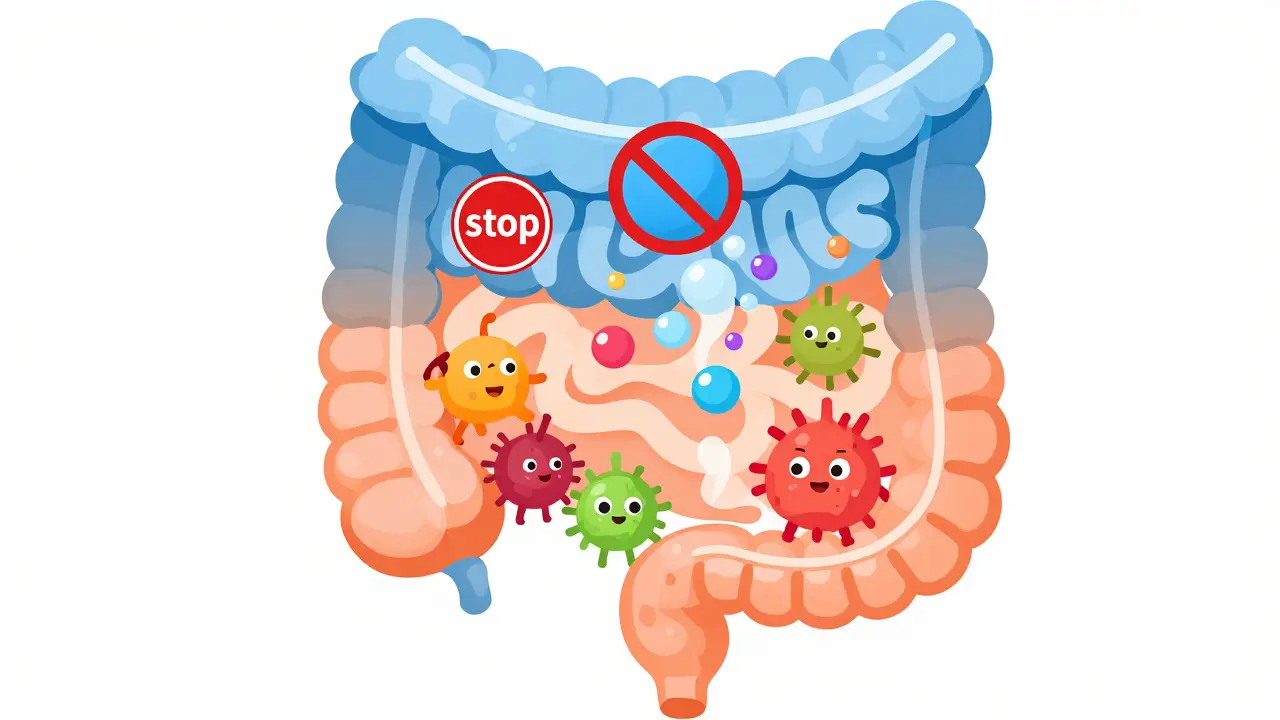
Starting a new diabetes medication should feel like gaining control over your health, not losing control of your digestive system. Yet for many people prescribed Acarbose or Miglitol, the reality is quite different. These drugs, known as alpha-glucosidase inhibitors (AGIs) are oral antihyperglycemic medications that delay carbohydrate digestion in the small intestine, work by blocking enzymes that break down carbs. The result? Lower blood sugar spikes after meals. But there is a catch. Those undigested carbohydrates travel to the colon, where bacteria ferment them, producing hydrogen, methane, and carbon dioxide. In plain English, this means gas, bloating, and sometimes urgent trips to the bathroom.
You are not alone if you find these side effects discouraging. About 20% to 30% of patients stop taking AGIs within the first three months because the gastrointestinal discomfort feels too severe. However, giving up immediately might mean missing out on a powerful tool for managing type 2 diabetes without causing weight gain or low blood sugar. The good news is that with the right strategy-slow dose titration, specific dietary tweaks, and targeted supplements-you can often train your gut to tolerate these medications. Let’s look at exactly how to make acarbose and miglitol work for you, rather than against you.
Why Do Acarbose and Miglitol Cause Gas?
To manage the side effects, it helps to understand why they happen. Unlike metformin, which works primarily in the liver, AGIs act locally in your upper small intestine. They inhibit the enzyme alpha-glucosidase, which is responsible for breaking down complex carbohydrates into simple sugars like glucose. When this process is slowed, less sugar enters your bloodstream quickly, keeping postprandial (after-meal) blood glucose levels stable.
However, the carbohydrates that aren’t broken down don’t just disappear. They move intact into the large intestine (colon). Your gut microbiome-the trillions of bacteria living there-sees this influx of undigested carbs as a feast. As these bacteria ferment the carbohydrates, they produce gas as a byproduct. This fermentation process is what causes flatulence, abdominal distension, and diarrhea.
There is a key difference between the two main drugs in this class that affects how bad these symptoms get:
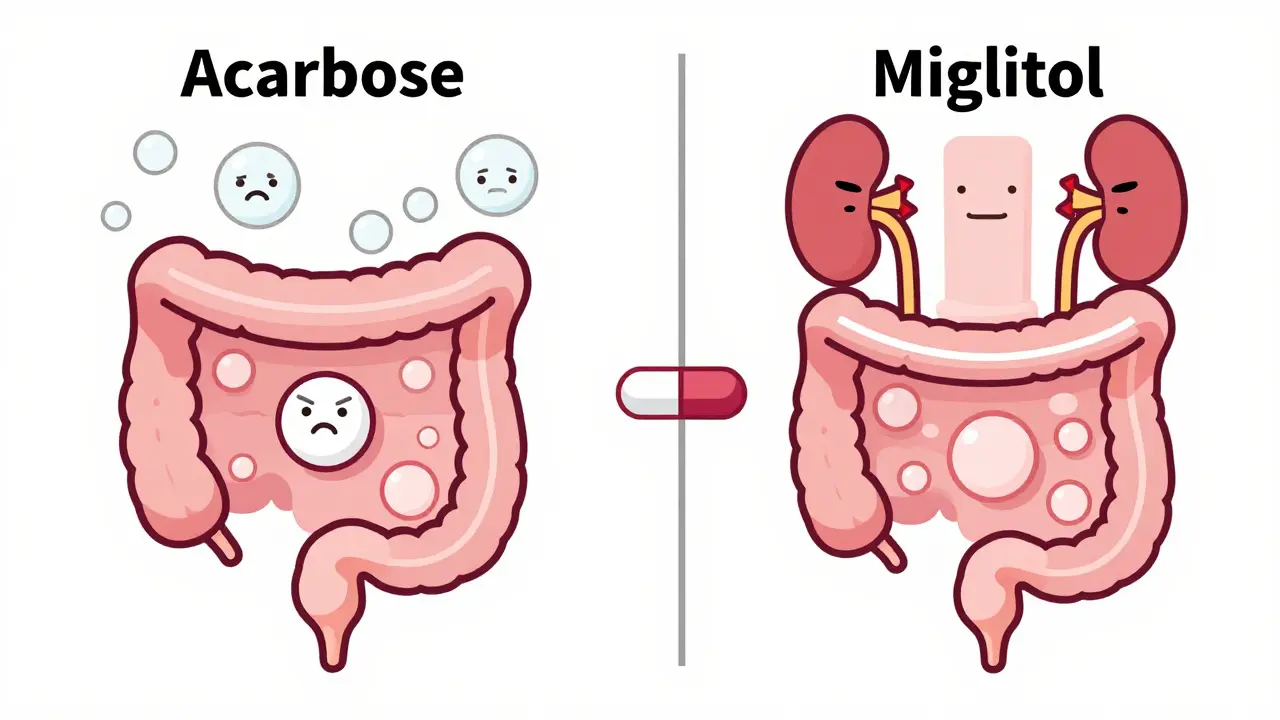
- Acarbose is a pseudotetrasaccharide that is barely absorbed into the bloodstream (less than 2%). It stays entirely in the gut, leading to a higher concentration of undigested carbs reaching the colon, which often results in more significant gas production.
- Miglitol is a deoxynojirimycin derivative that is absorbed systemically (50-100%) and then excreted by the kidneys. Because some of it leaves the gut via the blood, slightly fewer undigested carbs may reach the colon compared to acarbose, potentially leading to milder gastrointestinal symptoms for some users.
A study by Aoki et al. (2010) confirmed this dynamic, showing that acarbose produced significantly higher flatus scores and abdominal bloating compared to miglitol in male participants. If you have tried both, you might notice miglitol feels easier on your stomach, though individual responses vary based on your unique gut bacteria composition.
The Golden Rule: Start Low and Go Slow
The single most effective way to reduce GI side effects is how you start the medication. Many patients make the mistake of jumping straight to the therapeutic dose, hoping to see immediate blood sugar improvements. This shocks your digestive system. Instead, follow the principle of gradual titration.
Clinical guidelines from the American Diabetes Association (ADA) and experts like Dr. Lawrence Blonde recommend starting with the lowest possible dose. For both acarbose and miglitol, this is typically 25mg taken three times daily, with the first bite of each meal. Stay at this dose for at least two to four weeks. During this time, your colonic bacteria begin to adapt to the increased carbohydrate load. You will likely still experience some gas, but it should be manageable.
After your body adjusts, increase the dose by 25mg to 50mg every two to four weeks until you reach the target maintenance dose (usually 50mg to 100mg three times daily for acarbose, or 25mg to 100mg three times daily for miglitol). Research shows that this slow titration approach can drop discontinuation rates from 30% down to just 12%. Patience here pays off. If you rush the increase, you reset the adaptation clock, forcing your gut to deal with a sudden surge of fermentable material.
Dietary Adjustments to Minimize Fermentation
Your diet plays a massive role in how well you tolerate AGIs. Since these drugs specifically target carbohydrate digestion, what you eat directly influences the amount of substrate available for bacterial fermentation in the colon.
First, focus on consistency. Aim for 45-60 grams of carbohydrates per meal. Avoid erratic swings where one meal has very few carbs and the next is loaded with pasta or rice. Consistency helps your gut bacteria predict and process the incoming load more efficiently.
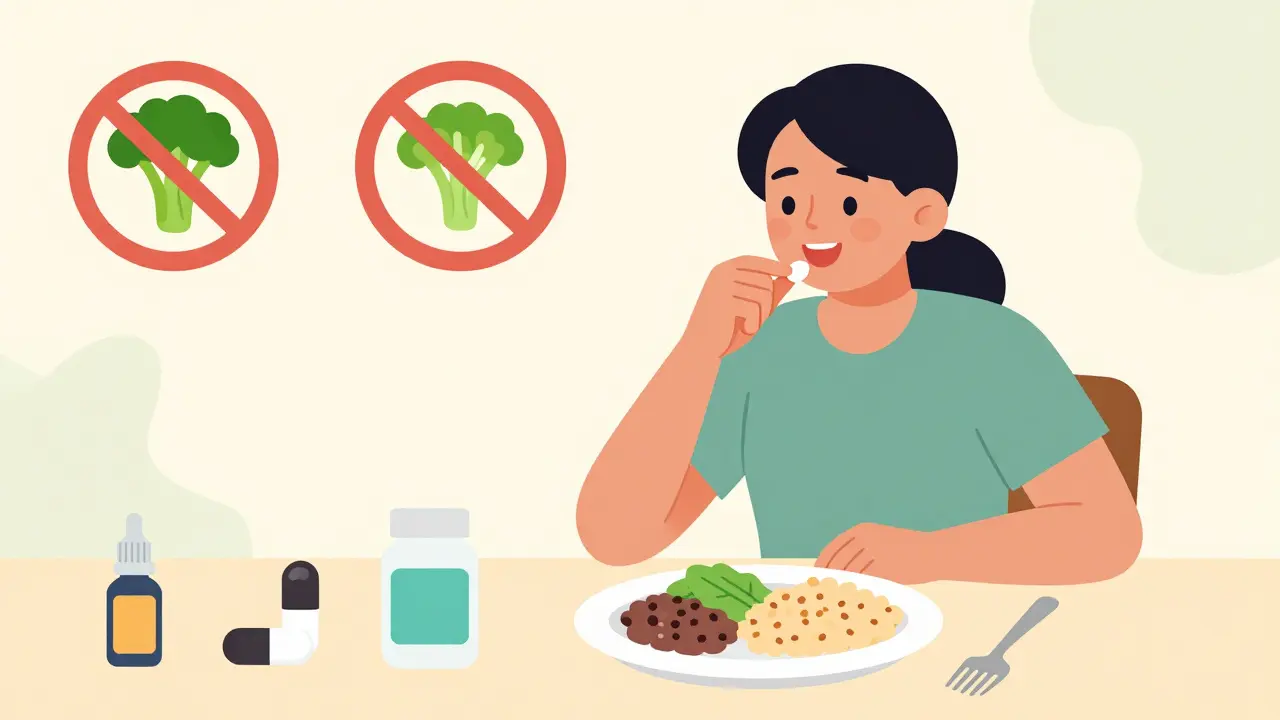
Second, be mindful of high-fiber foods during the initial titration period. While fiber is generally healthy, combining high-fiber foods with AGIs in the first few weeks can exacerbate bloating. Foods like beans, lentils, broccoli, and cauliflower are notorious for causing gas on their own. When you add an AGI to the mix, the effect multiplies. Consider temporarily reducing these high-FODMAP (fermentable oligo-, di-, mono-saccharides, and polyols) foods while your body adjusts, then reintroduce them slowly once you are on a stable dose.
Third, avoid excessive simple sugars. While AGIs are designed to blunt the spike from carbs, consuming large amounts of pure sugar (like soda or candy) can overwhelm the enzyme inhibition capacity, leading to both poor blood sugar control and severe GI distress. Stick to complex carbohydrates with lower glycemic indices, such as whole grains, but monitor how your body reacts to specific types.
| Action | Reasoning | Practical Tip |
|---|---|---|
| Limit High-Fiber Veggies Initially | Reduces fermentable substrate for gut bacteria | Avoid beans, broccoli, and cabbage for the first 4 weeks |
| Consistent Carb Intake | Prevents shock to the digestive system | Aim for 45-60g carbs per meal, same timing daily |
| Avoid Simple Sugars | Prevents overwhelming enzyme inhibition | Choose whole fruit over juice; limit sugary snacks |
| Take with First Bite | Ensures drug mixes with food in the stomach | Do not take it after eating; it must be present during digestion |
Supplements and Medications to Reduce Gas
If dietary changes and slow titration aren’t enough, several over-the-counter options can provide relief. These don’t replace the diabetes medication but help manage the uncomfortable byproducts of its action.
Simethicone: This is an anti-foaming agent that breaks up gas bubbles in the gut, making them easier to pass. A 2019 study in *Diabetes Care* found that taking 120mg of simethicone three times daily reduced bloating severity by 40% in patients using AGIs. It does not prevent gas formation but reduces the discomfort associated with trapped gas.
Activated Charcoal: Some studies suggest that activated charcoal capsules can adsorb gases produced by bacterial fermentation. Taking them 30 minutes before meals has been shown to reduce flatus volume by up to 32%. Note that charcoal can interfere with the absorption of other medications, so take it at least two hours apart from your diabetes drugs and any other prescriptions.
Probiotics: Modulating your gut microbiome can change how much gas is produced. Specific strains like Lactobacillus GG (10 billion CFU daily) have been shown to reduce flatulence frequency by 37% in a 12-week trial. More recently, research presented at the 2023 ADA Scientific Sessions demonstrated that combining miglitol with Bifidobacterium longum BB536 reduced flatulence frequency by 42% compared to miglitol alone. Look for probiotics containing these specific strains if you struggle with persistent gas.
When to Talk to Your Doctor
While gas and bloating are expected, some symptoms warrant medical attention. If you experience severe abdominal pain, vomiting, or signs of liver issues (such as yellowing of the skin or eyes), contact your healthcare provider immediately. Although rare, the FDA issued a warning in 2020 about hepatotoxicity (liver damage) associated with acarbose, with an incidence rate of approximately 0.02% based on post-marketing surveillance.
Additionally, if you cannot tolerate even the lowest dose after eight weeks despite trying all mitigation strategies, ask your doctor about alternatives. Newer formulations, such as the 2023 FDA-approved acarbose-metformin combination tablet (Acbeta-M), use controlled-release technology to reduce GI side effects, showing a 28% lower flatus incidence in trials. Or, your doctor might switch you to a different class of medication, such as SGLT2 inhibitors or GLP-1 agonists, which do not cause gastrointestinal fermentation.
Remember, the goal of diabetes management is sustainable control. If a medication makes your life miserable, it isn’t working, regardless of the numbers on your glucometer. Work closely with your endocrinologist or primary care provider to find a regimen that keeps your blood sugar in check and your quality of life high.
How long does it take for gas side effects from acarbose to go away?
For most patients, the peak of gastrointestinal symptoms occurs during days 3 to 7 after starting or increasing the dose. Significant improvement is typically observed by week 2 to 4 as your colonic bacteria adapt to the increased carbohydrate load. By week 8, most users report minimal to no disruptive gas if the dose was titrated slowly.
Is miglitol better tolerated than acarbose?
Generally, yes. Clinical studies show that miglitol tends to cause less severe flatulence and abdominal bloating compared to acarbose. This is partly because miglitol is absorbed into the bloodstream and excreted by the kidneys, whereas acarbose remains almost entirely in the gut, leading to more fermentation in the colon. However, individual responses vary, and some patients may find one works better than the other.
Can I take simethicone with my diabetes medication?
Yes, simethicone is generally safe to take with acarbose and miglitol. It works locally in the gut to break up gas bubbles and is not absorbed into the bloodstream, so it does not interact with the mechanism of action of your diabetes drugs. Taking 120mg three times daily can help reduce bloating severity.
What should I do if I miss a dose of acarbose?
If you miss a dose, take it as soon as you remember with your next meal. However, if it is already time for your next scheduled dose, skip the missed one. Do not double the dose to make up for a missed one, as this will likely worsen gastrointestinal side effects without providing additional blood sugar benefit.
Are there any foods I should strictly avoid while taking AGIs?
You should avoid foods extremely high in simple sugars, such as sodas, candies, and syrups, as they can overwhelm the medication’s ability to block sugar absorption, leading to both high blood sugar and severe gas. Additionally, during the first month, limit high-FODMAP foods like beans, lentils, onions, and cruciferous vegetables (broccoli, cauliflower) to minimize fermentation.
Does acarbose cause weight loss?
Acarbose is considered weight-neutral, meaning it does not typically cause weight gain like some other diabetes medications. However, miglitol has been shown in some studies to promote modest weight loss (around 1.2kg at 12 weeks) due to the slight caloric deficit created when carbohydrates are not fully absorbed. This makes miglitol a particularly attractive option for obese type 2 diabetes patients.