
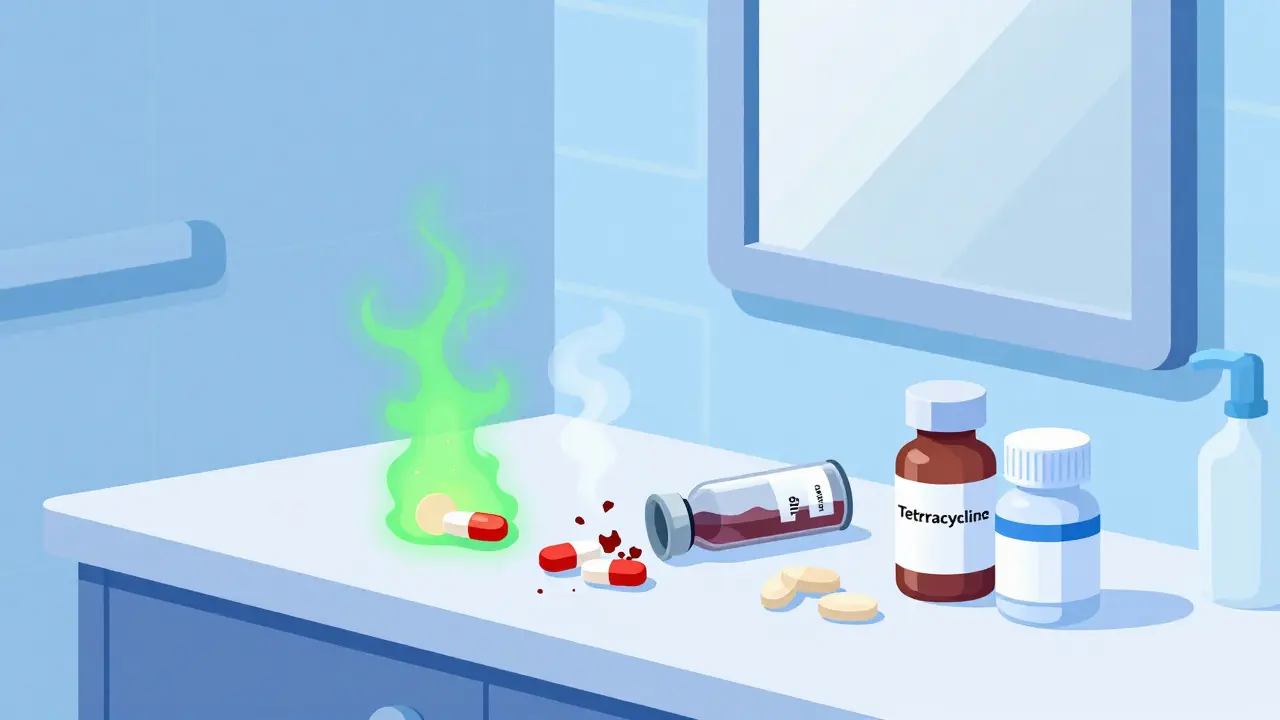
Most people assume that if a pill is past its expiration date, it’s just weak-maybe it won’t work as well, but it won’t hurt you. That’s the myth. The truth is more complicated. For the vast majority of medications, expiration doesn’t mean danger. But for a small, critical group, it means toxicity-and even death.
What Does ‘Expired’ Actually Mean?
The date on your medicine bottle isn’t a random guess. It’s the last day the manufacturer guarantees the drug will work as intended and remain safe under proper storage. This requirement has been law in the U.S. since 1979, based on stability testing required by the FDA. But here’s the twist: that date is often way too conservative. The FDA’s own Shelf Life Extension Program (SLEP), run with the Department of Defense, tested over 100 medications and found that 90% of them were still fully potent 5 to 15 years after expiration-when stored correctly. That means your leftover antibiotics from last year? Chances are, they’re still good. But that doesn’t mean all expired drugs are safe.The Dangerous Exceptions: When Expired Drugs Turn Toxic
Not all medications degrade the same way. Some break down into harmful chemicals. And those are the ones you never risk using. Tetracycline is the most infamous example. In 1963, three patients developed severe kidney damage after taking expired tetracycline. The drug broke down into epitetracycline and anhydro-4-epitetracycline-nephrotoxic compounds that attack the kidneys. Even today, experts warn against using any expired tetracycline or its derivatives, like doxycycline, if they’re discolored or smell musty. Nitroglycerin, used for chest pain, is another critical case. It breaks down quickly into unstable nitrogen oxides. Studies from the Cleveland Clinic show it loses half its effectiveness within three months of expiration. If you’re having a heart attack and your nitroglycerin tablet doesn’t work because it’s old, you could die waiting for help. That’s not a theory-it’s a documented cause of preventable death. Insulin doesn’t turn toxic, but it loses potency fast. After expiration, it can form clumps and fibrils that your body can’t absorb properly. Research shows a 20-30% drop in effectiveness per year. For someone with diabetes, that means dangerously high blood sugar-or worse, a diabetic emergency because the dose didn’t work. Liquid antibiotics, like amoxicillin-clavulanate, are another danger zone. Once opened, they start to break down through hydrolysis. Not only do they become less effective, but the breakdown products can trigger allergic reactions. A 2023 report from a parent on Drugs.com described their child developing severe diarrhea after taking a liquid antibiotic just three days past its expiration date. Eye drops and EpiPens are also high-risk. Eye drops lose their preservatives after 28 days, letting bacteria grow. Using contaminated drops can cause permanent vision damage. EpiPens? A 2017 study in the Annals of Internal Medicine found they lose 85% of their epinephrine potency after one year past expiration. If you’re having anaphylaxis and your EpiPen fails, there’s no second chance.What’s Safe? What’s Not?
Here’s a quick breakdown of what you can and can’t risk:- High risk-never use expired: Tetracycline, nitroglycerin, insulin, liquid antibiotics, eye drops, EpiPens
- Low risk-likely still effective: Tablets and capsules of blood pressure meds, antidepressants, antihistamines, pain relievers (like ibuprofen or acetaminophen)
- Watch out: Aspirin. It breaks down into acetic acid (vinegar) and salicylic acid. After two years past expiration, it’s more likely to irritate your stomach.
Storage Matters More Than You Think
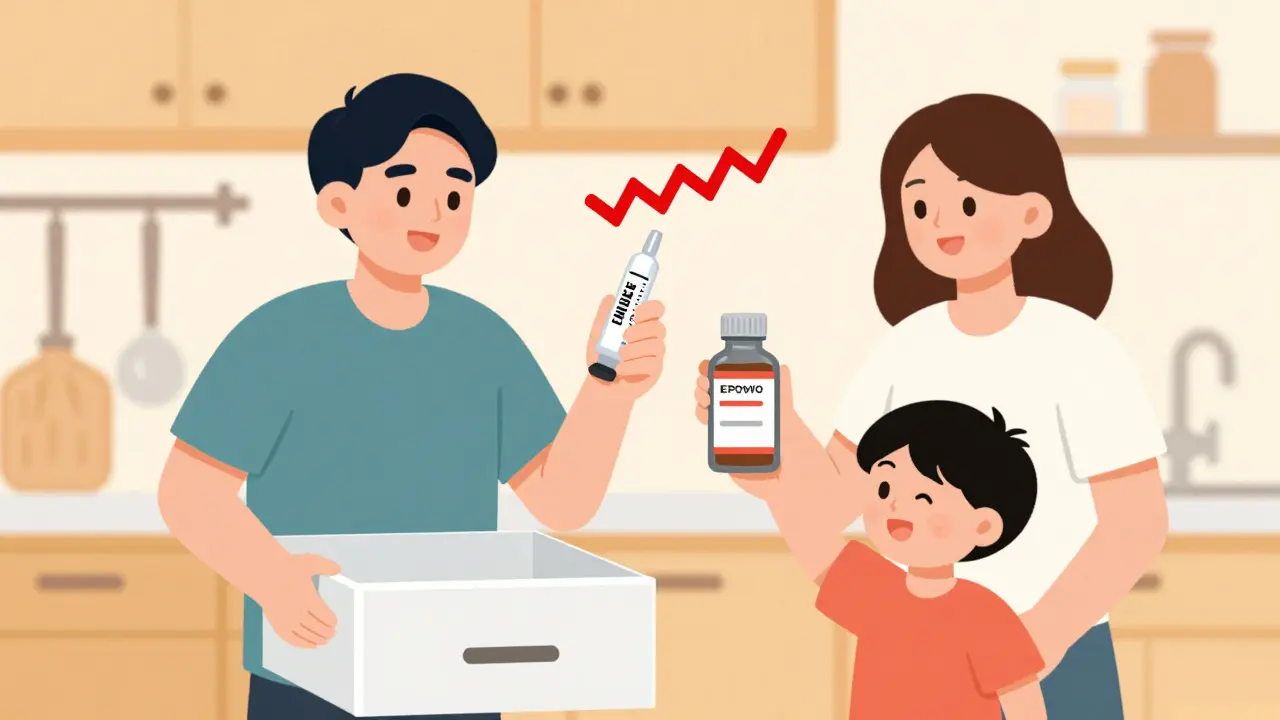
The expiration date assumes your medicine is kept in a cool, dry place-15°C to 25°C (59°F to 77°F) with 35% to 45% humidity. How many homes meet that? Only 22% of U.S. bathrooms do, according to EPA data. That’s why your pills might expire faster than the label says. Keep medications in a bedroom drawer, not the bathroom. Avoid the kitchen near the stove. Don’t leave them in your glove compartment. If you’re storing insulin, refrigerate it. Nitroglycerin should stay in its original glass bottle with amber tinting to block light. Improper storage doesn’t just reduce potency-it can speed up chemical breakdown into toxic byproducts. A pill that’s fine in a cool closet might turn dangerous in a humid bathroom.What Happens When You Take an Expired Drug?
Most people who take expired meds don’t get sick. In fact, a 2023 Consumer Reports survey of over 2,000 adults found that 68% had used expired medication. Only 0.3% reported any toxicity symptoms. But that’s not the real danger. The bigger problem is treatment failure. Someone with high blood pressure takes expired lisinopril and their pressure spikes. A parent gives expired children’s amoxicillin, and the ear infection worsens. A diabetic uses old insulin and ends up in the ER. These aren’t rare. They’re routine-and preventable. Reddit threads are full of stories like: “Used 6-month expired epinephrine for allergic reaction-worked but delayed symptom relief.” Or: “Expired nitroglycerin didn’t help chest pain-called 911.” These aren’t anecdotes. They’re warning signs.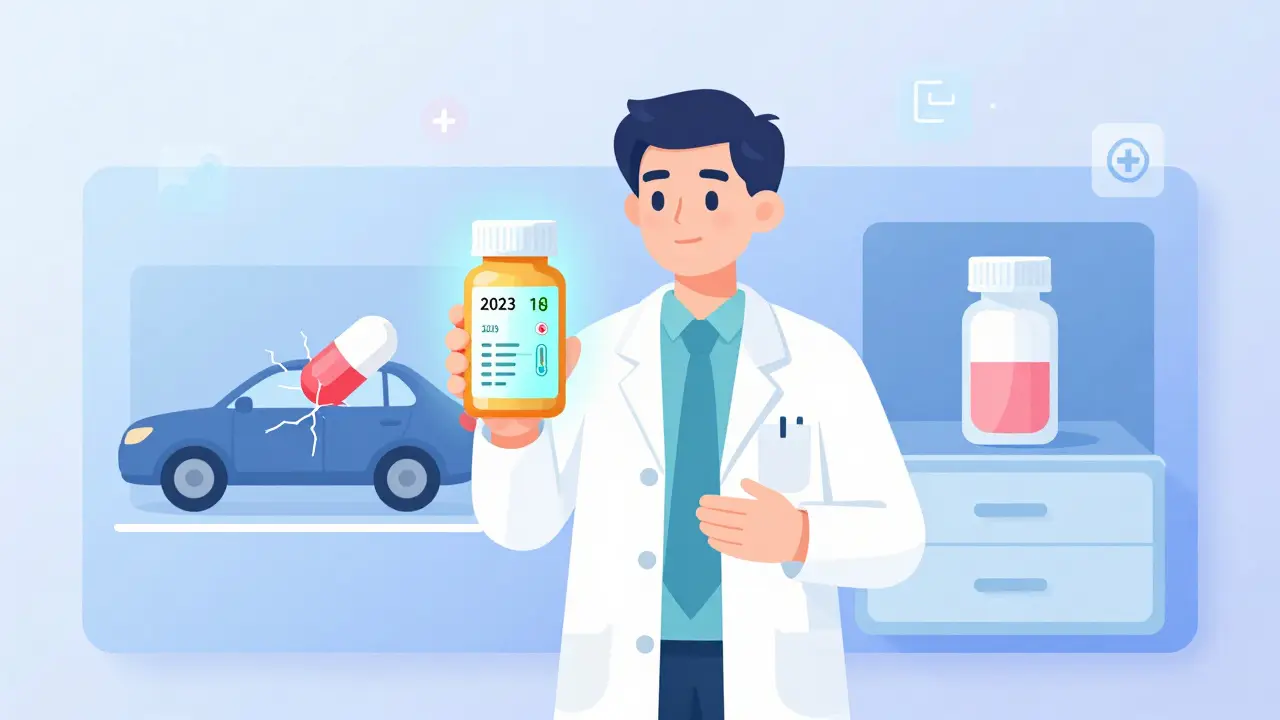

John McGuirk
January 23, 2026 AT 23:21they dont want you to know this but the FDA is in bed with big pharma and they make you throw away perfectly good meds so you buy new ones every year. i seen a guy on youtube who took 10 year old Xanax and it worked better than the new stuff. they dont tell you that. its all about profit. they dont care if you die from an expired epi pen they just want your money. #conspiracy
Michael Camilleri
January 25, 2026 AT 02:02you think expiration dates are about safety but theyre about control. the system wants you dependent. if you could live on 15 year old insulin youd be free. but no they need you hooked on their product cycle. its not medicine its a cage. and the bathroom? thats where they put the poison so youll blame your own stupidity not their greed. we are all just inventory with a pulse
lorraine england
January 26, 2026 AT 23:15my grandma used to keep all her meds in a shoebox under the bed and she lived to 98. she never had a problem. i think people panic too much. if it looks and smells fine and its a regular pill like ibuprofen? i use it. if its liquid or insulin? yeah i toss it. common sense beats fear. also dont store meds in the bathroom lol i know we all do but its just dumb
Kevin Waters
January 27, 2026 AT 21:19great breakdown. i work in pharmacy and we get this all the time. most solid pills are fine years past expiry if stored right. the real killers are insulin, epi pens, and liquid antibiotics. if you have a kid with an ear infection and the amoxicillin is expired? dont risk it. go get a new script. its cheaper than the ER visit. also if your nitroglycerin tastes funny or looks yellow? throw it. no second chances with heart stuff.
Kat Peterson
January 29, 2026 AT 02:54OMG this is so important!!! 😭 i had a friend who almost died because her expired epi pen didn't work and now i carry TWO just in case 🥺 i also keep my insulin in the fridge and my boyfriend laughs at me but when you've seen the ER lights flash... you dont take chances. also pls stop storing meds in the bathroom!! it's like putting your face in a steam room and calling it skincare 😅
Himanshu Singh
January 30, 2026 AT 18:30life is balance. yes some meds are dangerous expired. yes most are not. but dont live in fear. store your pills like you store your coffee - cool dry away from light. if you feel unsure? ask your pharmacist. they are your friend. and if you have diabetes? get a glucose meter. know your numbers. knowledge is power. 🙏
Izzy Hadala
January 30, 2026 AT 23:18the FDA's Shelf Life Extension Program data is publicly accessible and demonstrates that 90% of pharmaceuticals retain full potency beyond labeled expiration dates under controlled storage conditions. however, the absence of regulatory reclassification does not imply universal safety. degradation kinetics vary significantly by molecular structure, excipient composition, and environmental exposure. therefore, generalizations are methodologically unsound. individual pharmacokinetic analysis is required for clinical decision-making.
Elizabeth Cannon
January 31, 2026 AT 14:59ok but like... why do we even have expiration dates if theyre just guesses? its so messed up. i used expired tylenol last year and i was fine. but then i saw a post about someone’s kid getting sick from old amoxicillin and i nearly cried. we need to stop being scared and start being smart. store it right. know what’s risky. ask your doc. its not that hard. also... bathroom? no. just no. 🙃
Gina Beard
January 31, 2026 AT 23:14the real tragedy isn’t the expired pill. it’s that we’ve been trained to fear medicine instead of understand it. we treat pills like magic beans instead of chemicals with half-lives. if we taught basic pharmacology in high school, we wouldn’t need fear-based marketing. or corporate liability shields. or bathroom medicine drawers.