
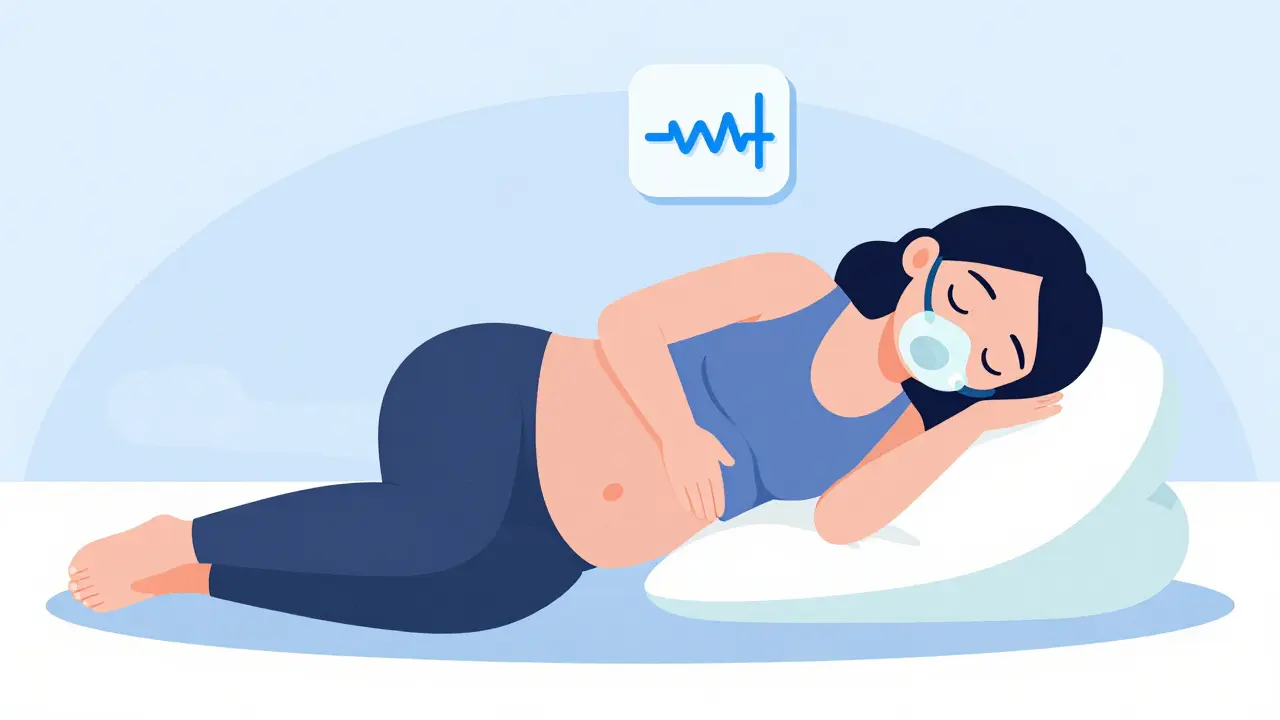
Why Sleep Gets So Hard During Pregnancy
By the third trimester, many pregnant women feel like they’re sleeping on a beach ball with a toddler kicking inside. It’s not just discomfort-it’s a perfect storm of physical changes that wreck sleep. Your body is holding extra fluid, your belly is pushing up on your diaphragm, and hormones like progesterone are relaxing the muscles in your throat. That’s why sleep apnea affects over 1 in 10 pregnant women by the end of pregnancy, and nearly 1 in 4 if you’re overweight. Snoring isn’t just annoying-it’s a red flag.
And it’s not just apnea. Heartburn hits harder because your growing uterus presses on your stomach, pushing acid up. You can’t lie flat without feeling like you’re swallowing fire. Plus, finding a position that doesn’t make your hips scream or your back ache feels impossible. The good news? These problems aren’t normal-they’re treatable. And fixing them doesn’t just help you sleep better. It protects your baby.
What Is Sleep Apnea in Pregnancy-and Why It Matters
Sleep apnea means your airway keeps closing briefly while you sleep, cutting off oxygen. Your body jolts awake just enough to breathe again, but you don’t remember it. You wake up tired, even after 8 hours. This isn’t just fatigue. Research shows untreated sleep apnea during pregnancy raises your risk of preeclampsia by more than double, gestational diabetes by 70%, and needing a C-section by over 20%. These aren’t rare complications. They’re serious, preventable risks.
The American College of Obstetricians and Gynecologists now recommends screening all pregnant women for sleep apnea by the 28th week using a simple questionnaire called STOP-Bang. If you snore loudly, feel exhausted during the day, have high blood pressure, or gained more weight than recommended, you should be tested. Don’t wait until you’re miserable. The earlier you catch it, the better the outcome.
CPAP Therapy: The Gold Standard (and How to Make It Work)
Continuous Positive Airway Pressure, or CPAP, is the most effective treatment for moderate to severe sleep apnea during pregnancy. It’s a small machine that pushes gentle air through a mask to keep your airway open. It’s not new-but pregnancy changes how you use it.
Most women start with a nasal pillow mask instead of a full-face mask. Why? Your face swells during pregnancy, especially around the nose. A full mask can dig in and cause sores. Nasal pillows sit just under your nostrils and are less likely to leak. Many machines now have pregnancy-specific settings that adjust pressure automatically as your body changes. ResMed’s AirSense 11 Pregnancy Mode, approved in 2022, does exactly this.
Humidification is key. Dry air makes nasal congestion worse-something most pregnant women deal with. Set your humidifier to 37°C. That’s body temperature. It keeps your nasal passages moist. If you’re still getting dryness, try saline sprays before bed. Avoid decongestants-they’re not safe in pregnancy.
Adherence is the biggest hurdle. Only about 6 in 10 women stick with CPAP beyond four weeks. But here’s what works: get support. A 30-minute session with a sleep technician who shows you how to fit the mask, adjust the straps, and troubleshoot leaks can boost usage from 54% to 82%. Use a pregnancy pillow to help you stay on your side. The Boppy Noggin CPAP pillow, praised in over 1,800 Amazon reviews, holds your head in place so the mask doesn’t pull or leak.
Positioning: The Simple Fix That Works
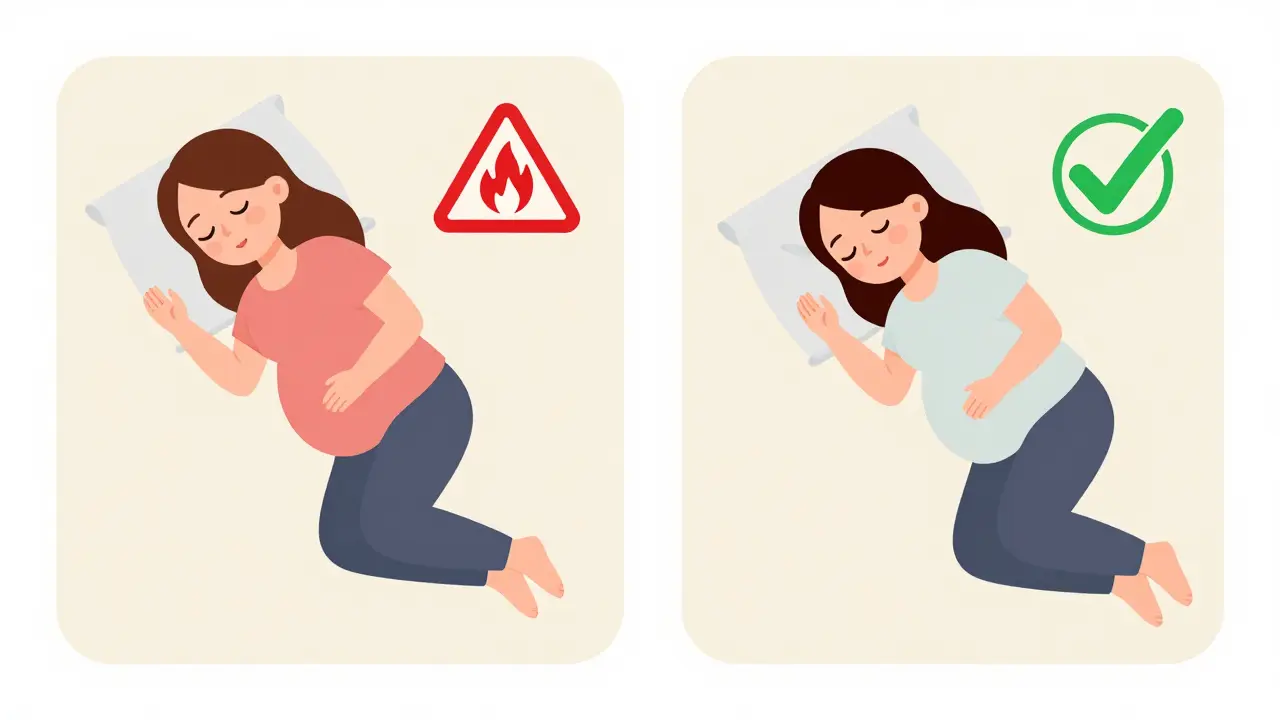
If your apnea is mild (AHI under 15), changing how you sleep can cut your breathing pauses by over 20%. The best position? Left side. Why? Lying on your back compresses the big vein that returns blood to your heart. That drops oxygen levels. Lying on your right side isn’t much better. Left side keeps blood flowing to your baby and reduces pressure on your diaphragm.
Use a full-body pregnancy pillow. Don’t just prop up your belly-wrap your legs and back around it. This keeps you from rolling onto your back. Some women swear by the Leachco Snoogle or the Total Body Pillow Pro. They’re pricey ($80-$90), but if they help you sleep, they pay for themselves in energy and mood.
Elevate your upper body 6 to 8 inches. Not with a bunch of pillows-that just bends your neck and makes apnea worse. Use a firm wedge pillow under your mattress or a bed riser. This helps both apnea and reflux. A 2022 study from Brown Health showed this single change improved oxygen levels by over 3% compared to lying flat.
Managing Reflux Without Medication
Heartburn during pregnancy isn’t just spicy food. It’s hormones, pressure, and gravity. Lying down makes it worse. Here’s what actually helps:
- Don’t eat within 3 hours of bedtime. Even a light snack can trigger reflux.
- Elevate your head with a wedge-not pillows. Pillows make your stomach higher than your esophagus, which pushes acid up.
- Choose low-fat, non-acidic foods. Avoid chocolate, citrus, coffee, and fried stuff after noon.
- Use Gaviscon Advance. It’s an alginate-based antacid that forms a foam barrier over stomach acid. It doesn’t get absorbed into your bloodstream, so it’s safe. A 500ml bottle costs about $15 and lasts weeks.
Don’t take regular antacids like Tums unless your doctor says so. Some contain aluminum or high sodium, which aren’t ideal in pregnancy. Stick to the ones labeled pregnancy-safe.
What Doesn’t Work (and Why)
Some solutions sound smart but aren’t safe or proven in pregnancy.
Mandibular advancement devices (mouthpieces that push your jaw forward) work well for non-pregnant people. But pregnancy changes your jaw and TMJ. There’s no safety data. The 2023 joint guideline from the Society of Anesthesia and Sleep Medicine says avoid them.
Weight loss sounds obvious-but you shouldn’t try to lose weight while pregnant. Instead, follow the Institute of Medicine’s weight gain guidelines: 11.5-16 kg if you started at a normal weight, 5-9 kg if you were obese. Gaining too much increases apnea risk. But losing weight isn’t the goal-staying within range is.
Alcohol and sleeping pills are absolute no-gos. They relax your throat muscles even more and can harm your baby.
When to Call Your Doctor
You don’t need to suffer. If you’re experiencing any of these, talk to your OB or a sleep specialist:
- Snoring that wakes you or your partner
- Gasping or choking during sleep
- Daytime exhaustion that doesn’t improve with naps
- Morning headaches or dry mouth
- High blood pressure or swelling in hands/face
- Heartburn that won’t quit, even with lifestyle changes
Screening is now part of standard prenatal care in many clinics. Ask for the STOP-Bang questionnaire at your 28-week visit. If you’re high-risk (obese, hypertensive, diabetic), ask for it earlier.

What Happens After Baby Is Born?
Many women think sleep apnea goes away after delivery. It might. But not always. A 2023 study found that 58% of women who developed sleep apnea during pregnancy still had high blood pressure 10 years later-even if their apnea resolved.
Some experts, like those at Brown Health, recommend a follow-up sleep study at 12 weeks postpartum. Others say if symptoms disappear, you can wait. But if you still snore, feel tired, or have high blood pressure after delivery, get tested. Pregnancy can uncover a hidden problem that sticks around.
Real Stories, Real Results
One woman on Reddit shared: ‘I started CPAP at 26 weeks. My blood pressure dropped in two weeks. I stopped waking up gasping. I actually slept.’
Another said: ‘I thought my exhaustion was just pregnancy. Turns out, I had moderate apnea. My OB didn’t ask me about snoring until I brought it up. Don’t wait.’
And from a verified Amazon review of the Boppy Noggin pillow: ‘Finally a pillow that keeps me on my side without sliding-and my AHI dropped from 18 to 6 in 2 weeks.’
These aren’t outliers. They’re the norm when you get the right support.
What’s Coming Next
The future is getting brighter. Apple Watch Series 9 now has a sleep apnea detection algorithm that’s 89% accurate for moderate to severe cases. It won’t replace a sleep study-but it can alert you to a problem before you even notice symptoms.
Research is underway to see if starting CPAP before 20 weeks can reduce fetal growth problems. The NIH is funding a major trial called PREGSLEEP to find out.
By 2027, sleep apnea screening could be standard in 65% of prenatal clinics. That’s because treating it saves money-$1,850 per pregnancy-by preventing preeclampsia, preterm birth, and C-sections.
You don’t have to just endure bad sleep. You can fix it. And doing so isn’t just about feeling better tonight. It’s about protecting your health-and your baby’s-for years to come.

Alex Smith
January 11, 2026 AT 14:55Priya Patel
January 11, 2026 AT 18:54Vincent Clarizio
January 13, 2026 AT 00:07Jason Shriner
January 14, 2026 AT 19:47Michael Patterson
January 15, 2026 AT 08:59Matthew Miller
January 16, 2026 AT 02:49Adewumi Gbotemi
January 16, 2026 AT 15:53Madhav Malhotra
January 17, 2026 AT 14:48Roshan Joy
January 19, 2026 AT 00:13Jennifer Littler
January 20, 2026 AT 07:34Sean Feng
January 22, 2026 AT 05:56Christian Basel
January 24, 2026 AT 03:18