
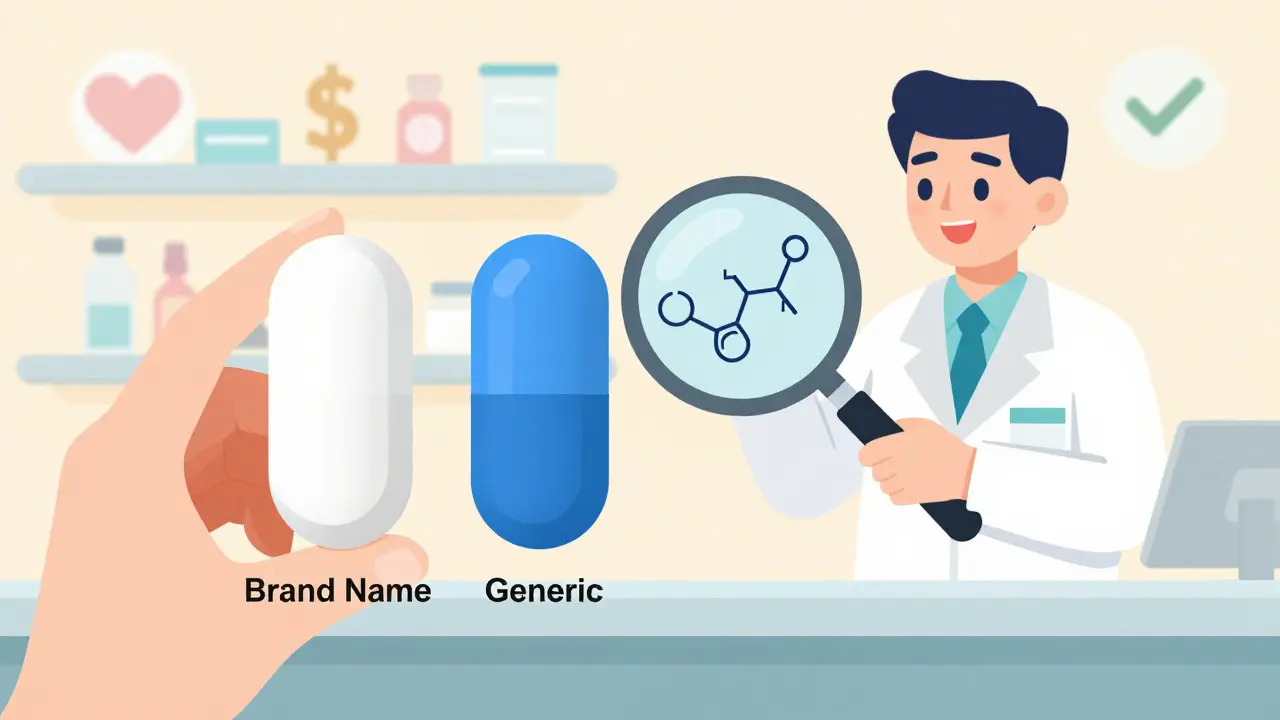
When you pick up a prescription and see a different pill than what you’re used to, it’s normal to pause. Generic medications look different. They might be a different color, shape, or size. Maybe the name on the bottle doesn’t match what your doctor told you. You’re not alone if you wonder: Is this the same? The answer is yes-most of the time. But understanding why, and what to ask, makes all the difference.
What exactly is a generic drug?
A generic drug is a copy of a brand-name medication that contains the same active ingredient, in the same strength, and works the same way in your body. The FDA requires that every generic drug meet strict standards: it must deliver the same amount of active ingredient into your bloodstream at the same rate as the brand-name version. This is called bioequivalence. The FDA’s testing allows a small range-between 80% and 125%-of the brand’s performance, but this isn’t a loophole. It’s a scientifically proven window where the effect is identical for nearly every patient.Why do generics look different?
The active ingredient is the same. But the rest? That’s where differences show up. Generics use different fillers, dyes, and binders-called inactive ingredients. These don’t affect how the drug works, but they can change the pill’s color, shape, or taste. That’s why your blood pressure pill might go from a white oval to a blue capsule. It’s still the same medicine. But if you’ve been taking the same brand for years, a sudden change can feel unsettling. One survey found that 31% of patients felt confused when their pill looked different. Some even stopped taking it because they thought it wasn’t the right one.What should your pharmacist tell you?
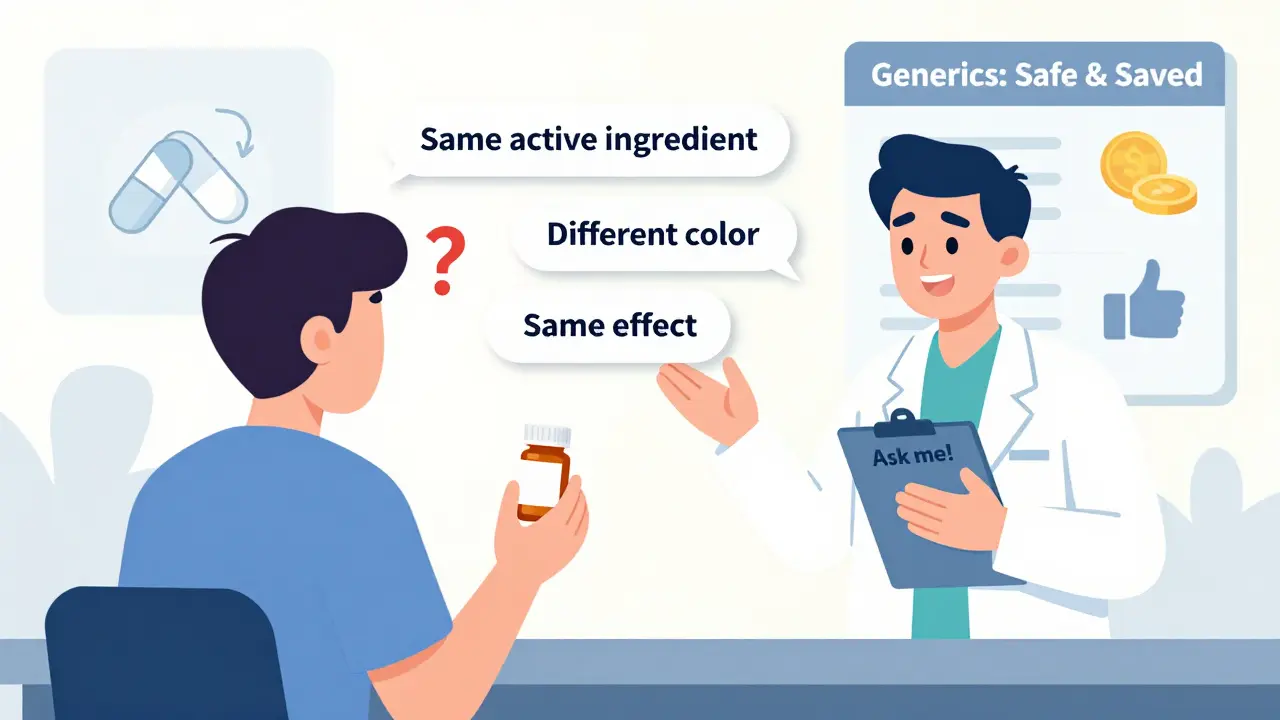
By law, pharmacists must offer counseling when you get a generic drug. It’s not optional. They’re required to explain:- That this is a generic version of your usual medication
- That it works the same way as the brand-name drug
- That the active ingredient is identical
- That inactive ingredients may differ (important if you have allergies)
- How to take it-dose, timing, food interactions
- Common side effects to watch for
What about safety? Are generics really as good?
Yes. Over 40 years of research and millions of prescriptions confirm it. The FDA says generic drugs are just as safe and effective as brand-name drugs. A 2018 study tracking over 12 million patients found that people who switched to generics were 8.2% more likely to keep taking their medication regularly. Why? Because they cost less. Lower cost means fewer skipped doses. Fewer skipped doses mean fewer hospital visits and lower overall healthcare costs. Some people worry about drugs with narrow therapeutic indexes-medications where even a tiny change in dose can cause big problems. These include warfarin (a blood thinner), levothyroxine (for thyroid), and phenytoin (for seizures). Even here, studies show generics are safe when properly managed. But some states require special consent before switching. If you take one of these, ask your pharmacist: Is this substitution approved for this drug?What if you had a bad reaction?
It’s rare, but it happens. Most reactions aren’t from the active ingredient-they’re from an inactive one you’re allergic to. For example, some generics use lactose as a filler. If you’re lactose intolerant or allergic, that can cause issues. Your brand-name drug might have used corn starch instead. That’s why it’s critical to tell your pharmacist about any allergies, even if they seem unrelated to your medication. If you notice new symptoms after switching-rash, nausea, dizziness-call your pharmacist or doctor. Don’t assume it’s “just the new pill.”How much money can you save?
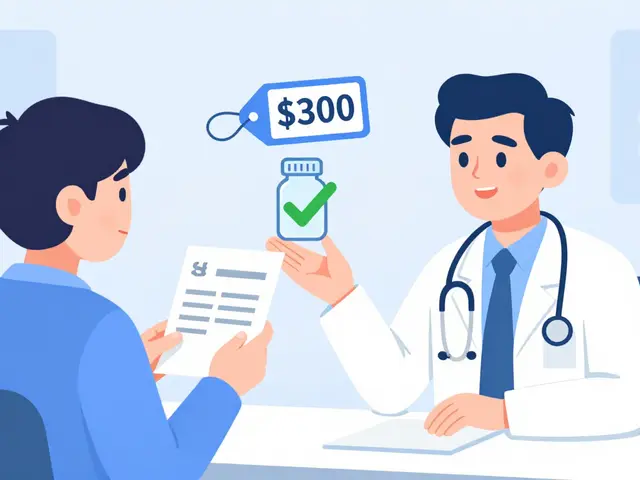
A lot. On average, generics cost 80-85% less than brand-name drugs. For chronic conditions like high blood pressure, diabetes, or cholesterol, that’s hundreds of dollars a month. One patient on PatientsLikeMe saved $300 a month by switching to a generic. In 2021, 90.8% of all prescriptions filled in the U.S. were generics. That’s over 8 billion prescriptions. The total savings since 2009? Over $1.9 trillion.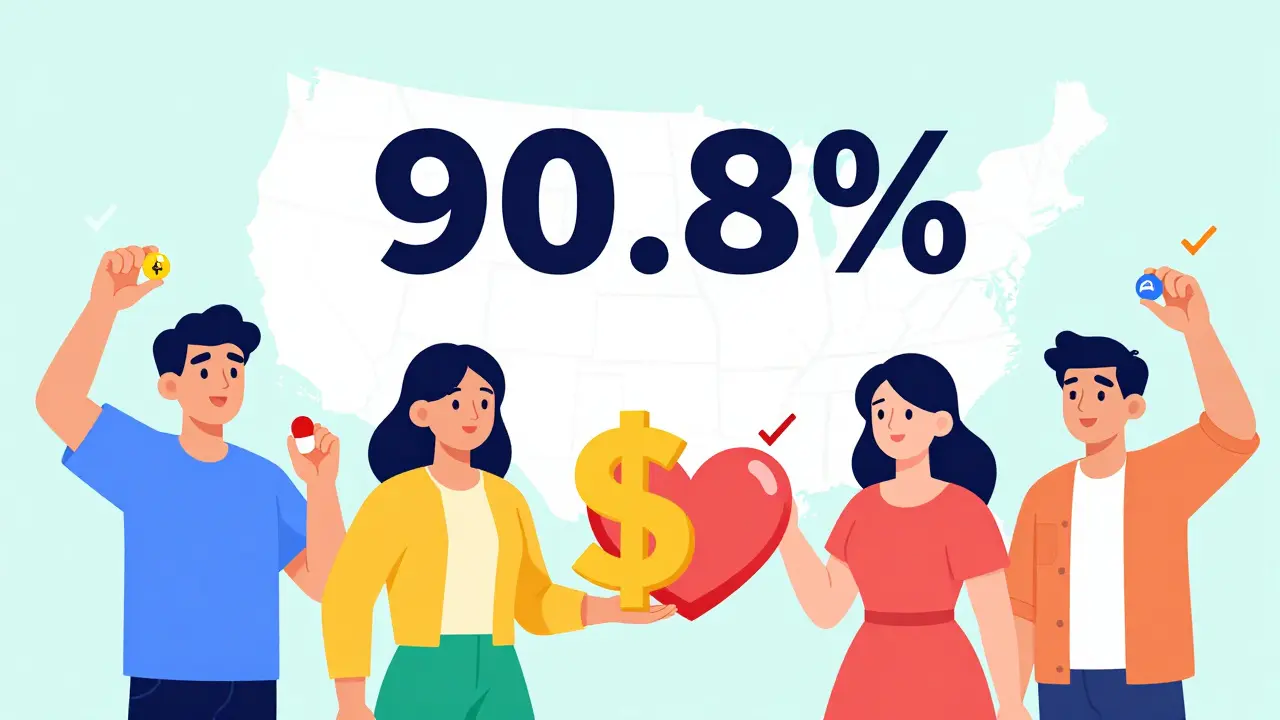
Barbara Mahone
January 21, 2026 AT 10:01Just picked up my generic lisinopril yesterday. Looked like a tiny blue football compared to the white oval I’m used to. Stared at it for five minutes before swallowing. Turned out fine-no side effects, same blood pressure numbers. Still weird how something so small can trigger anxiety.
Pharmacist didn’t say a word. I asked. She shrugged and handed me the receipt. Guess I’m lucky I remembered to ask.
Kelly McRainey Moore
January 22, 2026 AT 17:00My grandma used to say, 'If it doesn't look like the one from last month, it's probably poison.' 😅 She’s 82 and takes six meds. Now she asks the pharmacist every time-'Is this the same one?'-and they love her for it. Turns out she’s the reason they started doing counseling properly at her pharmacy. Small victories, right?
Ashok Sakra
January 23, 2026 AT 04:17Y’all are acting like generics are some kind of miracle. But I heard from my cousin’s neighbor’s dog walker that the FDA lets generics be made in China and India and sometimes they mix in rat poison just to save money. I mean, why else would they be so cheap? My uncle got sick after switching. He didn’t tell anyone. Just stopped taking it. Now he’s in a wheelchair. Coincidence? I think not.
Also my phone vibrates when I take my pills now. I think they’re tracking me.
Samuel Mendoza
January 23, 2026 AT 19:13Generics aren’t 'just as good.' They’re identical. Stop saying 'just as good.' That implies inferiority. They’re bioequivalent. End of story.
Also, if you're allergic to lactose, you should’ve told your doctor. Not the pharmacist. That’s your job.
Glenda Marínez Granados
January 25, 2026 AT 16:35So we’re now treating pharmacy counseling like a TED Talk? 🙄
Next they’ll hand out pamphlets titled 'Why Your Pill Isn’t Trying to Kill You (A Beginner’s Guide).'
Meanwhile, I’m over here taking my generic metformin like a champ while my insurance laughs all the way to the bank. Thanks, capitalism. You’re the real MVP.
Yuri Hyuga
January 26, 2026 AT 12:30This is one of the most important public health messages I’ve read in months! 🙌
Knowledge isn’t just power-it’s survival. Every time someone asks, 'Is this the same?' they’re not being difficult. They’re being responsible. Pharmacists: don’t treat counseling like a box to check. Treat it like a lifeline.
And patients-you’re not bothering anyone. You’re saving lives. Keep asking. Keep speaking up. Your health is worth it. 💪❤️
Steve Hesketh
January 26, 2026 AT 17:25Brother, I come from a village where people believe medicine comes from the sky. When my cousin got his first generic pill, he cried. Said the color changed, so the soul of the medicine left.
We sat down. I showed him the FDA page. He still didn’t believe. So I took his pill, swallowed it with him, and said, 'If this kills us, we die together.'
He’s fine now. Takes it every day. We even made a little chart with stickers. He says it’s his 'medicine dance.'
Truth is, sometimes you don’t need science-you need someone to hold your hand while you swallow the unknown.
shubham rathee
January 27, 2026 AT 18:35why do people think generics are safe when the same companies make both brand and generic
they just change the label
and the fda is owned by big pharma anyway
you think they really test every batch
or do they just look at the paperwork and say nice job
also why are there so many different colors
they want us confused
its a mind game
just stick to brand
even if it costs your rent
MAHENDRA MEGHWAL
January 28, 2026 AT 23:09It is with profound respect for the regulatory frameworks established by the U.S. Food and Drug Administration that I acknowledge the rigorous bioequivalence protocols governing generic pharmaceuticals.
While the structural and aesthetic variance in pill morphology may induce psychological dissonance among long-term users, the pharmacokinetic equivalence remains empirically validated across decades of clinical observation.
I would respectfully urge all stakeholders to prioritize patient education as a non-negotiable component of pharmaceutical dispensing, not as an administrative formality, but as an ethical imperative.
Thank you for this thoughtful exposition.
Sangeeta Isaac
January 29, 2026 AT 05:37generic = less money, same magic ✨
my pill went from white oval to a purple star and i was like 'did i get a candy?'
pharmacist just handed it over like 'here’s your dragon ball z pill, enjoy'
so now i take it with a side of sarcasm and a selfie. #genericglowup
also i told my dog it’s the same and he still licked the bottle. so… progress?