
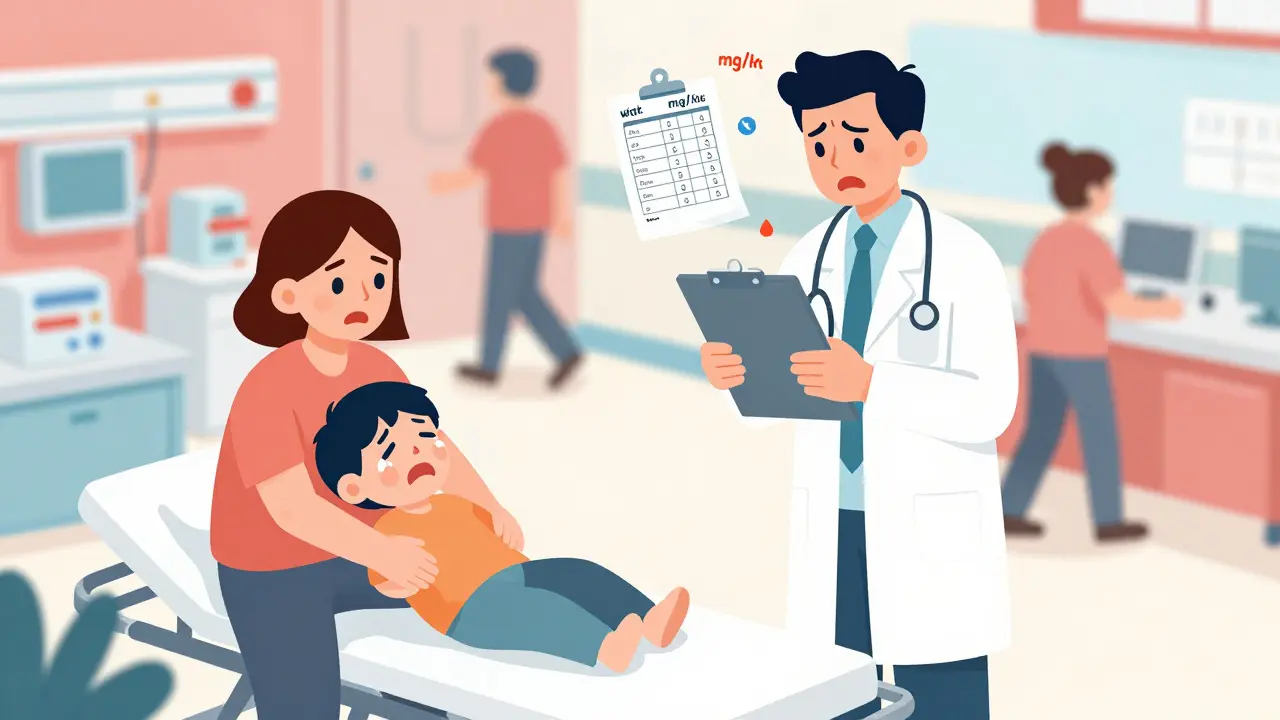
Imagine the scene: a chaotic pediatric emergency department. A child is crying, parents are anxious, and time is running out. In this high-pressure environment, a simple calculation mistake can turn a routine treatment into a life-threatening crisis. You might assume that modern medicine has solved these issues, but the data tells a different story. Pediatric medication errors occur at a rate of 31% in children compared to just 13% in adults, according to the US Pharmacopeia (USP) Medication Errors Reporting Program. This isn't just a statistic; it represents thousands of children facing preventable harm every year.
The gap between adult and pediatric safety is stark. While adult dosing often relies on fixed standard doses, pediatric care requires complex, weight-based calculations for nearly every intervention. This fundamental difference creates a vulnerability that persists despite decades of safety initiatives. Since the Institute of Medicine’s landmark 1999 report 'To Err is Human,' we have known about the scale of the problem, yet single-center studies in pediatric emergency departments (EDs) still report error rates ranging from 10% to 31%. The core issue remains: our systems are not yet robust enough to handle the unique physiological and logistical challenges of treating children in emergencies.
Why Children Are More Vulnerable to Dosing Mistakes
To understand why these errors happen, you need to look at the mechanics of pediatric pharmacology. Children are not simply small adults. Their bodies process drugs differently, requiring precise adjustments based on body weight. This necessity introduces multiple points of failure that do not exist in adult care.
The primary culprit is the complexity of weight-based dosing calculations. Unlike an adult who receives a standard 500mg tablet, a child’s dose must be calculated in milligrams per kilogram (mg/kg). This requires accurate weight measurement, correct mathematical conversion, and careful selection of drug concentration. Studies show that calculation errors account for 20-35% of all pediatric medication mistakes. Even a minor decimal point error-confusing 0.5 mg with 5 mg-can result in a tenfold overdose.
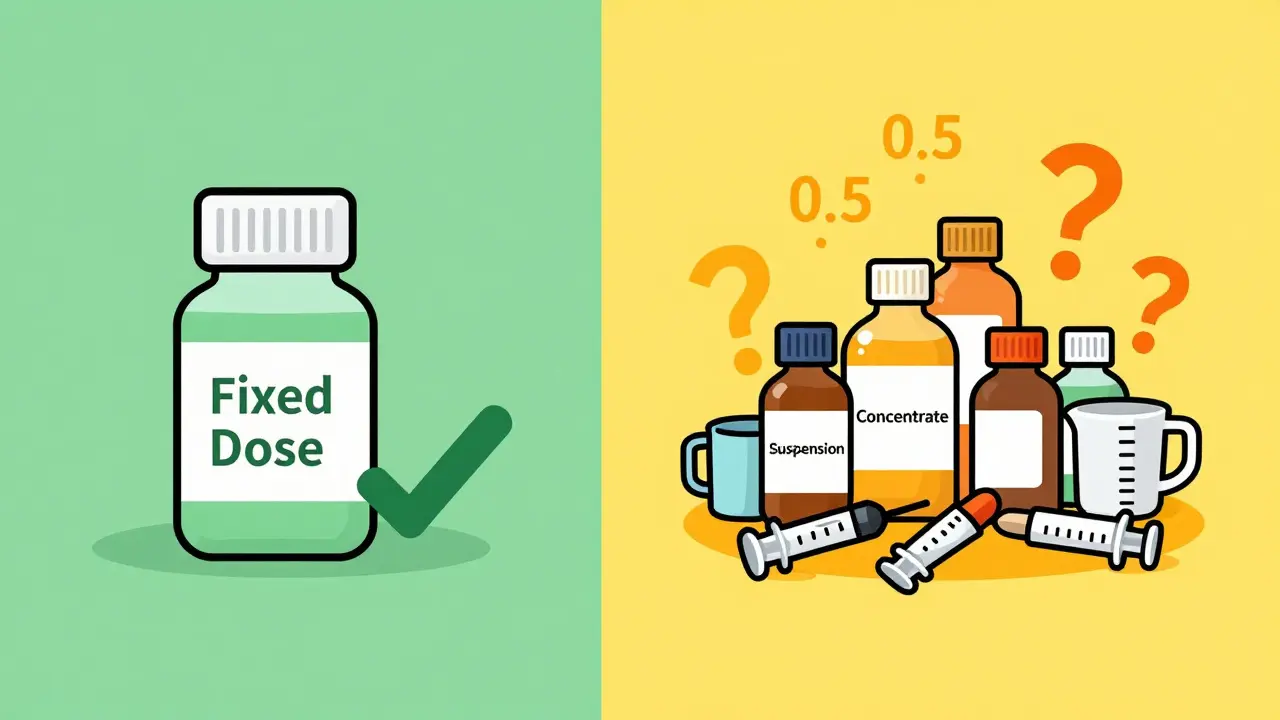
Liquid formulations add another layer of risk. Approximately 60-80% of outpatient dosing errors involve liquid medications. These drugs come in various concentrations, such as infant concentrate versus regular suspension. A parent or clinician might measure the correct volume (e.g., 5 mL) but fail to realize they are using a formulation that is twice as potent as intended. This confusion between volume (milliliters) and mass (milligrams) is a persistent source of danger.
| Factor | Pediatric Setting | Adult Setting |
|---|---|---|
| Error Rate (USP Data) | 31% | 13% |
| Dosing Method | Weight-based (mg/kg) | Fixed standard doses |
| Liquid Formulation Errors | 60-80% of outpatient errors | 10-20% of errors |
| Primary Calculation Risk | Decimal placement, unit conversion | Renal/hepatic adjustment |
Real-World Case Lessons from Emergency Departments
Statistics provide context, but case studies reveal the human cost. Let’s look at specific scenarios that highlight where the system breaks down.
Case 1: The Concentration Confusion
A mother administered 5 mL of liquid acetaminophen to her 10 kg child. She believed she was giving the standard dose. However, she accidentally used "infant concentrate" instead of the regular suspension. Infant concentrate is typically six times more potent than the regular version. This resulted in a massive overdose. This type of error is common because packaging often looks similar, and labels can be confusing under stress. According to incident reports, confusion between milligrams and milliliters is a leading cause of home-administered errors, with one Reddit user sharing how they gave their toddler the wrong concentration until a pediatrician called to clarify.
Case 2: The Duplicate Dose
In a busy ED, a child receives pain medication from the triage nurse. Later, the attending physician orders the same medication without seeing the initial administration record in real-time. This duplicate dosing accounts for 15-25% of cases. The pressure to act quickly often overrides the pause needed to check recent interventions. This highlights a systemic failure in communication rather than individual negligence.
Case 3: The Weight Discrepancy
A child’s weight was recorded incorrectly in the electronic medical record (EMR) due to a transcription error. The subsequent antibiotic dose was calculated based on the wrong weight, leading to underdosing. Inaccurate weight measurement is documented in 10-31% of errors. Without an accurate baseline, even perfect math leads to harmful outcomes.
Systemic Factors Behind the Errors
It is tempting to blame individual clinicians or parents, but research consistently points to systemic failures. Dr. Shaw, lead author of a study in the Emergency Medicine Journal, noted that "emergency settings present unique vulnerabilities due to time pressure, frequent verbal orders, and complex weight-based calculations."
Several key factors contribute to this environment:
- Time Pressure: EDs are fast-paced. Clinicians often rely on mental math or quick estimations, increasing the risk of calculation errors.
- Verbal Orders: In critical situations, doctors may give verbal instructions to nurses. These lack the double-check mechanism of written or electronic orders, making them prone to mishearing or misinterpretation.
- Health Literacy Gaps: Parents play a crucial role in administering medications at home. Studies show that parents with limited health literacy have a 2.3 times higher error rate (68% vs. 29%) compared to those with adequate literacy. Similarly, families with limited English proficiency show 45% dosing error rates versus 28% for English-proficient families.
- Underreporting: Traditional incident reports capture only 10-30% of actual errors. Many near-misses go unreported, hiding the true scope of the problem.
The American Academy of Pediatrics has identified medication safety as a top priority since 2015, recognizing that no single intervention is sufficient. We need a multi-layered approach that addresses both clinical workflows and patient education.
Proven Strategies to Reduce Errors
Good news exists. Hospitals and researchers have developed effective strategies that significantly lower error rates. Here is what works in practice.
Standardized Measuring Devices
One of the simplest yet most effective changes is providing standardized measuring devices. Using household spoons is a major risk factor. Providing oral syringes or dosing cups with clear markings reduces errors by 35-45%. The JAMA Network Open (2024) highlighted that simplified discharge instructions combined with proper tools make a tangible difference.
The MEDS Intervention
A notable example is the MEDS intervention, which reduced dosing errors from 64.7% at baseline to 49.2% during implementation. This program focused on two things: pictogram-based instructions and the "teach-back" method. Teach-back involves asking patients or parents to repeat the instructions in their own words. This takes only about 90 seconds per patient but ensures understanding. The adjusted odds ratio of 0.52 indicates a strong protective effect against errors.
Electronic Medical Record (EMR) Enhancements
Technology plays a vital role. By 2023, 68% of children's hospitals had implemented pediatric-specific dosing calculators in their EMRs. These systems automatically calculate doses based on verified weight, flagging potential overdoses or underdoses before they reach the patient. However, a disparity remains: community EDs serving pediatric patients often lack these specialized systems, creating a safety gap.
Double-Check Systems
For high-alert medications (like insulin, heparin, or concentrated electrolytes), mandatory independent double-checks are essential. Two licensed professionals verify the calculation and preparation separately. Nationwide Children’s Hospital achieved an 85% reduction in harmful medication events by implementing such rigorous verification protocols alongside real-time pharmacy verification of all ED orders.

The Role of Parents and Caregivers
Caregivers are partners in safety, not just recipients of instructions. Empowering them with clear, accessible information is critical. Verbal instructions alone are insufficient. Written discharge summaries should use plain language, avoid medical jargon, and include visual aids.
If you are a parent, here are three steps to protect your child:
- Ask for Clarification: If the dosage instruction is unclear, ask the pharmacist or doctor to explain it again. Use the teach-back method yourself: repeat back what you heard to ensure accuracy.
- Use the Right Tool: Never use a kitchen spoon. Always use the measuring device provided by the pharmacy. Check the label to confirm whether it is "concentrate" or "regular" strength.
- Verify Weight: Ensure your child’s weight is up-to-date in their medical records. Growth spurts can change dosing requirements rapidly.
Future Directions and Industry Trends
The landscape of pediatric medication safety is evolving. Current developments focus on continuous monitoring and standardized metrics. The 2023 Pediatrics scoping review identified promising tools for measuring outpatient errors, though resource constraints limit widespread adoption. The American Academy of Pediatrics aims to implement standardized metrics by 2025 to track progress more effectively.
Innovative approaches, like those pioneered by Nationwide Children’s Hospital, shift from reactive reporting to proactive safety culture. By engaging frontline staff to identify workflow barriers, hospitals can design solutions that fit real-world conditions. This human-centered design approach has led to sustained improvements, with some interventions showing lasting behavior change even after active support ends.
However, challenges remain. Social determinants of health, such as insurance status and access to care, influence error rates. Medicaid-enrolled children experience 27% higher medication error rates than commercially insured children, highlighting the need for equitable safety resources across all healthcare settings.
What is the most common type of pediatric medication error?
The most common type is wrong dose, accounting for 13% of all safety events reported by children's hospitals. This is often due to calculation errors involving weight-based dosing or confusion between liquid medication concentrations.
Why are medication errors more common in children than adults?
Children require weight-based dosing (mg/kg) rather than fixed doses, introducing complex calculations. Additionally, many pediatric medications are liquids with varying concentrations, increasing the risk of measurement and selection errors.
How can parents prevent dosing errors at home?
Parents should always use the measuring device provided by the pharmacy, never household spoons. They should also practice the "teach-back" method by repeating instructions to the provider and verifying the medication concentration on the label.
What is the "teach-back" method in medication safety?
Teach-back is a communication technique where patients or caregivers repeat instructions in their own words. This confirms understanding and identifies misconceptions immediately. It has been shown to reduce dosing errors by ensuring clear comprehension of dosage and frequency.
Do electronic medical records help reduce pediatric errors?
Yes, pediatric-specific EMR modifications, such as automated dosing calculators and allergy alerts, significantly reduce errors. By 2023, 68% of children's hospitals had implemented these tools, helping to catch calculation mistakes before medication administration.