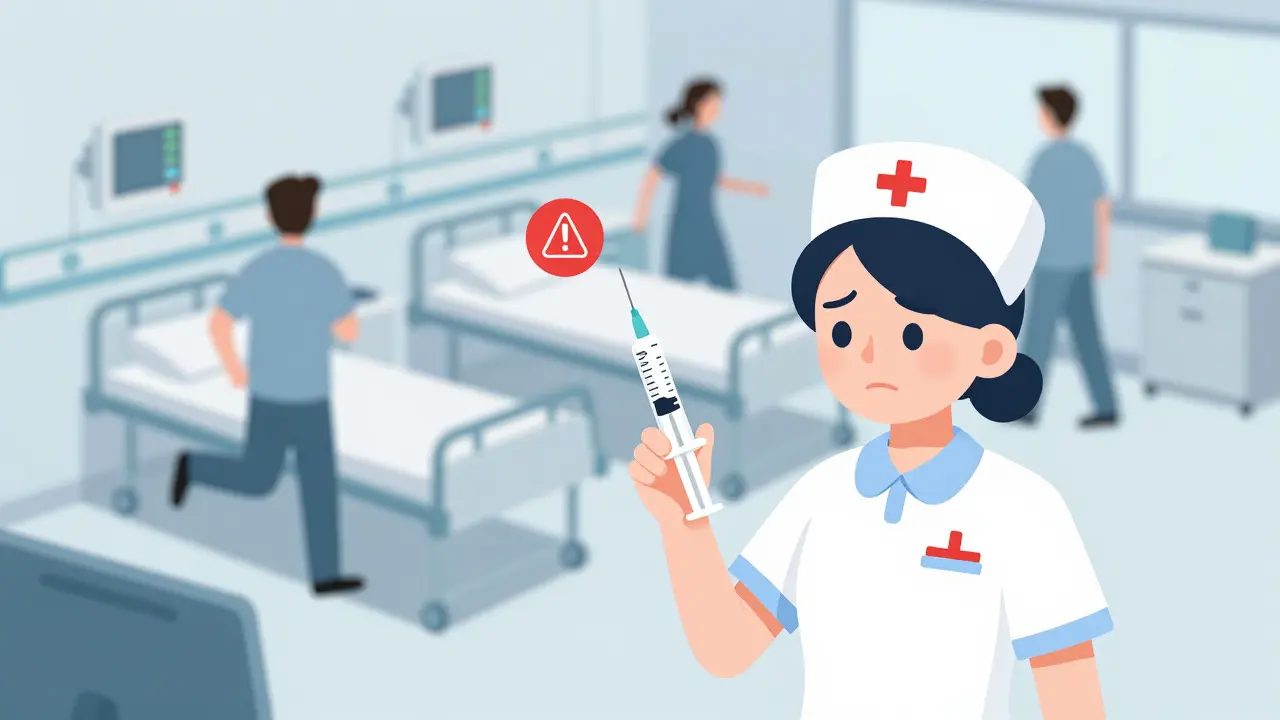
Imagine a busy hospital ward. The lights are dimmed, monitors beep rhythmically, and nurses are rushing between beds. In this high-pressure environment, a single moment of distraction can lead to a catastrophic mistake. A patient receives the wrong dose of insulin. Another gets an antibiotic they are allergic to. These aren't just hypothetical scenarios; they are real risks that Patient Safety Goals aim to eliminate every day.
Medication errors account for a staggering number of preventable deaths annually. According to data from the Institute of Medicine, these errors contribute significantly to patient harm. The goal isn't just to blame individuals when things go wrong-it's to build systems that make it nearly impossible to make a mistake in the first place. This article breaks down how these safety goals work in practice, specifically focusing on medication dispensing and pharmacy workflows.
Understanding the Core Patient Safety Goals
To grasp why dispensing errors happen, we need to look at the framework guiding healthcare institutions. The The Joint Commission is a healthcare accrediting body established in 1951 that sets standards for hospitals developed the National Patient Safety Goals (NPSGs). First launched in 2003, these goals provide a common language and set of expectations for safety across all accredited facilities.
There are six primary areas covered by the NPSGs:
- Identify patients correctly
- Improve staff communication
- Use medicines safely
- Prevent infection
- Identify patient safety risks
- Prevent mistakes in surgery
For pharmacists and dispensers, the third goal-Use medicines safely-is the most critical. It targets the entire lifecycle of a drug, from ordering and dispensing to administering and monitoring. The Joint Commission notes that medication-related errors contribute to at least 1 out of every 131 outpatient deaths. That statistic alone should make any healthcare professional pause and rethink their daily routines.
The Reality of Medication Dispensing Errors
Dispensing is often seen as the final checkpoint before a patient receives their medication. If the prescription is correct but the dispenser makes a mistake, the damage is done. Common errors include selecting the wrong strength, misreading handwriting, or confusing look-alike/sound-alike drugs.
Consider the case of injectable promethazine. Between 2006 and 2018, there were 37 documented amputations caused by serious tissue injuries from this specific drug. Why? Because it was being administered incorrectly due to a lack of standardized protocols. This is exactly the kind of error that targeted safety best practices aim to stop. The ISMP (Institute for Safe Medication Practices) identifies 19 specific high-risk scenarios like this one, requiring immediate intervention.
Another major issue is the reliance on memory. Many professionals still swear by the "Five Rights" of medication administration: right patient, right drug, right dose, right route, and right time. However, the Institute for Healthcare Improvement (IHI) points out a harsh reality: 83% of medication errors occur even when nurses believe they have confirmed all five rights. This proves that human vigilance alone is not enough. We need system-level safeguards.
Key Standards for Safe Dispensing
So, what does a safe dispensing process actually look like? Let’s break down some specific technical requirements mandated by safety frameworks.
Labeling Requirements
Standard NPSG.03.04.01 requires that all medications, containers, and solutions be labeled correctly. In perioperative settings, this means labels must include the drug name, strength, and concentration. Crucially, the font size must be at least 10-point to ensure readability. Despite this rule, studies show that 27% of operating rooms still use unlabeled syringes. Imagine trying to identify a clear liquid in a small syringe during an emergency without a label. It’s a recipe for disaster.
High-Alert Medications
High-alert medications are drugs that carry a higher risk of causing significant patient harm when used in error. Insulin, opioids, and anticoagulants fall into this category. For anticoagulants, standard NPSG.03.05.01 requires specific protocols, including International Normalized Ratio (INR) monitoring and patient education. Facilities aim for 95% compliance with these protocols, measured quarterly. When these checks fail, patients face life-threatening bleeding or clotting events.
Automated Dispensing Cabinets (ADCs)
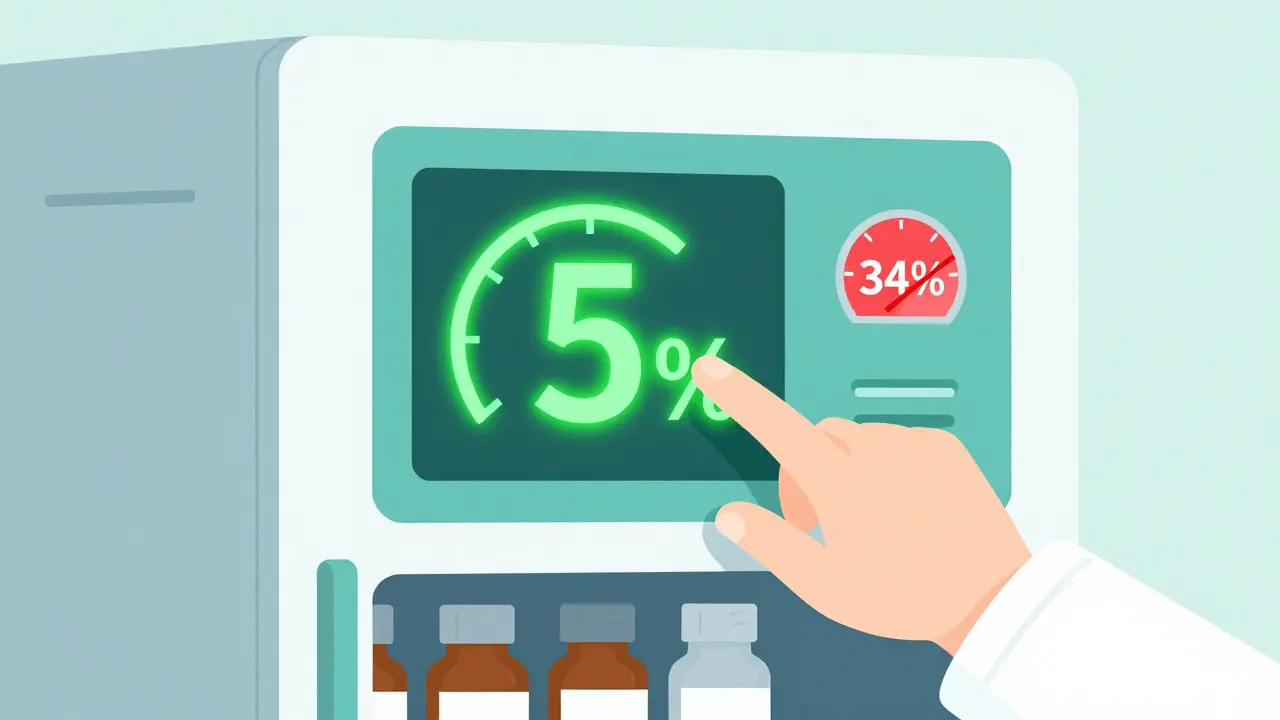
Modern pharmacies rely heavily on Automated Dispensing Cabinets (ADCs). While convenient, they introduce new risks. One major issue is the "override" rate. An override happens when a clinician bypasses the usual verification steps to get a drug quickly, often during emergencies. The recommended threshold for overrides is below 5%. However, surveys reveal that 34% of pharmacists report override rates exceeding this limit. High override rates correlate directly with more medication errors-facilities exceeding the 5% threshold see 3.7 times more errors.
| Framework | Nature | Key Focus | Adoption Rate |
|---|---|---|---|
| Joint Commission NPSGs | Mandatory for accredited hospitals | Minimum safety standards, labeling, identification | ~96% of U.S. acute care hospitals |
| ISMP Best Practices | Voluntary consensus recommendations | Specific high-risk interventions (e.g., promethazine, opioids) | 68% of large hospital systems |
| Five Rights | Traditional clinical guideline | Individual clinician responsibility | Universal, but criticized as insufficient |
| ASHP Guidelines (Australia) | System-level focus | Barcode systems, standardized procedures, error reviews | Varies by region/facility |
Technology as a Safety Net
Human error is inevitable. Technology is our best defense against it. Barcode-assisted medication administration (BCMA) is a prime example. When implemented correctly, BCMA reduces wrong-drug errors by up to 86%. However, technology isn't a magic bullet. One hospital director noted that while errors dropped, nurse workflow time increased by 7.2 minutes per dose. This highlights a common trade-off: safety often costs time and resources.
Electronic Health Records (EHRs) integrated with Clinical Decision Support Systems (CDSS) are also crucial. These systems can flag potential interactions or dosage errors before the pharmacist even picks up the pill bottle. Looking ahead, Artificial Intelligence (AI) is showing promise. Pilot programs at Mayo Clinic have demonstrated a 47% reduction in potential adverse drug events using AI-powered CDSS. By predicting errors before they happen, AI shifts the paradigm from reactive correction to proactive prevention.
Culture and Communication: The Human Element
Tools and rules are useless if the culture doesn't support them. Dr. Michael Cohen, President Emeritus of ISMP, emphasizes that NPSGs represent minimum standards, not best practices. True safety requires a leadership-driven culture where staff feel safe reporting errors without fear of punishment.
Communication breakdowns are a leading cause of dispensing errors. Misheard verbal orders, illegible handwriting, and unclear abbreviations can all lead to tragedy. Standardizing communication methods, such as using read-back techniques for critical orders, helps mitigate this. Furthermore, involving patients and families in their own care has proven effective. Facilities with robust patient involvement programs report 42% fewer medication errors. Asking a patient, "What medication do you expect to take today?" can catch errors that technology misses.

Implementation Challenges and Solutions
Implementing these goals is not easy. The Joint Commission recommends a 12-18 month timeline for full integration. Initial assessment takes 2-4 weeks, followed by 8-12 hours of training per clinician. Many facilities struggle here; 38% report providing less than 4 hours of annual medication safety training per staff member.
Common pitfalls include:
- Inadequate Labeling: As mentioned, unlabeled syringes remain a problem in many ORs.
- ADC Override Abuse: Without strict audit trails, overrides become a loophole rather than an emergency tool.
- Workflow Disruption: Adding safety checks can slow down dispensing, leading to staff frustration and shortcuts.
To overcome these, experts suggest using the Model Strategic Plan for Medication Safety. This plan includes seven long-term goals, such as establishing controlled formularies based on safety rather than just cost. High-performing facilities that score above 85% on self-assessments achieve 63% fewer medication-related adverse events. The key is executive sponsorship. Programs with dedicated pharmacy leadership and executive support have an 89% sustainability rate beyond five years, compared to just 42% for those without.
Special Considerations: Pediatrics
Children are not just small adults. Their medication needs are vastly different, requiring weight-based dosing and specialized formulations. Medication error rates in pediatric units are three times higher than in adult units. The Pediatric Medication Safety Model addresses this by mandating double-checks for high-risk medications in neonatal and intensive care units. Children's Hospital of Philadelphia reduced weight-based dosing errors by 91% through these standardized protocols. Vaccination errors are another growing concern, contributing to 21% of pediatric medication incidents, prompting new ISMP interventions by 2026.
Future Directions in Medication Safety
The landscape of medication safety is evolving. The World Health Organization’s Global Patient Safety Action Plan 2021-2030 aims for universal adoption of safety standards by 2030. Currently, 63% of high-income countries meet these standards, but only 22% of low- and middle-income nations do. Bridging this gap is a global priority.
Regulatory pressures are also increasing. The Centers for Medicare & Medicaid Services (CMS) now links 2% of hospital reimbursement to patient safety outcomes. This financial incentive drives hospitals to prioritize safety over speed. With the global patient safety software market projected to reach $4.03 billion by 2028, investment in technology will continue to grow. However, the core message remains unchanged: safety is a system-wide effort, not just an individual responsibility.
What are the top causes of medication dispensing errors?
The top causes include poor communication, look-alike/sound-alike drug confusion, inadequate labeling, and interruptions during the dispensing process. Additionally, reliance on manual processes without barcode verification contributes significantly to errors.
How effective are barcode medication administration systems?
Barcode Medication Administration (BCMA) systems are highly effective, reducing wrong-drug errors by up to 86%. However, they require proper implementation and may increase workflow time initially, necessitating additional staffing or process adjustments.
What is the recommended override rate for Automated Dispensing Cabinets?
The recommended override rate for ADCs is below 5%. Overrides should only be used in genuine emergencies. Rates exceeding 5% are associated with a 3.7-fold increase in medication errors, indicating a breakdown in standard verification processes.
Why are the "Five Rights" considered insufficient on their own?
While the Five Rights (right patient, drug, dose, route, time) are fundamental, studies show that 83% of errors occur even when clinicians believe they followed them. This highlights the need for system-level safeguards like barcoding and electronic alerts, rather than relying solely on human memory and vigilance.
How do Patient Safety Goals impact hospital reimbursement?
Regulatory bodies like CMS link a portion of hospital reimbursement (currently 2%) to patient safety outcomes through programs like the Hospital-Acquired Condition Reduction Program. This creates a financial incentive for hospitals to strictly adhere to safety goals and reduce errors.
What role does AI play in future medication safety?
AI is emerging as a powerful tool for predictive error detection. Pilot programs have shown that AI-powered Clinical Decision Support Systems can reduce potential adverse drug events by 47%. AI analyzes vast amounts of data to flag risks before a medication is even dispensed.