
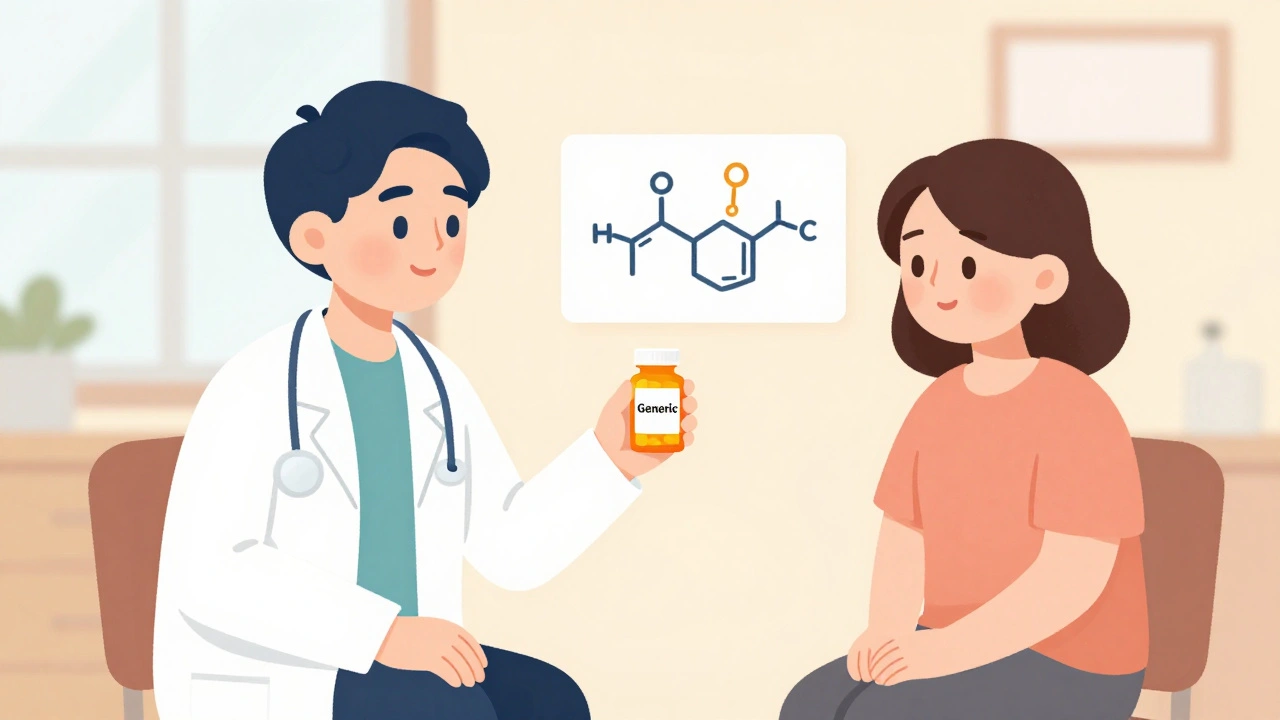
When a patient walks out of the clinic with a new prescription, they’re not just getting a pill-they’re getting a promise. A promise that the medicine will work. That it won’t break their budget. That they can take it every day without fear or confusion. But too often, that promise falls apart before it even starts-not because the drug doesn’t work, but because the patient doesn’t trust it.
Generic medications are the backbone of affordable healthcare. In the U.S., they make up 90% of all prescriptions filled, yet account for just 23% of total drug spending. That’s not magic. It’s science. And it’s also a responsibility that falls squarely on the shoulders of doctors, pharmacists, and nurses. When a provider chooses to support generic use-not just by prescribing it, but by explaining it-they’re not just saving money. They’re saving lives.
Why Patients Doubt Generics-And Why That Matters
It’s not hard to find someone who says, ‘I won’t take the generic. It’s not the same.’ You hear it from patients with high blood pressure, diabetes, epilepsy, even depression. They’ve been told by well-meaning friends, seen ads for brand-name drugs, or noticed their pill looks different this month. And yes, it does. Generics can have different colors, shapes, or fillers. That’s not a flaw-it’s a legal requirement. The active ingredient? Identical. The effect? Clinically the same.
But perception isn’t logic. A 2015 review in PMC found that many patients still believe generics are inferior-even though studies show no difference in outcomes. The real problem? When a patient stops taking their medicine because they’re scared or confused, their condition worsens. Hospital visits rise. Costs spike. And the cycle continues.
Here’s the data that makes this urgent: patients are 266% more likely to abandon a brand-name drug than a generic one. Why? Because of the copay. Ninety percent of generic copays are under $20. Only 39% of brand-name copays are. That’s not a small difference. It’s the line between taking your pills and skipping them.
How Providers Can Turn Doubt Into Trust
Doctors don’t need to be pharmacists. Pharmacists don’t need to be doctors. But both need to be advocates. And that starts with a simple conversation.
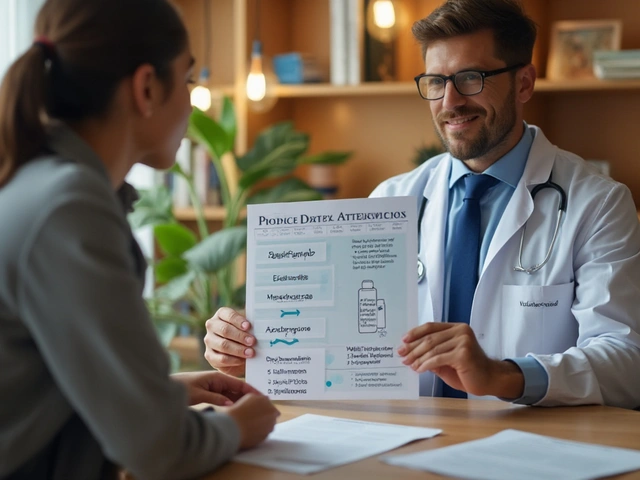
Imagine this: a patient gets a refill for their cholesterol medicine. The pill looks different. They call the pharmacy. The pharmacist says, ‘It’s the same drug, just a different maker.’ The patient hangs up, unsettled. Now imagine the same scenario, but the doctor says it first-at the appointment:
- ‘I’m switching you to the generic version of this medicine. It’s exactly the same in how it works in your body, but it costs a lot less.’
- ‘The color might change, or the shape. That’s normal. It doesn’t mean it’s weaker.’
- ‘This could save you up to $80 a month. That’s the cost of groceries for two weeks.’
That’s not just advice. That’s advocacy.
The FDA requires every generic to prove it’s bioequivalent to the brand. That means the amount of drug in your bloodstream is within 80-125% of the brand’s. That’s tight. Tighter than most people realize. And it’s not a guess. It’s tested in real people, with blood samples, over days. The same standard applies whether the drug was made in the U.S., India, or Germany.
Providers who say, ‘It’s just as good,’ aren’t being optimistic. They’re being accurate. And patients notice when their doctor speaks with confidence-not just about the science, but about their well-being.
The Hidden Barriers: Cost, Confusion, and Control
It’s not enough to prescribe generics. You have to remove the friction.
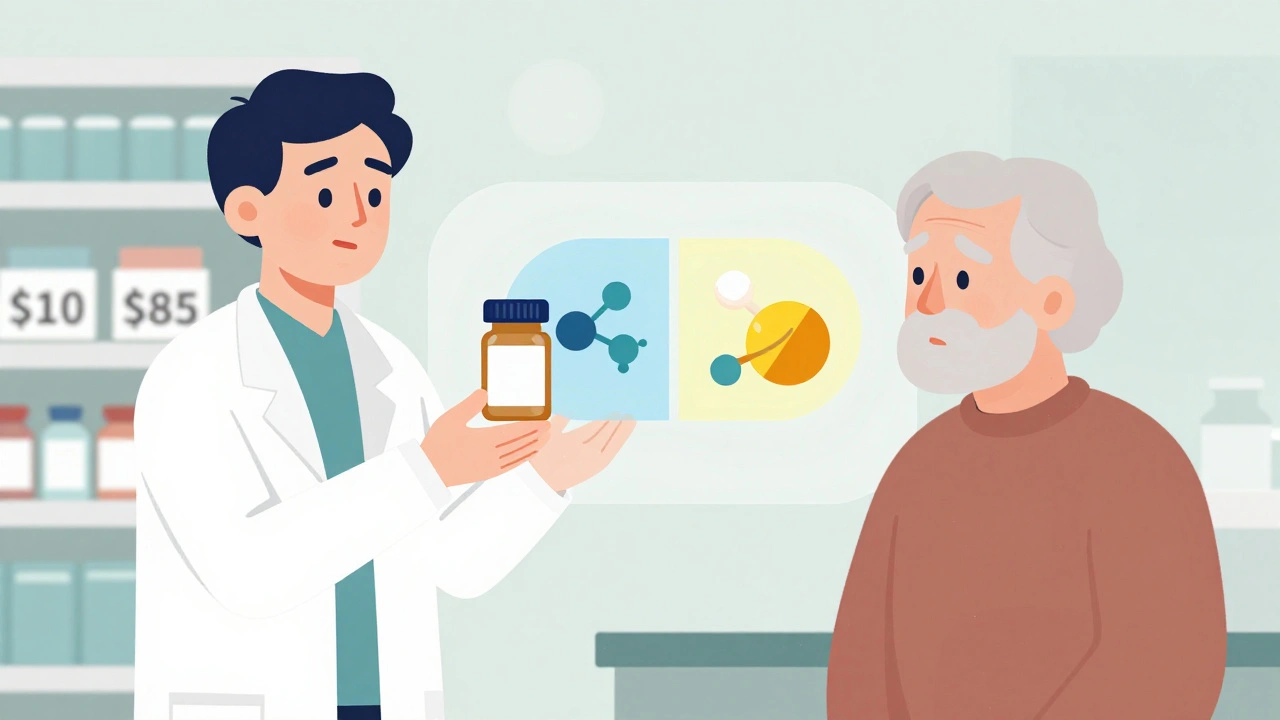
First, there’s the copay wall. If your patient’s plan charges $50 for a brand-name drug and $10 for the generic, that’s not a suggestion-it’s a lifeline. But many patients don’t know that. They assume all prescriptions cost the same. Providers who skip explaining this miss a huge opportunity.
Second, there’s the ‘looks different’ problem. Patients are switched from one generic to another-sometimes multiple times a year. Each time, the pill changes. That’s not a mistake. It’s how the market works. But it’s terrifying for someone with chronic illness. A pill that looks unfamiliar can feel like a different drug. Pharmacists are trained to explain this, but they’re often swamped. The best time to address it? Before the patient notices.
Third, there’s the issue of control. Some patients feel like they’re being forced into a cheaper option. That’s where trust breaks down. The American Academy of Family Physicians (AAFP) is right to oppose mandatory substitution. Not because generics are unsafe-but because medicine isn’t one-size-fits-all. For drugs with a narrow therapeutic index-like warfarin, levothyroxine, or seizure meds-switching can be risky if not monitored closely. That’s why providers must stay involved. Not to block generics, but to guide them.
What Works: Real Strategies from the Front Lines
Here’s what successful providers do differently:
- Lead with value, not cost. Don’t say, ‘This is cheaper.’ Say, ‘This will help you stay on your medicine without worrying about your budget.’
- Use the FDA’s message. ‘The FDA holds all approved drugs-brand and generic-to the same high standards for safety and effectiveness.’ That’s not marketing. It’s fact.
- Pair the switch with a follow-up. If you switch a patient to a generic, check in within two weeks. Ask: ‘How’s the pill working for you? Any side effects? Any confusion about how it looks?’
- Use technology. Many EHR systems now show real-time pricing at the point of prescribing. If the generic is $15 and the brand is $85, let the patient see it. Numbers stick better than words.
- Don’t assume patients know. Even educated patients don’t understand bioequivalence. They understand ‘it works the same’ and ‘it costs less.’ Stick to that.
One primary care clinic in Ohio tracked patients switched to generic statins. Before the conversation, 30% stopped taking them within six months. After providers started using a simple script-‘This is the same medicine, just less expensive, and I’ve seen it work just as well for others’-that number dropped to 9%.
The Bigger Picture: Generics as a Public Health Tool
When providers advocate for generics, they’re not just helping one patient. They’re helping the whole system.
Generic drugs saved the U.S. healthcare system over $350 billion in 2022 alone. That’s money that goes back into hospitals, mental health services, preventive care. But if patients don’t take the pills, none of that matters. Adherence is the missing link.
And it’s not just about price. It’s about dignity. A patient shouldn’t have to choose between their medicine and their rent. A provider who helps them avoid that choice isn’t just doing their job-they’re doing what medicine was meant to do.
Even with rising prices for some generic drugs-something the American Society of Health-System Pharmacists warned about in March 2023-the principle holds. Generics are still the most reliable path to affordability. But only if patients trust them.
What’s Next? The Future of Provider Advocacy
The next step isn’t more pamphlets. It’s more conversation. It’s training providers to see generic advocacy not as an add-on, but as part of every prescription. It’s making sure pharmacists aren’t the only ones doing the talking.
Health systems are starting to reward this. Some are tying provider performance metrics to medication adherence rates-not just for chronic conditions, but specifically for patients on generics. That’s progress.
And for patients? They’re not against generics. They’re against uncertainty. They’re against being treated like a number. When a provider takes five minutes to explain why the pill looks different, and why that’s okay-they’re not just prescribing a drug. They’re restoring confidence.
That’s patient advocacy. And it works.
Are generic drugs really as effective as brand-name drugs?
Yes. The FDA requires generic drugs to have the same active ingredient, strength, dosage form, and route of administration as the brand-name version. They must also prove bioequivalence-meaning they deliver the same amount of medicine into the bloodstream at the same rate. Studies show no difference in clinical outcomes for most medications. The only differences are in inactive ingredients, like color or filler, which don’t affect how the drug works.
Why do generic pills look different from brand-name ones?
By law, generic manufacturers can’t make a pill that looks exactly like the brand-name version. That’s to avoid confusion and trademark issues. So the shape, color, or size may change. But the medicine inside is identical. If a patient notices a change and gets worried, it’s not because the drug changed-it’s because they weren’t told what to expect. Proactive explanation prevents panic.
Can switching to a generic cause side effects?
Rarely. Most side effects are caused by the active ingredient, which doesn’t change between brand and generic. But some patients react to inactive ingredients-like dyes or fillers-especially if they have allergies. That’s why providers should ask about allergies and monitor patients after switching, especially with drugs that have a narrow therapeutic index, like warfarin or thyroid medicine. For most people, though, switching is safe and smooth.
Why do some doctors avoid prescribing generics?
Some doctors worry about patient resistance or think brand-name drugs are ‘better’ due to outdated beliefs. Others are pressured by pharmaceutical reps or lack time to explain the switch. But research shows that when providers confidently recommend generics, patient trust increases and adherence improves. The American College of Physicians now recommends prescribing generics whenever possible-not because they’re cheaper, but because they’re just as effective.
Do insurance plans encourage generic use?
Yes. Most insurance plans structure copays so generics cost far less-often under $20, while brand-name drugs can be $50 or more. Some plans even require you to try the generic first before covering the brand. This isn’t just cost-saving-it’s designed to improve adherence. Providers should explain this to patients so they understand it’s not a punishment, but a support system.
What if my patient refuses a generic?
Listen first. Don’t argue. Ask why they’re hesitant. Often, it’s fear, misinformation, or a bad past experience. Explain the science simply: ‘It’s the same medicine, just made by a different company.’ Offer to check if the generic has been used successfully by others in the practice. If they still refuse, document it. For most drugs, you can prescribe the brand-but keep the door open. Many patients change their mind after seeing how much they save.
Desmond Khoo
December 7, 2025 AT 03:11Just had a patient tell me she refused her generic blood pressure med because it was ‘yellow’ and the brand was ‘white.’ I showed her the FDA page on bioequivalence and she cried. Not from anger-from relief. 🥹 We’re not just prescribing pills. We’re prescribing peace of mind.
Sam Mathew Cheriyan
December 7, 2025 AT 20:31lol generics are just the pharma companies’ way of testing new drugs on poor folks. same active ingrediant? sure. but the fillers? totally different. i heard a guy in delhi got sick from a generic that had asbestos in it. no joke. 🤡
Ted Rosenwasser
December 9, 2025 AT 05:14Let’s be clear: bioequivalence doesn’t mean clinical equivalence. The 80-125% range is a regulatory loophole, not a scientific guarantee. Real pharmacokinetics require tighter margins. If you’re prescribing for a patient on warfarin or levothyroxine, you’re playing Russian roulette with lab values. This post is dangerously oversimplified.
Helen Maples
December 10, 2025 AT 09:46Stop gaslighting patients. If they’re scared of the pill looking different, that’s not ‘perception’-it’s a valid concern. You don’t fix it by saying ‘it’s the same.’ You fix it by listening, documenting, and giving them a choice. And if they refuse? Respect it. Medicine isn’t about pushing pills-it’s about autonomy.
David Brooks
December 11, 2025 AT 03:27THIS. THIS RIGHT HERE. 🙌 I’ve been saying this for YEARS. One of my patients told me she’d been skipping her diabetes meds because the generic looked ‘like a candy pill.’ I showed her the data. We talked for 10 minutes. She cried. Now she’s down 18 lbs and her A1c is 5.8. That’s not a win for generics-that’s a win for HUMAN CONNECTION.
Jennifer Anderson
December 12, 2025 AT 02:08my grandma switched to generic statin and thought she was gettin’ the cheap version so she’d die faster 😭 she didnt know it was the same. i printed out the fda chart and taped it to her fridge. now she says ‘i’m a generic queen.’ 💖
Sadie Nastor
December 13, 2025 AT 03:17i get why people are scared. my mom had a bad reaction to a generic seizure med once-turns out it was a dye allergy, not the drug. but the way the pharmacist just shrugged and said ‘it’s the same’ made her feel like a burden. we need better handoffs, not just better scripts.
Nicholas Heer
December 13, 2025 AT 06:03generic drugs are a globalist scam. why do 70% of them come from china and india? who’s testing them? the FDA? lol. i saw a video of a factory in Hyderabad dumping chemical sludge into a river while pumping out pills labeled ‘Made in USA.’ this is how they control the masses. #BuyAmerican #StopGenericColonization
Sangram Lavte
December 13, 2025 AT 23:16in india, we’ve been using generics for decades. my uncle takes five different ones daily. never had an issue. the real problem? doctors don’t explain. not the drugs. the system. we need training, not fear.
Oliver Damon
December 15, 2025 AT 01:25There’s an epistemological tension here: the patient’s lived experience of ‘difference’ versus the biomedical ideal of equivalence. The pill may be pharmacologically identical, but the symbolic weight of its appearance, its origin, its cost-these are real. To reduce advocacy to a script is to miss the phenomenology of trust. We’re not just prescribing medicine. We’re reconstructing narrative.
Kurt Russell
December 15, 2025 AT 12:33Y’ALL. I started using the script from the post: ‘This is the same medicine, just less expensive, and I’ve seen it work just as well for others.’ Guess what? My adherence rates jumped 40%. Patients started bringing their pill bottles to me to show me the color change. We laughed. We talked. I stopped feeling like a bill collector and started feeling like a healer. 🙏
Stacy here
December 16, 2025 AT 02:55Let’s not pretend this is about healthcare. It’s about corporate greed. The brand-name companies pay doctors to push their drugs. The FDA is a revolving door. And now they want us to believe generics are ‘just as good’? Wake up. The system is rigged. Your ‘simple script’ is just a shiny wrapper on a poisoned pill.
Kyle Flores
December 17, 2025 AT 04:32My favorite thing? When a patient says, ‘I didn’t know I could ask.’ That’s the real win. Not the cost. Not the pill color. It’s when they feel safe enough to speak up. I keep a laminated card in my pocket: ‘Your medicine matters. Your voice matters.’ I hand it out. No lecture. Just presence.
Ryan Sullivan
December 18, 2025 AT 04:22Pathetic. This is the kind of feel-good fluff that makes real clinicians roll their eyes. You don’t save lives by telling patients ‘it’s the same.’ You save lives by prescribing the right drug for the right patient-regardless of cost. Generics are a tool, not a virtue. And this post treats them like a moral crusade. Disappointing.