

When a generic drug hits the market, it’s supposed to work just like the brand-name version. But here’s the catch: most bioequivalence studies used to test this were done on young, healthy men. That’s not how most people actually take these drugs. Women, older adults, and people with different body types are often left out - even when they’re the ones using the medication most. This isn’t just an oversight. It’s a gap in safety and effectiveness that regulators are finally starting to fix.
Why Bioequivalence Studies Used to Skip Women and Older Adults
For decades, bioequivalence (BE) studies relied on a simple model: enroll young, healthy adult males. Why? Because they were seen as the most predictable group. Their bodies responded consistently to drugs, making it easier to spot differences between formulations. It wasn’t about fairness - it was about convenience. Researchers thought if a drug worked the same in a 25-year-old man, it would work the same in everyone else. That assumption turned out to be dangerously wrong. Studies now show that sex affects how drugs are absorbed, distributed, metabolized, and cleared from the body. Women often have slower gastric emptying, higher body fat percentage, and different enzyme activity than men. These differences can change how much of the drug actually reaches the bloodstream. For example, a 2023 study from the University of Toronto found that 37% of commonly tested drugs are cleared 15-22% faster in men than in women. That doesn’t mean the drug fails - it means the dose might need to be adjusted for women to get the same effect. Age matters too. Older adults have reduced kidney and liver function, lower muscle mass, and changes in stomach acidity. A drug that works fine in a 30-year-old might build up to toxic levels in a 70-year-old. Yet, until recently, BE studies rarely included people over 60 - even when the drug was meant for seniors with chronic conditions like hypertension or thyroid disease.What the FDA, EMA, and ANVISA Require Today
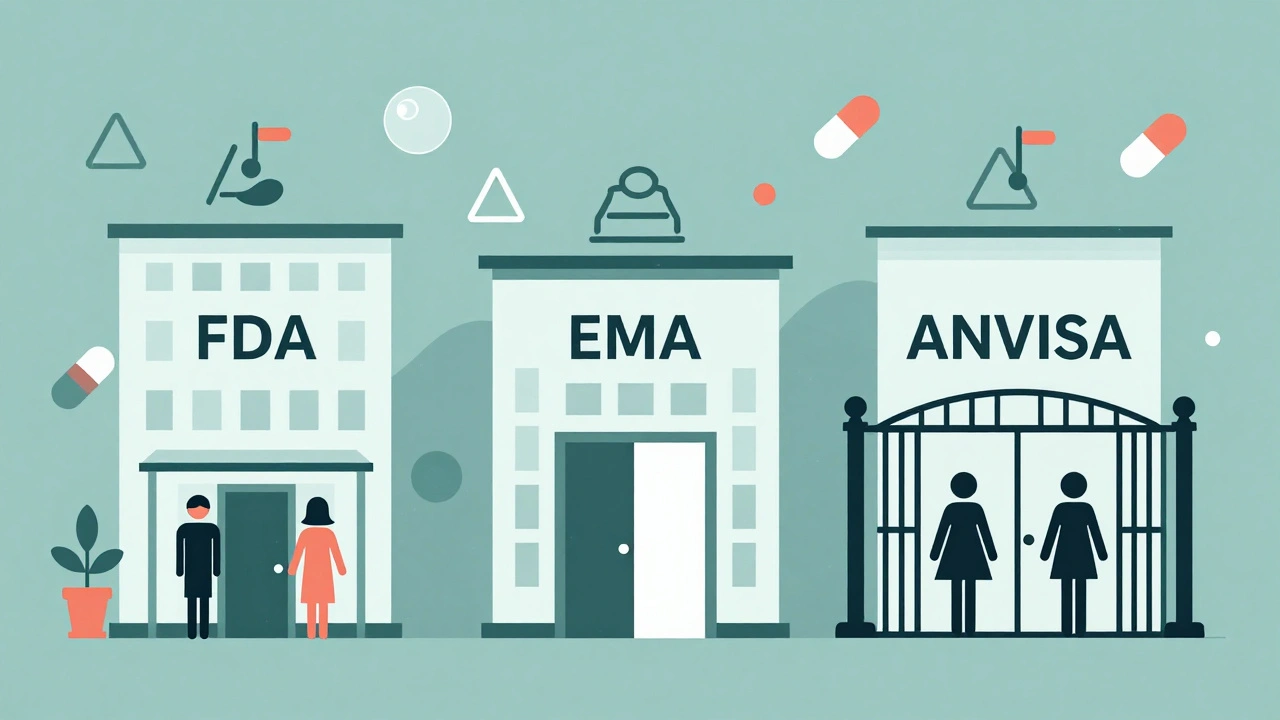
Regulators have caught up. The U.S. Food and Drug Administration (FDA) updated its guidance in May 2023, and the rules are now clear: if a drug is used by both men and women, your study must include both - roughly half and half. The same goes for age. If the drug is meant for older adults, you need to include people 60 and older - or give a solid scientific reason why you didn’t. The European Medicines Agency (EMA) takes a slightly different approach. Their 2010 guideline says subjects “could belong to either sex,” but doesn’t require a 50:50 split. Still, they expect you to account for sex differences in your analysis. Brazil’s ANVISA is the strictest: all studies must have equal numbers of men and women, ages 18 to 50, with no smokers, and BMI within a tight range. These rules aren’t suggestions. They’re requirements for approval. Here’s how the major agencies compare:| Regulatory Body | Minimum Age | Age Cap | Sex Requirements | Health Status |
|---|---|---|---|---|
| FDA | 18 years | None (but 60+ required if drug targets elderly) | ~50:50 male:female unless justified | Healthy or stable chronic conditions allowed |
| EMA | 18 years | None | Either sex allowed; no mandated balance | Must be healthy volunteers |
| ANVISA | 18 years | 50 years | Equal male and female distribution required | Must be healthy, non-smokers |
One big difference? The FDA now allows people with stable chronic conditions - like controlled diabetes or hypertension - to join BE studies if the drug doesn’t interfere with their condition. That’s a huge shift. It means your study can reflect real-world patients, not just lab models.
The Hidden Problem: Small Studies and False Results
Even when sponsors try to include women and older adults, many studies are still too small. The EMA says you need at least 12 evaluable subjects. But 12 people? That’s not enough to catch sex-based differences. A 2018 study in Clinical Pharmacology & Therapeutics showed that with only 12-14 participants, a few extreme values in one group could make it look like the drugs weren’t bioequivalent - even when they were. When the same study was repeated with 36 people, the “difference” disappeared. This isn’t just bad science. It’s risky. Imagine a generic version of a blood thinner is tested in 14 men. It looks fine. But women metabolize it slower. So when women start taking it, they get too much drug in their system - and bleed internally. That’s not hypothetical. It’s happened. That’s why experts now say: don’t just meet the minimum. Aim for 24-36 participants. Use stratified randomization - make sure half are men, half are women. Run separate analyses for each group. Don’t just average everything together. If you don’t, you’re not just missing data - you’re hiding danger.Why Women Are Still Underrepresented - Even When They Shouldn’t Be
Here’s the uncomfortable truth: even though the FDA now requires balanced enrollment, women still make up only about 32% of participants in BE studies. Why? Recruitment is harder. Women are less likely to volunteer for clinical trials. They juggle caregiving, work, and family. Many sites don’t offer flexible hours or childcare. And some women are hesitant because they fear pregnancy risks - even if the drug isn’t used during pregnancy. The problem gets worse when the drug is meant mostly for women. Take levothyroxine, a thyroid hormone. Over 60% of users are women. But in BE studies for this drug, women often make up less than 25% of participants. That’s not just inconsistent - it’s illogical. Why test a drug in men when women are the ones who need it most? Some sponsors still argue that including women adds cost and complexity. But the cost of getting it wrong is higher. A single adverse event in a woman taking a generic drug can trigger lawsuits, recalls, and loss of trust. The FDA is watching. In 2021, they flagged over 40% of generic applications for inadequate sex representation. That means delays. That means re-submissions. That means lost revenue.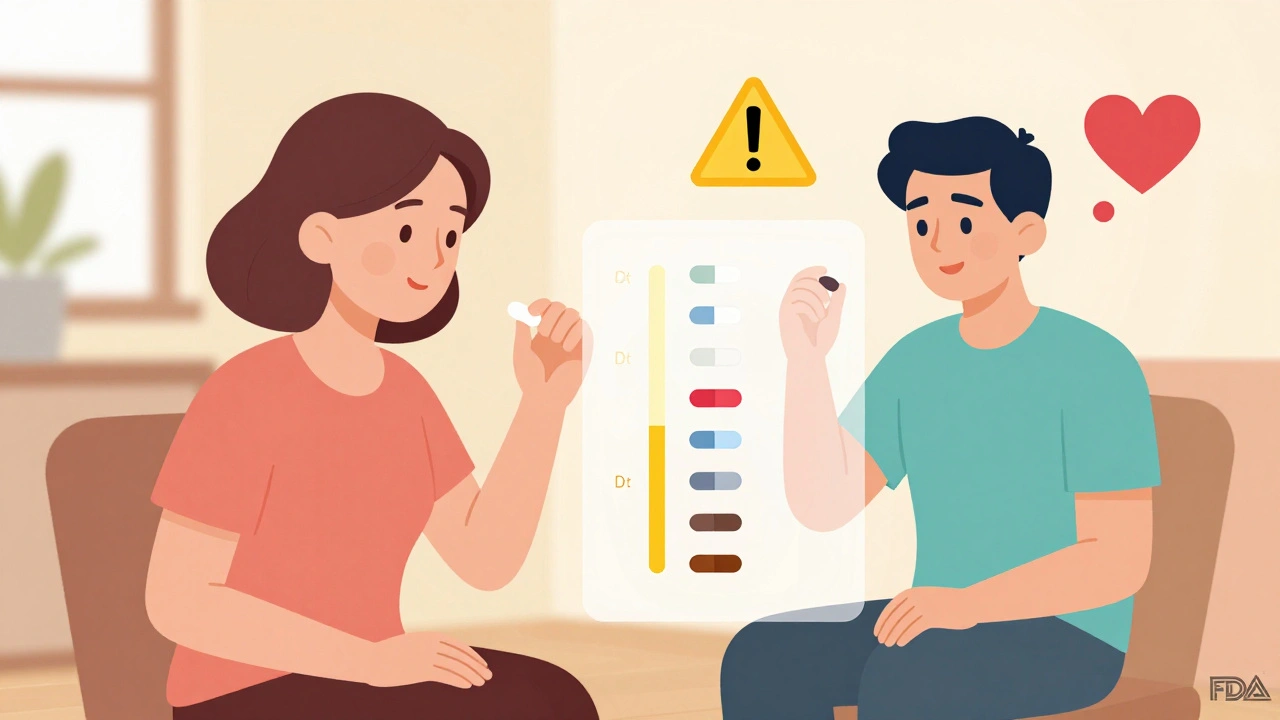
What Sponsors Should Do Now
If you’re designing a bioequivalence study, here’s what you need to do - right now:- Match your study population to your target patients. If your drug is for postmenopausal women, enroll postmenopausal women. If it’s for elderly men with heart failure, include elderly men with heart failure - if allowed by the regulator.
- Aim for 24-36 participants. Don’t cut corners. Smaller studies miss real differences.
- Stratify by sex. Randomize men and women separately to ensure balance across treatment groups.
- Analyze by subgroup. Run separate statistical analyses for men and women. Don’t just report an overall result.
- Document everything. Your Clinical Study Report must include detailed demographics, BMI, smoking status, and any exclusion reasons. ANVISA and the FDA will check.
- Justify deviations. If you’re not including women or older adults, you need a strong, science-backed reason. Not “it’s easier.” Not “we’ve always done it this way.”
There’s no excuse anymore. The data is clear. The rules are clear. The risks are clear.
What’s Next for Bioequivalence Studies
The future is inclusive. The FDA’s 2023-2027 plan says improving diversity in generic drug testing is a top priority. The EMA is reviewing its 2010 guideline - and updates are expected in 2024. Researchers are already looking at sex-specific bioequivalence limits for narrow therapeutic index drugs like warfarin and levothyroxine. These are drugs where even a small difference can cause harm. We’re moving toward a system where bioequivalence isn’t just about matching average blood levels. It’s about matching real-world outcomes. That means studying how drugs work in older adults, in women, in people with different body types, and in those with other health conditions. The days of testing drugs only on young men are over. The science says so. The regulators say so. And patients - the ones actually taking these pills every day - deserve better.Why can’t bioequivalence studies just use young men for all drugs?
Because men and women process drugs differently. Women often have slower metabolism, higher body fat, and different enzyme activity. Older adults have reduced kidney and liver function. Testing only on young men can miss these differences, leading to under- or overdosing in real patients. A drug that works fine in a 25-year-old man might be ineffective or dangerous in a 65-year-old woman.
Do all regulatory agencies require equal numbers of men and women?
No. The FDA now requires roughly 50:50 representation unless scientifically justified. The EMA allows either sex but doesn’t require balance. ANVISA mandates equal numbers. The trend is moving toward balance, especially for drugs used by both sexes.
Can older adults be included in bioequivalence studies?
Yes - and increasingly, they must be. The FDA requires inclusion of subjects aged 60+ if the drug is intended for elderly patients. The EMA and ANVISA don’t set an upper age limit, but ANVISA caps it at 50. The key is matching the study population to the intended patient group.
What happens if a study doesn’t include enough women?
The FDA and other regulators may reject the application. In 2021, over 40% of generic drug submissions were flagged for inadequate sex representation. This causes delays, costly re-submissions, and lost market access. It also puts patients at risk if the drug performs differently in women than in men.
Are there specific drugs where sex differences are most critical?
Yes. Narrow therapeutic index drugs like warfarin, levothyroxine, and lithium are especially sensitive. Small changes in blood levels can cause serious side effects. Studies show women often have higher exposure to these drugs, making balanced representation in BE studies essential for safety.
How can sponsors improve female recruitment for BE studies?
Offer flexible scheduling, childcare support, transportation assistance, and clear communication about safety protocols. Target outreach to women’s health clinics and community centers. Some CROs now use dedicated female recruiters and partner with patient advocacy groups. Tracking recruitment data by sex helps identify gaps early.


Evelyn Pastrana
December 9, 2025 AT 18:22Nikhil Pattni
December 11, 2025 AT 02:06Elliot Barrett
December 12, 2025 AT 09:49Andrea Beilstein
December 13, 2025 AT 00:00What if the problem isn't that women are different
but that we've spent centuries treating male bodies as the default human
And now we're surprised when the math doesn't add up
Sabrina Thurn
December 13, 2025 AT 08:09Richard Eite
December 14, 2025 AT 09:35Tim Tinh
December 15, 2025 AT 15:05my grandma takes levothyroxine and her pills never seem to work right
she’s always tired and the doc just upped the dose
but what if it’s not the dose... what if it’s just that the study was done on guys in their 20s
and she’s a 72yo woman with 3 grandkids and zero time for clinical trials
we owe her better
Ryan Brady
December 16, 2025 AT 17:39Raja Herbal
December 18, 2025 AT 17:18Lauren Dare
December 20, 2025 AT 08:18Gilbert Lacasandile
December 20, 2025 AT 14:44Lola Bchoudi
December 22, 2025 AT 05:26Morgan Tait
December 23, 2025 AT 05:53