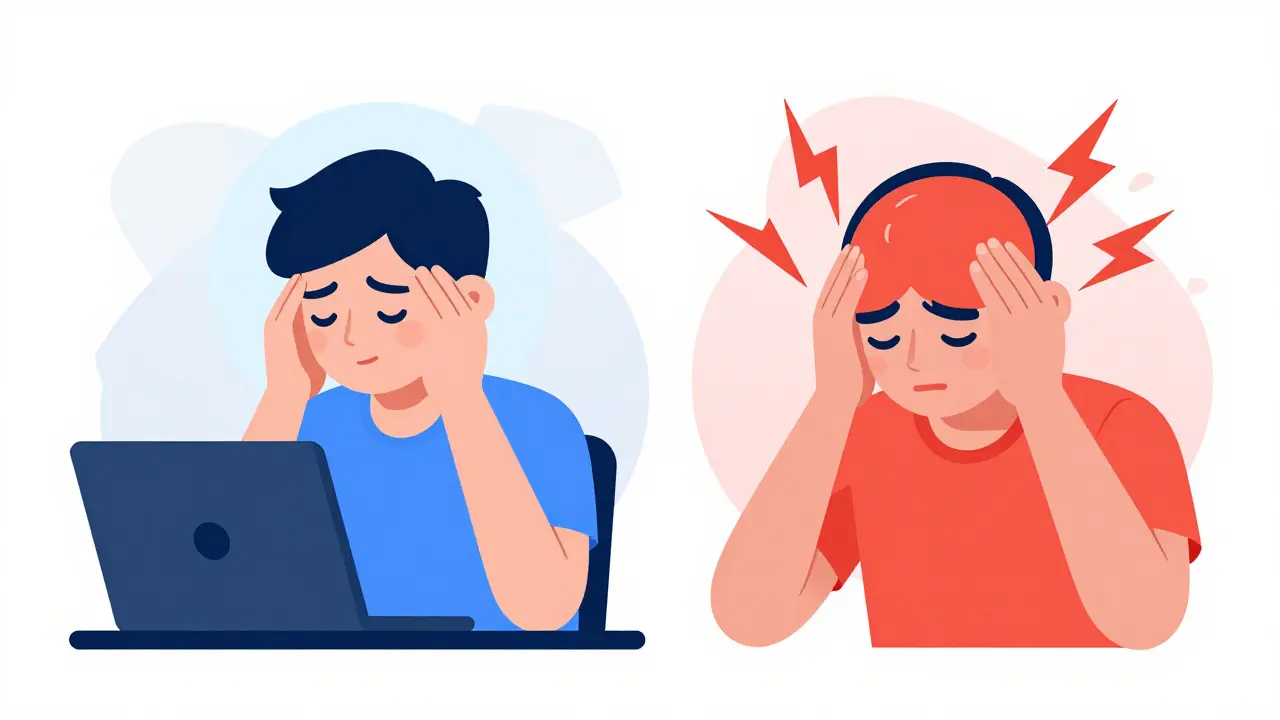
That splitting pain behind your eyes? It’s probably just a tension headache from staring at screens all day. But what if it isn’t?
About half of us deal with headaches every year. Most are harmless nuisances that fade with water and rest. Yet, for a small but significant group, a headache is the first warning sign of something life-threatening-like a brain bleed, an infection, or a tumor. The difference between a bad migraine and a medical emergency often comes down to recognizing specific neurological red flags is a set of clinical warning signs that indicate a headache may be caused by a serious underlying condition requiring immediate medical attention.
Missing these signals can be costly. Studies show that up to 20% of serious secondary headaches are misdiagnosed when these red flags are overlooked. This guide breaks down exactly what to look for, why timing matters, and how to act fast when your head hurts in a way that feels different.
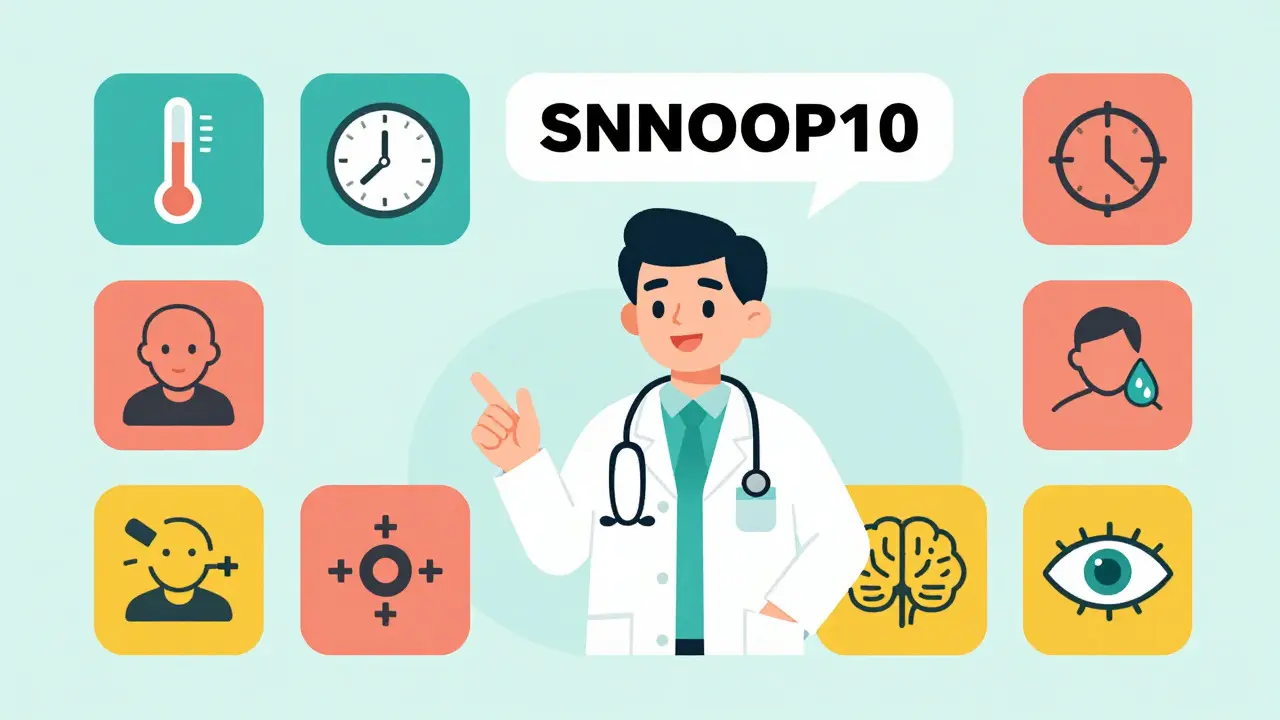
The SNNOOP10 Framework: A Doctor’s Checklist
If you want to understand how neurologists screen for danger, you need to know about SNNOOP10 is a clinical mnemonic used by healthcare providers to identify potential secondary causes of headaches based on ten key risk factors.. Developed by Dr. David Dodick and colleagues at the Mayo Clinic, this tool helps doctors quickly spot headaches that aren't primary (like migraines) but are symptoms of another disease.
Here is what the acronym stands for and why each letter matters:
- S - Systemic Symptoms: Do you have a fever, weight loss, or night sweats? These suggest an infection or inflammation.
- N - Neoplastic History: Do you have cancer? Headaches in patients with known malignancy raise the risk of metastasis.
- O - Onset Sudden: Did the pain hit you like a truck in seconds? This is the hallmark of a vascular event.
- O - Onset After Age 40 (or 50): New headaches starting later in life carry higher risks for conditions like giant cell arteritis.
- P - Previous Headache History Abnormal: Is this headache completely different from any you’ve had before?
- P - Positional: Does the pain get worse when you lie down or stand up? This can indicate pressure issues in the brain.
- P - Precipitated by Valsalva: Does coughing, sneezing, or straining make it spike? This suggests structural problems.
- P - Progressive: Is it getting steadily worse over days or weeks? This pattern often points to a mass effect.
- P - Papilledema: Swelling of the optic nerve seen during an eye exam indicates high intracranial pressure.
- P - Painful Eye with Autonomic Features: One-sided eye pain with tearing or drooping eyelid can signal cluster headaches or other cranial nerve issues.
You don’t need to memorize this list perfectly. Just remember that if your headache checks multiple boxes here, it’s time to see a doctor immediately.
The Thunderclap Headache: The Most Critical Sign
Among all the red flags, one stands out as the most dangerous: the thunderclap headache is a severe headache that reaches maximum intensity within 60 seconds of onset, often described as the 'worst headache of my life'..
This isn’t a gradual build-up. It hits peak severity in less than a minute. Imagine being struck by lightning in your skull. About 85% of people with a subarachnoid hemorrhage (bleeding around the brain) experience this type of pain. Even if a CT scan comes back normal initially, doctors still treat this as an emergency because early scans can miss small bleeds. You typically need an MRI or a lumbar puncture to rule out danger completely.
If you feel this sudden, explosive pain, do not wait. Call emergency services. Time is brain tissue.
Focal Neurological Deficits: When Your Body Fails You
A headache alone is painful. A headache combined with new weakness, confusion, or vision changes is alarming. These are called focal neurological deficits, and they suggest that part of your brain is not functioning correctly.
Watch for these specific symptoms:
- Focal Weakness: Numbness or paralysis on one side of the face, arm, or leg. This is a classic stroke symptom.
- Aphasia: Difficulty speaking or understanding language. Slurred speech or using the wrong words.
- Diplopia: Double vision.
- Altered Mental Status: Confusion, drowsiness, or difficulty waking up. This is present in nearly 80% of meningitis cases.
If your headache comes with any of these, you are likely dealing with a stroke, a tumor, or severe inflammation. The American Stroke Association recommends evaluation within three hours for these symptoms. Every minute counts.
Infection and Inflammation: Fever and Stiff Neck
Not all serious headaches come from blood vessels or tumors. Some come from infections. Meningitis, an inflammation of the membranes covering the brain and spinal cord, is a deadly race against time.
The classic triad for bacterial meningitis includes:
- Headache
- Fever
- Neck Stiffness (Meningismus)
Don’t confuse neck stiffness with general soreness from sleeping wrong. True meningismus makes it hard to touch your chin to your chest due to pain and resistance. If you have a headache plus a fever and a stiff neck, go to the ER. Untreated bacterial meningitis has a high mortality rate, and delays in antibiotics significantly increase the risk of death or permanent disability.
Age Matters: Why New Headaches After 50 Are Different
If you’ve had migraines since college, a new type of headache at age 55 is suspicious. Onset after age 50 is a major red flag. Specifically, it raises concern for giant cell arteritis is an inflammatory disease of the blood vessels, particularly those in the head, which can cause blindness if untreated..
Look for these accompanying signs:
- Jaw Claudication: Pain in your jaw when chewing.
- Temporal Artery Tenderness: Sensitivity or thickening of the arteries on the sides of your head.
- Visual Disturbances: Blurring or temporary loss of vision.
Giant cell arteritis can lead to permanent blindness if not treated quickly with steroids. Doctors will check your inflammatory markers (ESR and CRP) and may perform a biopsy of the temporal artery.
Trauma and Immunosuppression: Special Risk Groups
Your medical history changes how we view your headache. Two groups need extra caution:
Post-Traumatic Headaches: If you recently hit your head, even mildly, and now have a headache, watch for worsening symptoms. Loss of consciousness, vomiting more than twice, or a drop in alertness requires an immediate CT scan to rule out bleeding inside the skull.
Immunosuppressed Patients: If you have HIV, are on chemotherapy, or take immunosuppressants, your body fights infections differently. A simple headache could be fungal meningitis or a brain abscess. For these patients, doctors err on the side of caution, often ordering imaging regardless of other symptoms because the stakes are so high.
| Headache Feature | Typical Cause | Urgency Level | Action Required |
|---|---|---|---|
| Peaks in <60 seconds | Subarachnoid Hemorrhage | Critical (1 hour) | ER + CT/MRI |
| With fever/stiff neck | Meningitis | Critical (Immediate) | ER + Lumbar Puncture |
| New onset >50 years old | Giant Cell Arteritis | High (Same day) | Doctor Visit + Blood Work |
| Progressive worsening | Intracranial Mass | High (Days) | Neurology Referral |
| Pulsating, nausea, light sensitivity | Migraine | Low (Unless aura changes) | Home Care / PCP |
How to Act: Practical Steps for Patients
Knowledge is useless without action. Here is how to handle a suspicious headache:
- Assess the Onset: Did it start suddenly? If yes, call 911.
- Check for Neurological Signs: Can you smile symmetrically? Raise both arms? Speak clearly? If no, call 911.
- Measure Temperature: Fever plus headache equals ER until proven otherwise.
- Review History: Is this unlike any previous headache? Have you had recent trauma?
- Don’t Drive Yourself: If you are confused or weak, let someone else drive or call an ambulance.
Many people delay care because they fear it’s “just a migraine.” But if you are unsure, it is always safer to get checked. Emergency departments are equipped to rule out the worst-case scenarios quickly.
What is the "worst headache of my life"?
This phrase describes a thunderclap headache, which peaks in intensity within 60 seconds. It is a critical red flag for subarachnoid hemorrhage (brain bleed) and requires immediate emergency evaluation, including CT scans and possibly lumbar punctures, even if initial tests appear normal.
Can a migraine cause neurological symptoms?
Yes, migraines with aura can cause visual disturbances, numbness, or speech difficulties. However, these symptoms usually develop gradually over 5-20 minutes and resolve within an hour. Stroke symptoms tend to progress rapidly and may include weakness or confusion that persists. If your symptoms are new, different, or last longer than usual, seek urgent care to rule out stroke.
Why is age 50 a cutoff for headache concerns?
New-onset headaches after age 50 carry a higher risk of secondary causes like giant cell arteritis or brain tumors. While primary headaches like migraines can persist, a brand-new pattern of pain in older adults warrants investigation to rule out inflammatory or structural diseases.
What should I do if I have a headache and a stiff neck?
If you have a headache accompanied by fever and true neck stiffness (difficulty touching chin to chest), go to the emergency room immediately. This combination suggests meningitis, a serious infection that requires prompt antibiotic treatment to prevent severe complications or death.
Do I need a CT scan for every bad headache?
No. Most headaches do not require imaging. Doctors use tools like the SNNOOP10 criteria to decide who needs a scan. Imaging is reserved for those with red flags such as sudden onset, neurological deficits, fever, or progressive worsening. Unnecessary scans expose patients to radiation and cost without adding value.