
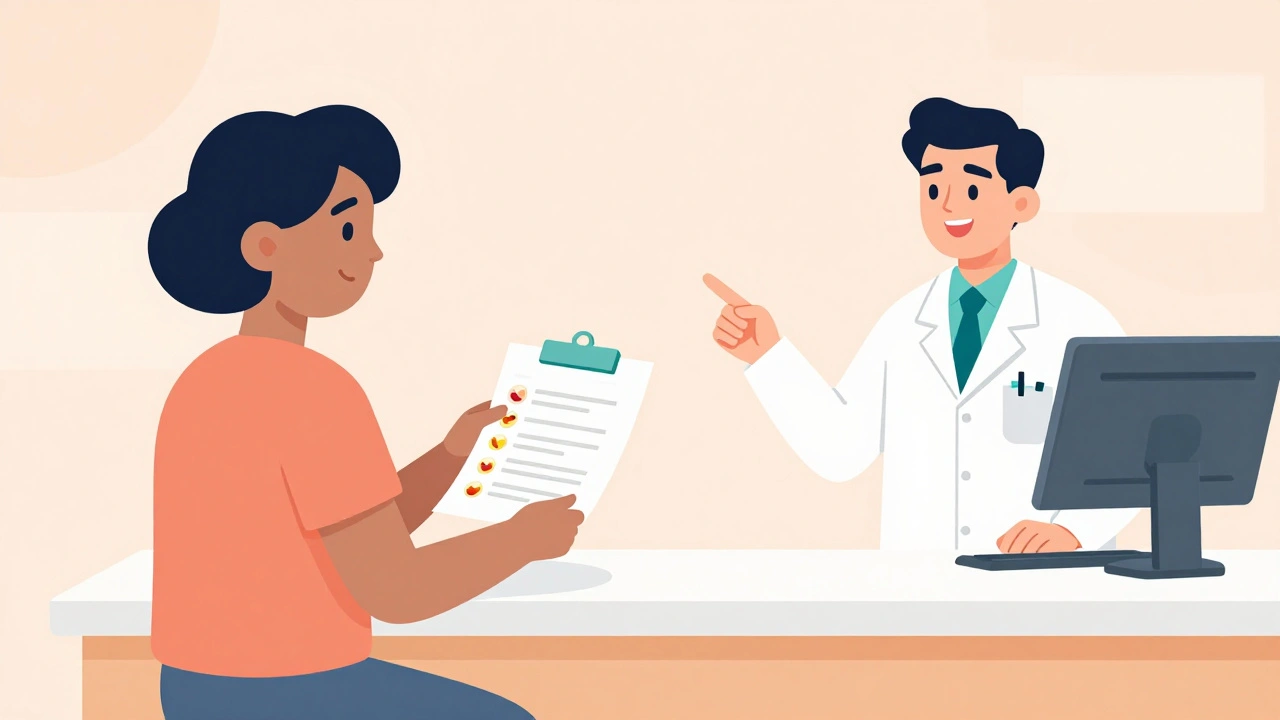
Many people take supplements - vitamins, herbs, probiotics - thinking they’re harmless. But if you’re on prescription meds, what you eat or swallow in pill form could be quietly sabotaging your treatment. You might not realize that your daily grapefruit juice is making your blood pressure pill too strong. Or that the St. John’s wort you take for mood is canceling out your birth control. These aren’t rare cases. Supplements and drug interactions are one of the most overlooked risks in everyday healthcare.
Why Your Pharmacist Is Your Best Bet
Pharmacists aren’t just the people who hand out pills. They’re trained to spot hidden conflicts between what you take and what you eat. Unlike doctors, who see you for 10 minutes once a month, pharmacists see you every time you refill a prescription. They know your full medication list, your refill patterns, and even your habits - if you tell them. In the UK, nearly 93% of people live within five miles of a community pharmacy. That means your local pharmacist is the most accessible expert on drug safety. But here’s the problem: most people don’t bring it up. A 2025 study found that only 6.7% of pharmacists were ever asked about supplement interactions - even though over half of adults take them.What You Need to Bring to the Pharmacy
Don’t walk in saying, “I take some vitamins.” That’s not enough. You need a real list. Write down:- Every supplement - name, dose, how often you take it (e.g., “Nature Made Vitamin D 2000 IU daily”)
- Brand names - not just “fish oil,” but “OmegaBrite 1000 mg”
- Any herbal teas or powders you drink regularly
- All prescription and over-the-counter meds, including eye drops or patches
- Big changes in your diet - like starting a new smoothie, eating more grapefruit, or drinking green tea daily
High-Risk Supplements You Must Mention
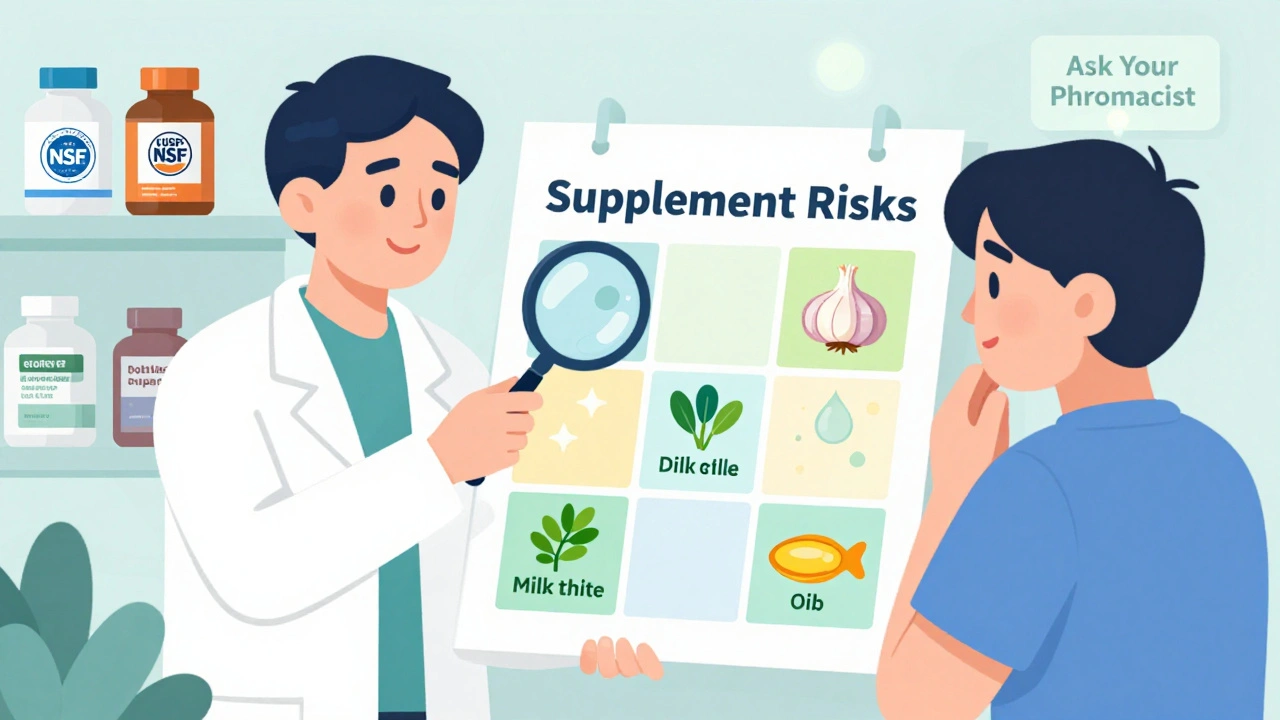
Some supplements are known troublemakers. If you take any of these, say so - even if you think they’re “natural” and safe:- St. John’s wort - can make antidepressants, birth control, blood thinners, and HIV meds useless. It’s linked to serotonin syndrome, a dangerous condition that can cause seizures or heart problems.
- Goldenseal - interferes with liver enzymes that break down over 50 common drugs, including statins and blood pressure meds.
- Ginkgo biloba - increases bleeding risk when taken with warfarin, aspirin, or even ibuprofen.
- Milk thistle - can affect how your body processes diabetes meds and some cancer drugs.
- Garlic supplements - can thin your blood, especially risky before surgery or if you’re on anticoagulants.
Food Interactions That Can Kill
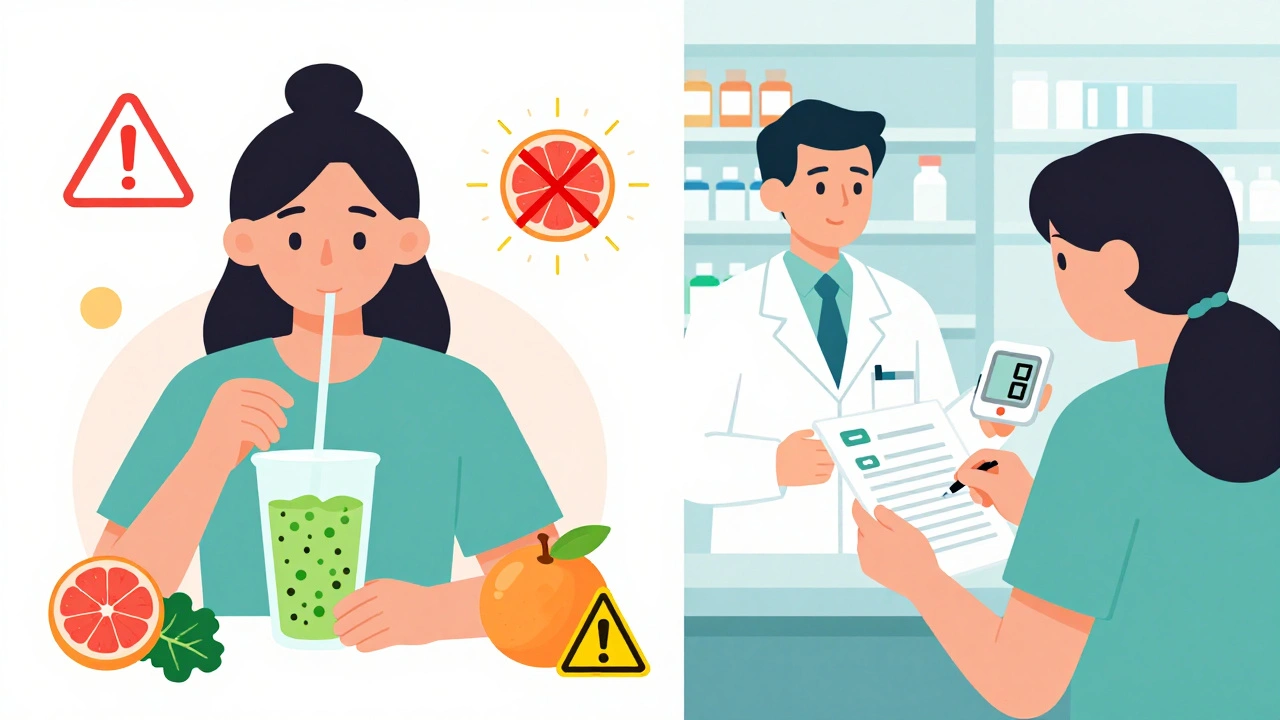
It’s not just pills. Your breakfast can be dangerous.- Grapefruit and grapefruit juice - blocks how your body breaks down over 85 medications. That includes statins (like atorvastatin), blood pressure drugs (amlodipine), and some anti-anxiety meds. One glass can make your drug dose dangerously high. Even a single grapefruit can last 72 hours.
- Dairy products - calcium in milk, yogurt, or cheese can bind to antibiotics like ciprofloxacin or doxycycline, stopping them from working. Take them 2-4 hours before or after dairy.
- Leafy greens - spinach, kale, broccoli are high in vitamin K. If you’re on warfarin, sudden changes in how much you eat can make your blood too thick or too thin. Keep your intake steady.
- Cranberry juice - often thought to help UTIs, but it can boost the effect of warfarin and raise bleeding risk.
What Your Medications Might Be Stealing From You
Some drugs don’t just interact with supplements - they drain your body of essential nutrients. If you’re on any of these, ask about replacement:- Proton pump inhibitors (PPIs) - like omeprazole - can lower vitamin B12, magnesium, and calcium. Long-term use raises risk of nerve damage and bone fractures.
- Metformin - for type 2 diabetes - depletes B12 and folate. This can cause fatigue, memory issues, and tingling in hands and feet.
- Statins - like simvastatin - reduce coenzyme Q10, which your muscles need. That’s why so many people on statins feel tired or get muscle cramps.
- Diuretics - water pills - wash out potassium and magnesium. That can cause irregular heartbeat or leg cramps.
- Birth control pills - lower B vitamins and magnesium. This might explain mood swings or headaches you thought were “just PMS.”
How to Ask the Right Questions
Most people say: “Is this okay with my meds?” That’s too vague. Try these instead:- “I’m taking [supplement name]. Does it interfere with [medication name]?”
- “Should I take this at a different time than my other pills?”
- “Is there a food I should avoid while taking this?”
- “Could this be causing my [symptom: fatigue, dizziness, muscle pain]?”
- “Is there a safer alternative?”
What to Avoid
Don’t:- Stop or start a supplement without talking to someone - even if it’s “natural.”
- Assume “if it’s sold in a pharmacy, it’s safe.” The FDA doesn’t approve supplements before they hit shelves.
- Use supplements as a substitute for prescribed treatment.
- Ignore side effects like unusual bruising, rapid heartbeat, or sudden confusion - they could be interaction signs.
What’s Changing in 2025
The rules are catching up. Pharmacy schools now require full training on supplement interactions. By 2027, 85% of UK community pharmacies will offer formal supplement reviews as part of routine care. The FDA is also moving toward requiring manufacturers to list all supplements before selling them - something that doesn’t happen now. Some pharmacies already offer free 10-minute “Supplement Check-Ups.” Ask if yours does. It’s free, takes 10 minutes, and could save your life.Can I just stop taking my supplements if I’m worried?
No - stopping suddenly can be dangerous. Some supplements, like magnesium or B vitamins, help balance your body’s chemistry. If you’re on a medication that already lowers them (like metformin or a diuretic), quitting a supplement could make side effects worse. Always talk to your pharmacist first. They’ll tell you if you can stop, taper off, or switch to something safer.
Are all supplements labeled with interaction warnings?
No. The FDA doesn’t require supplement labels to list drug interactions. Many don’t. Even if a product says “natural” or “safe,” that doesn’t mean it won’t interfere with your meds. That’s why you need to tell your pharmacist - not rely on the bottle.
I take fish oil. Is that safe with blood thinners?
Fish oil can thin your blood, especially in high doses (over 3,000 mg per day). If you’re on warfarin, clopidogrel, or aspirin, it can increase your risk of bleeding. That doesn’t mean you have to quit - but you need to tell your pharmacist. They can check your dose and maybe suggest a lower amount or monitor your blood levels more closely.
Can my pharmacist help me choose a good supplement brand?
Yes. Look for labels with USP, NSF, or ConsumerLab verification. These mean the product was tested for what’s on the label and free of harmful contaminants. Your pharmacist can point you to brands that meet these standards. Avoid random online brands with no third-party testing.
Why don’t my doctors talk about supplements?
Most doctors have 10-15 minutes per visit and focus on your main condition. Supplements aren’t always part of their training. Pharmacists, on the other hand, are trained specifically to spot drug-supplement conflicts. They’re the experts on how everything you take interacts - not just prescriptions.
What if I don’t want to tell my pharmacist everything?
You’re not required to share anything. But if you don’t, you’re taking a risk. A hidden interaction can cause hospitalization - like a dangerous drop in blood pressure, a stroke, or organ damage. Your pharmacist’s job is to protect you, not judge you. The more you tell them, the safer you are.

Chris Jahmil Ignacio
December 3, 2025 AT 16:08Look I get it you think you're being smart taking all these 'natural' supplements but you're just poisoning yourself slowly and not even realizing it. Grapefruit juice with statins? That's not a 'diet choice' that's a death sentence waiting to happen. And don't even get me started on St. John's wort - people think it's herbal so it's harmless but it's basically a chemical bomb in your system when mixed with SSRIs. The FDA doesn't regulate this stuff because they're bought off by Big Herb. You think your pharmacist gives a damn? They're just there to cash your check. You're one bad interaction away from an ICU stay and no one's gonna blame you because you were too lazy to read the fine print. Wake up.
Paul Corcoran
December 4, 2025 AT 05:46Hey I just want to say thank you for this post. I was totally clueless until my pharmacist called me out last month about my fish oil and blood thinner combo. I thought 'natural' meant safe. Turns out I was nearly bleeding out internally. Now I keep a list on my phone like you said and bring it every time. It's not scary - my pharmacist actually high-fived me for being proactive. We're all just trying to get better. No shame in asking. You're not weird for caring about your health. Keep sharing this stuff.
Colin Mitchell
December 5, 2025 AT 20:50Biggest game changer for me? Asking 'Is this drug stealing something from my body?' I was on metformin for years and had zero energy. Turns out I was B12 deficient and no one ever told me. My pharmacist hooked me up with a cheap sublingual and now I feel like a new person. Also - don't skip the vitamin K thing if you're on warfarin. My grandma went from eating salads daily to eating the same amount every day and her INR stabilized overnight. Small changes matter. You don't need to be perfect. Just be aware.
Stacy Natanielle
December 7, 2025 AT 02:16THIS IS WHY WE CAN'T HAVE NICE THINGS. 🚨 You're telling people to 'just ask' like pharmacists are therapists? 🤦♀️ The reality? Most are overworked, underpaid, and have 37 people waiting. You think they're gonna do a deep dive on your 'Nature Made Vitamin D 2000 IU daily'? LOL. And don't even get me started on the fact that 93% of Americans live near a pharmacy but 93% of those pharmacies are owned by CVS which is owned by a private equity firm that doesn't care about your liver enzymes. You're being manipulated into thinking this is a 'simple fix' when the entire system is rigged. 🤷♀️
kelly mckeown
December 8, 2025 AT 10:54i just wanted to say thank you for this. i’ve been taking garlic supplements for my blood pressure and didn’t realize they could be risky with my blood thinner. i’m kinda nervous to talk to my pharmacist but i’m going to try. i’ve been feeling weird lately - dizzy and tired - and now i think it might be this. i’ll bring my list next week. just wanted to say you helped me feel less alone about this.
Tom Costello
December 10, 2025 AT 00:43One thing I’ll add: don’t just trust the bottle. I bought a 'premium' turmeric supplement labeled 'organic' and it had lead levels higher than a child’s toy. My pharmacist pulled up a ConsumerLab report and showed me the difference between brands. Now I only buy USP or NSF certified. Also - if you’re on statins, ask about CoQ10. It’s not magic but it cuts muscle pain by half for a lot of people. No hype. Just science. And yeah - grapefruit juice is the silent killer. I used to drink it every morning. Now I drink water. No regrets.
dylan dowsett
December 10, 2025 AT 19:31Wait. You’re telling people to bring a LIST? To the pharmacy? Like a document? With BRAND NAMES? Are you serious? You think the average person can do that? You think they’re not already overwhelmed by their meds? You think they’re not working two jobs and taking care of kids? You’re not helping. You’re adding guilt. You’re making people feel stupid for being human. This isn’t advice. It’s a performance review for your health. And guess what? Most people can’t afford to be perfect. So stop shaming them.
Susan Haboustak
December 11, 2025 AT 09:31Let’s be real. You’re not saving lives. You’re just feeding fear. St. John’s wort doesn't 'cancel out birth control' - it reduces efficacy by 10-15% in rare cases with high doses. Most people are fine. But you want them to panic. You want them to stop taking everything. You want them to believe every herb is a Trojan horse. The real danger? The pharmaceutical industry profits from fear. They don’t want you talking to your pharmacist. They want you buying their next $200 pill. Your 'list' is just a marketing tool. Don’t be fooled.
Chad Kennedy
December 11, 2025 AT 20:35Bro this is too much. I just take a multivitamin and fish oil. I don’t need a 10-page essay. I’m not gonna write down every pill I’ve ever taken. My doctor says I’m fine. Why are you making this so complicated? I’m not dying from grapefruit juice. I drink it every day. Chill out.
Cyndy Gregoria
December 13, 2025 AT 18:40Just did my first supplement check-up at the pharmacy. Took 8 minutes. They told me my magnesium was low from my diuretic and suggested a better brand. I cried in the parking lot. Not because I was scared. Because someone finally asked me how I felt. Not just what I take. How I feel. That’s the difference. You don’t need a perfect list. You just need to show up. And say something. Even if it’s just 'I’m tired.' That’s enough.