Vegan Medication & Supplement Checker
Select the types of products you are taking or considering below to see a breakdown of potential non-vegan ingredients and recommended questions for your pharmacist.
You think you’re doing everything right. You check the labels on your oat milk, you scrutinize the ingredient list on your skincare, and you proudly declare your ethical stance at every dinner party. Then, you get sick. The doctor writes a prescription, or you grab a bottle of vitamins off the shelf, and you swallow it without a second thought. But what if that simple act contradicts everything you stand for? It’s a reality many vegans and vegetarians face but rarely talk about: hidden animal ingredients are lurking in common medications and supplements.
This isn’t just about purity; it’s about informed consent. Unlike food, where labeling laws are strict and visible, the pharmaceutical industry operates with different rules. Active ingredients are listed clearly, but inactive ingredients-the binders, fillers, and coatings-often aren’t specified by source. Did you know that nearly half of all supplements contain hidden animal byproducts? Or that the capsule holding your medication is likely made from the bones and skin of pigs or cows? Let’s unpack what’s actually inside those pills and how you can navigate this landscape without compromising your ethics.
The Invisible Ingredients List
When we talk about veganism in medicine, we aren’t usually talking about the active drug molecule itself. Most synthetic drugs are chemically identical regardless of whether they were synthesized in a lab or derived from nature. The real issue lies with the excipients-inactive substances used as carriers for the active ingredients. These are the things that make a pill look good, taste better, or dissolve properly.
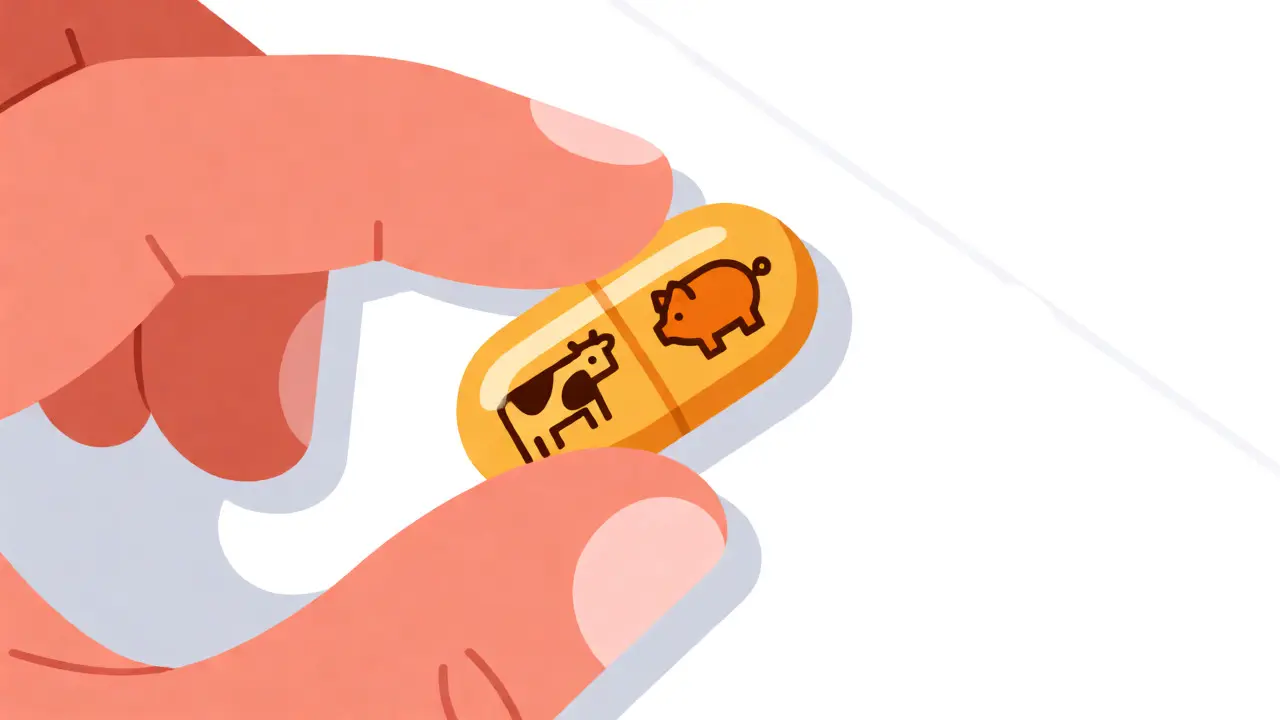
Gelatin is the big one here. If you take a softgel capsule, there’s a 90% chance it contains gelatin. This substance is derived from collagen, which comes from boiling the skin, tendons, ligaments, and bones of animals like pigs, cows, and chickens. It’s cheap, effective, and everywhere. Unless the label explicitly says "vegetarian capsule" or "cellulose," assume it’s animal-derived.
Then there’s magnesium stearate. You’ll see this on almost every supplement bottle. It’s a flow agent that prevents ingredients from sticking to machinery during manufacturing. While it can be plant-based (from palm or cotton), about 65% of the time, it’s derived from animal fats. Without a specific "plant-based" certification, you’re gambling on its origin. Similarly, glycerin and stearic acid (often labeled as E570) are frequently sourced from tallow (animal fat). For strict vegans, these small chemical names represent significant ethical breaches.
Common Culprits in Your Medicine Cabinet
Beyond the obvious capsules, several specific medications rely heavily on animal tissues as their primary active ingredients. These are harder to swap out because the animal part is the medicine. Here are some of the most common offenders you might encounter:
- Heparin: This blood thinner is essential for preventing clots. It is extracted from the mucosal membranes of pig intestines. There is currently no widely available synthetic or plant-based equivalent for acute medical needs.
- Pancrelipase (Creon, Viokace): Used for people whose pancreas doesn’t produce enough enzymes. These enzymes are harvested from the pancreases of pigs and cows.
- Conjugated Estrogens (Premarin): Historically used for hormone replacement therapy, Premarin stands for "Pregnant Mares' Urine." While synthetic alternatives exist, many patients still use formulations containing this animal-derived estrogen.
- Vitamin D3: Standard Vitamin D3 is typically sourced from lanolin, which is wax secreted by sheep. However, newer plant-based options derived from lichen or algae are becoming more common.
- Icosapent Ethyl (Vascepa): A prescription fish oil used to lower triglycerides. Since it’s literally fish oil, it’s not vegan.
It’s worth noting that while some of these have no direct vegan substitutes, others do. The key is knowing which ones fall into which category. For instance, thyroid medications vary wildly. Armour Thyroid is made from desiccated pig thyroid glands. If you’re vegan, you’d need to switch to a synthetic levothyroxine, which is generally animal-free, though you must check the inactive ingredients for fillers like lactose or stearates.
Why Labels Don’t Tell the Whole Story
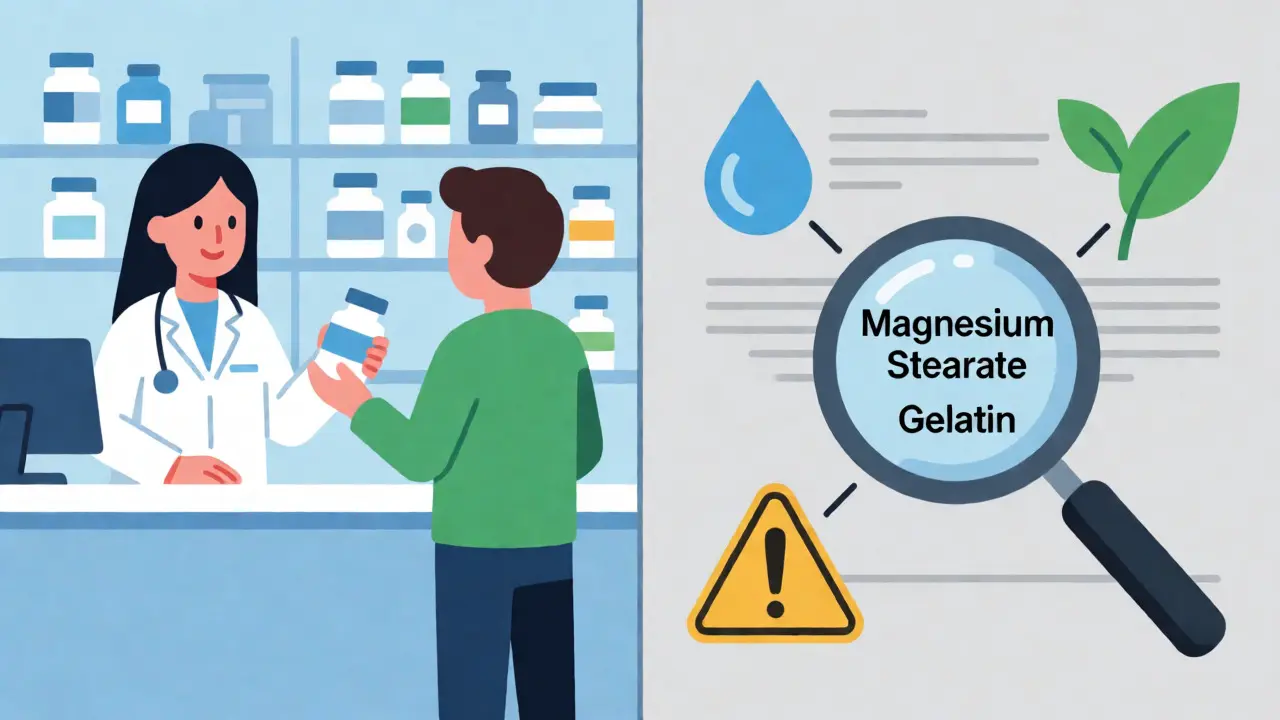
You might ask, "If it’s so important, why isn’t it on the box?" The answer lies in regulatory differences. Food products are required to disclose allergens and major ingredients clearly. Pharmaceuticals are regulated differently. The FDA requires listing of active ingredients and certain inactive ingredients, but it doesn’t mandate specifying the source of those inactive ingredients unless they are known allergens (like peanut oil).
Magnesium stearate could come from a cow or a coconut, and the label won’t tell you the difference. This lack of transparency creates a massive gap between consumer intent and product reality. A 2022 report highlighted that over 50% of supplements on the market contain at least one animal-derived ingredient that isn’t immediately obvious. This isn’t necessarily malicious; it’s often a matter of cost and supply chain logistics. Plant-based alternatives can be more expensive or harder to source consistently.
Furthermore, the term "natural" on a supplement bottle is misleading. "Natural" doesn’t mean "plant-based." Lanolin is natural. Gelatin is natural. Both are animal products. Always ignore marketing fluff and look for specific certifications like "Certified Vegan" or contact the manufacturer directly.
Navigating the Pharmacy Counter
So, what do you do when the pharmacist hands you a bag of pills? You need to become an active participant in your healthcare. Simply saying "I’m vegan" might not trigger the right checks in their system, especially if the pharmacy uses automated dispensing machines.
Here is a practical checklist for your next pharmacy visit:
- Ask about the capsule shell: Specifically ask if the capsule is gelatin or cellulose. If it’s gelatin, ask if a vegetarian version is available.
- Question the fillers: Ask if the tablet contains magnesium stearate or stearic acid. If yes, ask if it’s vegetable-derived.
- Check for dyes: Some red dyes, like Carmine (E120), are made from crushed cochineal insects. They are common in chewable tablets and syrups.
- Request compounding: If a standard medication has too many animal-derived excipients, ask if the pharmacy can compound a custom version using vegan bases.
Communication is key. Instead of asking "Is this vegan?", try being specific: "Does this medication contain any animal-derived ingredients like gelatin, lactose, or animal-sourced stearates?" This forces the pharmacist to look up the specific formulation rather than guessing based on brand reputation.
Alternatives and Emerging Solutions
The good news is that the market is shifting. As the vegan population grows, so does the demand for transparency. Platforms like Pill Clarity (formerly VeganMed) have emerged to help consumers identify animal-free medications. These databases allow you to search for specific drugs and see user-verified reports on their ingredients.
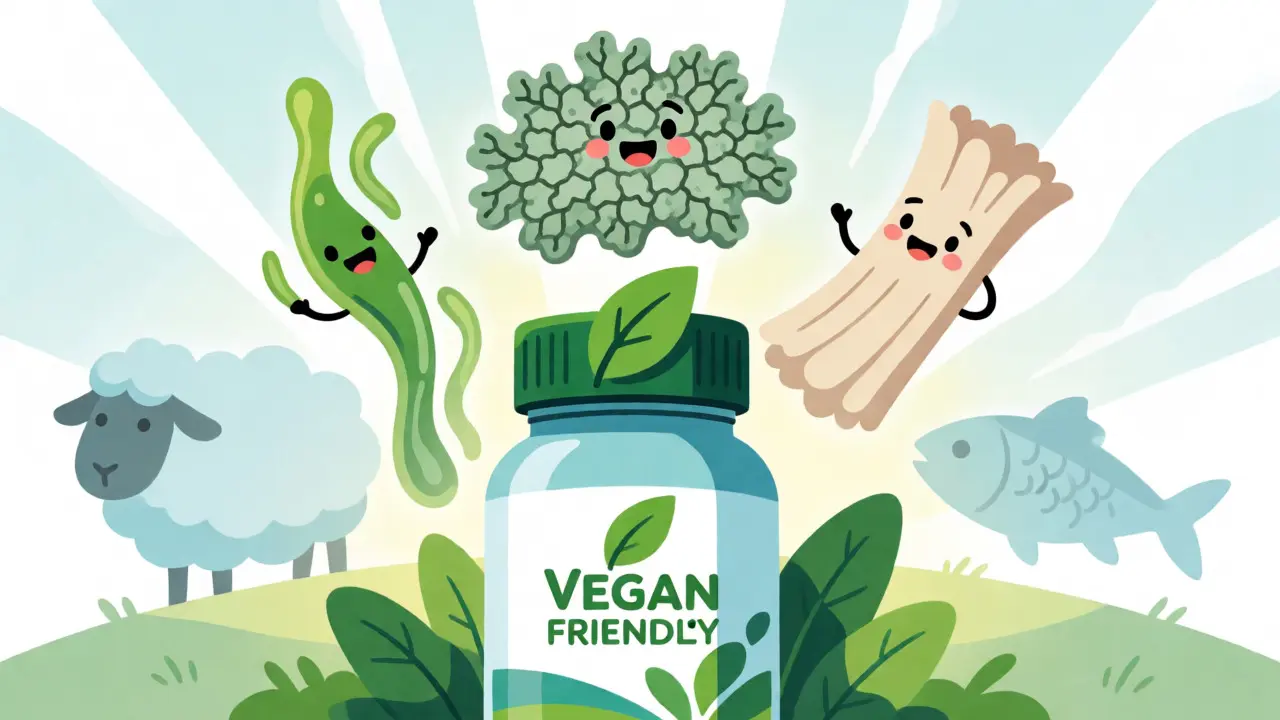
For supplements, the shift is even faster. Algae-based Omega-3s are now a viable, sustainable alternative to fish oil. Lichen-derived Vitamin D3 is widely available and often cheaper than before. Many multivitamin brands have switched to HPMC (hydroxypropyl methylcellulose) capsules, which are fully plant-based.
However, for critical prescription medications, change is slower. Pharmaceutical companies prioritize stability and bioavailability. Switching from a gelatin capsule to a cellulose one might seem trivial, but it can affect how the drug dissolves in your stomach. This is why doctors sometimes hesitate to switch formulations without clinical trials. Yet, for non-critical conditions, many pharmacists are willing to accommodate requests for vegan-friendly generics if they exist.
| Ingredient | Source | Common Use | Vegan Alternative? |
|---|---|---|---|
| Gelatin | Animal bones/skin | Capsule shells | Yes (Cellulose) |
| Lactose | Cow's milk | Filler/Binder | Yes (Plant starches) |
| Magnesium Stearate | Animal fat or plants | Lubricant | Depends on source |
| Lanolin | Sheep wool | Vitamin D3 base | Yes (Algae/Lichen) |
| Carmine | Insects | Red dye | Yes (Beet juice/Synthetic) |
Health Considerations Beyond Ethics
While ethics are the primary driver for avoiding these ingredients, there are practical health considerations too. Some individuals have allergies to specific animal proteins found in medications. Others may experience digestive issues with certain animal-derived fillers. By seeking out simpler, plant-based formulations, you might inadvertently reduce your intake of unnecessary additives.
Moreover, the environmental footprint of sourcing animal ingredients for pharmaceuticals is significant. Producing gelatin and lanolin requires livestock farming, which contributes to greenhouse gas emissions and land use. Choosing plant-based alternatives aligns with broader sustainability goals, making your healthcare choices consistent with your environmental values.
Remember, your health journey is personal. For some vegans, taking a heparin injection derived from pigs is a necessary compromise for survival. For others, finding a synthetic alternative is non-negotiable. Neither choice makes you "less" vegan; it just reflects the complexity of modern medicine. The goal is awareness, not perfection. Know what you’re swallowing, ask questions, and advocate for your preferences. The more patients speak up, the more the industry will listen.
Are all vitamin supplements non-vegan?
No, but many are. Common issues include Vitamin D3 (often from lanolin), Omega-3s (fish oil), and gelatin capsules. Look for "Vegan Certified" labels or specific mentions of algae-based D3 and plant-based capsules.
What is magnesium stearate?
Magnesium stearate is a lubricant used in manufacturing to prevent ingredients from sticking to equipment. It can be derived from animal fats or plant oils. Without explicit labeling, its source is unknown, so vegans should verify with the manufacturer.
Can I get a vegan version of my prescription medication?
It depends on the drug. Synthetic drugs are often vegan, but inactive ingredients may not be. Pharmacists can sometimes order generic versions with different excipients or compound a custom formulation. Always consult your doctor before switching medications.
Is lactose in pills bad for vegans?
Lactose is a sugar derived from milk. While present in very small amounts in pills, it is technically an animal product. Strict vegans avoid it, while others may accept trace amounts. Check for "lactose-free" alternatives if this is a concern.
Why don't drug labels specify the source of ingredients?
Regulations focus on safety and allergens, not ethical sourcing. Unless an ingredient is a common allergen (like peanut or soy), the source (animal vs. plant) is not legally required to be disclosed on the packaging.