

Imagine you're halfway through a jog or in the middle of a high-stakes soccer match, and suddenly your chest feels tight. You start coughing, wheezing, and struggling to catch your breath, even though you're in great shape. This isn't just "being out of breath"-it's a physiological reaction known as Exercise-Induced Bronchoconstriction is a condition where the airways in the lungs narrow during or shortly after physical activity, making it harder to breathe. Often called EIB, it affects between 9% and 30% of the general population, and a staggering 90% of people who already have asthma. The good news? It's highly manageable. With the right timing and a few simple habits, you can stop the coughing fits and get back to your peak performance.
What Actually Happens During an EIB Attack?
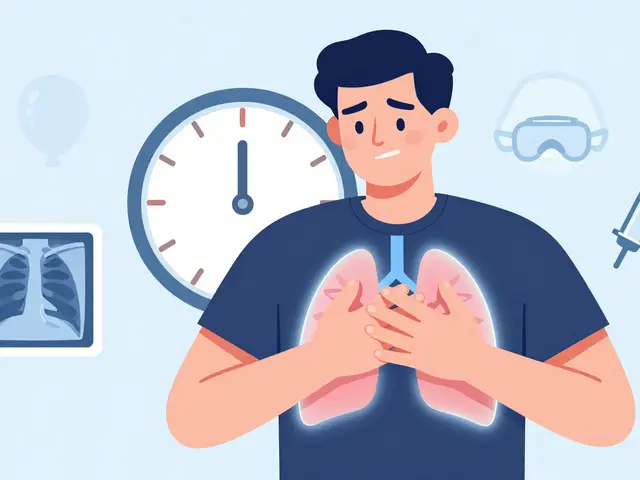
When you exercise, you breathe faster and often through your mouth. This floods your lungs with air that is typically colder and drier than the air you breathe at rest. This rapid loss of heat and water from the lining of your airways triggers a reaction where mast cells release chemicals that cause the smooth muscles around your bronchial tubes to tighten. This narrowing is measured by a decline in FEV1 (Forced Expiratory Volume in 1 second) of 10% or more, usually peaking 30 to 60 minutes after you stop moving.
It is a common mistake to think EIB is the same as chronic asthma. While they share symptoms, EIB is a transient event triggered specifically by exertion. However, if you ignore it, the risk isn't just a few wheezing episodes. Many people start avoiding sports altogether, which leads to social withdrawal and a higher risk of weight gain. In fact, about 68% of undiagnosed cases end up in a cycle of exercise avoidance.
Picking the Right Activity for Your Lungs
Not all workouts are created equal when it comes to your airways. The trigger is "minute ventilation"-basically, how much air you move in and out of your lungs per minute. Sports that require short bursts of energy usually trigger EIB in only about 22% of cases. Think of activities like baseball, wrestling, or sprinting. These are generally "safer" for those with sensitive lungs.
On the flip side, endurance sports are much more likely to cause trouble. Cross-country skiing or ice hockey-where you're breathing heavily for long periods in cold, dry air-trigger EIB in up to 85% of susceptible people. If you find yourself struggling, you might consider adjusting the intensity or the environment of your workout rather than quitting entirely.
Non-Drug Ways to Prevent Bronchoconstriction
You don't always need a pharmacy to find relief. There are several concrete strategies you can use to prime your lungs before you start your main workout.
- The Strategic Warm-Up: Perform a moderate-intensity warm-up for 10 to 15 minutes. This creates a "refractory period," a window of time where your lungs are less likely to constrict for up to two hours.
- Watch the Weather: Cold air is a major trigger. Try to avoid outdoor exercise when temperatures drop below 10°C (50°F) or when humidity is under 40%. Cold, dry air can increase your risk of an attack by 73%.
- Air Quality Checks: If you're allergic to pollen or live in a smoggy area, check the air quality index. If the index is over 50 or pollen counts are high (above 9.7 grains/m³), moving your workout indoors can prevent a flare-up.
- Improve Your Base Fitness: Your lungs handle exercise better when your heart is strong. Interestingly, every 1-MET improvement in your VO2 max can reduce the severity of EIB by about 12%.

Mastering Inhaler Use and Timing
For most people, medication is the most effective way to stay active. The gold standard for immediate prevention is the SABA (Short-Acting Beta-2 Agonist), with Albuterol being the most common example. These medications relax the airway muscles quickly.
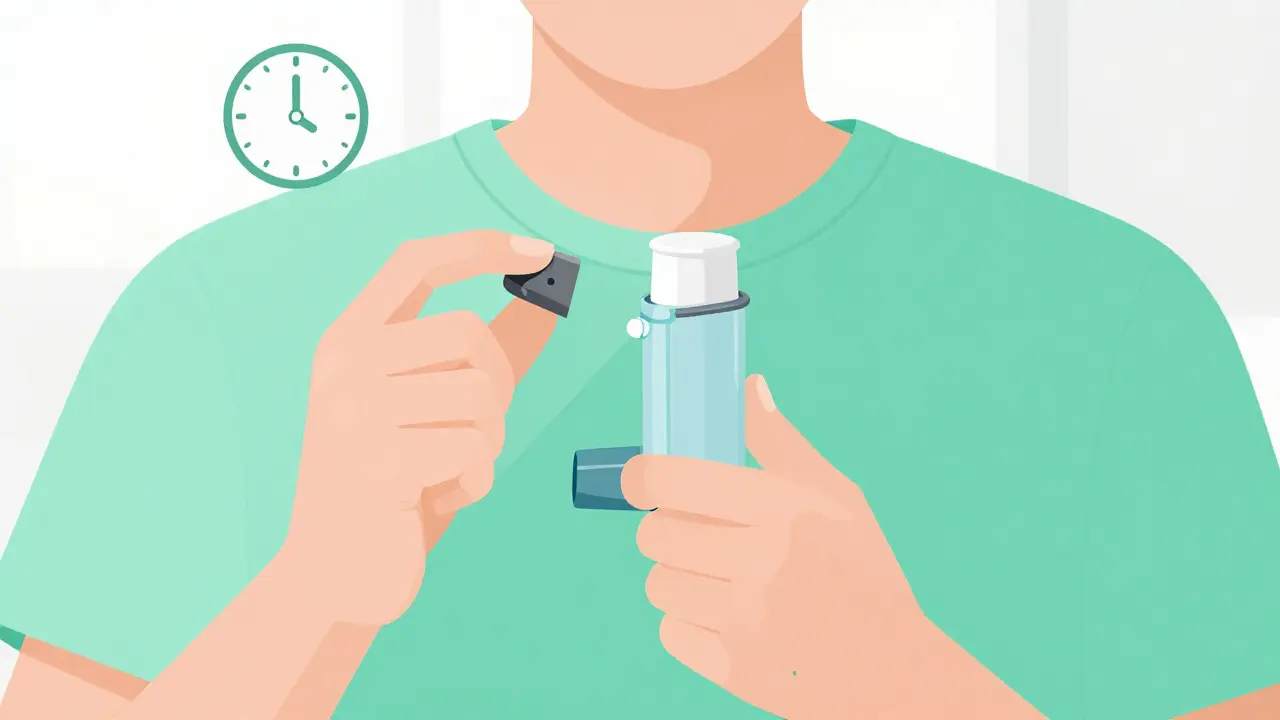
The secret to SABA success is timing. You should use your inhaler 5 to 20 minutes before you begin exercising. A standard dose of two puffs (90 mcg per puff) typically provides protection for 2 to 4 hours. According to the American Thoracic Society, this approach is 80-90% effective in preventing symptoms.
If a rescue inhaler isn't enough, your doctor might suggest long-term controllers. Inhaled Corticosteroids (ICS) help reduce the underlying inflammation, while Leukotriene Receptor Antagonists (LTRAs) like montelukast can offer further improvement. In competitive athletes, combining a SABA with an ICS has been shown to reduce symptom frequency by 78%.
| Medication Type | Example | Timing | Effectiveness | Best Use Case |
|---|---|---|---|---|
| SABA | Albuterol | 5-20 min pre-exercise | 80-90% | Immediate prevention |
| ICS | Fluticasone | Daily maintenance | 50-60% reduction | Persistent inflammation |
| LTRA | Montelukast | Daily (10mg) | 30-40% improvement | Additional control |
| MCSA | Cromolyn sodium | 15-20 min pre-exercise | 60-70% | Non-steroid alternative |
Avoiding the Most Common Inhaler Mistakes
Believe it or not, most "treatment failures" aren't because the medicine doesn't work, but because it never reaches the lungs. About 63% of EIB management failures are due to poor technique. If you're still wheezing after using your inhaler, check these three things:
- Use a Spacer: Using a spacer device can increase the amount of medication that actually reaches your lungs by 70% compared to using the inhaler alone. Replace your spacer every 6 months, as plastic degradation can cut efficiency by 25% after a year.
- The 10-Second Rule: After inhaling the medication, hold your breath for a full 10 seconds. This simple step increases drug deposition by 30%.
- Temperature Control: Store your inhaler in a cool, dry place (20-25°C). If the propellant gets too cold (below 10°C), its effectiveness can drop by 40%.
Future Tech and Personalized Care
We are moving away from a one-size-fits-all approach. Newer tools like "smart inhalers" with Bluetooth connectivity are helping people track their usage, improving adherence by nearly 47%. Doctors are also using biomarkers, such as fractional exhaled nitric oxide (FeNO) levels, to predict who will respond best to corticosteroids.
Even the rules for professional athletes have changed. The International Olympic Committee now allows most EIB medications without requiring special exemptions, recognizing that respiratory health is a matter of safety and fairness, not an unfair advantage.
Can I exercise if I have EIB?
Yes, absolutely. With proper prevention-such as a thorough warm-up and the correct use of a SABA inhaler-about 95% of people with EIB can participate fully in all sports, including elite competitions, without any limitations.
Is a warm-up really enough to prevent an attack?
A 10-15 minute moderate warm-up can induce a "refractory period" that reduces bronchoconstriction for up to two hours. While this is helpful for some, it is often most effective when used alongside medication, especially in cold or dry environments.
How do I know if I have EIB or just poor cardio?
While poor fitness causes shortness of breath, EIB usually involves coughing, wheezing, and a chest-tightening feeling that persists or peaks 30-60 minutes after you stop. A doctor can confirm this with an exercise challenge test or a methacholine challenge.
Are there dietary supplements that help EIB?
Some research suggests omega-3 fatty acids (2-4 grams daily) and Vitamin C (500mg daily) may reduce symptoms. However, major institutions like the Mayo Clinic note that there isn't enough evidence to recommend these as primary treatments over inhalers.
Should I use a heat exchange mask?
Heat exchange masks can help warm the air you breathe, but they are significantly less effective than medication. Studies show they are only about 42% effective compared to the 89% effectiveness of albuterol pretreatment.
Next Steps for Better Breathing
If you suspect you have EIB, your first step should be a formal diagnosis through an exercise challenge or EVH test to ensure you aren't masking a more serious condition. Once diagnosed, start with a tiered approach: optimize your environment (indoor exercise on bad air days), implement a strict 15-minute warm-up, and work with your doctor to find the right SABA dose.
For those who find that their symptoms aren't improving despite using an inhaler, double-check your technique. Invest in a high-quality spacer and set a timer for that 10-second breath-hold. If symptoms persist, discuss adding a daily controller like an ICS to address the inflammation rather than just the constriction.


Nathan Kreider
April 7, 2026 AT 20:31This is such a helpful guide! I know how scary it feels when you can't catch your breath during a workout, but it's great to know there are simple ways to handle it. Just keep pushing forward, everyone!
Grace Lottering
April 8, 2026 AT 17:47Big Pharma just wants you hooked on these inhalers. Trust me, it's all a scam to control how we breathe.
Victoria Gregory
April 10, 2026 AT 00:34Wow, I never knew about the 10-second rule!!! 😮 That's a total game changer for anyone struggling with their meds!!! ✨ Stay healthy, friends!!! 🌿💖
Laurie Iten
April 10, 2026 AT 09:37it makes me wonder if we focus too much on the biological machine and not enough on the environment that shapes it’s reactions naturally
Kathleen Painter
April 10, 2026 AT 20:10I've spent a lot of time mentoring younger athletes who deal with similar respiratory issues, and I've found that the psychological hurdle of fear is often just as big as the physical narrowing of the airways, so it's really important to approach this with a lot of patience and kindness because when you're gasping for air in front of a crowd, it can feel incredibly isolating and embarrassing, even if the science tells us it's just a physiological response to cold air. If you're new to this, just know that you aren't alone and taking the time to master the spacer technique is a small investment that pays off in massive ways for your long-term health and your love for the sport you're passionate about, so don't let a little wheezing stop you from finding your strength and your community on the field or the track.
Nikhil Bhatia
April 11, 2026 AT 21:07Too much text. Just use the inhaler.
Timothy Burroughs
April 12, 2026 AT 23:12only weak people need these fancy gadgets in america we used to just breathe through the pain and get it done stop coddling yourselves with spacers and get some real grit back in your lungs
Dhriti Chhabra
April 14, 2026 AT 10:34It is most commendable that the International Olympic Committee has updated its regulations to prioritize athlete safety over restrictive medication policies.
shelley wales
April 16, 2026 AT 03:54I'm so glad you're sharing this. It's all about supporting each other so we can all stay active and healthy together.