
Your shoulder hurts when you reach for a coffee mug. It aches at night when you roll over in bed. You might assume it’s just "wear and tear" or a minor strain that will pass with rest. But if the pain persists, you could be dealing with a rotator cuff tear, which is a rupture in one or more of the four tendons that stabilize the shoulder joint. This condition affects millions of people annually, yet the path from diagnosis to recovery is often confusing. Do you need surgery? Is physical therapy enough? Which scan tells the truth?
The good news is that modern medicine has moved far beyond the "wait and see" approach of the past. Today, we have precise imaging tools, targeted rehabilitation protocols, and minimally invasive surgical techniques that can get you back to your life faster than ever before. Whether you are an active athlete, a manual laborer, or simply someone who wants to lift their grandchild without pain, understanding the landscape of rotator cuff care is your first step toward healing.
Understanding the Rotator Cuff Anatomy
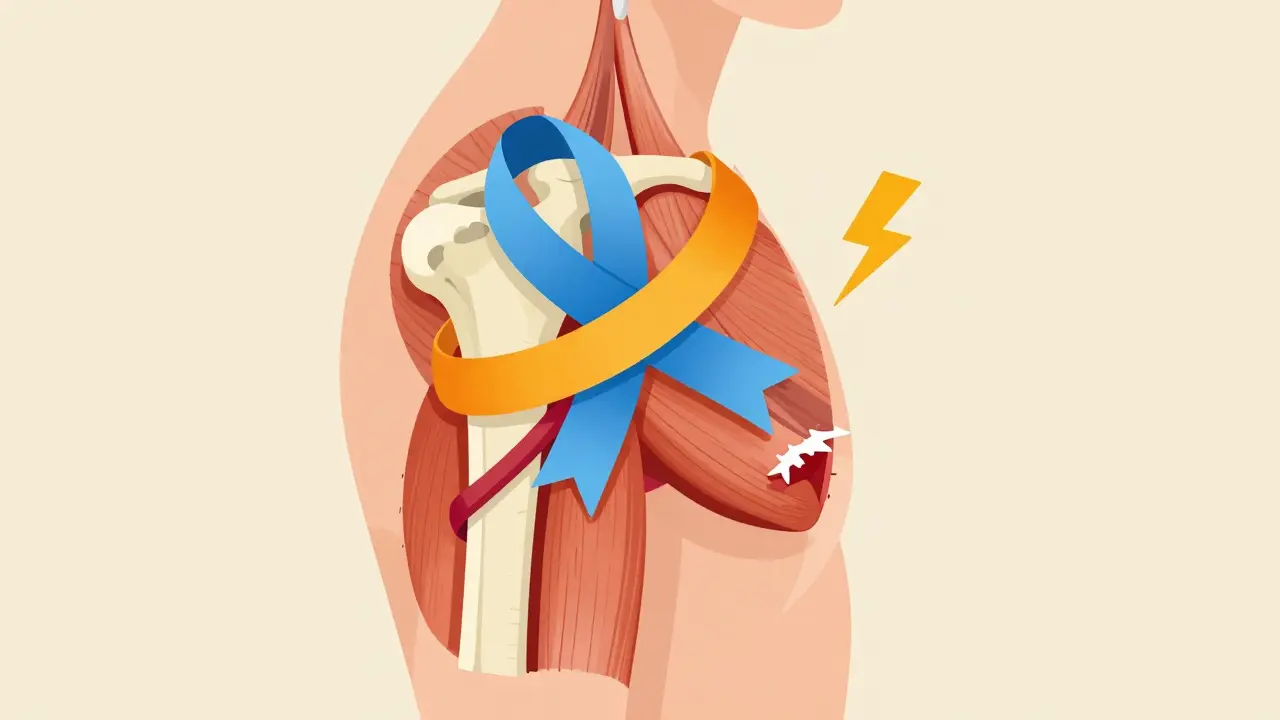
To fix the problem, you first need to know what broke. The rotator cuff consists of four muscles and their associated tendons that wrap around the head of the humerus (upper arm bone) to keep it centered in the shoulder socket. These muscles are the supraspinatus, infraspinatus, teres minor, and subscapularis. Think of them as the ropes holding a ship’s mast steady against the wind. If one rope frays or snaps, the mast wobbles, causing instability and pain.
Tears usually happen in two ways. Acute tears occur suddenly, often from a fall or lifting something heavy. Chronic tears develop slowly over time due to repetitive overhead motions-like painting a ceiling or playing tennis-or simple aging. As we get older, blood flow to these tendons decreases, making them brittle and prone to degeneration. By age 60, nearly half of all asymptomatic individuals show signs of rotator cuff tearing on scans, though not everyone experiences pain.
Diagnosis: Physical Exams and Initial Tests
Before ordering expensive scans, any competent orthopedic specialist will start with a physical exam. This isn’t just a formality; it provides crucial context that machines cannot offer. Doctors look for specific signs:
- Painful Arc: Does it hurt specifically between 60 and 120 degrees of elevation?
- Weakness: Can you externally rotate your arm against resistance?
- Special Tests: The Empty Can test checks the supraspinatus tendon. The Hawkins-Kennedy test looks for impingement.
If these tests suggest a tear, the next step is imaging. However, not all images are created equal. Understanding which tool to use saves you money and time.
Imaging Options: X-Ray, MRI, and Ultrasound
When you suspect a soft tissue injury like a rotator cuff tear, X-rays are often the first line of defense-but they have limits. An X-ray shows bone, not muscle or tendon. It can reveal arthritis, bone spurs, or calcifications that might be irritating the tendon, but it cannot visualize the tear itself. That’s where advanced imaging comes in.
MRI: The Gold Standard for Detail
Magnetic Resonance Imaging (MRI) remains the most comprehensive tool for evaluating rotator cuff pathology. According to data from the American Academy of Orthopaedic Surgeons, MRI demonstrates approximately 92% diagnostic accuracy for full-thickness tears. It provides a detailed "road map" of the shoulder, showing not just the size of the tear, but also the quality of the tendon tissue. Is it retracted? Is there fatty infiltration into the muscle? These details matter significantly for surgical planning.
However, MRIs are expensive (often $500-$1,200 depending on location and insurance) and time-consuming. They also require lying still in a confined space, which can be challenging for patients with claustrophobia or severe pain.
Ultrasound: The Dynamic Alternative
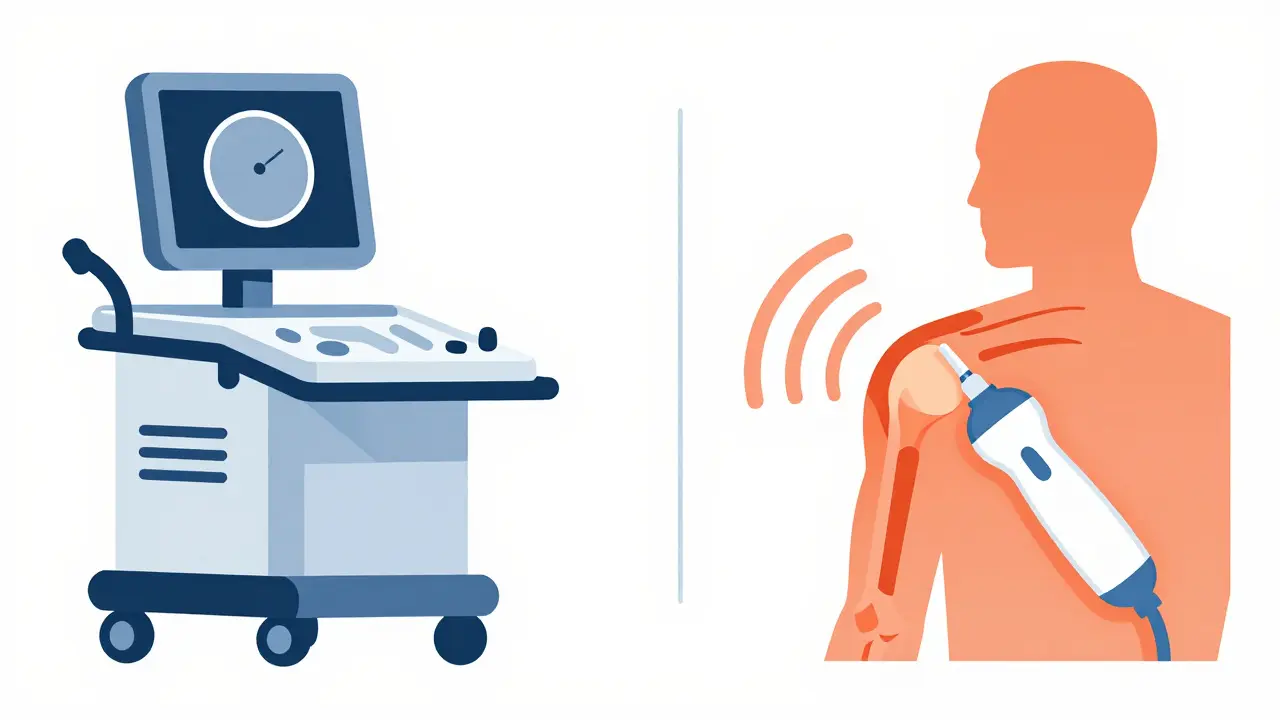
Ultrasound has emerged as a powerful competitor to MRI. In fact, many experts now argue it should be the first-line imaging modality for suspected rotator cuff tears. Why? Because it’s dynamic. While an MRI is a static snapshot, an ultrasound allows the doctor to watch the tendon move in real-time. You can see how the tendon behaves as you lift your arm, identifying impingement or partial tears that might be missed on a static scan.
Studies show ultrasound has 87-91% sensitivity for full-thickness tears, which is comparable to MRI. Plus, it’s significantly cheaper (often 30-50% less), faster, and lacks contraindications like metal implants. The main drawback? Operator dependency. A skilled sonographer is essential. If the technician isn’t experienced in musculoskeletal ultrasound, the results may be less reliable.
| Feature | X-Ray | MRI | Ultrasound |
|---|---|---|---|
| Visualizes Soft Tissue? | No | Yes | Yes |
| Accuracy for Full-Thickness Tears | N/A | ~92% | 87-91% |
| Dynamic Assessment | No | No | Yes |
| Cost (Approximate) | $100-$300 | $500-$1,200 | $200-$400 |
| Best For | Bone structure, arthritis | Surgical planning, complex cases | Initial diagnosis, follow-up |
Conservative Treatment: Rehabilitation First
Here’s a surprising fact: Surgery isn’t always the answer. In fact, for many patients, especially those with partial-thickness tears or chronic symptoms, conservative treatment works wonders. The American Academy of Orthopaedic Surgeons recommends a trial of physical therapy for 6-8 weeks before considering advanced imaging or surgery, unless there is a massive acute tear in a young, active patient.
Rehabilitation is not just about stretching. It’s a phased process designed to restore function without aggravating the injury.
- Phase 1: Protection & Passive Motion (Weeks 1-6): The goal here is to reduce pain and prevent stiffness. You’ll perform passive range-of-motion exercises, where your therapist or your other arm moves the injured shoulder. No active lifting yet.
- Phase 2: Active-Assisted Motion (Weeks 6-12): You begin to engage your muscles slightly, using aids like pulleys or sticks to help lift the arm. Strengthening of the scapular stabilizers starts gently.
- Phase 3: Strengthening (Weeks 12+): Once pain subsides and mobility improves, you progress to resistance bands and light weights. Focus is on rebuilding the rotator cuff and deltoid strength.
Research published in the Journal of Orthopaedic & Sports Physical Therapy indicates that 85% of patients with partial-thickness tears achieve functional recovery through structured rehab alone. Even some full-thickness tears can be managed conservatively if the patient is older or less active.
Surgical Repair: When and How
If conservative measures fail, or if you have a large, acute tear affecting your ability to work or live independently, surgery becomes necessary. Approximately 250,000 rotator cuff repairs are performed annually in the United States. The good news? Most are now done arthroscopically.
Arthroscopic vs. Open Surgery
Gone are the days of large incisions and long hospital stays. Arthroscopic repair involves three small portals (incisions) through which a camera and instruments are inserted. This approach offers several advantages:
- Less Pain: Smaller incisions mean less tissue trauma.
- Faster Recovery: Return to daily activities is typically 25% faster compared to open surgery.
- Lower Complication Rates: Studies show complication rates of around 7.2% for arthroscopic repairs versus 10.3% for open repairs.
During the procedure, the surgeon cleans out damaged tissue and uses sutures to reattach the torn tendon to the bone. Small anchors are screwed into the humeral head to hold the sutures in place. For massive tears (>3cm), surgeons may use patch augmentation to reinforce the repair, improving the chances of healing.

Post-Operative Rehabilitation: The Key to Success
Surgery is only half the battle. The other half is rehabilitation. Post-op protocols have evolved significantly. In the 1990s, patients were immobilized for 4-6 weeks. Today, early motion is encouraged to prevent stiffness.
Expect to wear a sling for 3-6 weeks to protect the repair. During this time, you’ll continue passive range-of-motion exercises under the guidance of a physical therapist. Active strengthening doesn’t begin until 12 weeks post-surgery, allowing the tendon to biologically heal to the bone.
Patience is critical. Retear rates can reach 27% for large tears, often due to premature return to activity or poor compliance with rehab. Follow your surgeon’s timeline strictly. Don’t rush because you feel "good." Healing happens on a biological clock, not your emotional state.
Emerging Trends and Future Directions
The field of rotator cuff management is evolving rapidly. Platelet-Rich Plasma (PRP) injections are gaining popularity as an adjunctive therapy to promote healing, though evidence remains mixed. Some studies suggest modest benefits for partial tears, while others show no significant difference over saline injections.
Artificial Intelligence is also entering the picture. Machine learning algorithms are being tested to analyze MRI scans, achieving up to 89% accuracy in distinguishing partial from full-thickness tears. This could lead to faster, more consistent diagnoses in the future.
For now, the best approach combines accurate diagnosis, personalized rehab, and timely surgical intervention when needed. Your shoulder is a marvel of engineering, but it needs care. Listen to your body, seek expert advice, and stay committed to your recovery plan.
How long does it take to recover from rotator cuff surgery?
Recovery varies by tear size and individual health, but generally takes 4-6 months for basic activities and up to 12 months for full strength. Arthroscopic repairs typically allow faster return to daily living compared to open surgery.
Is ultrasound as good as MRI for diagnosing rotator cuff tears?
Yes, for most cases. Ultrasound has 87-91% sensitivity for full-thickness tears, comparable to MRI. It is cheaper, faster, and allows dynamic assessment. However, MRI is preferred for complex cases or pre-surgical planning due to superior soft-tissue detail.
Can rotator cuff tears heal without surgery?
Partial-thickness tears often heal well with physical therapy alone. Some full-thickness tears, particularly in older or less active patients, can also be managed conservatively with significant improvement in function and pain relief.
What causes a rotator cuff tear?
Tears are caused by acute trauma (falls, heavy lifting) or chronic degeneration from repetitive overhead motions and aging. Decreased blood flow to the tendons over time makes them more susceptible to damage.
When should I see a doctor for shoulder pain?
Seek medical attention if shoulder pain persists for more than a few weeks, prevents sleep, causes weakness in lifting arms, or follows a sudden injury. Early diagnosis leads to better outcomes.

Daniella Renzon
June 14, 2026 AT 11:26hey everyone, just wanted to say this is super helpful info. i’ve been dealing with shoulder pain for months and was scared it was something serious. seeing that rehab can actually fix a lot of issues without surgery gives me so much hope. thanks for breaking it down simply.
rebecca torres
June 15, 2026 AT 05:20ultrasound is way better than mri for initial checks honestly. saves money and you can move your arm while they look at it. my doc uses it all the time and catches things mri misses because its static. dont let anyone tell you otherwise unless you need surgical planning
Hailey Dunston
June 15, 2026 AT 11:16Oh, how quaint. You suggest ultrasound as a viable alternative to the gold standard MRI? How delightfully pedestrian. One must understand that true diagnostic precision requires the comprehensive soft-tissue visualization only MRI provides. Ultrasound is merely a parlor trick for those who cannot afford proper care or lack the sophistication to appreciate high-fidelity imaging. The operator dependency alone renders it a gamble, not a science. Do not confuse cost-saving measures with medical excellence. :)
rebecca torres
June 16, 2026 AT 10:56lol wow ok. maybe stick to your expensive hobbies instead of lecturing people on basic ortho. most docs agree us is great for first line. your elitism is showing hailey
AnneKatherine Stiekes
June 17, 2026 AT 01:01i really like how this article explains the phases of rehab. it makes sense why you cant just jump back into lifting weights immediately. patience is hard but necessary. glad to see more people talking about non-surgical options first
Emily Barnhill
June 17, 2026 AT 08:09Listen up! If you have a massive tear and you are young, do NOT sit around doing physical therapy hoping it will magically heal itself. That is negligence. I have seen too many people ruin their shoulders by delaying surgery when they clearly needed it. Stop listening to these conservative protocols if you are an athlete or laborer. Get the scan, get the repair, get back to work. Hesitation is weakness.
Christina S.
June 18, 2026 AT 04:10I totally get where you’re coming from Emily, but rushing into surgery isn’t always the best path either. For many folks, especially older adults, PT works wonders. It’s about finding what fits your lifestyle. No one size fits all here. Let’s keep the conversation supportive rather than aggressive, okay?
Glenn Davis
June 19, 2026 AT 09:04Weakness leads to decline. Strong shoulders mean strong nation. Fix it fast.
Cici arya Arya
June 20, 2026 AT 01:37I am currently suffering from severe rotator cuff pain and it is absolutely ruining my life. I cannot sleep, I cannot lift my child, and I feel like I am losing my mind. Why does no one talk about the emotional toll this takes? It feels like my body is betraying me. I read about PRP injections and I am desperate to try anything. Has anyone here had success with PRP? Please tell me it works because I am at my wit's end and I just want the pain to stop. My husband says I should wait but I can't wait anymore. Is there any chance surgery would be faster? I am terrified of the recovery but even more terrified of staying in this pain forever.