
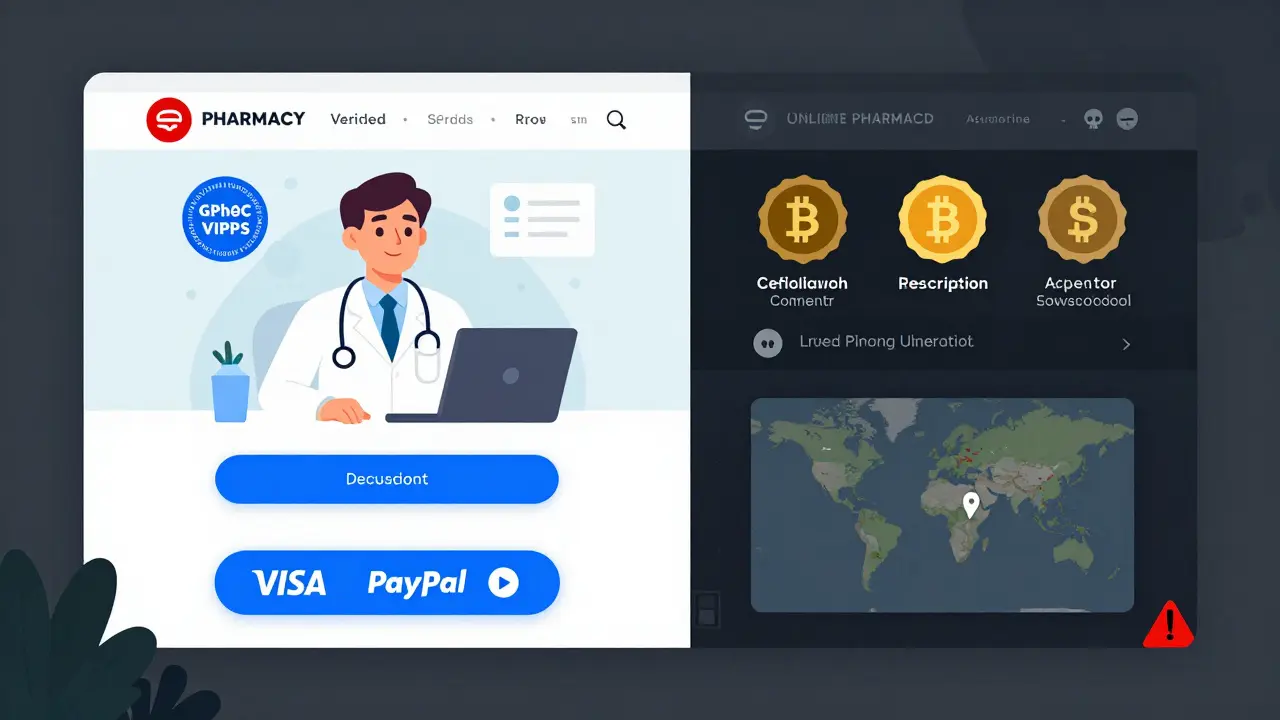
Buying medicine online sounds convenient-until you realize you might be ordering from a criminal operation. In 2023, nearly half of all online pharmacies selling prescription drugs were confirmed as rogue operations, according to a UK study analyzing over 100 websites. These aren’t just shady sellers-they’re selling fake pills, toxic ingredients, and sometimes nothing at all. And they’re getting better at looking real.
What Makes an Online Pharmacy Legit?
A legitimate online pharmacy follows the same rules as your local drugstore. In the UK, it must be registered with the General Pharmaceutical Council (GPhC). In the US, it needs VIPPS accreditation from the National Association of Boards of Pharmacy. These aren’t optional badges-they’re legal requirements.Legit sites always require a valid prescription for controlled or prescription-only medicines. No exceptions. They employ licensed pharmacists who can answer your questions. They list a real physical address-not a PO box or a rented office in a different country. And they don’t offer 80% discounts on Viagra or insulin. If it sounds too good to be true, it is.
European Union-compliant pharmacies display a mandatory common logo. Click it. It should link directly to the pharmacy’s official authorization page. If it doesn’t work, or if the logo looks blurry or misaligned, walk away.
Red Flag #1: No Prescription Required
This is the biggest, most obvious warning sign. If a website lets you buy antibiotics, antidepressants, or heart medication without a prescription, it’s not a pharmacy-it’s a drug dealer in disguise.A 2023 NIH study found that 98.2% of rogue pharmacies didn’t require prescriptions for prescription-only medicines. That’s not a loophole-it’s a violation of international pharmaceutical law. Legitimate pharmacies, even those offering online consultations, still require proof of medical need. If they skip that step, they’re not helping you-they’re putting you at risk.
Red Flag #2: No Physical Address or Fake Location
You wouldn’t trust a doctor who won’t tell you where their clinic is. Same goes for a pharmacy. Legitimate businesses list their full address, phone number, and email. You can verify them through official registers like the GPhC’s online directory in the UK or state pharmacy boards in the US.Rogue sites often fake this. They’ll list a UK address but their server is in Bulgaria. Or they use a virtual office service that doesn’t actually exist. A 2021 Reginfo.gov analysis found that 67.7% of rogue pharmacies had mismatched physical and server locations. Use a free IP lookup tool-enter their domain name. If the server is in a country with no pharmaceutical oversight, like Cambodia or Nigeria, you’re in danger.
Red Flag #3: Too-Good-To-Be-True Prices
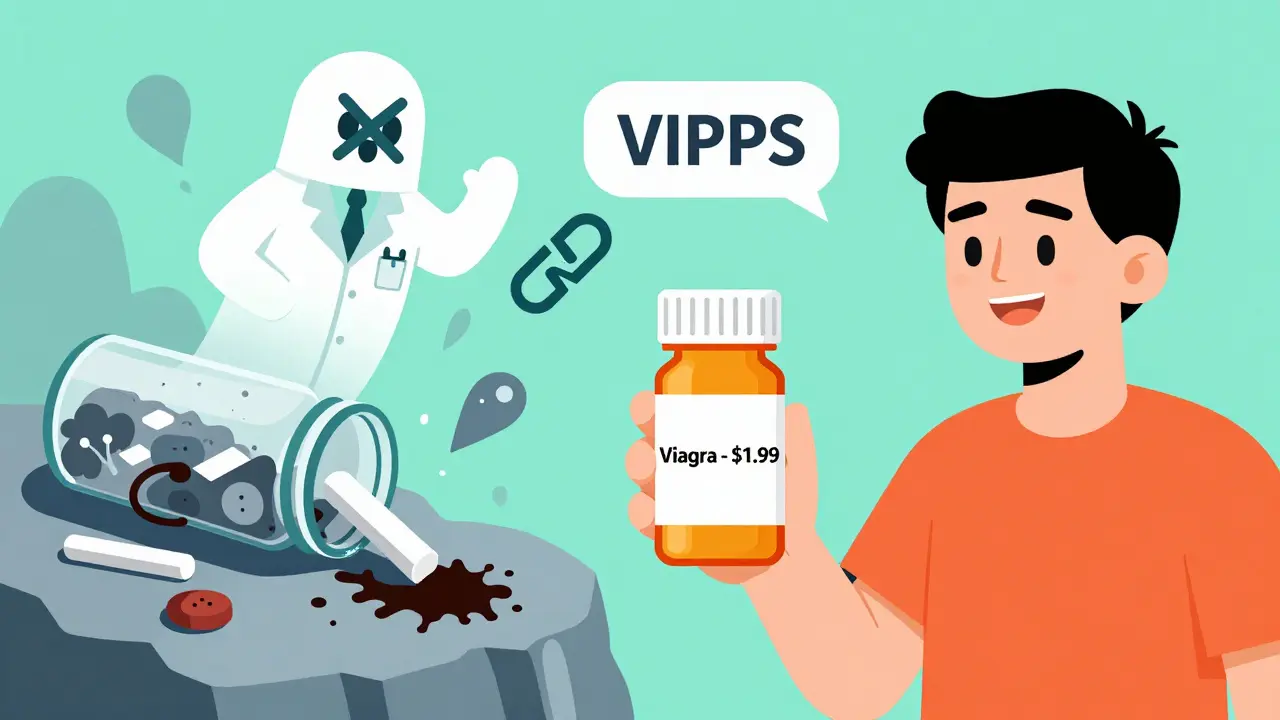
A 30-day supply of metformin costs about £12 at a UK pharmacy. If you see it for £3 online, that’s not a deal-it’s a trap.Rogue pharmacies undercut prices by skipping quality control. Their pills might contain chalk, rat poison, or the wrong active ingredient. The FDA has documented cases where counterfeit diabetes meds had no metformin at all. Other fake drugs contained toxic levels of lead or arsenic.
Legit pharmacies don’t compete on price alone. They compete on trust. If a site is advertising 70% off branded drugs, it’s either selling expired stock or counterfeit pills. Either way, you’re risking your health.
Red Flag #4: No Licensed Pharmacist Available
A real online pharmacy has a pharmacist on staff-someone you can call or message with questions. Not a chatbot. Not a pre-written FAQ. A real, licensed professional who can review your medication history and warn you about interactions.The same 2023 study showed that 93.1% of rogue pharmacies didn’t have a licensed pharmacist available. Some sites claim they do, but clicking the link leads to a generic contact form or a voicemail. Others list a pharmacist’s name-but that person doesn’t work there. Check the GPhC register or NABP’s VIPPS directory to verify names. If the pharmacist isn’t listed, they’re fake.
Red Flag #5: Fake Certification Seals
You’ve seen them: the VIPPS logo, the LegitScript seal, the “Verified Pharmacy” badge. But here’s the catch-rogue sites copy them.A 2023 study found that 41.8% of rogue pharmacies displayed counterfeit verification logos. These aren’t just poorly designed-they’re deliberately made to look real. Click them. If they don’t take you to the official verification page (like www.vipps.pharmacy or www.legitscript.com), it’s fake.
Legit sites don’t just show the logo-they link to a live verification page that confirms their status. If the link is broken, or if the page says “Not Found,” walk away. No legitimate pharmacy would risk its reputation with a broken link.
Red Flag #6: Spam Emails and Unsolicited Offers
If you didn’t ask for it, don’t buy it. Rogue pharmacies rely on spam to find customers. You might get an email saying, “Your prescription is ready!” or “Special offer on Cialis-only $1.99!”Legit pharmacies don’t cold-email you. They only contact you if you’ve already ordered from them. If you get unsolicited offers for controlled drugs-especially after searching for them on Google-that’s a red flag. These are automated campaigns run by criminal networks.
And don’t fall for the “free shipping” trap. Many rogue sites use free shipping as bait to get you to enter your credit card details. Then they disappear-or worse, sell your data.
Red Flag #7: No Secure Checkout or Only Cryptocurrency
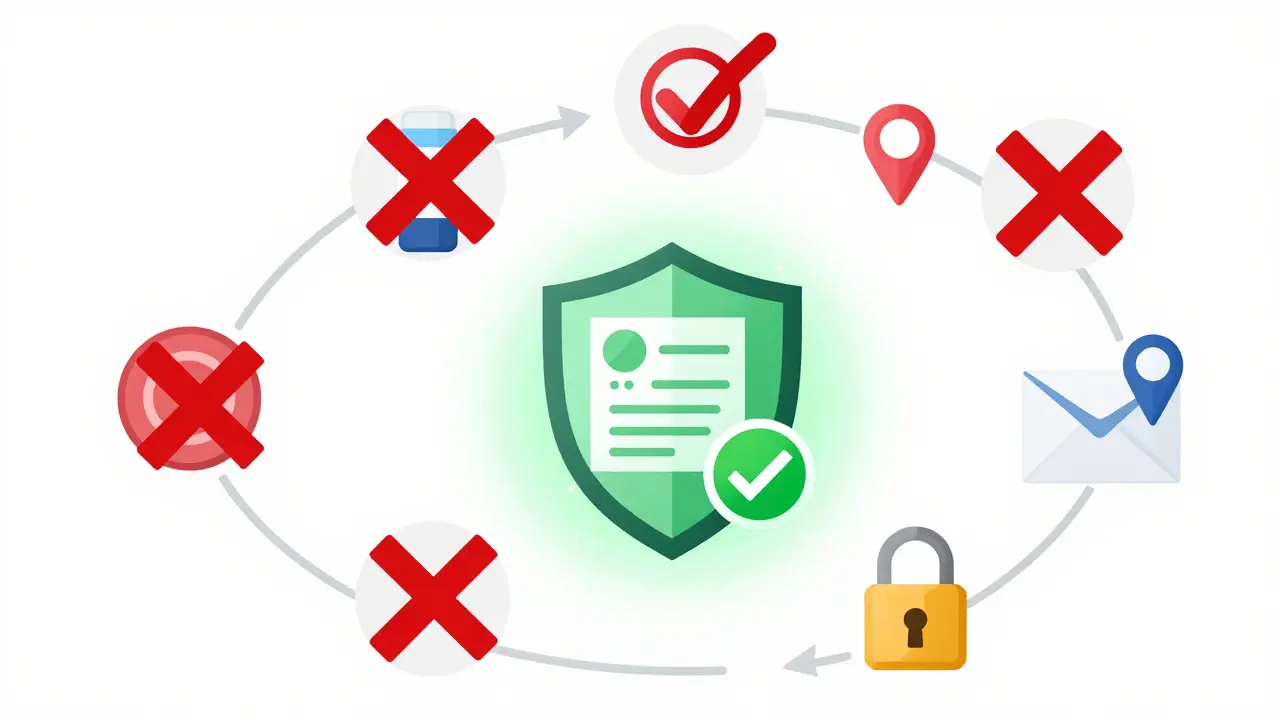
A legitimate online pharmacy uses standard, secure payment methods: Visa, Mastercard, PayPal. They encrypt your data. You’ll see a padlock icon in your browser’s address bar.Rogue sites often avoid credit card processors because they’re tracked. So they push you toward cryptocurrency-Bitcoin, Ethereum, Monero. Why? Because crypto payments are nearly impossible to trace or reverse.
If a site only accepts crypto, or if they say “We don’t take credit cards,” that’s a major red flag. You won’t get a refund. You won’t get your money back. And you won’t get real medicine.
How to Verify an Online Pharmacy
Don’t guess. Verify.- In the UK: Go to the General Pharmaceutical Council register. Search by pharmacy name or postcode. If it’s not there, it’s not legal.
- In the US: Visit the NABP’s VIPPS site. Only 68 pharmacies were accredited as of 2021. If it’s not on the list, assume it’s not safe.
- For EU sites: Look for the EU common logo. Click it. It should link to the pharmacy’s official authorization page in your country’s health authority database.
- Always: Check if they require a prescription. Call their listed phone number. Google their physical address. If it’s a warehouse or a residential home, walk away.
What Happens If You Buy From a Rogue Pharmacy?
It’s not just about wasting money. People have ended up in hospital because their “Viagra” contained high doses of sildenafil and undisclosed chemicals. Others took “antibiotics” that had no active ingredient-leading to untreated infections.The FDA has documented cases where counterfeit insulin caused diabetic comas. Fake blood pressure meds led to strokes. Fake cancer drugs delayed life-saving treatment.
And there’s no legal recourse. If you’re scammed by a pharmacy in Russia or India, your bank won’t help. Your credit card company won’t reverse the charge. You’re on your own.
What Should You Do Instead?
If you need medication, use a licensed pharmacy-even if it’s online. Many UK pharmacies now offer home delivery. You can upload your prescription, speak to a pharmacist, and get your meds delivered in 24-48 hours.Pharmacies like Boots, Lloyds, and independent GPhC-registered pharmacies have secure online portals. They’re regulated, safe, and affordable. You don’t need to risk your health for convenience.
When in doubt, call your local pharmacy. Ask if they offer delivery. Most do. And if they don’t, they can recommend one that does.
Buying medicine online should be easy. But it should never be risky. Your health isn’t a gamble. Don’t let a fake website make the decision for you.
How can I tell if an online pharmacy is real?
Check if it’s registered with your country’s pharmacy regulator-like the GPhC in the UK or NABP’s VIPPS program in the US. Look for a physical address, a licensed pharmacist you can contact, and a requirement for a valid prescription. If any of these are missing, it’s not legitimate.
Can I trust online pharmacies that offer free shipping?
Free shipping alone doesn’t mean a pharmacy is safe. Many rogue sites use free shipping as bait to get your payment details. Always verify their registration and prescription requirements first. Legit pharmacies may offer free delivery, but only after you’ve confirmed they’re authorized.
Why do rogue pharmacies use cryptocurrency?
Cryptocurrency is anonymous and irreversible. Rogue pharmacies use it because it helps them avoid detection, evade law enforcement, and prevent customers from getting refunds. If a pharmacy only accepts Bitcoin or Ethereum, it’s a major red flag.
Are all websites with a padlock icon safe?
No. A padlock only means the site encrypts your data-it doesn’t mean they’re legal or selling real medicine. Rogue pharmacies often use SSL encryption to look trustworthy. Always check for regulatory registration and prescription requirements, not just the padlock.
What should I do if I already bought medicine from a suspicious site?
Stop taking the medication immediately. Contact your doctor or pharmacist to check for potential harm. Report the site to your national health authority-like the MHRA in the UK or the FDA in the US. Don’t rely on the seller for a refund-most won’t respond. Keep the packaging and receipt as evidence.
Can I use a UK pharmacy to buy medicine from another country?
Yes, if the pharmacy is registered with the GPhC and follows UK regulations. But if they’re shipping medication from outside the UK-especially without a prescription-they’re breaking the law. Always confirm the pharmacy’s registration and where the drugs are being shipped from.

Manan Pandya
December 29, 2025 AT 16:03Really glad someone laid this out so clearly. I’ve seen friends buy cheap insulin from shady sites after losing insurance, and they had no idea how dangerous it was. This isn’t just about scams-it’s about people dying because they thought they were saving money. Thank you for the GPhC and VIPPS links. I’m sharing this with my family in India where these sites are everywhere.
Nisha Marwaha
December 31, 2025 AT 07:05The pharmacovigilance infrastructure gap in low-resource jurisdictions is a critical vector for pharmaceutical malfeasance. Rogue entities exploit regulatory arbitrage by leveraging jurisdictional opacity-particularly in jurisdictions lacking real-time digital verification protocols for e-pharmacy accreditation. The absence of interoperable regulatory databases exacerbates consumer vulnerability. Verification must be standardized across WHO member states via blockchain-anchored credentialing systems.
Paige Shipe
December 31, 2025 AT 10:57Actually, I think this article is way too alarmist. I bought my blood pressure meds from a site in Canada for 70% less and they were fine. The padlock was there, the site looked professional, and I didn’t die. People need to stop being so paranoid. Also, why do you assume everyone can afford $12 for metformin? Not everyone has your privilege.
Nicole K.
January 1, 2026 AT 07:01You people are idiots. If you don’t know how to tell if a website is real, you shouldn’t be buying medicine online at all. You’re not just risking your life-you’re risking your kids’ lives if you’re a parent. How hard is it to check a website? It’s not rocket science. Stop being lazy and get your act together.
Amy Cannon
January 2, 2026 AT 18:57It is, indeed, a profoundly disconcerting phenomenon, this proliferation of ostensibly legitimate digital pharmaceutical entities that, upon closer scrutiny, reveal themselves to be nothing more than digital facades constructed by transnational criminal syndicates operating with near-total impunity. The erosion of public trust in healthcare infrastructure, particularly among elderly populations and those navigating complex insurance systems, has created a vacuum that these predatory actors exploit with surgical precision. One must consider not only the pharmacological integrity of the product, but the sociotechnological architecture of deception-how SSL certificates, fake testimonials, and cloned regulatory seals are weaponized to simulate legitimacy. The solution, I believe, lies not in individual vigilance alone, but in systemic reform: mandatory API integration between national pharmacy boards and payment processors, with real-time flagging of non-accredited vendors.
Himanshu Singh
January 3, 2026 AT 10:37Thanks for this! I was gonna buy my anxiety meds from one of those sites last month, but I checked the address and it was just a house in Mumbai. Glad I didn’t. I mess up spelling all the time but this stuff? Can’t afford mistakes.
Jasmine Yule
January 3, 2026 AT 15:43Thank you for writing this. I’ve been trying to tell my mom for months that her ‘cheap Viagra’ site is fake. She’s 72 and thinks if it looks nice, it’s safe. I’m sharing this with her. You’re right-no legitimate pharmacy pushes crypto. And no, the padlock doesn’t mean anything. I’m so tired of people thinking security = safety. This is life-or-death info. Thank you.
Lisa Dore
January 5, 2026 AT 07:34I love how this breaks it down step by step. My cousin in Florida got scammed last year-bought fake insulin, ended up in the ER. He didn’t even know the difference between a real logo and a fake one. I printed this out and left it on his fridge. Simple stuff like checking the GPhC register should be taught in high school. We need public service campaigns on this. Seriously. It’s not just about money-it’s about people not knowing they’re being targeted because they’re sick and scared.
Sharleen Luciano
January 5, 2026 AT 10:12How quaint. You assume the average consumer has the time, literacy, or digital fluency to navigate GPhC registers, IP lookups, and VIPPS verifications. Most people don’t even know what a ‘pharmacist’ is beyond the guy behind the counter. This article reads like a whitepaper written for a policy think tank-completely detached from the lived reality of people who choose between insulin and rent. Instead of lecturing them, maybe ask why these rogue pharmacies exist in the first place. The real red flag is a healthcare system that forces people into dangerous choices.