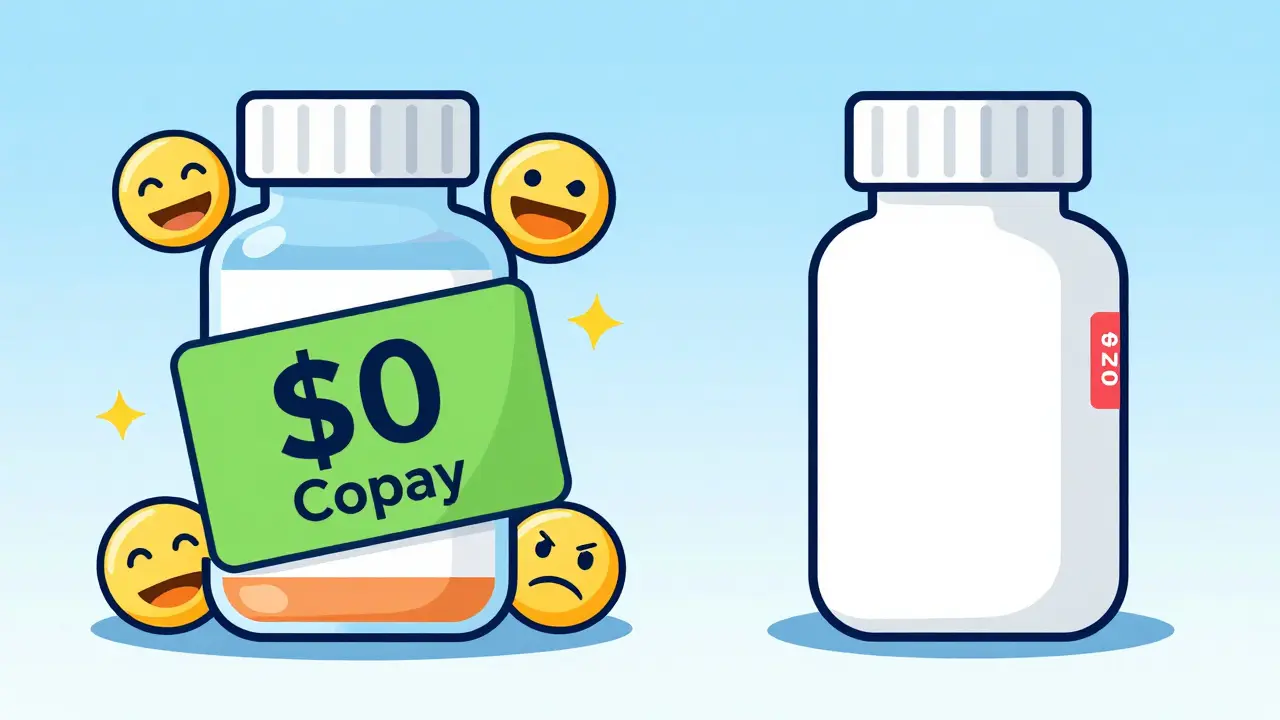
Generic drugs are supposed to be the budget-friendly option. You swap the brand name for the generic, and your bill drops from $50 to maybe $10. It’s a win, right? Not always. For millions of people, even that $10 or $20 per pill adds up fast, especially when you’re taking three or four medications daily. The frustrating truth is that while big pharma companies offer slick copay cards for their expensive brand-name drugs, copay assistance for generics is often nowhere to be found. Generic manufacturers operate on razor-thin margins, so they rarely have the cash to subsidize your prescriptions directly.
If you are struggling to afford your generic medications, you aren’t out of options-you just have to look in different places. The landscape shifted dramatically with the Inflation Reduction Act provisions kicking into full gear in 2025 and 2026. This means new caps, new rules, and new ways to save money if you know where to look. Let’s break down exactly how to find financial help for your generic prescriptions without getting lost in red tape.
Why Generic Copay Cards Are Rare
You’ve probably seen those ads for brand-name drugs promising "$0 copay." That’s because the manufacturer wants to keep you on their drug instead of switching to a cheaper generic. But when it comes to generics, the math doesn’t work that way. Generic drug makers compete primarily on price. If one company tries to offer a copay card, others will just lower their wholesale price further, triggering a race to the bottom.
This creates a weird gap in the market. Brand-name patients get direct subsidies from the drug maker. Generic patients? They’re left relying on insurance tiers, government programs, and pharmacy discounts. According to data from 2024, about 87% of traditional copay assistance programs explicitly exclude patients with government insurance like Medicare or Medicaid. Since many people needing generic assistance fall into these categories, standard "manufacturer" help is off the table for most of us.
The Game Changer: Inflation Reduction Act Benefits (2025-2026)
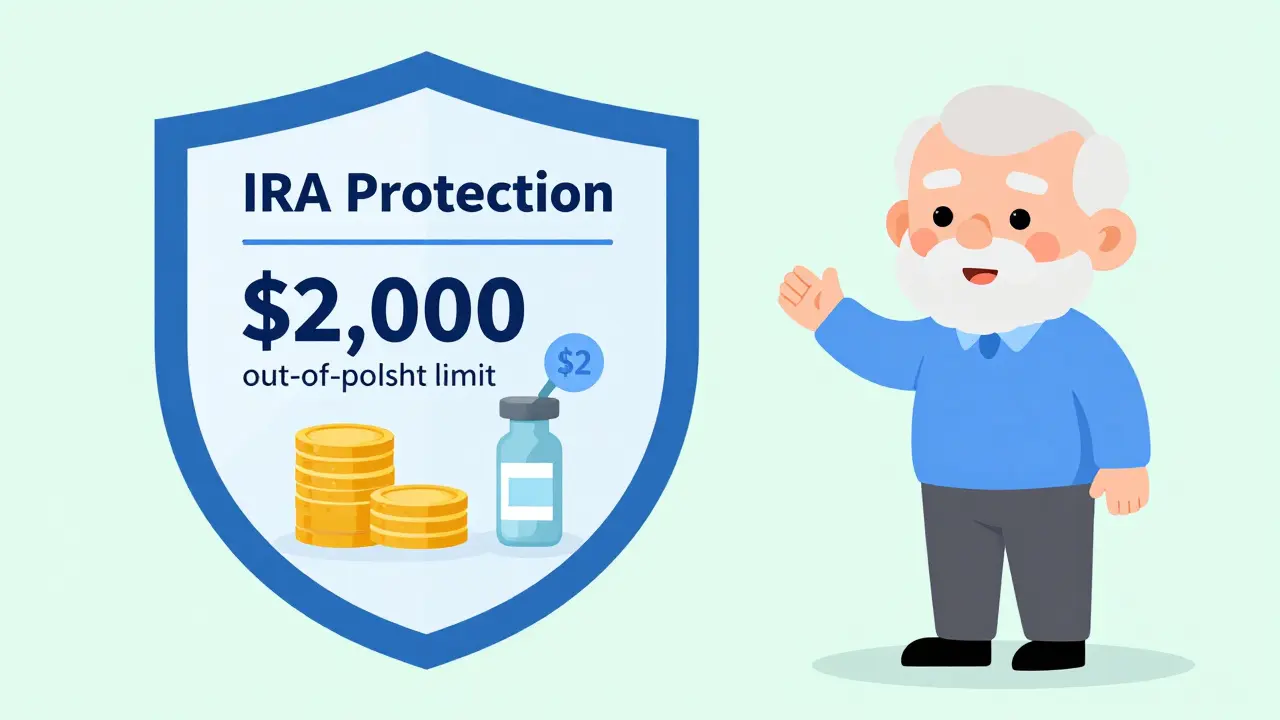
If you are on Medicare, pay attention. The rules changed significantly starting January 1, 2025. The Inflation Reduction Act introduced a hard cap on out-of-pocket costs for Part D beneficiaries. Before 2025, you could spend thousands before hitting catastrophic coverage. Now, once you hit $2,000 out of pocket in a year, your plan covers 100% of your drug costs for the rest of the year.
For generic users, this is huge. Because generics are cheap, you might need more refills to reach that $2,000 threshold compared to someone on expensive brand names. However, CMS guidance issued in mid-2024 also ensured that no beneficiary pays more than $100 quarterly for generics during the coverage gap phase. This effectively eliminates the "donut hole" shock for most people taking standard generic meds like metformin or lisinopril.
- Hard Cap: $2,000 annual out-of-pocket maximum for Medicare Part D.
- Insulin Cap: A strict $2 monthly limit on covered insulin products, including generics.
- Deductible Elimination: For those with Extra Help, deductibles are gone entirely.
These changes mean that for many seniors, the need for third-party generic assistance has dropped. But not everyone qualifies for these federal protections, and those with commercial insurance still face tiered pricing structures that can add up.
Pharmacy Discount Programs: The Easiest First Step
Before you fill out any applications, check your local pharmacy’s discount program. These are free, require no income verification, and often beat insurance copays. Big chains like Walmart and Kroger have long-standing lists of generic medications priced at $4 for a 30-day supply or $10 for a 90-day supply. As of 2026, these lists cover approximately 150 common medications, including antibiotics, blood pressure meds, and cholesterol drugs.
Independent pharmacies and online services like SingleCare or GoodRx also offer digital coupons. You simply show the QR code at checkout. Here is the catch: you cannot combine these discounts with your insurance copay. You have to choose one or the other. Always ask the pharmacist to run both prices-sometimes the discount coupon is cheaper than your insurance tier, even if your plan usually covers generics well.
| Option | Typical Cost | Eligibility | Best For |
|---|---|---|---|
| Pharmacy Discount (e.g., Walmart) | $4 - $10 | Anyone | Uninsured or high-deductible plans |
| Medicare Extra Help | $4.90 per generic | Low-income Medicare beneficiaries | Seniors on fixed incomes |
| Commercial Insurance Tier 1 | $5 - $15 | Employment-based insurance | Working adults with standard plans |
| PAN Foundation / NeedyMeds | $0 - Subsidized | Income-based / Disease-specific | Those falling through the cracks |
Government Programs: Medicare Extra Help and Medicaid
If you are on Medicare, the gold standard for generic assistance is the Extra Help program, officially known as the Low-Income Subsidy (LIS). In 2026, if you qualify for Extra Help, your copay for a generic drug is capped at $4.90. That’s it. No matter how many you take, that’s the max. You automatically qualify if you have Medicaid, a Medicare Savings Program, or Supplemental Security Income (SSI).
If you don’t have those, you can apply. The income limits are strict but clear. For an individual, if your income is below roughly $21,000 annually (adjusted yearly), you likely qualify. The application process takes 45 to 90 days, so don’t wait until you’re desperate. Gather your tax returns, bank statements, and proof of income upfront. State Health Insurance Assistance Program (SHIP) counselors can walk you through this for free. They handle hundreds of thousands of inquiries annually and can spot errors in your paperwork that would cause a denial.
For non-Medicare individuals, Medicaid is the primary safety net. However, there is a notorious "assistance cliff." If you earn just above the Medicaid threshold-say, making $2,100 a month from two jobs-you might make too much for Medicaid but not enough to comfortably afford private insurance copays. This group is the hardest to help. Look into your state’s specific waiver programs or expanded eligibility criteria, which vary widely by location.
Nonprofit Assistance and Patient Advocacy Groups
When government programs say no, nonprofits step in. Organizations like the PAN Foundation and NeedyMeds provide grants and navigation tools. PAN Foundation, for instance, has dozens of disease-specific programs. While they focus heavily on specialty drugs, some of their partners do assist with chronic conditions treated by generics, particularly for cardiovascular and diabetes care.
NeedyMeds operates as a clearinghouse. They list hundreds of patient assistance programs (PAPs). Their database shows that approval rates are high (around 78%) for those earning below 250% of the federal poverty level. But for those between 250% and 400% FPL, success rates drop to 12%. This highlights the importance of applying broadly. Don’t just pick one organization. Successful applicants often use 2.3 different sources of assistance simultaneously.
Local community health centers (FQHCs) are another underutilized resource. They charge on a sliding scale based on your income. If you go to an FQHC for your primary care, they often dispense medications at cost or with significant subsidies, bypassing the retail pharmacy markup entirely.
Navigating the System: Pro Tips for Success
Finding help requires a bit of detective work. Here is how to maximize your chances:
- Ask for Therapeutic Interchange: Sometimes your doctor prescribes a slightly more expensive generic that isn’t on the discount list. Ask if a cheaper therapeutic equivalent exists. Pharmacists can often substitute automatically unless the doctor writes "Dispense as Written."
- Don’t Assume Generics Are Free: Many people skip doses because they think generics should be negligible in cost. They aren’t always. If you’re skipping, you’re already paying a price-in health outcomes. Seek help immediately.
- Check the Accumulator Policy: If you do have some manufacturer assistance for a brand-name drug alongside generics, check if your plan uses a "copay accumulator." This prevents assistance payments from counting toward your deductible. It’s less relevant for pure generic users, but good to know if your regimen is mixed.
- Use SHIP Counselors: If you are over 65, call your local State Health Insurance Assistance Program. They are federally funded, unbiased, and free. They know the local loopholes and application shortcuts better than anyone.
The system is fragmented, but it is not impenetrable. By combining pharmacy discounts, leveraging the new IRA caps if you’re on Medicare, and tapping into nonprofit resources, you can drastically reduce the burden of generic medication costs. Start with the pharmacy counter today-it’s the fastest, easiest win available.
Do generic drug manufacturers offer copay cards?
Generally, no. Unlike brand-name pharmaceutical companies, generic manufacturers operate on very thin profit margins and rarely offer direct copay assistance programs. Instead, savings come from pharmacy discount programs, insurance tiers, and government subsidies.
What is the copay for generics with Medicare Extra Help in 2026?
If you qualify for Medicare Extra Help (Low-Income Subsidy), your copay for generic prescriptions is capped at $4.90 per prescription in 2026. Brand-name drugs have a higher copay, typically around $12.15.
Can I use a GoodRx coupon with my insurance?
No, you cannot combine pharmacy discount coupons like GoodRx or SingleCare with your insurance copay. You must choose one method of payment at checkout. Always ask the pharmacist to calculate both prices to see which is lower.
How does the Inflation Reduction Act help with generic drug costs?
The Inflation Reduction Act implemented a hard $2,000 annual out-of-pocket cap for Medicare Part D beneficiaries starting in 2025. It also eliminated deductibles for Extra Help recipients and capped insulin costs at $2 per month, significantly reducing financial strain for generic users.
Where can I find help if I make too much for Medicaid but can't afford copays?
This "assistance gap" is difficult to navigate, but options include Community Health Centers (which use sliding-scale fees), nonprofit organizations like the PAN Foundation or NeedyMeds, and state-specific waiver programs. Applying to multiple sources simultaneously increases your chances of approval.