
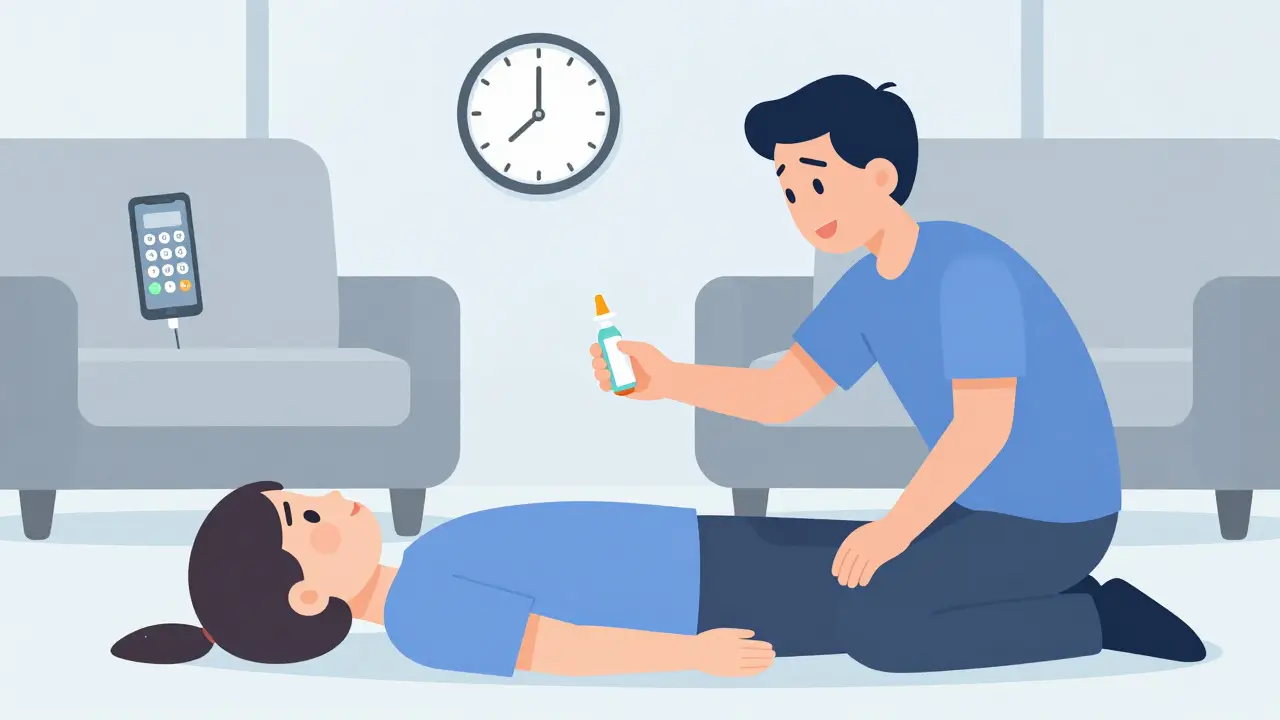
When someone overdoses on medication, every minute counts. But knowing what to do isn’t just for doctors - it’s something every patient and family member should understand. This guide breaks down the most common medication overdoses and the specific antidotes that can save lives. No fluff. No jargon. Just clear, practical info you can use.
Acetaminophen (Paracetamol) Overdose - The Silent Killer
Acetaminophen, sold under brand names like Tylenol or Panadol, is one of the most common drugs involved in overdoses. It’s in hundreds of cold and pain medicines, so people often don’t realize they’re taking too much. The scary part? You might feel fine for hours - even a full day - after taking a dangerous dose. By the time symptoms like nausea, vomiting, or yellowing skin appear, liver damage may already be underway.
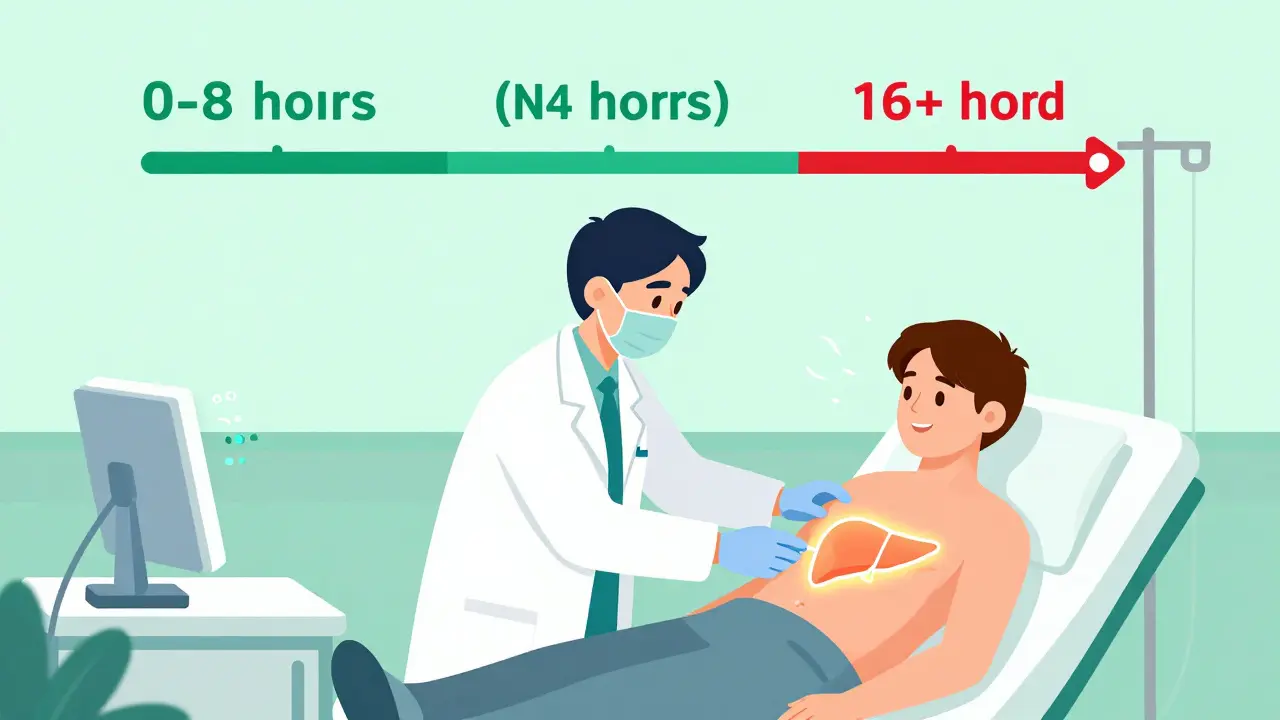
The antidote is N-acetylcysteine (NAC). It works by restoring glutathione, your body’s natural defense against acetaminophen toxicity. Timing is everything. If NAC is given within 8 hours of ingestion, it’s over 98% effective at preventing liver failure. After 16 hours, its effectiveness drops sharply. The California Poison Control System recommends starting treatment even if the person seems okay - because damage can be silent until it’s too late.
How it’s given: IV is standard in hospitals. The full dose is 150 mg/kg over the first hour, then 15 mg/kg/hour for the next 20 hours. Oral NAC is an option but requires 133 grams total, which is hard to tolerate due to the smell and taste. If you or someone you know took more than 10 grams of acetaminophen at once (about 20 regular tablets), call emergency services immediately. Don’t wait for symptoms.
Opioid Overdose - Naloxone Is Your Lifeline
Opioids include prescription painkillers like oxycodone, hydrocodone, and illegal drugs like heroin or fentanyl. An overdose slows or stops breathing. Without help, death can happen in minutes. The antidote? Naloxone - a drug that kicks opioids off brain receptors and brings breathing back.
Naloxone works fast. When given intranasally (as a nasal spray) or injected into the muscle, it can reverse an overdose in 2 to 5 minutes. The dose is 0.04-0.4 mg. If there’s no response after 2-3 minutes, give another dose. It’s that simple. The key is acting immediately. Don’t wait for EMS to arrive. If you’re around someone who uses opioids, keep naloxone on hand.
Here’s the catch: naloxone’s effects only last 30 to 90 minutes. Many opioids, especially fentanyl, stay in the system longer. That means the person can slip back into overdose after naloxone wears off. Always call emergency services after giving naloxone. Even if they wake up, they need medical monitoring.
In Australia, the Take-Home Naloxone Program has distributed over 25,000 kits since 2017 and recorded more than 1,800 reversals. Naloxone nasal spray (like Narcan) is now available over-the-counter in many places, including pharmacies. It’s safe, easy to use, and won’t harm someone who didn’t take opioids. Keep one in your home, car, or bag - just like a fire extinguisher.
Benzodiazepine Overdose - When the Calm Turns Dangerous
Benzodiazepines like diazepam (Valium), alprazolam (Xanax), and lorazepam (Ativan) are prescribed for anxiety and sleep. But mixing them with alcohol or opioids can cause dangerous respiratory depression. The antidote, flumazenil, exists - but it’s rarely used outside hospitals.
Why? Because flumazenil can trigger seizures in people who’ve been taking benzodiazepines long-term. If someone is dependent on these drugs, suddenly blocking them can cause withdrawal - and that can be deadly. The California Poison Control System warns: "Use small initial doses to avoid abrupt awakening or delirium. Use with caution in chronic users."
So what’s the real treatment? Supportive care. Oxygen, airway support, and monitoring. Most overdose cases recover with time and medical supervision. Flumazenil is only considered if the overdose is recent, there’s no history of long-term use, and the patient is in a hospital with full monitoring. Don’t expect to get this at home. If someone overdoses on a benzo, call for help. Don’t try to wake them up with cold showers or caffeine. Just place them on their side in the recovery position and wait for EMS.
Toxic Alcohol Poisoning - Ethylene Glycol and Methanol
These aren’t your regular drinks. Ethylene glycol is in antifreeze. Methanol is in windshield washer fluid or homemade alcohol. Ingesting even a small amount can cause blindness, kidney failure, or death. The antidotes are fomepizole or ethanol (vodka or whiskey).
Fomepizole blocks the enzyme that turns these poisons into deadly acids. The dose is 15 mg/kg IV, then 10 mg/kg every 12 hours. It’s expensive - around $4,000 per treatment - but it’s safer and easier to manage than ethanol. Ethanol works too: it competes with the poison for the same enzyme. But it requires constant IV drip monitoring, blood sugar checks, and careful dosing. One mistake, and you risk alcohol poisoning.
Signs of poisoning: nausea, vomiting, confusion, rapid breathing, and later, seizures or coma. If you suspect someone drank antifreeze or windshield fluid - even if they seem fine - go to the ER immediately. Time is critical. Treatment must start within hours. The Better Health Channel (Victoria) says: "Do not wait for symptoms to appear."
Methemoglobinemia - When Blood Can’t Carry Oxygen
This rare condition happens when certain drugs - like benzocaine (in some numbing sprays), dapsone, or nitroglycerin - turn hemoglobin into methemoglobin, which can’t carry oxygen. The skin turns blue or gray. Breathing gets hard. The antidote? Methylene blue.
Given as an IV drip over 5 minutes at 1-2 mg/kg. It helps convert methemoglobin back to normal hemoglobin. But don’t use it if the patient has G6PD deficiency - it can cause serious anemia. The maximum total dose is 7 mg/kg. This is not something you handle at home. If someone turns blue after using a numbing spray or taking a new med, call for emergency help. Oxygen and transport to a hospital are the first steps.
What You Can Do Right Now
You don’t need to be a medical expert to prevent or respond to an overdose. Here’s what you can do today:
- Know the signs: Unconsciousness, slow or stopped breathing, blue lips, pinpoint pupils (for opioids), vomiting, confusion.
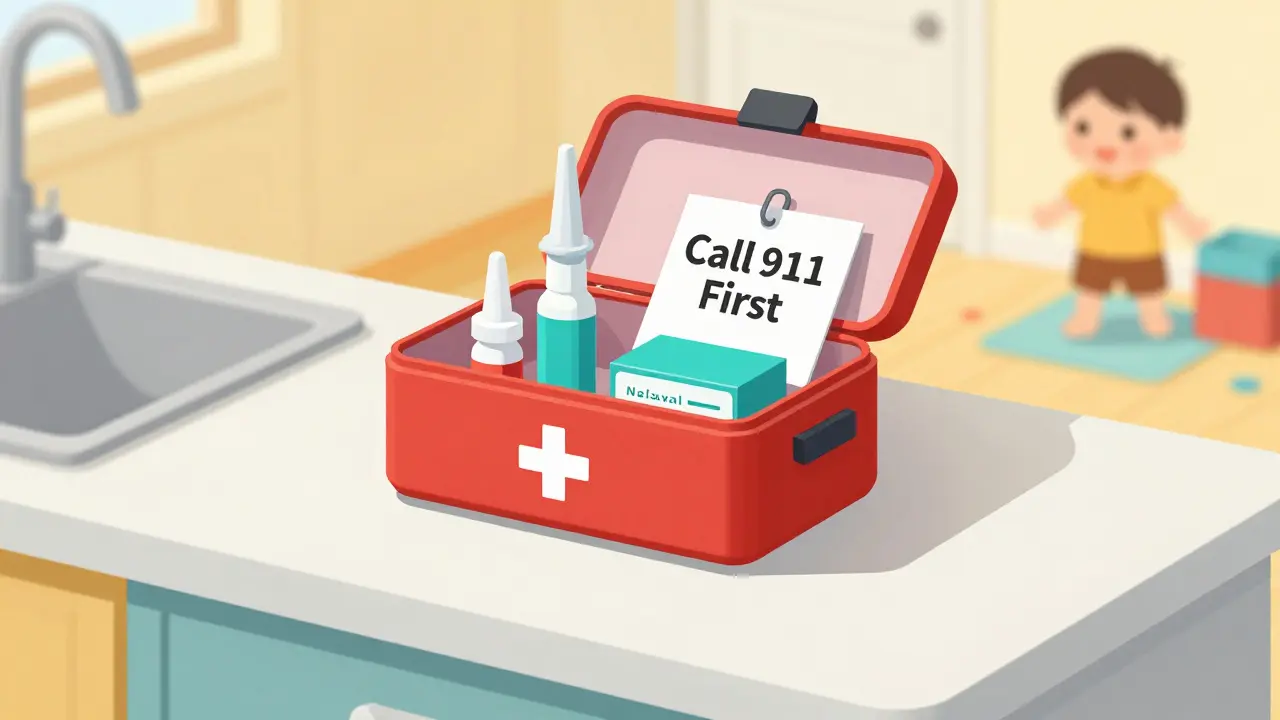
- Call for help first: In Australia, dial 000. In the U.S., call 911. Don’t try to handle it alone.
- Keep naloxone handy: If you or someone you know uses opioids, get a naloxone kit. They’re free or low-cost at many pharmacies and community centers.
- Store meds safely: Keep all medications locked up, especially if kids or teens are around. A single extra pill can be deadly.
- Don’t mix drugs: Alcohol with painkillers, benzos with opioids - this is how overdoses happen.
- Use the recovery position: If someone is unconscious but breathing, roll them gently onto their side. This keeps their airway open.
Why Antidotes Aren’t Magic Pills
Some people think antidotes are like a reset button - one shot and everything’s fine. That’s not true. Antidotes are tools, not cures. They buy time. They reverse the immediate danger. But they don’t fix organ damage, remove toxins from the body, or prevent complications.
Dr. Robert S. Hoffman, a leading toxicologist, says: "Antidotes are adjuncts to supportive care, not replacements." That means oxygen, IV fluids, monitoring, and ventilation matter just as much - sometimes more.
For example, NAC doesn’t magically heal a damaged liver. It stops further damage. Naloxone doesn’t cure addiction. It brings someone back to life so they can get treatment later. The real goal isn’t just survival - it’s recovery.
What’s Changing in 2026
Access to antidotes is improving. The FDA approved over-the-counter naloxone nasal spray in late 2023, and it’s now widely available in pharmacies without a prescription. Generic versions have cut the price from $150 to under $50 per kit. Some Australian states now offer free naloxone at community health centers.
Research is moving forward too. A new extended-release naloxone (XRx-1009) is in Phase 2 trials and could last 4-6 hours - long enough to prevent rebound overdose. That’s a game-changer.
But gaps remain. Rural hospitals still lack basic antidotes. NAC is often out of stock. Fomepizole is too expensive for many. Public education is still lagging. Most people don’t know what to do until it’s too late.
Knowledge is power. And in overdose situations, it’s survival.
Can I give naloxone to someone who didn’t overdose on opioids?
Yes. Naloxone only works on opioids. If someone didn’t take them, naloxone won’t hurt them. It won’t wake them up if they’re asleep from alcohol or a seizure. But it’s completely safe to use. If you’re unsure, give it. Better safe than sorry.
Is it too late to use NAC if more than 8 hours have passed?
Not necessarily. While NAC is most effective within 8 hours, it’s still recommended even after 16-24 hours, especially if liver damage is suspected. Doctors will check liver enzymes and use the Rumack-Matthew nomogram to decide. Don’t assume it’s too late - get to a hospital.
Can I use vodka or whiskey if I don’t have fomepizole for methanol poisoning?
In a true emergency with no access to fomepizole, ethanol (vodka or whiskey) can be used as a temporary measure. But this requires medical supervision - it’s not something to try at home. The dose must be carefully calculated and monitored. The best move is to get to an ER immediately.
Why can’t I use flumazenil at home for a benzodiazepine overdose?
Flumazenil can trigger seizures in people who use benzodiazepines regularly. Even if they took too much once, if they’ve been taking it daily for weeks, suddenly reversing it can cause dangerous withdrawal. It’s also not approved for home use. The safest approach is supportive care - oxygen, monitoring, and calling emergency services.
Where can I get naloxone in Australia?
In Australia, naloxone is available for free through the Take-Home Naloxone Program at community health centers, pharmacies, and needle and syringe programs. You don’t need a prescription. Ask your local pharmacist or contact your state’s health department.
Next Steps
If you take medications regularly, talk to your doctor about overdose risks. Ask if any of your drugs have antidotes. Keep a list of what you take and why. If you’re caring for someone with chronic pain, anxiety, or mental health issues, learn how to use naloxone. Keep a kit. Practice with the trainer device.
Overdose isn’t rare. It’s predictable. And it’s preventable. You don’t need to be a hero. You just need to know what to do - and act fast.

Alex Ogle
February 8, 2026 AT 11:20So I read this whole thing and honestly? I’m just sitting here thinking about how many people I know who’ve had near-misses with acetaminophen. My cousin took like 12 Tylenol PMs because she couldn’t sleep - thought it was ‘harmless’. She didn’t even throw up. No red flags. Just… quiet. Then her liver enzymes spiked three days later. NAC saved her. But if we hadn’t gotten her to the ER within 10 hours? She wouldn’t be here. It’s wild how something so common can kill silently. I keep a bottle of NAC in my medicine cabinet now. Just in case. No shame. Better safe than sorry.
And yeah, naloxone? I’ve got two kits in my car. One in my backpack. One at my mom’s house. I don’t care if you think it’s ‘enabling’ - if you’re around people who use opioids, you’re responsible for knowing how to save their life. It’s not a moral issue. It’s a biology issue.
Also - fomepizole costs $4,000? That’s insane. We’re talking about a life-saving drug that’s literally just a chemical inhibitor. Why is it so expensive? Who’s profiting off this? I’m not mad… I’m just disappointed.
And methemoglobinemia? I didn’t even know that was a thing. My aunt used benzocaine spray after a tooth extraction and turned gray. We thought it was a panic attack. Took 45 minutes to get to the hospital. They gave her methylene blue. She’s fine now. But what if we’d waited? This info should be on every OTC med label. Like, literally.
People think antidotes are magic. They’re not. They’re stopgaps. The real hero is the EMT who doesn’t panic. The nurse who knows the drip rate. The ER doc who doesn’t assume ‘it’s just alcohol’. This article? It’s not just helpful. It’s necessary.
Chima Ifeanyi
February 9, 2026 AT 01:08While the article presents a clinically coherent overview, it fails to contextualize the pharmacokinetic heterogeneity across populations. For instance, NAC efficacy is predicated on glutathione synthesis capacity, which is significantly attenuated in individuals with chronic alcohol use disorder or malnutrition - prevalent in sub-Saharan Africa. The 98% efficacy statistic cited is derived from Western, normative cohorts and lacks generalizability.
Furthermore, the assertion that naloxone is ‘safe’ ignores the emerging literature on opioid withdrawal-induced cardiac arrhythmias in polysubstance users. The pharmacodynamic profile of fentanyl analogs - particularly carfentanil - necessitates multi-dose regimens, yet the article implies a binary ‘on/off’ mechanism. This is dangerously reductive.
Flumazenil’s contraindication in chronic users is well-documented, yet the article omits that benzodiazepine dependence is often iatrogenic - stemming from overprescription in primary care. The real issue isn’t the antidote - it’s the prescribing culture.
And ethanol as an antidote for methanol? It’s a Band-Aid on a hemorrhage. The half-life of methanol is 15–50 hours. Ethanol requires continuous infusion and serum monitoring. This is not a home remedy. It’s a hospital protocol. The article’s casual tone misrepresents the clinical rigor required.
Finally, the FDA’s OTC naloxone approval is a political gesture, not a public health triumph. Distribution remains inequitable. Rural pharmacies in Appalachia still don’t stock it. This is performative medicine dressed as progress.
Ashlyn Ellison
February 10, 2026 AT 05:38My brother took 15 Advil PMs thinking they’d help him chill out. He didn’t even know it had acetaminophen. We didn’t panic - just called poison control. They told us to get him to the ER immediately. No waiting. No ‘maybe it’s fine’. We went. He got NAC. He’s fine now.
I kept thinking - why isn’t this stuff taught in high school? Like, basic first aid? CPR? Why not ‘what to do if someone takes too much Tylenol’? It’s way more common than gun accidents.
I got my naloxone kit last month. Didn’t need it yet. But I carry it. Like a spare tire. You hope you never use it. But if you do? You’re glad it’s there.
Frank Baumann
February 11, 2026 AT 21:48I’m not gonna lie - I cried reading this. Not because it’s sad. Because it’s so damn obvious and no one talks about it.
My sister died from a benzo overdose. She was on Xanax for anxiety. Took one extra. Mixed it with wine. Just one night. Just one time. They said she’d be fine. She wasn’t. They didn’t give her flumazenil. Said it was ‘too risky’. So they just… watched. For 12 hours. She stopped breathing. They didn’t intubate until it was too late.
Why is supportive care the default? Why not have a protocol? Why is this so… quiet? No one talks about benzo deaths. Everyone talks about opioids. But benzodiazepines? They’re the quiet killer. And we’re letting people die because we’re afraid of seizures?
I’m not blaming anyone. But this article? It’s the first time I’ve seen someone say it out loud. Thank you. I wish I’d read this before she died.
Random Guy
February 13, 2026 AT 18:11So let me get this straight… if I drink antifreeze, I should just… call 911? And they’ll give me vodka? That’s it? No, wait - they’ll give me a $4000 drug? Bro. I just wanted to kill myself, not fund Big Pharma.
Also, I’ve got a naloxone kit. I keep it next to my tampons. Just in case someone tries to OD on my ex’s fentanyl stash. Y’all good out here.
Brett Pouser
February 14, 2026 AT 00:52I’m Nigerian-American. My mom used to say, ‘If you don’t know what’s in the bottle, don’t take it.’ She was right. I’ve seen people in Lagos mix herbal remedies with blood pressure meds. No one knows what’s in the herbal stuff. And they die. Quietly.
This guide? It’s not just for the U.S. It’s for everywhere. I shared it with my cousin in Abuja. She’s a nurse. She’s printing it out for her clinic. We need more of this. Not just in English. In pidgin. In Hausa. In Yoruba. Knowledge shouldn’t be a privilege. It should be a tool. And this? This is a tool.
Karianne Jackson
February 15, 2026 AT 09:10I used to work at a pharmacy. People would come in and say, ‘I took 10 Tylenol. I feel fine.’ I’d say, ‘Go to the ER.’ They’d say, ‘I don’t have insurance.’ I’d say, ‘Your liver doesn’t care.’
One lady came in after her kid swallowed a whole bottle of melatonin. I told her to call poison control. She said, ‘It’s just gummies.’
It’s not just gummies. It’s not just pills. It’s not just ‘accidents.’ It’s life. And we’re too scared to talk about it.
Chelsea Cook
February 17, 2026 AT 05:06Y’all are overcomplicating this. Here’s the cheat sheet:
Too much Tylenol? Call 911. No waiting.
Someone passed out from opioids? Spray naloxone. Then call 911.
Drank antifreeze? Go to the ER. Now.
Blue lips? Oxygen. Now.
You don’t need a degree. You need a phone. And guts.
I taught my 17-year-old nephew how to use naloxone. He’s scared of needles. So I showed him the nasal spray. He said, ‘So it’s like a spray for bad people?’ I said, ‘No. It’s like a reset button for someone who forgot to breathe.’ He got it.
That’s all you need. One person. One kit. One second to act.
Andy Cortez
February 17, 2026 AT 08:21So let me get this straight - we’re telling people to keep naloxone in their car like a tire iron? But we won’t fix the system that makes people use opioids in the first place? This is like handing out bandages while the building burns down.
And NAC? It’s just a supplement. Why isn’t it OTC? Why do you need a hospital to give you a damn amino acid? Someone’s making billions off this. Meanwhile, people are dying because they can’t afford a $200 ER visit.
Also - fomepizole costs $4k? That’s not a drug. That’s a middle finger to the working class. We’re treating poisoning like a luxury service. Pathetic.
Andrew Jackson
February 18, 2026 AT 00:41This article represents a dangerous erosion of personal responsibility. The notion that antidotes are ‘tools’ rather than moral safeguards implies a society that has abdicated its duty to self-discipline. Why should we provide N-acetylcysteine to those who knowingly consume excessive quantities of acetaminophen? Why should we subsidize naloxone for individuals who voluntarily engage in illicit substance use? This is not medicine - it is enabling.
The United States of America was founded upon principles of accountability. We do not coddle those who make poor choices. We do not arm them with pharmaceutical safety nets while ignoring the moral decay that precipitates such behavior.
True compassion lies in prevention - in education, in character, in virtue. Not in stocking emergency kits for those who refuse to exercise prudence. Let them suffer the consequences of their actions. It is the only path to redemption.
And as for the suggestion that naloxone be made available ‘over-the-counter’ - this is a surrender to moral relativism. A nation that treats overdose as a public health issue rather than a moral failing is a nation on its knees.